Is It Okay for a Patio Rose Stem to Stick Out After Repotting?
Is a Visible Patio Rose Stem After Repotting a Problem?
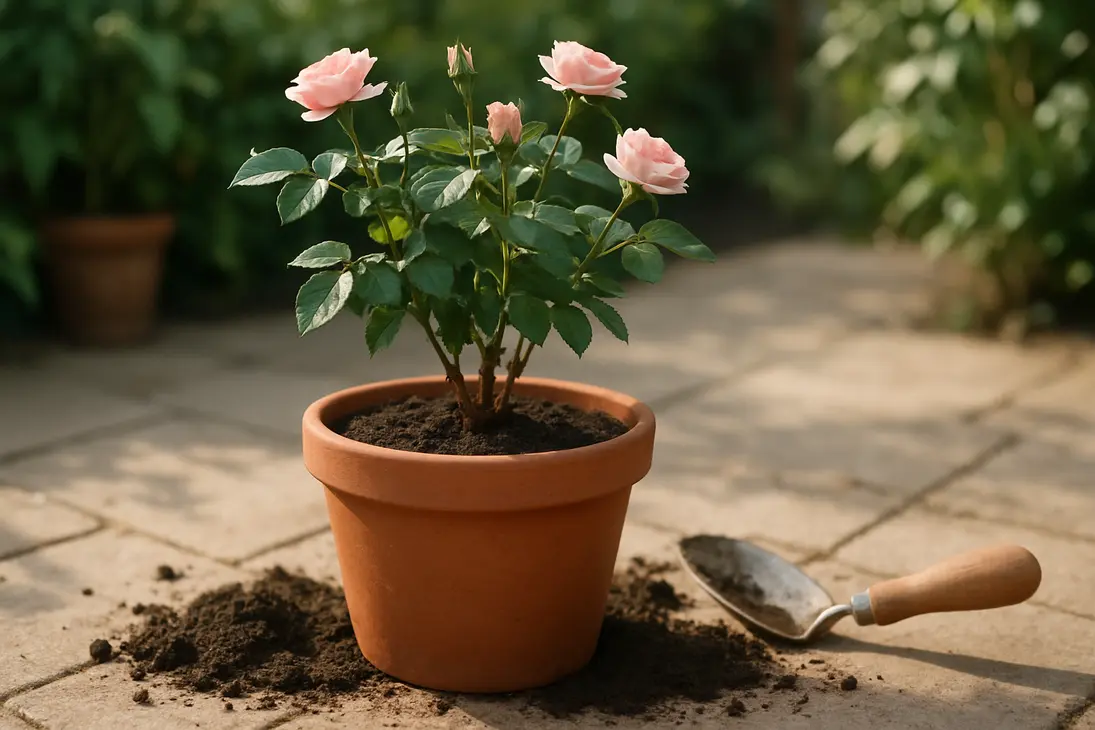
Yes, it is usually okay — and usually correct — for a patio rose stem to stick out above the soil after repotting. Rose stems are not roots, and the woody canes should normally remain visible after patio rose repotting.
The important questions are:
- Are any roots exposed?
- Is the root ball at about the same level as before?
- Is the crown or bud union buried too deeply?
- Is the rose loose, leaning, or sitting too high?
A visible stem is normal. Exposed roots are not. A buried stem base can also be a problem, especially in a pot where damp compost sits against the plant for long periods.
Patio roses and mini roses are often sold with a visible woody base and several short stems rising from it. When moving the plant into a larger container, the safest approach is usually to keep the same soil line it had in the nursery pot.
Check the Correct Soil Level for a Repotted Patio Rose
Look for the old soil mark on the lower stems or around the root ball. After repotting, the new compost should come up to roughly the same place.
| Part of the rose | Where it should be after repotting |
|---|---|
| Leaves and stems/canes | Above the soil |
| Woody stem base/crown | At or just above the soil surface |
| Roots | Fully covered |
| Root ball | Level with, or just slightly below, the compost surface |
| Bud union/graft, if present | Usually at or just above soil level in a pot |
Leave about 2–3 cm between the compost surface and the pot rim so water can soak in instead of running off.
What Should Stay Above the Soil
The visible stems or canes of a patio rose should stay above the soil. These parts carry buds, leaves, and flowers. Covering them with compost will not help the plant root better and may encourage rot.
Keep these above the soil:
- Green or brown rose stems
- Leaf buds and new shoots
- Pruned cane stubs
- The main woody framework
- Any visible graft swelling, unless you are deliberately following cold-climate graft-burying advice
If your patio rose has one short bare “trunk” at the base, do not bury it just because it looks exposed. Many small roses naturally have a visible woody base.
What Should Be Covered by Soil
Roots should always be covered. If you can see fine roots, white root tips, or thicker woody roots at the surface, the rose may be sitting too high or the compost may have settled after watering.
Cover:
- Exposed roots
- Gaps around the root ball
- Air pockets beside or under the root ball
- The top of the old root ball, if needed, with only a thin layer
The top of the root ball should be level with the surrounding compost or only lightly covered. Do not bury the whole stem base under several extra centimetres of damp mix.
Crown, Root Ball, and Bud Union: What to Look For
The root ball is the mass of compost and roots lifted from the old pot. Its top should sit close to the finished compost level in the new pot.
The crown is where the stems emerge from the root area. On an own-root patio rose, it may look like a small woody cluster. In a container, it is best kept at or just above the compost surface to reduce the risk of rot.
The bud union or graft union is a swollen join where a rose variety has been grafted onto rootstock. Not all patio roses have one; many are grown on their own roots.
If you see a swollen lump near the base:
- In a pot, keep it at or just above the compost surface.
- Make sure the roots below it are covered.
- Do not bury it under constantly damp compost unless you have a specific cold-climate reason.
For most patio rose repotting, matching the original nursery soil level is the simplest and safest guide.
What to Do If the Rose Was Repotted Too High or Too Low
If you have just repotted the rose and are unsure, do not panic. A small correction soon after repotting is usually better than leaving the plant badly positioned.
First, water lightly if the compost is very dry. This settles the mix and shows the real level. Then check:
- Are roots showing?
- Is the crown buried?
- Is the plant wobbly?
- Is water draining freely?
- Is there space at the top of the pot for watering?
Make only the correction needed. Avoid repeatedly lifting and replanting, as this can damage fine roots.
If Roots Are Showing
If roots are visible, add fresh, free-draining potting mix.
Steps:
- Gently tuck compost around exposed roots.
- Cover the root ball with a thin layer if needed.
- Avoid piling compost high against the stems.
- Water slowly to settle the mix.
- Check again after settling.
If a large part of the root ball is exposed, lift and reset the rose slightly lower rather than building a mound of compost around the base.
If the Crown or Stem Base Is Buried
If the lower stems or crown are buried under several centimetres of compost, correct the depth. In pots, buried stems can stay too wet.
Signs the rose may be too deep include:
- Compost covering the woody crown
- Lower buds below the surface
- Damp compost packed against stems
- Water pooling around the base
- The rose sitting lower than it did before
To fix it:
- Slide the root ball out carefully.
- Add a little potting mix underneath if needed.
- Reset the rose so the old soil mark matches the new surface.
- Backfill around the root ball.
- Firm gently.
- Water to settle.
Do not pull the rose upward by its stems while it is still in the pot. Lift the root ball, not the top growth.
If the Plant Is Leaning or Loose in the Pot
A newly repotted patio rose may wobble if there are air gaps or the compost was not firmed enough. Loose roots dry unevenly and establish slowly.
To steady it:
- Hold the rose upright at the correct height.
- Add compost evenly around the root ball.
- Press gently but firmly with your fingers.
- Water slowly.
- Add more mix if it sinks.
For a top-heavy patio rose, use a short temporary stake. Place it near the edge of the root ball and tie the stem loosely with soft twine or a flexible plant tie.
The aim is root contact, not heavy compression. Roots need both moisture and air.
Aftercare for a Patio Rose After Repotting
Repotting disturbs roots, even when done carefully. The rose may pause growth, droop slightly, or drop a few older leaves while it adjusts.
Avoid trying to fix every sign of stress with extra water, fertiliser, or hard pruning. Most newly repotted patio roses need steady moisture, shelter, and time.
Watering After Repotting
Water thoroughly after repotting, until water drains from the holes. This settles compost around the root ball and removes dry pockets.
After that, water by need, not by a fixed daily schedule. Patio roses in pots can dry quickly in warm weather but suffer if kept constantly wet.
Check moisture like this:
- Push a finger 2–3 cm into the compost.
- If it feels dry, water.
- If it feels damp, wait.
- If the pot feels heavy and smells sour, it may be too wet.
When watering, soak the compost properly rather than giving tiny splashes. Never leave a patio rose standing in water for long periods; empty saucers after watering unless the plant quickly takes it up in hot weather.
Light, Wind, and Frost Protection
A patio rose needs good light, but after repotting it may benefit from a gentler position for a few days.
For the first week:
- Give bright light, but avoid harsh midday sun if it is wilting.
- Keep it out of strong drying winds.
- Protect it from late frost.
- Avoid placing it against a hot wall.
Once settled, move it back to a sunny position. Most roses flower best with several hours of direct sun. In deep shade, a patio rose may survive but usually becomes weak and reluctant to bloom.
If frost is forecast soon after repotting, move the pot to a sheltered wall, cold frame, unheated greenhouse, porch, or similar protected spot. Roots in containers get colder than roots in the ground.
When to Feed Again
Do not feed heavily immediately after repotting, especially if the new potting mix already contains fertiliser. Fresh compost often has enough nutrients for the settling-in period.
Wait until the rose shows active growth, such as:
- New leaves expanding
- Buds swelling
- Stems extending
- The plant looking firm again
Then use a rose fertiliser or balanced container plant feed according to the label. More is not better; too much fertiliser in a pot can scorch roots or push soft, vulnerable growth.
If you repotted in autumn or winter, wait until spring growth begins before feeding.
Should You Prune After Repotting?
You do not need to prune just because you have repotted. If the rose is healthy, leave the top growth alone.
Prune only what is useful:
- Dead stems
- Broken stems
- Diseased or blackened pieces
- Very weak, crossing, or overcrowded shoots
- Spent flowers
If the rose wilted badly because roots were damaged, you can reduce a little top growth, but avoid severe pruning unless there is a clear reason. For routine shaping, wait until the normal pruning season for your climate and rose type.
Common Patio Rose Repotting Mistakes to Avoid
Many patio rose problems after repotting come from the setup rather than the visible stem. A rose can be planted at the correct depth and still struggle if the compost is too dense, drainage is poor, or watering keeps the roots saturated.
Mini and patio roses are often bought as gift plants. If they decline after a few weeks, the issue is often that they were kept too wet, too dark, too cramped, or in unsuitable soil.
Using Garden Soil Instead of Potting Mix
Garden soil is not the same as potting mix. In a container, it can become heavy, compacted, and slow to drain. In the ground, worms and natural soil structure help keep it open; in a pot, it can turn dense and airless.
Use a good-quality potting mix suitable for containers. A rose-specific compost is fine, but a general container mix can also work if it drains well. Some gardeners add perlite, grit, or fine bark to improve aeration, especially in rainy climates.
A suitable mix should:
- Hold moisture without staying soggy
- Drain freely
- Feel open and crumbly
- Support the root ball without collapsing into sludge
Avoid straight composted manure, dense topsoil, or heavy clay soil in a pot.
Keeping the Rose Too Wet
Overwatering is one of the most common reasons patio roses decline after repotting. An overwatered rose may wilt, just like an underwatered one, so check the compost before adding more water.
Possible signs of overwatering include:
- Compost staying wet for days
- Yellowing lower leaves
- Leaf drop
- Sour or stagnant smell
- Soft, dark roots
- Fungus gnats around indoor or sheltered pots
Underwatering usually comes with dry, shrinking compost and a light pot.
Aim for a wet-dry rhythm: water well, then let the upper layer dry slightly before watering again. In cool weather, a patio rose may need far less water than expected. In summer sun and wind, it may need water daily.
Always check drainage holes. A decorative outer pot with no drainage can drown a rose even if the surface looks fine.
Moving to a Pot That Is Too Large or Too Small
Choose a pot large enough for root growth, but not so oversized that unused compost stays wet for too long.
For most patio roses, move up one practical pot size at a time. A pot around 25–35 cm wide is often suitable for many patio roses, depending on plant size, but the root ball matters more than a fixed measurement.
A pot that is too small may cause:
- Fast drying
- Tight circling roots
- Poor flowering
- Stunted growth
- Tipping over
A pot that is too large may cause:
- Wet compost around the roots
- Slower establishment
- Higher overwatering risk
- A heavy container that is hard to move
Good drainage holes are essential.
Assuming Mini or Patio Roses Prefer to Be Root Bound
Mini and patio roses do not prefer to be root bound. They may tolerate a snug pot for a while, especially when sold in bloom, but they still need root space, oxygen, and nutrients.
A severely root-bound rose may dry out quickly and flower poorly because its roots cannot access enough fresh compost and moisture.
When repotting a root-bound patio rose:
- Slide it out of the old pot.
- Check for circling roots.
- Gently loosen a few outer roots if tightly wound.
- Do not tear the root ball apart unless extremely congested.
- Repot into fresh container mix at the same depth.
If the rose was very root-bound, it may take longer to settle. Keep care steady and avoid overfeeding while roots recover.
Conclusion
A patio rose stem sticking out after repotting is usually completely normal. Rose stems and canes belong above the soil. What matters is whether the roots are covered, the root ball is set at the correct level, and the crown or graft area is not buried under damp compost.
If you can see only the woody stem, leave it alone. If you can see roots, add potting mix or reset the plant slightly lower. If the stem base or crown is buried, lift and replant the rose at its original soil level.
Most patio rose repotting worries come down to depth, drainage, and watering. Get those right, and your rose has a much better chance of settling in and growing well.
FAQ
Should the stem of a patio rose be covered with soil?
No. The stem of a patio rose should normally stay above the soil. Cover the roots, not the stems. Compost piled around the woody stem base can hold moisture against the plant and increase the risk of rot.
The main exception is specific local advice for protecting a grafted rose in a very cold climate, but for ordinary container repotting, keep the original soil line.
How deep should I plant a patio rose in a pot?
Plant it at about the same depth it was growing in its previous pot. The top of the root ball should be level with, or just slightly below, the surface of the new potting mix. Roots should be covered, but the crown and stems should not be buried deeply.
Leave a small gap between the compost and the pot rim so you can water without overflow.
Why is my patio rose wilting after repotting?
A little wilting can happen because the roots were disturbed. The plant may temporarily lose water faster than the roots can replace it.
Check the compost before watering again. If it is dry below the surface, water thoroughly. If it is already wet, do not keep adding water; move the rose to bright shade and shelter it from wind for a few days. Wilting in wet compost can mean the roots are short of oxygen or damaged.
Can I use garden soil when repotting a patio rose?
It is better not to use garden soil on its own in a pot. It can become dense, compacted, and poorly drained in containers.
Use a free-draining potting mix that holds moisture but still allows air around the roots. If you already used garden soil and the rose is struggling, consider repotting into proper container mix, especially if the soil is staying wet or heavy.
You Might Also Like