Peat Moss vs Coco Coir: Which Growing Medium Is Best for Your Plants?
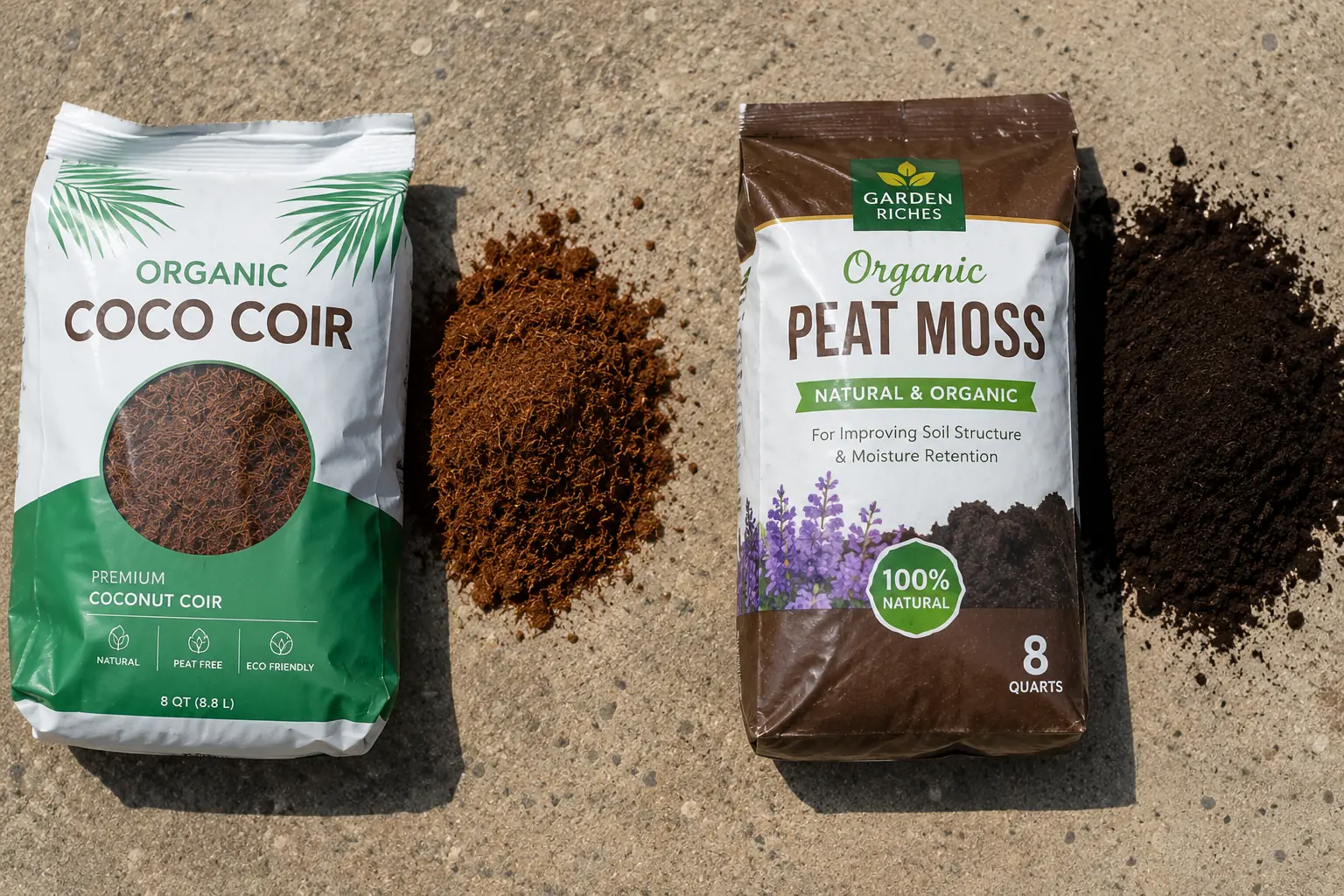
If you’ve ever started seeds, mixed potting soil, or set up a container garden, you’ve faced this choice: peat moss or coco coir. Both are lightweight, water-retentive, nearly nutrient-free base materials that improve soil structure. But they come from very different sources, behave differently with water and nutrients, and carry distinct trade-offs for sustainability and plant health. This guide compares peat moss and coco coir across pH, water retention, preparation needs, and environmental impact — so you can pick the right medium for your plants.
Key Takeaways
- pH differences matter: Peat moss is very acidic (pH 3.5–4.5) and needs lime for most plants, while coco coir is usually closer to neutral than peat moss, but quality varies by product. Some coir may need rinsing or buffering before use.
- Water behavior differs: Peat moss holds more water but becomes hydrophobic when dry and hard to rewet. Coco coir rehydrates easily and is more forgiving of inconsistent watering.
- Sustainability favors coco coir: Peat moss is not renewable on a human timescale and its harvesting releases carbon from peatlands. Coco coir is a byproduct that still requires water and energy to process and ship.
- Coco coir needs preparation: Unbuffered coco coir can bind calcium and magnesium, causing deficiencies. Pre-buffered coir or supplementing with calcium and magnesium prevents this issue.
- Neither is a complete mix: Both are base ingredients that need aeration (perlite, pumice) and nutrients (compost, fertilizer). Using either alone leads to waterlogging and poor nutrition.
What Are Peat Moss and Coco Coir?
Peat Moss: Harvesting, Properties, and Common Uses
Peat moss is the partially decomposed remains of sphagnum moss that have accumulated over thousands of years in waterlogged, acidic peatlands. Commercial peat is harvested from peatlands after the surface is prepared and drained enough for extraction. Because peat forms very slowly, removing it raises concerns about carbon storage, habitat disruption, and long-term regeneration. It holds several times its weight in water while providing some pore space for air, has very low nutrient content, and a naturally acidic pH (3.5–4.5). That acidity makes it useful for acid-loving plants, but for most others you’ll need to add lime. Peat moss is a standard ingredient in seed-starting mixes and potting soils, but rewetting it after drying can be difficult due to a water-repellent crust.
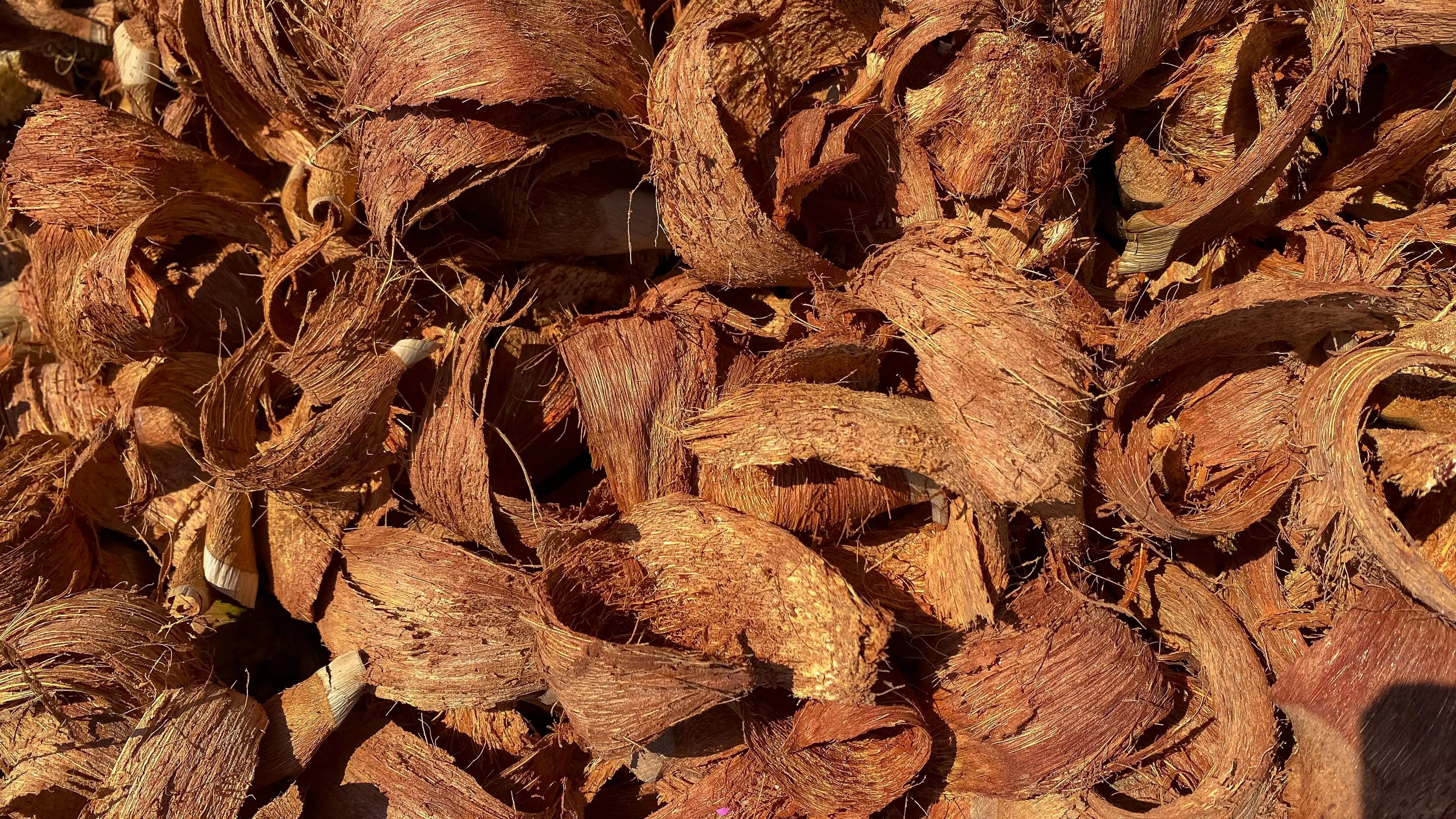
Coco Coir: From Coconut Husk to Growing Medium
Coco coir is a byproduct of the coconut industry. The fibrous husk is separated, soaked, and processed into a stable growing medium, sold as compressed bricks or loose coir. It has a near-neutral to slightly acidic pH (5.5–6.8), holds water well, and rehydrates far more easily than peat. This makes it popular for containers, hydroponics, and any setup where consistent moisture is important. Raw coco coir often contains salts and high potassium levels that can interfere with calcium and magnesium uptake unless pre-treated.
Coco Coir vs Coco Peat vs Coco Fiber
- Coco coir is the general name for the processed husk material.
- Coco peat refers to fine, dust-like particles similar to peat moss — the names are used interchangeably.
- Coco fiber is the longer, stringy material that adds aeration but holds little water.
- Coco chips are chunkier pieces that create air pockets, often used in orchid mixes.
For seed starting and general potting, you usually want a finer, peat-like consistency. Always check the physical feel of the product before buying.
Peat Moss vs Coco Coir: The Key Differences
Peat Moss vs Coco Coir: Key Differences at a Glance
| Feature | Peat Moss | Coco Coir |
|---|---|---|
| Source | Peatlands / sphagnum deposits | Coconut husks |
| Typical pH | Acidic (3.5–4.5) | Near-neutral (5.5–6.8) |
| Nutrients | Very low | Low, may contain salts/potassium |
| Water behavior | Holds water, hard to rewet when dry | Rehydrates easily |
| Drainage | Needs perlite/bark for aeration | Still needs drainage amendments |
| Sustainability concern | Peatland disruption and carbon release | Processing, salinity, transport |
| Best use | Acid-loving plants, traditional seed mixes, moisture-retentive potting bases | Peat-free mixes, seed starting, containers, hydroponics |
| Main risk | Too acidic / hydrophobic when dry | Salt, calcium/magnesium imbalance if unbuffered |
pH Levels and Nutrient Availability
Peat moss (pH 3.5–4.5) is too acidic for most vegetables and flowers. For many vegetables and ornamentals, peat-based mixes are often limed to bring pH closer to the plant’s preferred range. The exact amount depends on the peat source, mix recipe, and target crop, so testing pH is safer than guessing. Coco coir (pH 5.5–6.8) is already close to the sweet spot for most plants and can often be used straight from the bag. Adjust for plants with specific pH preferences — blueberries (acid) or succulents (neutral to slightly alkaline). A simple soil pH test before planting saves headaches.
Water Retention and Drainage
Peat moss can absorb up to 20 times its dry weight, but once dry it becomes hydrophobic — water beads off. To rehydrate, add a drop of mild liquid soap or soak from the bottom for hours. Coco coir holds slightly less water but rehydrates almost instantly due to its fibrous structure, making it more forgiving for inconsistent watering. However, its easy rewetting can lead to overwatering if you water too frequently. In both cases, amend with perlite, pumice, or bark to improve drainage and aeration.
Sustainability
Peat moss is not renewable on a human timescale. Peatlands accumulate at ~1 mm per year, yet harvesting removes layers that took millennia to form. Draining bogs releases stored CO₂ and disrupts unique ecosystems; many European countries have restricted peat extraction. Coco coir is a byproduct of the coconut industry, using waste material, but requires large amounts of fresh water for washing and long-distance shipping. For gardeners trying to reduce peat use, coco coir is one common alternative, but the full impact depends on processing, water use, transport distance, and product quality. The practical choice is “lower peat use” — coco coir is usually the better option, but locally produced alternatives like composted bark may reduce transport emissions further.
How to Choose Between Peat Moss and Coco Coir
| Growing Situation | Better Choice | Why | Watch Out For |
|---|---|---|---|
| Seed starting | Coco coir or peat-based seed mix | Both hold moisture and support germination | Avoid dense, soggy mixes |
| Vegetables in containers | Either as part of a mix | Both improve moisture retention | Add compost, perlite, bark, or fertilizer |
| Succulents and cacti | Neither alone | Both hold too much moisture | Add pumice, perlite, grit |
| Carnivorous plants | Usually peat moss | Many need acidic, low-nutrient media | Avoid salty coir |
| Hydroponics | Coco coir | Common soilless medium | Manage EC, pH, Ca, Mg |
| Peat-free gardening | Coco coir | Avoids peat extraction | Quality, salts, transport impact |
Seed Starting
Coco coir is a favorite because it rehydrates easily and stays loose, making transplanting simple. Peat-based mixes are reliable but can become waterlogged or crust over. For either, mix in perlite or vermiculite for drainage, pre-moisten, and fertilize after first true leaves appear.
Vegetables and Herbs in Containers
Either can serve as a base. Combine one part coir or peat with one part compost and one part perlite/pumice. Add slow-release fertilizer or feed with liquid nutrients. Both drain well when amended; if water sits on top, add more perlite.
Succulents and Cacti
Do not use either alone — they hold too much moisture. Limit coir to 10–20% of the total volume, with the rest being coarse mineral material. Water only when completely dry.
Carnivorous Plants
Peat moss is traditional for its low pH and sterility. Coco coir is risky unless verified low in salt; most growers recommend sticking with pure sphagnum peat.
Hydroponics and Soilless Growing
Coco coir is standard due to its neutral pH and capillary action. Peat moss is less common because of acidity and hydrophobic tendencies. Most hydroponic recipes start with coir and perlite; manage calcium and magnesium carefully.
Why Neither Is a Complete Potting Mix
Both lack nutrition and aeration. Always blend with:
- Base ingredient (peat or coir) for moisture.
- Aeration agent like perlite, pumice, or bark.
- Nutrient source like compost, worm castings, or slow-release fertilizer.
- pH adjuster (lime for peat, none or gypsum for coir).
Using either alone leads to poor root health and nutrient deficiencies.
How to Prepare Coco Coir Before Planting
Do You Need to Rinse Coco Coir?
Some coir products contain residual salts that can burn sensitive roots. If the coir is labeled “pre-washed” or “buffered,” use it directly. For generic bricks, soak, expand, then flush with clean water until runoff is clear (EC below 0.5 mS/cm if you have a meter). A good tap water flush is enough for most home gardeners.
What Does “Buffered Coco Coir” Mean?
Buffered coir has been treated with calcium and magnesium salts so these nutrients occupy exchange sites. Unbuffered coir binds calcium and magnesium, making them unavailable to plants. When using unbuffered coir, supplement calcium and magnesium from the start — e.g., add 1 teaspoon calcium nitrate and 1 teaspoon Epsom salt per gallon of water to hydrate the brick.
When Pre-Buffered Coco Coir Is Worth Buying
Pre-buffered coir saves time and reduces nutrient issues during early growth. It’s worth it for seed starting, hydroponics, and heavy-feeding plants like tomatoes. For low-maintenance houseplants or mixing into garden soil, unbuffered coir is fine with a balanced fertilizer.
Practical Tips for Using Peat Moss and Coco Coir
Can You Mix Peat Moss and Coco Coir?
Yes. A 50/50 blend offers easier rewetting from coir and peat’s structure. The pH will be intermediate, so you may still need lime. Mixing complicates sustainability claims — if your goal is to reduce peat use, go with 100% coir. If you have both on hand, blending works with the same amendments.
Troubleshooting Common Problems
- Yellow lower leaves with dark veins in coir: magnesium deficiency. Apply Epsom salt at 1 tsp/gal.
- Stunted growth and blossom end rot: calcium shortage in unbuffered coir. Add calcium nitrate or liquid calcium.
- Purple stems in peat: phosphorus lockout from acidity. Check pH and apply lime.
- Slow growth in peat: hydrophobic dry spots. Water from bottom or add wetting agent.
In both mediums, the most common issue is treating them as complete soils. Always provide supplemental nutrition and drainage.
Conclusion
Peat moss and coco coir are both useful base ingredients but are not identical. Peat moss offers reliable acidity for specialty plants, but its environmental cost and rewetting difficulties are real downsides. Coco coir rehydrates easily, has a friendlier pH range, and comes from a renewable byproduct, but requires careful salt management and buffering. The best choice depends on your plants, growing method, and sustainability priorities. For most home gardeners growing vegetables, houseplants, and herbs, coco coir offers a practical, lower-impact alternative — especially if you buy pre-buffered coir and amend it properly.
FAQ
Is coco coir better than peat moss?
There is no universal “better.” Coco coir is better for easier rewetting, neutral pH, and peat-free gardening. Peat moss is better for acid-loving plants. The choice depends on your plants and priorities.
Why do many gardeners avoid peat moss?
Mainly environmental reasons: peatland destruction releases carbon and destroys ecosystems. Peat moss is also hard to rewet and requires pH adjustment, leading many to switch to coco coir.
What are the disadvantages of coconut coir?
Coco coir can contain salts that harm sensitive plants. Unbuffered coir may bind calcium and magnesium. It’s lightweight and may not stabilize top-heavy plants. Quality varies by brand, and shipping adds to its carbon footprint.
Can I use coco coir for seed starting instead of peat moss?
Yes. Coco coir works well, especially if pre-buffered or supplemented with diluted nutrients. It stays loose, rehydrates easily, and has a good pH range. Use a fine texture and avoid overwatering.
You Might Also Like