Low-Cost Indoor Plant Hacks That Actually Keep Houseplants Healthy
Healthy houseplants rarely need expensive gadgets. Most problems come from basics: low light, soggy soil, compacted mix, pests caught too late, or inconsistent care.
The best low-cost indoor plant hacks improve placement, watering, soil structure, pest prevention, and travel routines without forcing plants to survive in poor conditions.
Cheap Light and Placement Hacks for Stronger Growth
Light is the cheapest “fertilizer” for indoor plants. In dim light, plants use water slowly, grow weakly, and decline more easily. Before buying grow lights, improve placement and reflected light.
Use bright, indirect light whenever possible
For many houseplants, the best spot is bright, indirect light: close enough to a window to see the sky, but not pressed against harsh midday sun.
Basic placement tips:
- South- and west-facing windows give the strongest light. They suit succulents, cacti, and sun-tolerant plants, while many tropicals need distance from the glass or a sheer curtain.
- East-facing windows offer gentler morning sun and work well for pothos, philodendron, peace lily, spider plant, and many calatheas.
- North-facing windows can support low-light-tolerant plants, but growth is slower. “Low light” does not mean “no light.”
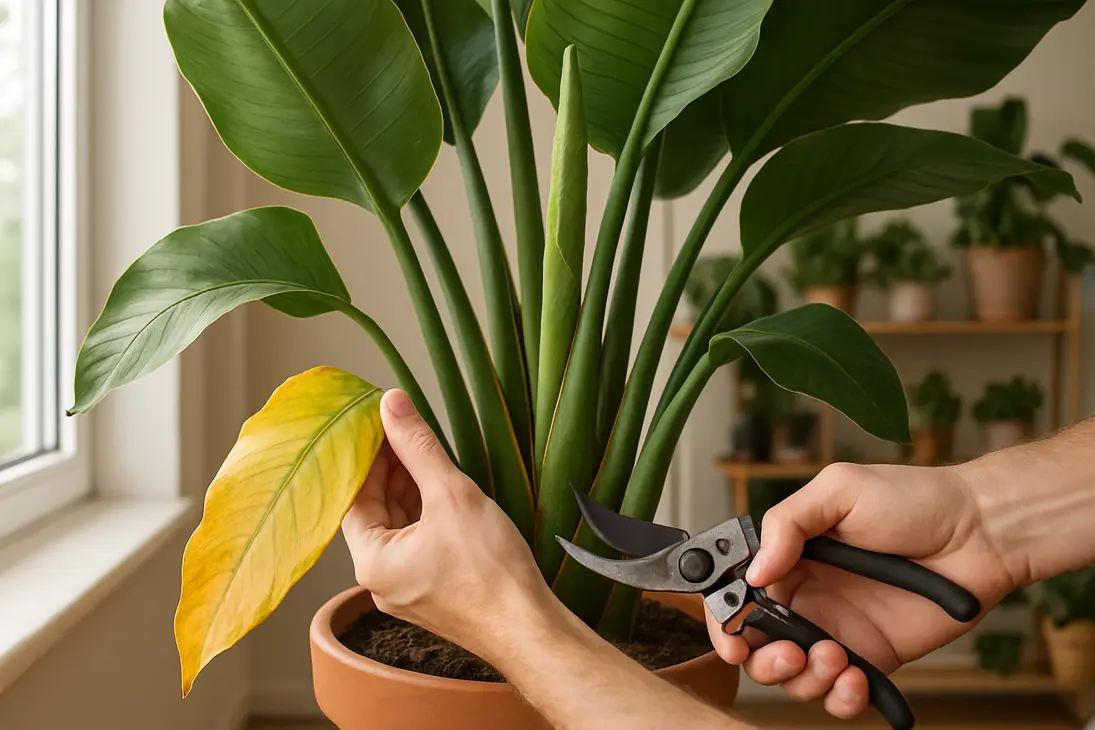
If a plant is struggling, move it closer to natural light before changing everything else. Too little light often causes leaning, long gaps between leaves, small new leaves, pale growth, slow-drying soil, and leaf drop. Too much direct sun can cause bleached leaves, crispy patches, curling, or unusually fast-drying soil.
Reflect light with white walls, mirrors, or foil-lined boards
Bounce light back toward plants with a white wall, mirror, white foam board, or cardboard covered with aluminum foil.
White surfaces give softer reflection. Foil is stronger but can create hot spots in direct sun, so keep it offset rather than wrapped around the plant. This will not make a dark room bright, but it can improve a marginal spot.
Rotate plants to prevent leaning and uneven growth
Plants grow toward light. Rotate pots a quarter turn every week or two to keep growth balanced. Fast growers in bright windows may need weekly rotation; slower plants can be turned less often.
Avoid constantly moving a stressed plant. If it is dropping leaves after relocation, let it settle first.
Watering Hacks That Prevent Overwatering
Overwatering usually means roots are sitting in airless, wet soil too long. Indoor conditions vary, so fixed watering schedules often cause problems.
Check soil moisture before watering
Your finger is the cheapest moisture meter. Push it 1–2 inches into the soil. If it feels damp, wait. If it feels dry at that depth, many common houseplants are ready for water.
For larger pots, use a wooden chopstick, skewer, or pencil. Soil stuck to the stick means moisture remains; a mostly clean, dry stick suggests it may be time to water. You can also lift the pot: dry pots feel much lighter than freshly watered ones.
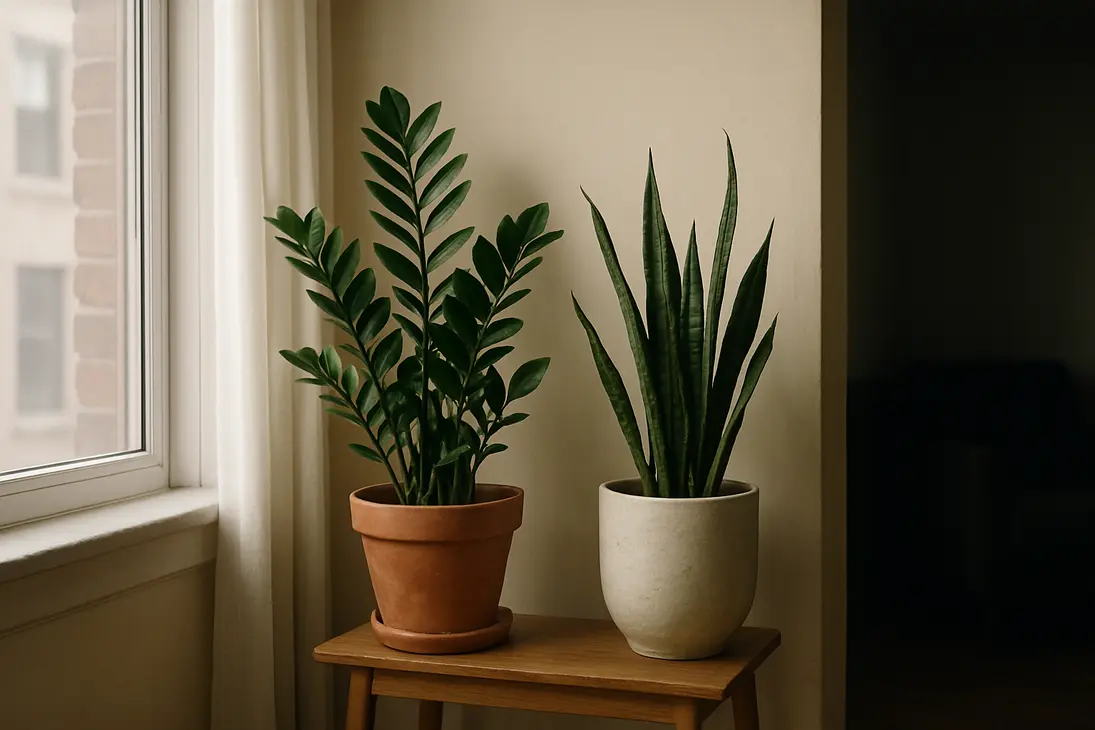
Different plants need different dryness levels. Snake plants, ZZ plants, succulents, and cacti should dry more thoroughly. Ferns, peace lilies, and thin-leaved tropicals prefer not to become bone dry.
Water deeply, but less often
Small daily sips keep the surface damp, encourage fungus gnats, and may leave deeper roots dry. For pots with drainage holes, water until excess runs from the bottom. Let the pot drain fully, then empty the saucer.
After that, wait until the plant actually needs water again. In a warm, bright room this may be a few days. In a cool, dim room it may be two weeks or more.
A simple rule: water based on dryness, not the calendar.
Use nursery pots inside decorative planters
Many decorative pots lack drainage. A cheap solution is to keep the plant in its plastic nursery pot and place that inside the decorative outer pot.
This lets the plant drain properly, protects furniture, and makes it easy to lift the inner pot out for watering. It also lets you check whether water is pooling inside the outer planter.
If the nursery pot sits too low, place a small overturned saucer, plastic lid, or pebbles underneath it. Make sure the inner pot is not sitting in standing water.
What to do if your planter has no drainage hole
Plants can survive in no-drainage pots, but the margin for error is smaller because water can collect at the bottom.
If you must plant directly into one:
- Use an airy mix with perlite, bark, or coco coir.
- Add water slowly and sparingly.
- Stop before the soil is fully saturated.
- Wait longer between waterings.
- Avoid no-drainage pots for succulents, cacti, or struggling plants.
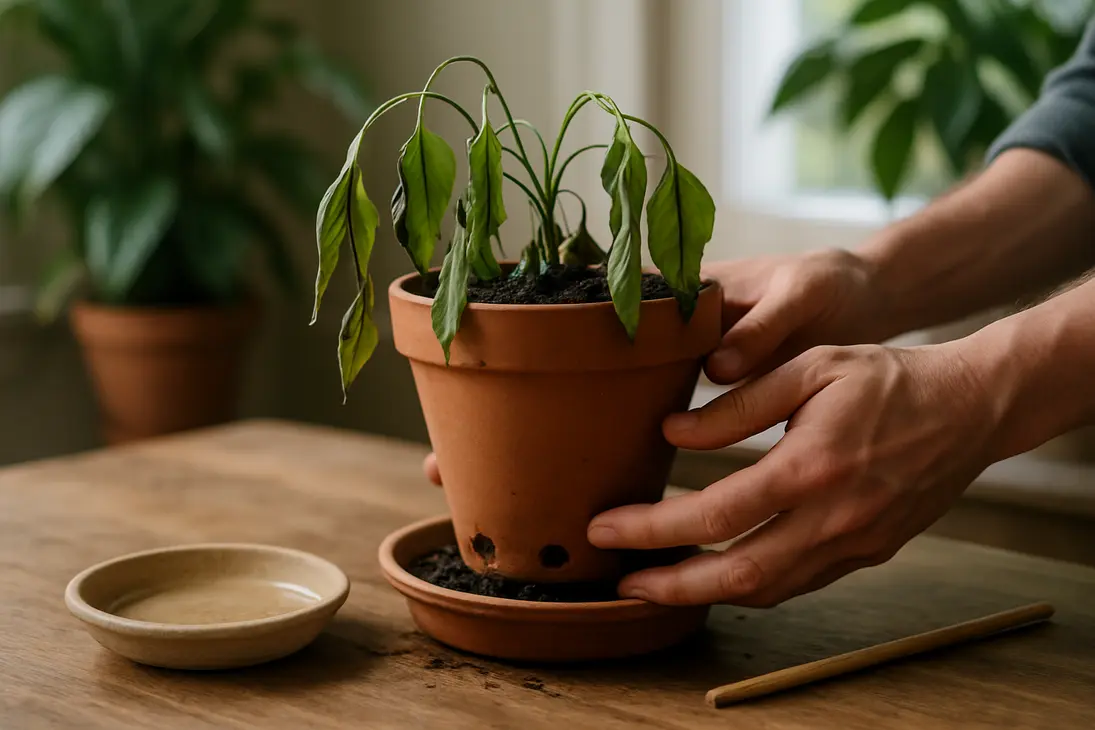
A rock layer at the bottom does not replace a drainage hole. It can create a hidden water reservoir and reduce usable soil. When possible, use the no-hole pot as a cachepot instead.
Budget Soil, Feeding, and Repotting Fixes
Good indoor plant soil holds some moisture while leaving air around roots. Cheap potting mixes can work well if you improve their structure.
Improve cheap potting mix with perlite, bark, or coco coir
If a mix stays wet for many days, turns dense and muddy, or shrinks away from the pot, improve it before blaming the plant.
Useful low-cost amendments:
- Perlite: adds air and drainage for most houseplants.
- Orchid bark: creates chunky structure for aroids such as monstera, pothos, and philodendron.
- Coco coir: holds moisture while staying lighter than dense peat.
- Pumice: adds drainage and weight for succulents, cacti, and top-heavy plants.
A practical all-purpose blend is 2 parts potting mix to 1 part perlite. Add bark for chunky tropical plants. Use a grittier mix for succulents and cacti.
Avoid garden soil indoors. It compacts in containers, drains poorly, and may bring pests or weed seeds.
Repot only when the plant actually needs it
Repotting can help, but doing it too often stresses plants. Oversized pots also hold extra wet soil, raising the risk of root rot.
Repot when roots circle tightly, grow through drainage holes, water runs straight through a packed root ball, soil dries extremely fast, growth stalls during the growing season, or the plant becomes unstable.
Usually move up only one pot size, about 1–2 inches wider for small to medium plants. Spring or early summer is best for routine repotting. Repot urgently at any time if soil is sour, pests are severe, or roots are rotting.
Use diluted fertilizer instead of “more is better”
Fertilizer supports growth, but it cannot fix poor light, bad soil, or root rot. In dim conditions, plants use nutrients slowly, and extra fertilizer can leave salts that damage roots.
Use a balanced houseplant fertilizer at half strength during active growth. Many indoor plants need light feeding in spring and summer and little or none in winter.
Do not fertilize a severely wilted plant, a plant with suspected root rot, a newly repotted plant in fresh fertilized mix, or a plant sitting in very low light and not growing.
If you see white crust on the soil or pot rim, flush the pot thoroughly if it has drainage. For pots without drainage, replace the crusty top layer and reduce feeding.
Reuse containers safely after cleaning them
Reusing pots saves money, but clean them first, especially if the previous plant had pests, disease, or root rot.
Remove old soil and roots, scrub with warm soapy water, rinse well, disinfect if needed, and let the pot dry before refilling. Plastic nursery pots, ceramic planters, and terracotta can all be reused.
Homemade Pest Control and Gnat Prevention
Indoor pests are easiest to manage early. Fungus gnats are especially common because their larvae thrive in damp organic soil.
Let the top layer of soil dry out
Fungus gnats look like tiny dark flies around the pot or soil surface. They often mean the surface is staying too wet.
Let the top 1–2 inches dry before watering again unless the plant truly needs constant moisture. You can also remove the top half-inch of old soil and replace it with fresh, dry mix. A thin layer of coarse sand or fine pumice may make the surface less inviting, but it will not help if the whole pot remains wet.
Use sticky traps for adult gnats
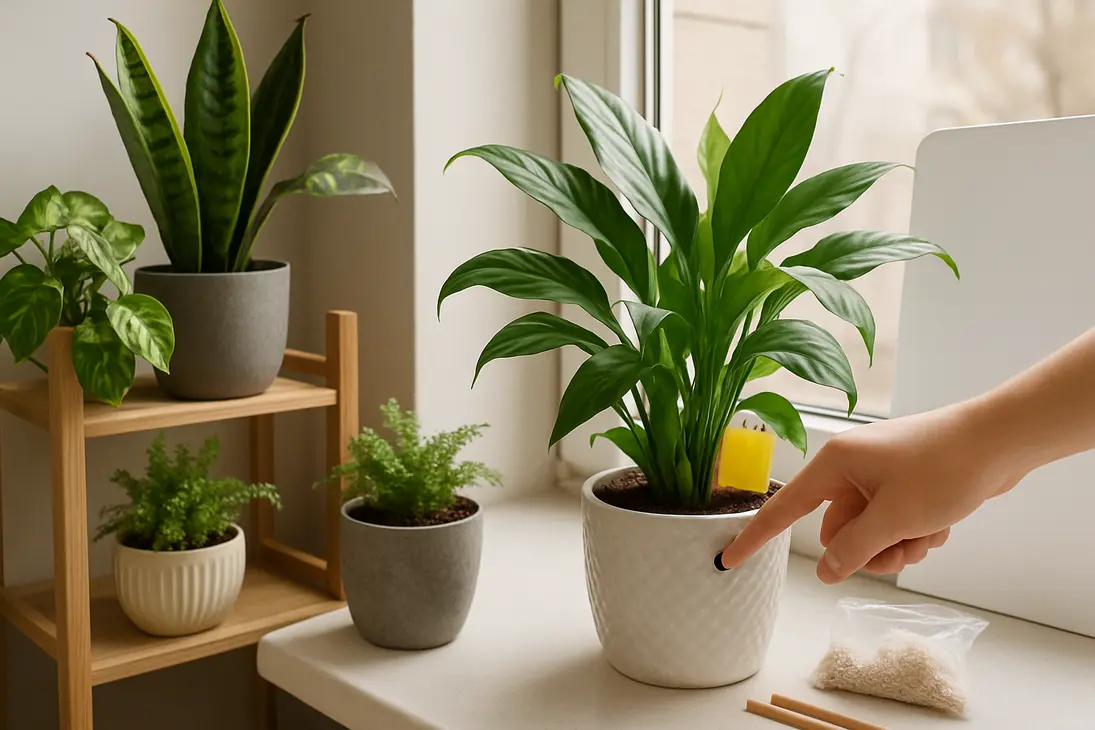
Yellow sticky traps are cheap and useful for monitoring. Place them near the soil surface and replace them when covered or dusty.
They work best with better watering habits: let the top soil dry, avoid daily sips, remove dead leaves from pot surfaces, and check nearby plants. Traps catch adults, but they do not kill larvae in the soil.
Try bottom watering to reduce damp surface soil
Bottom watering moistens the root zone while keeping the top layer drier, which can help with fungus gnats.
Place the nursery pot in a bowl or tray with a few inches of water. Let it absorb water through the drainage holes, then remove it once the pot feels heavier or the soil surface is slightly moist. Let it drain fully before returning it to the outer planter.
Do not leave plants soaking all day. Also top water occasionally if the pot has drainage, because salts can build up near the soil surface.
Isolate new or infested plants early
A bargain plant can become expensive if it brings pests into your collection. Isolate new plants for a week or two when possible, especially clearance, grocery store, or outdoor-display plants.
Check leaf undersides, new growth, stems, nodes, soil surfaces, and drainage holes. If you find pests, move the plant away from others, wipe leaves, prune badly infested growth if needed, and treat gently. Repeated cleaning and isolation often matter more than one harsh treatment.
Low-Cost Plant Care Hacks for Travel and Busy Weeks
Most established houseplants tolerate a short dry period better than constant sogginess. Before travel, reduce water loss and add backup moisture only where needed.
Group plants to slow moisture loss
Grouping plants creates a slightly more humid pocket of air and makes pre-trip care easier. Water only plants that are actually ready, group similar plants together, and keep them away from heaters, vents, and drafty doors.
Do not group an infested plant with healthy ones.
Make a simple wick-watering setup
A wick system is cheap and useful for moisture-loving plants in pots with drainage. It is not ideal for succulents or plants that need to dry out.
Use cotton cord, nylon cord, or a strip of absorbent fabric. Place one end a few inches into the soil and the other end in a jar or bowl of water. Set the water container level with or slightly above the pot.
Test the setup for several days before relying on it. Some wicks move water too quickly; others barely work. For short trips, many plants only need a thorough watering, full drainage, and a cooler bright spot out of harsh sun.
Use a pebble tray or humidity tray where helpful
A pebble tray can slightly raise humidity and protect surfaces, but it is not a substitute for watering.
Fill a shallow tray with pebbles, add water below the top of the pebbles, and set the pot on top. The pot should sit above the waterline, not in standing water.
Pebble trays are most useful for ferns, calatheas, fittonias, and other thin-leaved tropicals. They are not very useful for snake plants, ZZ plants, succulents, or cacti.
Move plants out of harsh direct sun before leaving
A plant that is fine in a sunny window while you are home may dry too fast while you are away. Before leaving for several days, move sensitive plants slightly back from hot glass or direct afternoon sun.
Choose bright, indirect light rather than deep shade. This is especially helpful for small pots, recently repotted plants, ferns, thin-leaved tropicals, terracotta pots, and plants near west-facing windows.
If possible, move plants a day or two early so you can spot wilting before you leave.
Conclusion
The best low-cost indoor plant hacks are simple: brighter placement, reflected light, careful watering, airy soil, sensible feeding, early pest control, and basic travel routines.
If a plant looks unhappy, check the cheap causes first. Is it getting enough light? Is the soil staying wet too long? Does the pot drain? Is the mix compacted? Are pests hiding under leaves or in damp soil?
Most houseplants recover best when you change one or two conditions at a time and watch their response. Good plant care is less about spending more and more about noticing what the plant is telling you.
FAQ
Should indoor plants be watered every day?
Usually, no. Most indoor plants should not be watered daily because constantly damp soil can cause root rot and fungus gnats. Check the soil first and water when it has dried to the level that plant prefers.
Can indoor plants survive in pots without drainage holes?
Yes, some can, but it is riskier. Excess water can collect at the bottom and suffocate roots. Use an airy mix, water sparingly, and avoid no-drainage pots for plants that hate wet soil. The safer method is to keep the plant in a nursery pot with drainage inside the decorative planter.
How do I get rid of tiny flies or gnats in houseplant soil?
Let the top 1–2 inches of soil dry between waterings, use yellow sticky traps, remove dead leaves from the soil surface, and consider bottom watering temporarily. Sticky traps help, but the real fix is usually reducing damp surface soil.
What is the cheapest way to water plants while traveling?
For many houseplants, water thoroughly before leaving, let pots drain, group plants together, and move them out of harsh direct sun. For plants that need steadier moisture, use a wick-watering setup with cord and a jar of water. Test it before your trip.
You Might Also Like