How Much Light and Moisture Do Different Cacti Need?
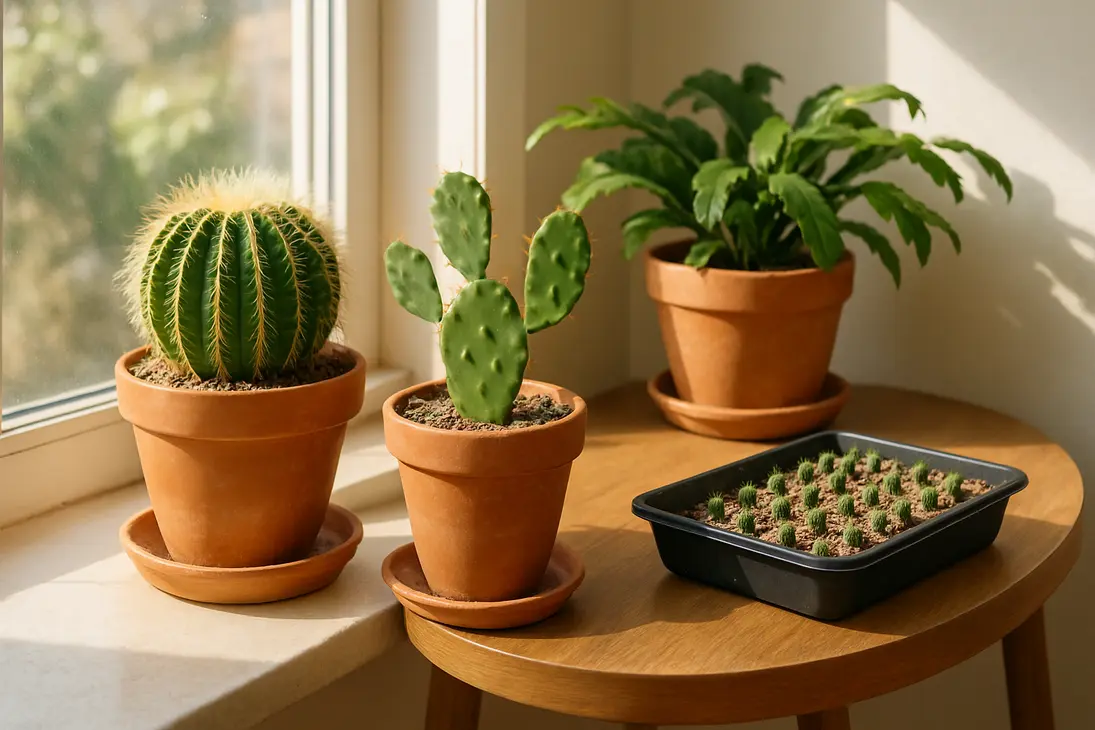
Getting light and moisture for cacti right is less about following a fixed calendar and more about matching the plant to its natural habits. Many cacti come from dry, bright regions, but not all live in open desert sun. Some grow in forests, under shrubs, or in filtered light.
Most cacti prefer strong light, fast-draining soil, and deep watering followed by a dry period. The exact balance depends on cactus type, season, pot, soil, and growing conditions.
Cacti Don’t All Need the Same Conditions
A desert barrel cactus, a holiday cactus, and a tray of seedlings should not be treated the same way. Their needs differ because they evolved in different habitats.
The biggest mistake is assuming “cactus” means “never water” or “put in the hottest sun available.” Cacti are drought-adapted, not drought-proof, and even sun-loving species can burn if moved too quickly from shade to direct summer sun.
Desert cacti
Desert cacti include barrel cacti, prickly pears, many Mammillaria, Echinocactus, Ferocactus, Echinopsis, and columnar types. These usually want the brightest conditions you can reasonably provide, especially indoors.
Most desert cacti do best with:
- Several hours of direct sun or very bright light daily
- A gritty, fast-draining potting mix
- Thorough watering during active growth, followed by a full or near-full dry-down
- Much less water in cool, low-light winter conditions
Outdoors, many desert cacti can handle full sun once acclimated. Indoors, a south-facing or very bright west-facing window is often best in the Northern Hemisphere. High light increases water use, so a cactus in a hot outdoor pot may need water far more often than the same plant indoors.
Forest cacti
Forest cacti, such as Christmas cactus, Thanksgiving cactus, Easter cactus, and many epiphytic jungle cacti, prefer filtered light rather than harsh desert exposure.
These cacti usually prefer:
- Bright indirect light or gentle morning sun
- More consistent moisture than desert cacti
- A well-aerated mix that drains quickly
- Protection from hot afternoon sun
Forest cacti still dislike soggy roots, but they are less tolerant of long droughts than many desert types. Their flattened stems may wrinkle or droop if kept too dry, especially while budding or flowering.
Seedlings and newly bought cacti
Seedlings have small root systems and less stored water, so they usually need bright filtered light and more even moisture than mature plants. They dry out quickly, but they can also rot quickly in heavy, wet soil.
Newly purchased cacti also need adjustment time. A plant grown in a greenhouse, shipped in a box, or displayed under store lighting can sunburn if placed immediately outside in full sun.
For new plants:
- Keep them in bright light, but avoid sudden harsh sun for the first week or two.
- Check the soil before watering; store plants may already be wet.
- Inspect for soft spots, pests, and compacted peat-heavy soil.
- Delay repotting if the plant is stressed, flowering, or recently soaked, unless the soil is staying wet too long.
Light Requirements for Common Types of Cacti
Most cacti need more light than typical leafy houseplants. A cactus several feet from a window may look decorative, but it may not receive enough energy to grow compactly.
A useful rule: desert cacti usually want direct sun or the brightest window you have, while forest cacti want bright but filtered light.
Full sun and bright direct light
Many desert cacti grow best with 4–6 or more hours of direct sun when properly acclimated. Outdoors, “full sun” generally means at least 6 hours of direct sunlight. Indoors, even a sunny window is weaker because glass, screens, roof overhangs, and short winter days reduce intensity.
Good placements for desert cacti include:
| Growing situation | Best placement | Notes |
|---|---|---|
| Indoors, bright home | South or southwest window | Rotate occasionally for even growth. |
| Indoors, limited sun | Brightest window plus grow light | Helpful in winter or shaded apartments. |
| Outdoors in summer | Morning sun first, then gradual increase | Acclimate over 1–2 weeks. |
| Very hot climates | Morning sun, light afternoon shade | Small pots can overheat. |
Direct sun supports compact growth, stronger spines, healthier color, and flowering in many species. But sudden exposure can burn plants that were indoors, shaded, dehydrated, root-damaged, or naturally more shade-tolerant.
Sunburn usually appears as pale, yellow, tan, or whitish patches on the sun-facing side. Severe burns become brown and scarred. Burned tissue will not turn green again, but the plant can keep growing if damage is limited.
Bright indirect light for forest cacti
Forest cacti generally prefer bright indirect light, similar to filtered light under a tree canopy. They can often handle morning or late afternoon sun, but hot midday or afternoon sun through glass may scorch them.
Good placements include:
- East-facing windows
- A few feet back from a bright south or west window
- Behind a sheer curtain
- A shaded porch with bright ambient light
- Grow lights that are not too close or intense
Too little light can cause weak, thin segments and poor flowering. Too much direct sun can turn stems yellowish, reddish, or scorched. Some reddish tint can also come from cool temperatures or dryness, so review the whole care situation.
Signs your cactus is getting too much or too little light
Cacti respond slowly, so light problems may develop over weeks or months. New growth is the best clue.
| Symptom | Likely light issue | What to do |
|---|---|---|
| Long, narrow, pale new growth | Too little light | Move gradually brighter or add a grow light. |
| Leaning toward window | One-sided or insufficient light | Rotate pot and increase brightness if needed. |
| Yellow, tan, or white patches | Sunburn or sudden light increase | Move to gentler light and acclimate slowly. |
| Reddish or purplish tint | Light, cool, or drought stress | Check sun, watering, and temperature. |
| No flowers on mature plant | Often low light or no seasonal rest | Increase light and review winter care. |
Do not try to fix low light by watering or fertilizing more. A cactus in weak light cannot use water quickly, so extra moisture increases rot risk.
Moisture and Watering: How Often Is Enough?
The simplest reliable cactus watering method is: water thoroughly, then wait until the soil has dried before watering again. This is much better than giving tiny daily sips.
For desert cacti in pots, watering may range from every 1–3 weeks during warm active growth, but that is only a rough guide. A small clay pot in a sunny window may dry in days, while a large plastic pot in a cool room may stay damp for weeks. Forest cacti may need water a little more often, especially when growing or flowering, but still need air around their roots.
Instead of asking only “How often should I water?” check whether the plant is actively growing, whether the soil is dry below the surface, how warm and bright the location is, and whether the potting mix is gritty or dense.
Why twice-a-day watering is usually wrong for cacti
For mature cacti, watering once or twice a day is almost always wrong unless you are managing very young seedlings in a controlled propagation setup.
Mature cacti store water in their stems. Their roots need moisture after watering, but they also need oxygen. Constant wetness pushes air out of the root zone and encourages root death and rot.
A better method is deep watering:
- Water evenly until water runs from the drainage holes.
- Let the pot drain completely.
- Empty any saucer.
- Wait until the mix has dried appropriately before watering again.
For desert cacti, that usually means dry all the way down. For forest cacti, it often means mostly dry, but not bone-dry for long periods during active growth.
How to check soil moisture before watering
The surface can look dry while the lower pot remains damp, especially in plastic pots or dense mixes.
Useful checks include:
- Finger test: If the mix feels cool and damp below the surface, wait.
- Wooden skewer test: Insert a dry skewer or chopstick for several minutes. If it comes out damp or with soil clinging, wait.
- Pot weight: A dry pot feels noticeably lighter than a freshly watered one.
- Moisture meter: Helpful as a rough aid, but unreliable in some gritty mixes.
- Drainage observation: If water runs down the pot edges while the root ball stays dry, the mix may be hydrophobic or compacted.
Use a calendar only as a reminder to check, not as an automatic watering schedule.
Seasonal watering: active growth vs dormancy
Cacti use more water when actively growing in warmth and bright light. They use much less in cool, dim conditions.
During active growth, often spring through early autumn:
- Water deeply when the soil dries.
- Provide strong light.
- Expect faster drying in warm weather.
- Watch small pots closely.
During dormancy or slow growth, often late autumn through winter indoors:
- Water much less often.
- Keep desert cacti drier, especially in cool rooms.
- Avoid fertilizing plants that are not actively growing.
- Be especially cautious with cold, wet soil.
Forest cacti can differ because some bloom in cooler seasons. They may need modest moisture while budding and flowering, but never soggy soil. Let the top portion of the mix dry before watering again.
Soil, Pots, and Drainage Matter as Much as Watering
Watering advice only works if the soil and pot allow moisture to move properly. A cactus in dense, water-retentive soil can rot even if watered infrequently. A cactus in a gritty, breathable mix may tolerate more frequent watering because excess water drains away and roots receive oxygen.
This is why two people can water on the same schedule and get different results: their pots, soil, light, temperature, and humidity may be very different.
What a good cactus mix should do
A good cactus mix should hold enough moisture for roots to absorb water, then dry quickly enough that the root zone does not stay wet for days. It should also resist compaction.
Useful ingredients include:
- Pumice
- Perlite
- Coarse sand or grit
- Fine bark
- Lava rock
- Commercial cactus/succulent potting mix as a base
For many desert cacti, improve bagged cactus mix by adding extra pumice or perlite. Many commercial mixes are still fairly peat-based and can hold too much water indoors.
Forest cacti usually prefer a somewhat more organic but still airy mix. Fine bark, perlite, and some potting mix can work well.
Why regular potting soil can hold too much moisture
Regular potting soil is designed for leafy plants that often prefer more consistent moisture. It may contain peat, compost, coir, or fine materials that hold water well. That is risky for desert cacti, especially indoors.
Dense soil can:
- Dry slowly in the center of the pot
- Compact around roots
- Reduce air space
- Become hydrophobic when very dry
- Increase root rot risk in low light or cool temperatures
Seed-starting mix is also not a good long-term medium for mature cacti because it is fine-textured and moisture-retentive. Garden soil is usually worse in pots because it can compact, drain poorly, and introduce pests or pathogens.
Pot choice and drainage holes
Always use a pot with drainage holes for cacti. A decorative cachepot can work only if the cactus is in a separate inner pot that is removed for watering.
| Pot type | Benefits | Cautions |
|---|---|---|
| Terracotta/clay | Breathable, dries faster | May dry too fast outdoors in heat. |
| Plastic | Lightweight, holds moisture longer | Easier to overwater in low light. |
| Glazed ceramic | Attractive, moderate moisture retention | Must have drainage; can dry slowly. |
| Oversized pots | More room eventually | Excess soil stays wet around small roots. |
Choose a pot only slightly larger than the root ball. Cacti often do better somewhat snug than in excess soil. After repotting, wait a few days before watering if roots were disturbed, especially with desert cacti.
Light and Moisture Problems: What Your Cactus Is Telling You
Cacti show stress slowly, and the same symptom can have more than one cause. Shriveling may mean underwatering, root loss from overwatering, or soil that is too compacted for roots to function.
Look at the whole situation: recent watering, soil type, drainage, light, temperature, and whether the plant is firm or soft.
Signs of underwatering
An underwatered cactus is usually still firm but may look thinner, wrinkled, or deflated. Ribs on barrel or columnar cacti may become more pronounced. Pads may wrinkle. Forest cactus segments may droop or pucker.
Likely signs include:
- Wrinkled but firm stems
- Dry soil pulling away from the pot edge
- Very light pot
- Slow growth during active season
- Limp but not mushy forest cactus segments
To correct underwatering, water thoroughly and let the pot drain. Do not water repeatedly every few hours. Give the plant time to rehydrate.
If water runs straight through a very dry peat-heavy mix, soak the pot briefly from below or water in stages. Once the plant is stable, consider repotting into a better-draining mix.
Signs of overwatering
Overwatering is more dangerous than underwatering because roots can be damaged before the top looks bad. By the time a cactus turns soft or collapses, rot may be advanced.
Warning signs include:
- Soft, mushy, or translucent tissue
- Yellowing from the base upward
- Black or brown soft spots
- Sour or swampy soil smell
- Fungus gnats around damp soil
- Shriveling despite wet soil
- Brown, slimy, or hollow roots
If you suspect overwatering, stop watering and inspect the roots. Remove the plant from wet, dense soil. Trim dead or mushy roots with clean tools, let the plant dry and callus, then repot into dry, fast-draining mix. Do not water immediately after major root trimming.
If rot has entered the stem, saving the plant may require cutting above the rot into healthy tissue, letting the cutting callus, and rerooting it.
Signs of poor light exposure
Poor light often causes distorted new growth rather than sudden collapse. A cactus may survive in low light for a long time but slowly lose its natural shape.
Signs of too little light include:
- Thin, stretched growth
- Pale green new growth
- Leaning toward the window
- Wide spacing between areoles or segments
- Failure to flower in mature plants
- Soil staying wet too long
Stretched growth will not thicken back to normal. Increase light gradually to improve future growth. Some stretched sections can be pruned or used as cuttings, depending on the cactus.
Signs of too much light or sudden exposure include:
- Bleached patches
- Yellowing on the sun-facing side
- Dry tan scars
- Reddish stress color
- Scorching after a move outdoors
Move sunburned plants to bright shade or gentler light, not a dark corner. They still need energy to recover.
Corking is different from rot. Older cacti may develop firm, tan, bark-like tissue near the base. Normal corking is dry, firm, and gradual. Rot is soft, spreading, and often discolored.
Conclusion
Most cacti do best with strong light, deep but infrequent watering, and a fast-draining mix in a pot with drainage holes. The right balance depends on the plant.
Desert cacti usually want the brightest light available and should dry thoroughly between waterings. Forest cacti prefer bright indirect light and slightly more regular moisture, though never soggy soil. Seedlings and newly purchased plants need gentler treatment and gradual adjustment.
If unsure, check the soil before watering, increase light gradually, and watch firmness, color, and new growth. Cacti are resilient when their roots have air, their stems have enough light, and watering follows the season rather than a rigid schedule.
FAQ
How often should I water a cactus indoors?
Most indoor desert cacti need water only when the soil has dried all the way through. In warm, bright conditions, that may be every 1–3 weeks. In winter or low light, it may be much less often.
Forest cacti usually need watering a little more often, especially while growing or flowering, but the mix should still partly dry. Always check the soil instead of watering on a fixed schedule.
Do cacti need direct sunlight every day?
Many desert cacti benefit from several hours of direct sun daily, especially indoors where light is weaker than outside. A south or very bright west window is often suitable.
Forest cacti do not need harsh direct sun every day. They usually prefer bright indirect light with perhaps some gentle morning sun. Any cactus moved from shade to direct sun should be acclimated gradually.
Can I use regular potting soil for a cactus?
Regular potting soil usually holds too much moisture for desert cacti, especially indoors. Use a cactus/succulent mix amended with pumice, perlite, grit, or similar drainage materials.
Forest cacti can tolerate more organic matter, but their mix should still be airy and quick-draining. Avoid dense garden soil and fine seed-starting mix as long-term cactus media.
Why is my cactus shriveling even though I water it?
Shriveling can happen for opposite reasons. The cactus may be too dry, or its roots may be damaged from staying too wet and unable to absorb water.
Check the soil and roots. If the soil is bone-dry and the plant is firm, water deeply and let it drain. If the soil is damp and the cactus is shriveling, yellowing, or soft, suspect root rot. Remove it from the pot, inspect the roots, trim dead tissue if needed, and repot into a dry, fast-draining mix.
You Might Also Like