How Often Should You Water a Snake Plant?
Snake plant watering needs are much lower than many common houseplants. In most indoor homes, a snake plant needs water about every 2–6 weeks, but the right interval depends on light, temperature, humidity, pot size, soil mix, and season.
The safest rule is: water only after the soil has dried out.
Snake plants, also sold as Sansevieria or Dracaena trifasciata, store water in their thick leaves and tolerate dry periods well. They are much more likely to suffer from too much water than too little. If you are unsure whether to water today or wait, waiting a few more days is usually safer.
Snake Plant Watering Needs at a Glance
Use this as a starting point:
| Growing condition | Typical watering frequency |
|---|---|
| Bright indirect light, warm room, fast-draining soil | Every 2–3 weeks |
| Medium light, average indoor temperature | Every 3–4 weeks |
| Low light, cool room, large pot, moisture-retentive soil | Every 4–6 weeks or longer |
| Winter or very low growth period | Often every 4–8 weeks |
| Outdoors in warmth and brighter light | May need water more often, depending on rain and heat |
These are baselines, not fixed rules. A snake plant in a small terracotta pot near a bright window may dry quickly, while the same plant in a large glazed pot in a dim corner may stay damp for weeks.
The goal is to water deeply when needed, then let the potting mix dry before watering again.
Why Snake Plants Need Less Water Than Many Houseplants
Snake plants are drought-tolerant succulents. Their firm, fleshy leaves hold moisture, which helps them handle dry spells and occasional neglect.
They also grow slowly indoors, especially in lower light. A slow-growing plant uses water slowly. If the potting mix stays wet while the plant is not using much moisture, the roots sit in low-oxygen conditions, and root rot becomes a real risk.
A snake plant does not want evenly moist soil like a fern or peace lily. It needs a dry-down period between waterings.
The “Dry Soil First” Rule
The simplest snake plant watering rule is:
Do not water until the soil is dry at least several inches down, and preferably dry through most of the pot.
For small pots, the top half or more of the soil should be dry. For large pots, check deeper because the surface can look dry while the root zone remains wet.
A dry surface alone is not enough. Indoor potting mix often dries from the top down, especially in large pots, plastic pots, decorative cachepots, or dense soil mixes.
If you want a practical routine, check your snake plant every 2–3 weeks, but only water if the soil is truly dry.
How to Tell When Your Snake Plant Needs Water
A snake plant tells you more through its soil and leaves than through a calendar. Before watering, check the potting mix, the weight of the pot, and the condition of the leaves.
A dry plant may look slightly wrinkled or less firm. A plant sitting in wet soil may yellow, soften, collapse, or develop mushy spots. Because symptoms can overlap, confirm with the soil before acting.
Check the Soil Before Watering
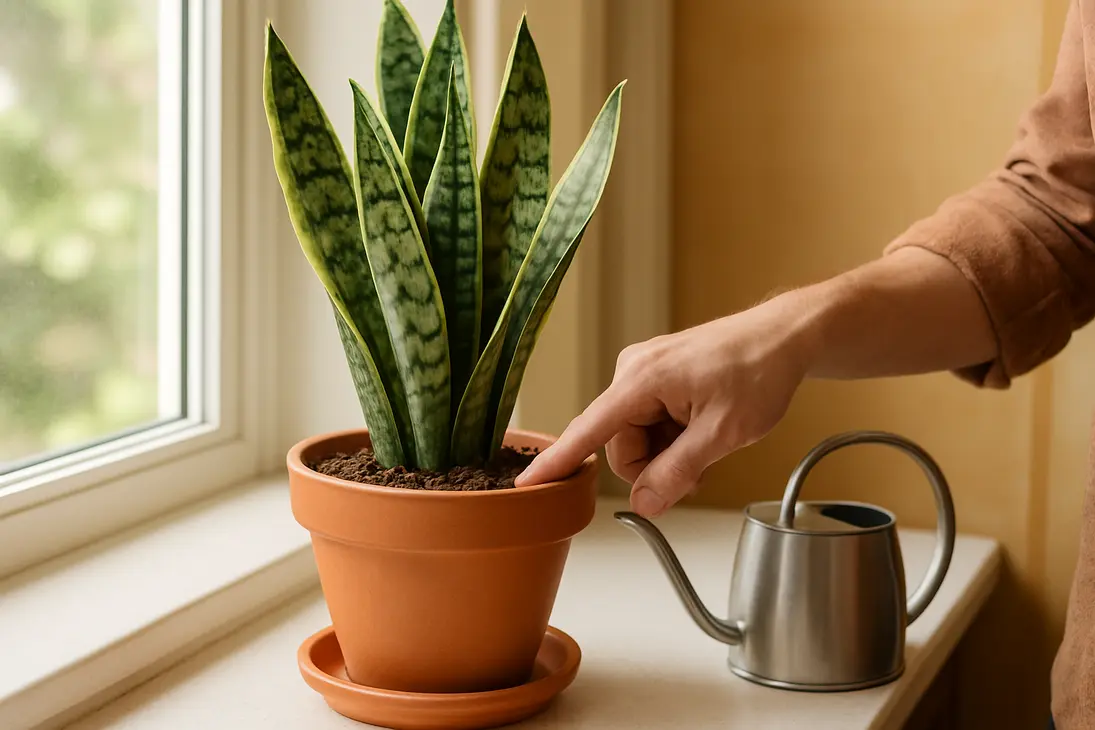
The best way to decide whether to water is to physically check the soil.
Try one or more of these methods:
-
Finger test
Push your finger 2–3 inches into the soil. If it feels cool or damp, wait. -
Wooden skewer or chopstick test
Insert a dry wooden skewer deep into the pot, leave it for a minute, then pull it out. If soil clings to it or the wood looks damp, the lower pot still has moisture. -
Pot weight test
Lift the pot after watering and again when dry. Over time, you will learn how light the pot feels when it is ready for water. -
Moisture meter, used cautiously
Moisture meters can help in deep pots, but they are not perfect. Use them as a guide, not the only decision-maker.
For snake plants, the lower part of the pot matters most. If the top inch is dry but the bottom is still damp, watering again can keep roots wet for too long.
Watch for Signs of Underwatering
Snake plants are tough, so mild underwatering is usually easy to correct. A thirsty snake plant may show:
- Slightly wrinkled or puckered leaves
- Leaves that feel thinner or less firm than usual
- Curling or folding leaves
- Dry, crispy leaf tips or edges
- Soil pulling away from the sides of the pot
- Very slow growth during the growing season
A slightly thirsty snake plant often perks up after a proper watering. However, do not respond to every brown tip by watering more. Brown tips can also come from old damage, inconsistent care, mineral buildup, cold drafts, physical injury, or low humidity.
If the soil is bone dry and the leaves are wrinkled, water thoroughly. If the leaves look poor but the soil is damp, do not water; check for overwatering or root problems instead.
Adjust for Light, Temperature, Humidity, and Season
A fixed watering schedule fails because indoor conditions vary. The same snake plant may need water every two weeks in one home and every six weeks in another.
| Factor | How it changes watering needs |
|---|---|
| Bright indirect light | Plant grows and uses water faster |
| Low light | Soil dries slowly; water less often |
| Warm temperatures | More evaporation and plant activity |
| Cool temperatures | Slower drying and slower growth |
| Dry indoor air | Soil may dry faster, especially in small pots |
| High humidity | Soil may stay moist longer |
| Summer growth | May need more frequent watering |
| Winter rest | Usually needs much less water |
Low light is one of the most common reasons snake plants get overwatered. They can tolerate dim rooms, but they use far less water there. In spring and summer, longer days and active growth may make the plant dry faster. In fall and winter, cooler rooms and shorter days can stretch the watering interval by several weeks.
How to Water a Snake Plant the Right Way
When your snake plant is ready, water it properly rather than giving it tiny sips. Deep watering followed by a full dry-down encourages healthier roots and reduces uneven moisture in the pot.
The basic method is simple: soak the soil, let excess water drain out, then leave the plant alone until the soil dries again.
Water Thoroughly, Then Let It Drain
To water a snake plant correctly:
- Move the pot to a sink, tub, or protected surface.
- Pour water evenly over the soil surface until water runs from the drainage holes.
- Wait a few minutes and let the pot drain fully.
- Empty any saucer or outer decorative pot.
- Do not water again until the soil dries.
This hydrates the root ball evenly. Small splashes may wet only the top layer while leaving deeper roots dry, making it harder to judge moisture later.
Use room-temperature water if possible. Aim for the soil rather than pouring water into the center of a tight leaf rosette, where it may sit between leaves in cool or low-light conditions.
Use a Pot With Drainage Holes
A pot with drainage holes is strongly recommended for snake plants. Without drainage, excess water has nowhere to go, and the lower soil can remain saturated long after the surface feels dry.
If you love a decorative pot with no hole, use it as a cachepot: keep the snake plant in a nursery pot with drainage, set that inside the decorative container, and remove it for watering. After it drains, place it back.
Also check that drainage holes are not blocked by compacted soil, roots, foil wrapping, or a tight-fitting saucer.
Reduce Watering in Winter or Low Light
In winter, many indoor snake plants slow down. Lower light, cooler rooms, and less active growth all reduce water use. If you keep watering on a summer schedule, the plant may sit damp for too long.
During winter or in low-light spaces:
- Expect the interval to stretch to 4–8 weeks in many homes.
- Check the soil before every watering.
- Avoid watering late in the day if the room gets cold at night.
- Keep the plant away from cold windowsills and drafts.
- Be extra cautious with large pots and dense soil.
If your snake plant is in a bright, warm room under grow lights, it may still use water regularly. Again, the soil decides.
Signs Your Snake Plant Is Overwatered
Overwatering is the most common serious snake plant problem. It usually does not mean you gave the plant too much water once. It means the roots stayed wet for too long, often because of frequent watering, poor drainage, dense soil, an oversized pot, low light, or cool temperatures.
Early overwatering can sometimes be corrected by letting the soil dry. Advanced overwatering can lead to root rot, leaf collapse, and plant loss.
Yellowing or Mushy Leaves
Common signs of an overwatered snake plant include:
- Yellowing leaves, especially near the base
- Soft, mushy, or water-soaked leaf sections
- Brown or black soft spots
- Leaves that flop, collapse, or detach at the soil line
- A sour or rotten smell from the pot
- Soil that stays wet for many days or weeks
- Fungus gnats around consistently damp soil
- Wilting even though the soil is wet
The confusing part is that an overwatered snake plant may look wilted, which makes some people water again. But if the roots are damaged, the plant cannot take up water properly even though the soil is wet. More water makes the problem worse.
If you see yellowing and mushiness together, stop watering and check the root zone.
Soft, Black, or Rotting Roots
Healthy snake plant roots are generally firm. Depending on the plant and soil, they may look white, tan, orange, or light brown. Rotting roots are usually soft, dark, slimy, hollow, or foul-smelling.
To inspect roots:
- Slide the plant gently out of its pot.
- Brush away some soil from the root ball.
- Look for soft, black, mushy, or smelly roots.
- Trim clearly rotten roots with clean scissors or pruners.
- Remove severely damaged leaves or leaf sections.
- Repot into fresh, fast-draining mix and a pot with drainage.
If the base of the plant is mushy and rotting, saving the whole plant may not be possible. However, firm, healthy leaf sections can sometimes be propagated if rot has not spread too far.
Why Overwatering Is More Dangerous Than Underwatering
Underwatering usually causes stress slowly. The plant uses stored moisture, leaves may wrinkle, and growth may pause. In many cases, a thorough watering restores the plant.
Overwatering can damage roots quickly because roots need oxygen as well as moisture. Saturated soil pushes out air, creating conditions where roots decline and rot organisms can take hold. Once the root system is badly damaged, the plant may be unable to recover even if you stop watering.
That is why snake plant care is best approached with restraint. A dry snake plant can usually wait. A rotting snake plant needs intervention.
Soil and Pot Conditions That Affect Watering
Snake plant watering needs are strongly shaped by the pot and soil. Two people can water on the same schedule and get different results because one plant drains freely while the other sits in heavy, wet mix.
If you repeatedly struggle with yellowing leaves, soggy soil, or root rot, the solution may not be “water less” alone. You may need a better potting mix, a smaller pot, or improved drainage.
Best Soil Mix for Snake Plants
Snake plants do best in a loose, fast-draining potting mix. A cactus or succulent mix is often a good starting point, though some commercial mixes still hold more water than ideal indoors.
A practical mix might include:
- Cactus/succulent potting mix
- Perlite or pumice for aeration
- Coarse bark or similar chunky material for structure
- A modest amount of regular potting soil if needed for moisture retention
The goal is a mix that holds some moisture after watering but does not stay soggy. If water pools on the surface for a long time, or the soil feels dense and muddy days later, it is too heavy.
Avoid garden soil in indoor pots. It compacts easily, drains poorly in containers, and may bring pests or pathogens indoors.
If your plant is in low light or a cool room, lean toward a grittier, faster-draining mix. If your home is very dry and bright, a slightly more moisture-retentive mix may be workable.
How Pot Size Changes Watering Frequency
Pot size has a major effect on watering. A small root system in a large pot is a common setup for overwatering because the plant cannot use all the moisture held in the extra soil.
In general:
- Small pots dry faster and may need more frequent checks.
- Large pots dry slower and require more caution.
- Terracotta pots dry faster because the clay breathes.
- Plastic and glazed ceramic pots hold moisture longer.
- Deep pots can stay wet at the bottom even when the top looks dry.
When repotting, choose a pot only slightly larger than the current root ball, usually 1–2 inches wider in diameter for smaller and medium plants. Oversizing the pot makes watering harder.
Snake plants also tolerate being somewhat snug in their pots. They do not need frequent repotting unless they are crowded, unstable, breaking the pot, or the soil has degraded.
When to Repot an Overwatered Snake Plant
Repotting is helpful when the current conditions are keeping the plant too wet. Consider repotting if:
- The soil remains damp for more than a week or two indoors.
- The pot has no drainage hole.
- The plant is in dense, heavy soil.
- Roots smell rotten or feel mushy.
- Leaves are yellowing or collapsing at the base.
- The pot is much larger than the root ball.
If the soil is only slightly damp and the plant looks healthy, you may not need to disturb it. Simply wait longer between waterings.
For a seriously overwatered plant, remove it from the pot, trim rotten roots, discard soggy soil, and repot in fresh dry or barely moist fast-draining mix. Do not water immediately if the roots were very wet and damaged. Give the plant a short rest, then resume cautious watering once the mix has dried appropriately.
After repotting, place the plant in bright indirect light if possible. Better light helps the plant recover and use water more efficiently.
Conclusion
Snake plants should be watered only after the soil dries out. For many indoor homes, that means roughly every 2–6 weeks, with longer gaps in winter, low light, cool rooms, large pots, or moisture-retentive soil.
The best approach is to check the soil before watering, water thoroughly when it is dry, and let excess water drain away completely. Avoid letting the pot sit in water, and do not rely on a strict calendar.
If you are deciding between watering today and waiting, check the soil deeper in the pot. If there is still moisture, wait. Snake plants handle dry spells far better than soggy roots.
FAQ
How often should I water a snake plant indoors?
Most indoor snake plants need water about every 2–6 weeks. In bright, warm conditions with fast-draining soil, watering may be closer to every 2–3 weeks. In low light, winter, cool rooms, or large pots, it may be every 4–8 weeks.
Always check the soil first. Water only when the soil has dried out through most of the pot.
Can a snake plant go a month without water?
Yes. A healthy snake plant can often go a month without water, especially indoors in moderate or low light. Many can go longer in winter or cool conditions.
However, do not use “one month” as a fixed rule. A small plant in bright light may need water sooner, while a large plant in a cool, dim room may not be ready after a month.
What does an overwatered snake plant look like?
An overwatered snake plant may have yellowing leaves, mushy or soft leaf bases, brown or black soft spots, drooping leaves, soggy soil, a rotten smell, or roots that are dark, slimy, and soft.
If the plant is wilting but the soil is wet, do not water again. Check the roots and drainage.
Should I mist a snake plant?
No, misting is not necessary for a snake plant. These plants do not need high humidity, and misting does little to water the roots. In cool or low-light conditions, repeated moisture on leaves can also be unhelpful.
If the leaves are dusty, wipe them gently with a damp cloth instead. For watering, focus on the soil, not the foliage.
You Might Also Like