Do Holiday Cacti Need Complete Darkness to Bloom?
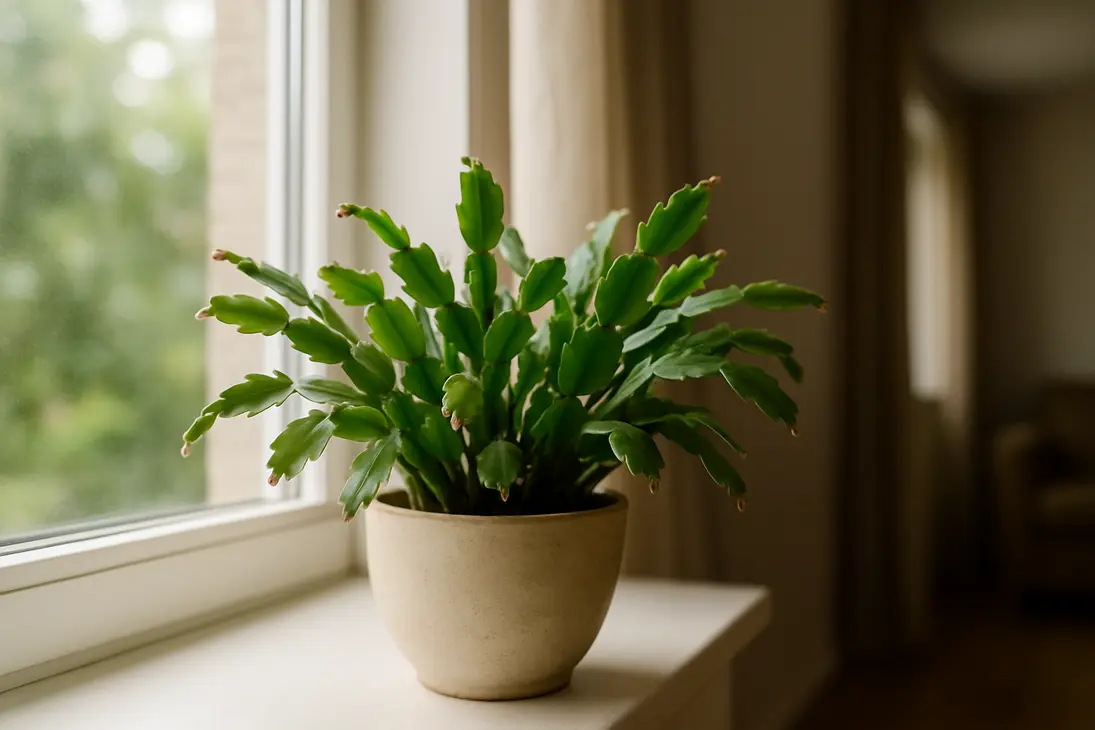
Holiday cacti do not need complete darkness all day to bloom. They should not be kept in a closet for 24 hours at a time. What they need is bright daytime light followed by long, uninterrupted nights.
For most Thanksgiving and Christmas cacti, aim for 12–14 hours of darkness each night for several weeks before buds form. The room does not have to be pitch-black, but the night period should not be repeatedly interrupted by lamps, grow lights, streetlights, or bright household activity.
In short: holiday cacti blooming light is about rhythm. Give the plant light by day, darkness by night, and consistency.
Do Holiday Cacti Need Complete Darkness?
No. Holiday cacti do not need complete darkness around the clock. They still need daytime light for photosynthesis, healthy growth, and enough stored energy to support buds.
Holiday cacti are forest cacti, not desert cacti. In nature, they grow in filtered light in humid environments, often attached to trees or rocks. Their bloom cycle responds mainly to long nights and often cooler temperatures.
The practical formula is:
- Daytime: bright, indirect light
- Nighttime: long, uninterrupted darkness
- Duration: usually 4–6 weeks before buds form
- Avoid: 24-hour darkness, hot direct sun, and erratic light schedules
If your plant is already in a room that becomes naturally dark after sunset, you may not need to do much. If it sits in a living room, kitchen, office, or window near a streetlight, nighttime light may need more control.
Darkness vs. “Uninterrupted Night”
“Complete darkness” and “uninterrupted night” are not the same. A holiday cactus does not need to be sealed in a black box. It needs a long, consistent period that functions as night.
A dim room with no direct artificial light is usually fine. A room where lights are switched on late into the evening is less reliable.
These can interrupt the night period:
- A lamp near the plant
- Bright room lights used late
- A grow light running too long
- Porch lights or streetlights through a window
- A television or computer screen close to the plant every night
One brief, dim exposure is unlikely to ruin the process. Repeated interruptions during bud setting are the bigger problem.
Why Short Days Help Holiday Cacti Set Buds
Thanksgiving and Christmas cacti are often called short-day plants, but they are really responding to long nights. As nights lengthen in fall, the plant receives a signal to shift from leafy growth toward bud formation.
Indoors, artificial light can blur that cue. If lamps stay on until 10 or 11 p.m., the plant may not sense that the season has changed.
Long nights help trigger buds, and cool nights can strengthen the signal. Darkness alone is not enough, though. The plant also needs bright daytime light to build the energy needed for flowers.
The Best Light Schedule for Holiday Cactus Buds
The best schedule is simple: provide bright indirect light during the day and 12–14 hours of uninterrupted darkness each night for several weeks.
| Time | What to Provide |
|---|---|
| Day | Bright indirect light |
| Night | Darkness or very dim conditions away from lamps |
| Bud-setting period | A consistent routine for several weeks |
Do not worry about exact minutes. Consistency matters more than perfection. A plant that gets 13 dark hours most nights is better off than one moved randomly between bright and dark rooms.
How Many Hours of Darkness They Need
Aim for 12–14 hours of uninterrupted darkness per night. Many growers use 14 hours for reluctant plants.
Useful schedules include:
- 6 p.m. to 8 a.m.
- 7 p.m. to 7 a.m.
- 8 p.m. to 8 a.m., if nights are cool and daytime light is strong
If your home stays active late, choose a spot that gets dark early and stays dark, such as a guest room, unused office, laundry room with a window, or cool bedroom.
Avoid keeping the plant dark all day. If its night location has no window, return it to bright indirect light each morning. Better yet, use one place where it can stay bright by day and dark by night.
How Many Weeks Before Blooms Appear
Most Thanksgiving and Christmas cacti need about 4–6 weeks of long nights to initiate buds. Some take longer if they are young, recently repotted, stressed, or kept too warm.
Once buds appear, keep care steady. Buds can drop if the plant is moved suddenly from a cool, stable room to a hot, dry spot near a heater, or if watering changes sharply.
| Goal | When to Start Long Nights |
|---|---|
| Thanksgiving bloom | Early to mid-September |
| Christmas bloom | Early to mid-October |
| Later winter bloom | November or later |
These dates are approximate. Variety, maturity, temperature, and household conditions all affect timing. Store-bought plants may also be greenhouse-scheduled, so their first bloom at home may not reflect their future pattern.
Thanksgiving, Christmas, and Easter Cactus Timing
“Holiday cactus” can refer to several similar-looking plants.
Thanksgiving cactus usually refers to Schlumbergera truncata. It often blooms in late fall and has pointed, claw-like stem segment edges.
Christmas cactus usually refers to Schlumbergera × buckleyi or related hybrids. It tends to bloom later and usually has more rounded or scalloped segments.
Easter cactus is different. It is commonly placed in Rhipsalidopsis or Hatiora, depending on classification, and typically blooms in spring. Its timing and care cycle are not identical to Thanksgiving and Christmas cactus care.
For Thanksgiving and Christmas cacti, long fall nights are the key light cue. Easter cactus usually needs patience through winter and may respond to cooler, somewhat restrained care before spring buds develop.
Best Daytime Light for a Blooming Holiday Cactus
Long nights work best when the plant also receives enough daytime light. A holiday cactus may survive in a dim room for years, but survival is not the same as strong blooming.
The ideal daytime exposure is bright but indirect. These plants are adapted to filtered forest light, not harsh desert sun.
Bright Indirect Light Is Ideal
Bright indirect light means the room is well lit, but the plant is not being scorched by hot direct sun for long periods.
Good placements include:
- An east-facing window with gentle morning sun
- A bright north-facing window
- A spot a few feet back from a south- or west-facing window
- A bright room with sheer curtains
- A shaded porch in mild weather, protected from midday sun
If growth is thin or weak, the plant may need brighter daytime light. If segments turn reddish, yellowish, wrinkled, or scorched, it may be getting too much light, heat, or dryness.
Morning Sun vs. Afternoon Sun
Morning sun is usually safer than afternoon sun. It is cooler and gentler, making an east window one of the best indoor locations.
Afternoon sun through south or west glass can be intense and hot. In winter, a little may be fine, but in warm rooms or hot climates it can stress the plant.
If you only have a bright south or west window, move the plant back from the glass, use a sheer curtain, or give it bright reflected light instead of direct rays. Watch for red, yellow, or scorched segments.
A slight bronze or red tint can be a stress response to strong light, cool temperatures, or dryness.
Signs Your Cactus Is Getting Too Much or Too Little Light
| Sign | Likely Issue | What to Do |
|---|---|---|
| Few or no buds | Nights too short or interrupted | Provide 12–14 dark hours |
| Long, weak growth | Too little daytime light | Move to brighter indirect light |
| Red or purplish segments | High light, cool stress, or dryness | Reduce harsh sun and check moisture |
| Yellow or scorched patches | Too much direct sun or heat | Filter light or move back |
| Buds dry up | Stress, dryness, heat, or sudden change | Stabilize care |
Change light gradually when possible. A plant moved suddenly from a dim corner into strong sun can scorch.
Indoor Light Problems That Can Stop Blooming
Indoor homes are not naturally seasonal. Lamps, screens, heaters, and decorative placements can interfere just when holiday cacti are trying to form buds.
If a cactus blooms well in one room but not another, the difference is usually nighttime darkness, daytime brightness, temperature, or stability.
Streetlights, Lamps, and TV Light at Night
Artificial light at night is a common reason holiday cacti fail to bloom. A window may look dark to you, but a streetlight, porch light, or security light may shine directly on the plant. Nearby lamps and overhead lights can also interrupt the dark period.
A television or computer screen across the room is usually weaker than a lamp beside the plant, but repeated bright exposure every night can still make the signal inconsistent.
If your plant will not bloom, check its spot after dark. Stand where the plant sits and look for direct light sources. If the area is not dark or very dim for 12–14 hours, move the plant or block the light.
Moving the Plant Too Often
Moving a holiday cactus is not always harmful, but frequent changes during bud set can cause problems. Each location may have different light, temperature, humidity, and airflow.
Avoid moving a cool, budding plant into a hot display room, shifting it from bright light to a dim decorative spot, or placing it near a heater, fireplace, or drafty door.
Once buds are visible, keep conditions steady. If you display the plant elsewhere, choose a spot with similar light and temperature, and avoid sudden extremes.
Using a Closet, Spare Room, or Covering Method
A closet can help, but it is not required. It works only if the plant gets bright light during the day and is moved into darkness at the same time each evening, then returned to light each morning.
A spare room with a bright window by day and darkness at night is usually easier and less stressful.
Covering the plant can also work. Use a breathable, opaque cover such as a cardboard box or dark cloth frame. Avoid plastic bags or tight coverings that trap moisture and heat.
A simple routine:
- Keep the cactus in bright indirect light during the day.
- Cover it or move it to darkness in early evening.
- Uncover it or return it to light in the morning.
- Repeat for 4–6 weeks.
- Once buds are well formed, keep care stable.
If Your Holiday Cactus Still Won’t Bloom
If the light schedule is right and the plant still will not bloom, look at the rest of its care. Blooming also depends on temperature, watering, maturity, pot size, recent repotting, and stress.
Cool Nights Help Bud Formation
Cool nights often help holiday cacti set buds. Many respond well to nighttime temperatures in the mid-50s to mid-60s Fahrenheit. They do not need freezing conditions and should be protected from frost.
Cool nights are especially helpful when indoor lighting is imperfect. A plant near a cool, dark window may bloom with little effort, while one in a warm, bright room may keep growing without setting many buds.
Avoid icy glass, freezing porches, and strong drafts. Cool and steady is better than cold and stressful.
Watering During Bud Set
Holiday cacti are not desert cacti, but they dislike soggy soil. During bud set, keep the mix lightly and evenly moist, allowing the upper part to dry somewhat before watering again.
Good watering habits include:
- Use a pot with drainage holes.
- Water thoroughly, then let excess drain.
- Do not leave the pot sitting in water.
- Check the mix before watering.
- Water less in cool, dark conditions.
- Avoid swinging from bone-dry to constantly wet.
Too much water can stress roots and cause rot, especially in cool conditions. Too little water can shrivel segments and cause bud drop. Slightly snug pots are often better than oversized pots that stay wet too long.
Bud Drop After Light or Care Changes
Bud drop often happens after the plant has already formed buds. It is usually caused by sudden stress.
Common causes include:
- Moving the plant from a cool room to a warm display area
- Letting the pot dry too much
- Overwatering after buds appear
- Hot air from heating vents
- Cold drafts near doors or windows
- Sudden low humidity
- Major changes in light or orientation
If buds drop, the plant is not ruined. Correct the conditions and keep caring for it. Many holiday cacti are long-lived and may bloom again in a later cycle.
The best prevention is consistency. Once buds appear, avoid changing everything at once. Keep bright indirect light, moderate moisture, and stable temperatures.
Conclusion
Holiday cacti do not need complete darkness all day to bloom. They need bright indirect light during the day and long, uninterrupted nights for several weeks. For Thanksgiving and Christmas cacti, aim for 12–14 hours of darkness each night during bud set.
If your plant is not blooming, first check for nighttime interruptions from lamps, grow lights, streetlights, or late-evening household activity. Then check cool nights, steady watering, enough daytime light, and stable conditions after buds form.
The easiest setup is a bright window in a room that naturally becomes dark and cool at night. No all-day closet treatment is required.
FAQ
Can holiday cacti bloom without total darkness?
Yes. They do not need total darkness all day. They need bright indirect daytime light and a long, uninterrupted dark period at night.
How long should I keep my holiday cactus in the dark each night?
Aim for 12–14 hours of uninterrupted darkness each night for about 4–6 weeks, or until buds are clearly forming.
Can indoor lights prevent a holiday cactus from blooming?
Yes. Lamps, overhead lights, grow lights, porch lights, and streetlights can interfere if they interrupt the plant’s night period.
Should I put my holiday cactus in a closet to make it bloom?
You can, but it is not always necessary. A bright spare room that stays dark at night is usually easier. If using a closet, use it only for the nighttime dark period and return the plant to bright indirect light every morning.
You Might Also Like