What Month Do Honey Mesquite Seedlings Grow Best in the Desert?
Best Month for Honey Mesquite Seedling Growth
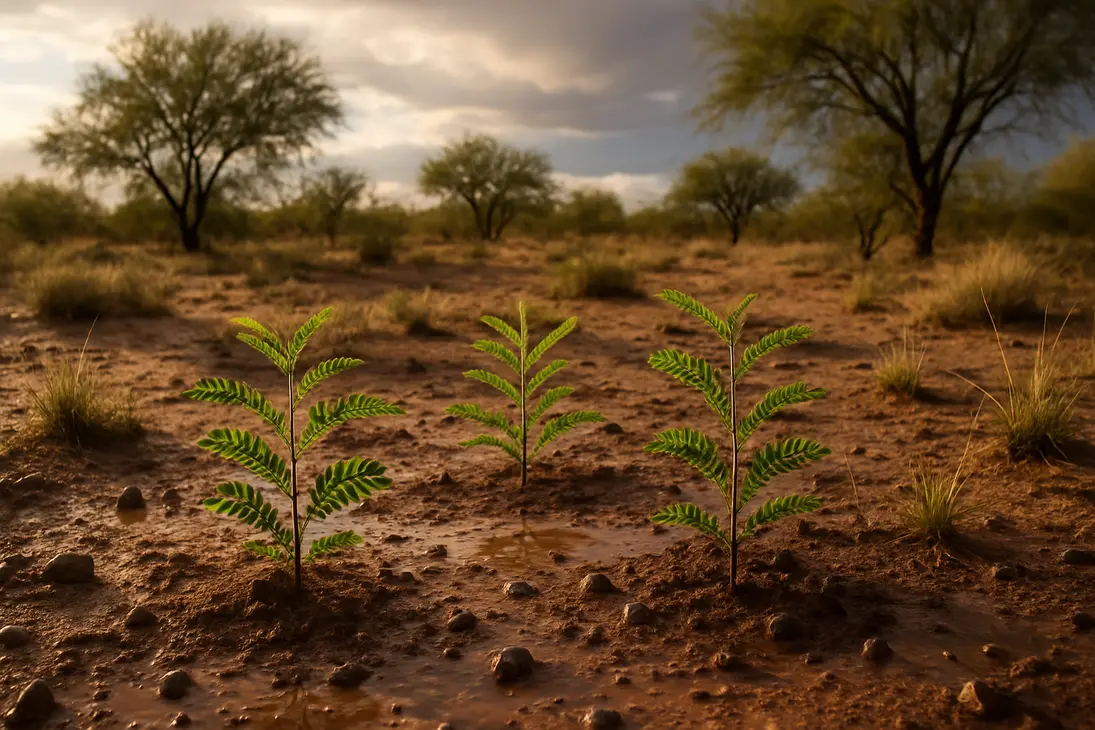
Honey mesquite seedling growth is usually strongest during the warmest wet part of the desert year. In many monsoon-influenced desert regions of the Southwest, that means July or August, when soil temperatures are high and summer rain temporarily relieves drought stress.
The calendar matters less than the combination of heat and usable moisture. A rainy July or August with warm nights can produce a clear flush of new leaves, stem growth, and root expansion. A hot, dry July may stall seedlings unless you irrigate.
| Desert situation | Likely best growth period for seedlings |
|---|---|
| Sonoran or Chihuahuan desert with summer monsoon rain | July to August |
| Warm desert site with irrigation but unreliable rain | Late spring through summer, especially after deep watering |
| Cooler high-desert site | Late spring to midsummer |
| Unwatered dry site with little summer rain | Brief growth after storms |
Honey mesquite is drought-adapted, but seedlings are not as drought-proof as mature trees. A large mesquite can survive long dry periods with deep roots. A young seedling is still building that root system, so its best growth month is the month when warm soil and moisture last long enough to support both roots and shoots.
If you need a single answer, choose August in many monsoon deserts and July or August where summer rains are dependable. If you can irrigate, seedlings may establish well from late spring into early summer, provided the soil is warm and watering is deep enough to encourage roots downward.
How Honey Mesquite Seedling Growth Changes by Season
Honey mesquite does not grow evenly all year. Seedlings respond to soil temperature, rainfall, day length, and drought stress. In desert gardens and restoration sites, growth often comes in pulses rather than steady progress.
Early growth may look slow because much of the seedling’s energy goes into roots. That is normal. Mesquite’s survival strategy is to reach deeper moisture before supporting much top growth.
Spring: Germination and Early Establishment
Spring is often when honey mesquite seedlings begin growing, especially when seeds have been scarified, weathered, passed through animals, or otherwise had their hard seed coat weakened. The seed coat is tough, so warmth and moisture help only if water can enter the seed.
Spring germination is most likely when:
- Soil has warmed after winter.
- Rain or irrigation moistens the seed zone.
- Seeds are not planted too deeply.
- The site is sunny and well drained.
- Young sprouts are protected from grazing, traffic, and drying winds.
Spring seedlings may look small above ground while roots are growing downward. This can make them seem stalled when they are actually establishing.
Spring can be a good planting time if you can water. Late spring often provides warm soil before peak summer stress. The risk is dryness: if seeds germinate and then the surface soil dries quickly, small seedlings may fail.
For gardeners, keep the seed area lightly moist until germination. Once seedlings have several true leaves, shift toward deeper, less frequent watering. Constantly wet soil is not the goal; the goal is early moisture followed by watering that encourages deeper roots.
Summer: Fastest Growth During Rain or Irrigation
Summer is when honey mesquite seedlings can grow fastest, as long as they are not drought-stressed. This is why July and August are often the best months in desert areas with monsoon rainfall.
Warm soil speeds root activity, warm nights reduce cold stress, and long days support photosynthesis. When rain arrives during this period, seedlings may quickly produce new leaves, longer stems, and stronger roots.
The key is moisture. Heat alone does not produce good growth. Without water, seedlings may slow leaf production, drop leaflets, wilt, or appear paused. That response may help them conserve moisture, but very young plants can only tolerate limited drying.
In a garden or nursery, deep watering can imitate the useful part of a summer storm. A light sprinkle evaporates quickly and encourages shallow roots. Deep watering followed by a drying period better fits mesquite’s natural growth pattern.
For in-ground seedlings, water the root zone thoroughly, then wait until the upper soil begins to dry before watering again. Containers dry and heat faster, so they need closer monitoring, but the principle is the same: water fully, let excess drain, and avoid soggy mix.
Watch for these common summer problems:
| Symptom | Possible cause | Practical response |
|---|---|---|
| Wilting during heat but recovery by morning | Temporary heat stress | Check soil before watering |
| Wilting with dry soil below the surface | Drought stress | Water deeply |
| Yellowing with wet soil | Poor drainage or overwatering | Let soil dry and improve drainage |
| Tall, weak growth | Too much shade | Move gradually into fuller sun |
| Stalled growth after transplanting | Root damage or shock | Water carefully and avoid fertilizer stress |
Summer is also when seedlings are vulnerable to browsing. Rabbits, livestock, and wildlife can remove tender growth. A mature honey mesquite may regrow, but a tiny seedling may not have enough stored energy. In open sites, a small cage or marker can be as important as watering.
Fall and Winter: Slower Growth or Dormancy
As temperatures cool in fall, visible honey mesquite seedling growth usually slows. In mild desert areas, limited root growth may continue, but top growth is much lower than during warm wet periods.
This slowdown is normal. Mesquite is responding to cooler temperatures and shorter days. In colder high-desert areas, seedlings may become mostly dormant. Leaves may yellow, drop, or look sparse after cold nights.
Winter is not the best time to judge vigor by appearance alone. Instead, check whether the stem is still flexible, buds or nodes are firm, drainage is good, and the root zone has not stayed completely dry for long periods.
Potted seedlings are more exposed to cold than seedlings in the ground because container roots experience sharper temperature swings. In cold desert areas, place pots where they receive sun and some wind protection. Do not overwater in cold weather; cool, wet potting mix can cause more harm than slightly dry soil.
Fall can be useful for transplanting in mild deserts after extreme heat has passed. Where winters are cold, or seedlings are very small, spring transplanting is often safer.
Conditions That Help Honey Mesquite Seedlings Grow Faster
The best month helps only if the growing conditions are right. Honey mesquite seedlings grow faster when warmth, water, light, drainage, and root space line up.
Warm soil is essential. Seeds germinate and seedlings grow more actively after winter soil has warmed. Cool soil slows growth even if daytime air feels pleasant.
Deep but infrequent watering is usually better than frequent shallow watering once seedlings are established. During germination, moisture must be near the surface. After that, watering should pull roots deeper.
A practical watering rhythm is:
- Keep the seed zone from drying completely during germination.
- Once true leaves appear, water more deeply.
- Let the surface soil dry somewhat between waterings.
- Adjust after rain instead of watering on a fixed schedule.
- Reduce supplemental watering gradually as the seedling establishes.
Full sun supports strong growth. Honey mesquite is a sun-adapted desert tree. Very young seedlings may benefit from brief protection in containers or after transplanting, but long-term shade often produces weak growth. Move shade-grown seedlings into stronger sun gradually.
Well-drained soil is critical. Mesquite tolerates dryness better than soggy conditions. It can grow in clay, but prolonged saturation around the roots can slow or damage seedlings. If water stands after rain or irrigation, plant on a raised spot or improve drainage.
Protection from grazing and disturbance can determine survival. Young mesquite may be browsed, trampled, mowed, or pulled as a weed. A small wire cage or visible marker can prevent accidental damage during the first year.
Avoiding overwatering matters as much as preventing drought. Heat wilt does not always mean the plant needs daily water. Check the soil a few inches down when possible. Dry soil with crisp leaves calls for water; wet soil with yellowing leaves suggests poor drainage or overwatering.
Fertilizer is usually not the main driver. Honey mesquite is a leguminous tree adapted to lean soils. Overfertilizing can push soft top growth that is less prepared for drought. Focus first on sunlight, drainage, deep watering, and root room.
Growing Honey Mesquite Seedlings in Pots or Dry Desert Sites
Honey mesquite seedlings can grow in pots temporarily, but they are not ideal long-term container plants unless managed carefully.
The main issue is the taproot. Honey mesquite naturally invests in a strong downward root system. In a shallow pot, the taproot may hit the bottom, bend, circle, or become restricted. That can make transplanting harder and reduce establishment success.
For container growing, use:
- A deep pot, tree pot, or tall nursery container.
- A fast-draining potting mix.
- Working drainage holes.
- Full sun after gradual acclimation.
- Thorough watering followed by drainage and partial drying.
If starting seeds, plant one or a few per deep container and thin to the strongest seedling. Avoid letting several compete in a small pot.
Transplant before the root system becomes badly confined. A smaller, actively growing seedling with an intact root ball often establishes better than a larger woody seedling with damaged or circling roots.
When transplanting from a pot to a dry desert site:
- Choose a sunny, well-drained location with room for a mature tree.
- Water the container first so the root ball holds together.
- Dig a hole no deeper than the root ball and somewhat wider.
- Handle gently to avoid breaking the main root.
- Plant at the same soil level.
- Water deeply after planting.
- Protect from animals and foot traffic.
- Provide occasional deep watering through the first hot season if rain is poor.
Do not plant honey mesquite too close to foundations, walls, septic systems, narrow courtyards, or small patios. A seedling looks harmless, but honey mesquite can become a broad, thorny tree with a significant root system. It can be valuable for shade, wildlife, erosion control, and desert character, but it needs space.
In very dry sites without irrigation, survival depends on rainfall timing. Sowing before the monsoon can work if storms are reliable. The risk is that one storm triggers germination and a long dry gap kills the seedlings. Backup water during the first year greatly improves success.
Mulch can help if used lightly. Gravel or coarse organic mulch around—but not against—the stem can reduce evaporation. Thick, wet mulch against the trunk can encourage rot or pests.
Conclusion
The best month for honey mesquite seedling growth in the desert is usually when high heat and real moisture overlap. In many monsoon desert regions, that is July or August. Warm soil, warm nights, and summer rain can produce the fastest visible growth.
Still, the calendar is only a guide. A seedling will grow better in a watered June than in a bone-dry August. It may establish well from late spring into early summer if the soil is warm and you provide moisture. It may slow in fall and look nearly dormant in winter while still being alive.
For best results, focus on the conditions behind the month: warm soil, full sun, deep watering, good drainage, root space, and protection while young.
FAQ
What is the best month to plant honey mesquite seeds?
Late spring to early summer is often a good time to plant honey mesquite seeds, especially if the soil has warmed and you can water. In monsoon desert regions, planting before summer rains can also work because July and August moisture may support strong seedling growth.
If relying on rainfall, sow before dependable seasonal rain. If irrigating, you have more flexibility. Avoid cold soil and do not let newly germinated seedlings dry out completely.
Do honey mesquite seedlings need monsoon rain to grow?
No. Monsoon rain helps, but irrigation can substitute if it is done correctly.
For honey mesquite, that usually means deep watering followed by a drying period, not constant shallow watering. During germination, the seed zone needs consistent moisture. After establishment begins, water should encourage deeper roots.
Can honey mesquite seedlings grow in a pot?
Yes, honey mesquite seedlings can grow in a pot for a while, but the pot should be deep. Mesquite develops a strong taproot, and shallow containers can restrict it quickly.
Use excellent drainage, water thoroughly but not constantly, and transplant before the seedling becomes root-bound. A pot is useful for starting seeds or protecting a young plant, but honey mesquite is usually better suited to the ground.
Why did my honey mesquite seedling stop growing?
A honey mesquite seedling may stop growing because of cool fall or winter weather, drought, poor drainage, overwatering, transplant shock, browsing, shade, or a restricted taproot.
Check the season, soil moisture, drainage, light, and root space before assuming the seedling has died. Correcting the growing conditions is usually more useful than adding fertilizer.
You Might Also Like