What Should You Do After Heavily Watering a Wilted Plant?
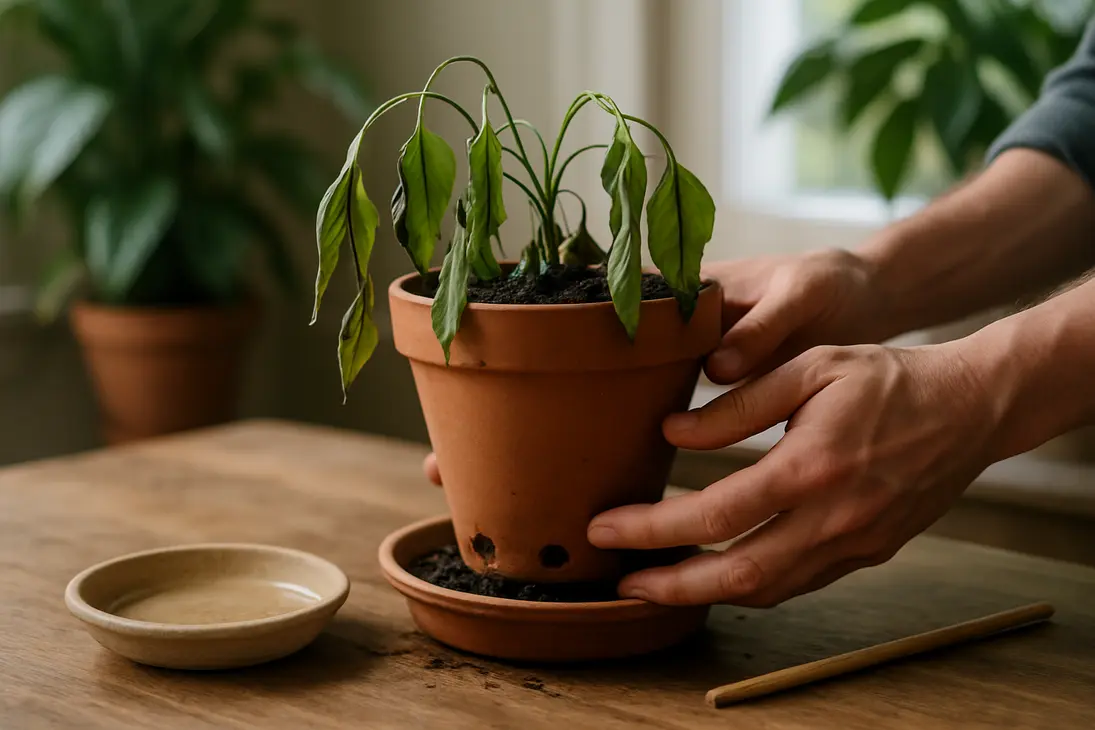
When a plant wilts, it is easy to assume it needs more water. But reviving a wilted plant with water works only when dryness is the cause. If you have already watered heavily, stop adding water, let excess drain away, and check why the plant wilted.
Wilted leaves can result from dry soil, but also from waterlogged roots, heat, pests, transplant shock, or root disease. A plant can look thirsty while its roots are too saturated to absorb water properly.
Take Immediate Steps to Prevent More Water Damage
A single thorough watering is not necessarily harmful if the pot drains well. Problems begin when water remains around the roots for days.
Empty the saucer, cachepot, or drip tray
Pour away water collected in a saucer, decorative outer pot, or drip tray. Do not let a houseplant sit in standing water.
If the plant is in a nursery pot inside a cachepot, lift it out, empty the outer container, and let the pot drain in a sink or bathtub for 10 to 20 minutes. Avoid repeatedly tipping or squeezing a heavy pot, which can disturb stressed roots.
Make sure the pot’s drainage holes are clear
Check that drainage holes are open. Packed soil, roots growing through the holes, or a saucer pressed tightly against the base can slow drainage.
Gently clear blocked openings with a wooden skewer or chopstick, without pushing deeply into the root ball. If the container has no drainage holes, allow the soil to dry cautiously and plan to repot into a draining pot when practical. Pots without drainage make overwatering much more likely.
Move the plant out of harsh sun and extreme temperatures
Place the plant in bright, indirect light while it recovers. Strong sun, hot glass, radiators, air-conditioning vents, and cold drafts can worsen stress.
Do not place it in a dark corner, either. Low light slows drying and leaves soil wet longer. Aim for steady room temperatures and suitable indirect light.
Avoid fertilizing, repotting, or watering again right away
Do not fertilize a stressed plant. Fertilizer will not speed recovery and can irritate damaged roots.
Also avoid repotting just because you watered too much once. Repotting adds stress and is best reserved for soil that remains sodden, a pot without drainage, sour-smelling mix, or clear root rot.
Most importantly, do not water again simply because leaves remain limp. Leaf recovery often takes longer than changes in soil moisture.
Check Why the Plant Is Wilted Before Trying to “Revive” It
Drooping alone is not a diagnosis. Inspect the soil and plant before taking further action.
Check the soil below the surface, not just the top layer
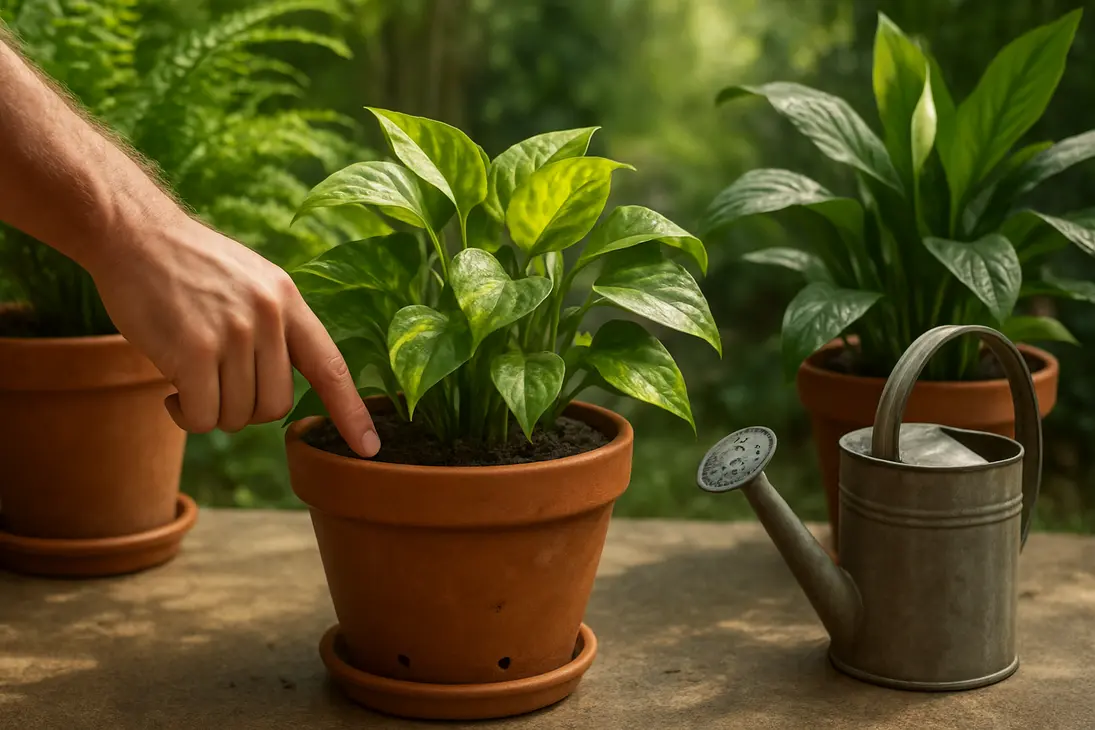
Insert a clean finger, wooden skewer, or chopstick about 2 inches into the potting mix. In larger pots, check as deeply as you reasonably can.
- Dry, dusty soil and a clean, dry skewer: underwatering may be the cause.
- Cool, damp soil with particles clinging to the skewer: wait before watering again.
- Wet, muddy soil or a sour smell: excess moisture and root stress are more likely.
- Dry surface but wet soil below: do not water yet.
A moisture meter can help, but it should not replace checking the soil yourself. Test a few areas for a more reliable picture.
Look for signs of overwatering and root stress
Overwatering usually means soil stayed wet too long between waterings, not necessarily that one watering was excessive.
Common signs include:
- Yellowing lower leaves
- Limp leaves despite wet soil
- Soft, dark, or mushy stems near the soil line
- Brown patches with yellow halos
- Musty or sour-smelling potting mix
- Fungus gnats around consistently moist soil
- Leaf drop while the pot remains heavy
Roots need oxygen as well as water. When soil air spaces stay filled with water, roots weaken or rot and cannot take up moisture effectively.
If you carefully slide the root ball out and find many brown, black, slimy, or foul-smelling roots instead of firm pale roots, root rot may be developing. Removing rotted roots and repotting into fresh, airy mix may then be necessary.
Look for signs the plant was truly too dry
A genuinely thirsty plant often improves within hours or by the next day after a thorough watering, though damaged leaves may not recover.
Signs of underwatering include:
- A very light pot
- Soil pulled away from the pot sides
- Dry mix well below the surface
- Thin, papery, crisp, or brittle leaves
- Firm but drooping stems
- Noticeable improvement after watering and draining
Very dry, peat-heavy mix can become water-repellent, allowing water to run down the pot sides without soaking the root ball. However, after heavily watering, wait and reassess before giving more water.
Tell whether the plant is still alive and able to recover
Severe wilting does not necessarily mean the plant is dead. Check stems near the base. Living stems are usually firm and may show green, moist tissue beneath a lightly scratched outer surface.
Look for:
- Firm stems or crowns
- Green tissue beneath the surface
- Healthy buds or new growth points
- At least some pale, firm roots
- Limp leaves that are not entirely brown and crisp
A fully brown, brittle plant with hollow stems is unlikely to recover. Avoid repeatedly digging around the roots; one careful inspection is enough.
Care for a Wilted Plant While It Recovers
Recovery mostly requires patient, steady care. Once excess water has drained, avoid constantly changing conditions or adding remedies.
Let the soil dry to the plant’s appropriate level
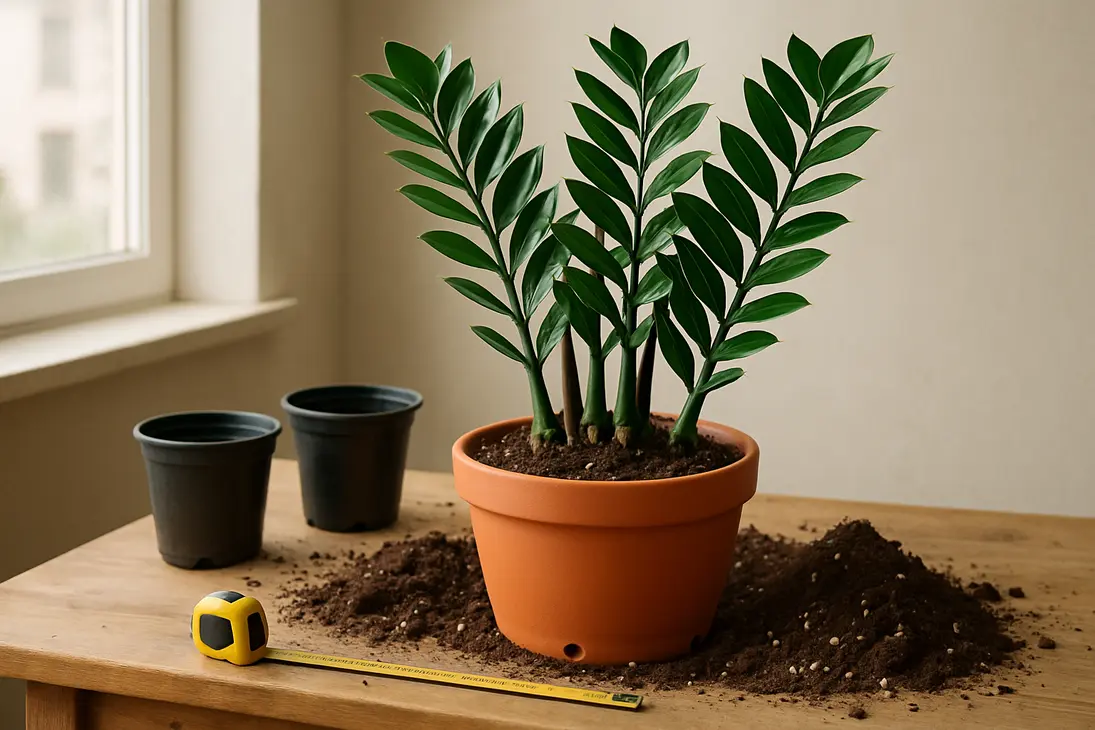
Allow the mix to dry before watering again, but adjust for the plant type. Succulents, cacti, snake plants, and ZZ plants need more drying between waterings than peace lilies, ferns, calatheas, and many tropical foliage plants.
For many common houseplants, let the upper portion of the mix dry while the lower root zone remains faintly moist. Drought-tolerant plants generally need a deeper dry-down.
Do not speed drying with a hair dryer, blazing sun, or direct heat. These methods can damage foliage and stress the plant further.
Water again only when the top 1–2 inches of soil are dry, where appropriate
For many leafy houseplants, watering when the top 1 to 2 inches feels dry is a useful starting point. It is not universal: small pots dry faster than large pots, and succulent plants often need more drying.
When it is time to water, do so slowly until a little water exits the drainage holes. Empty the saucer after draining. Thorough watering is generally better than frequent small sips, which can leave deeper roots dry while keeping the surface wet.
Provide bright, indirect light and stable conditions
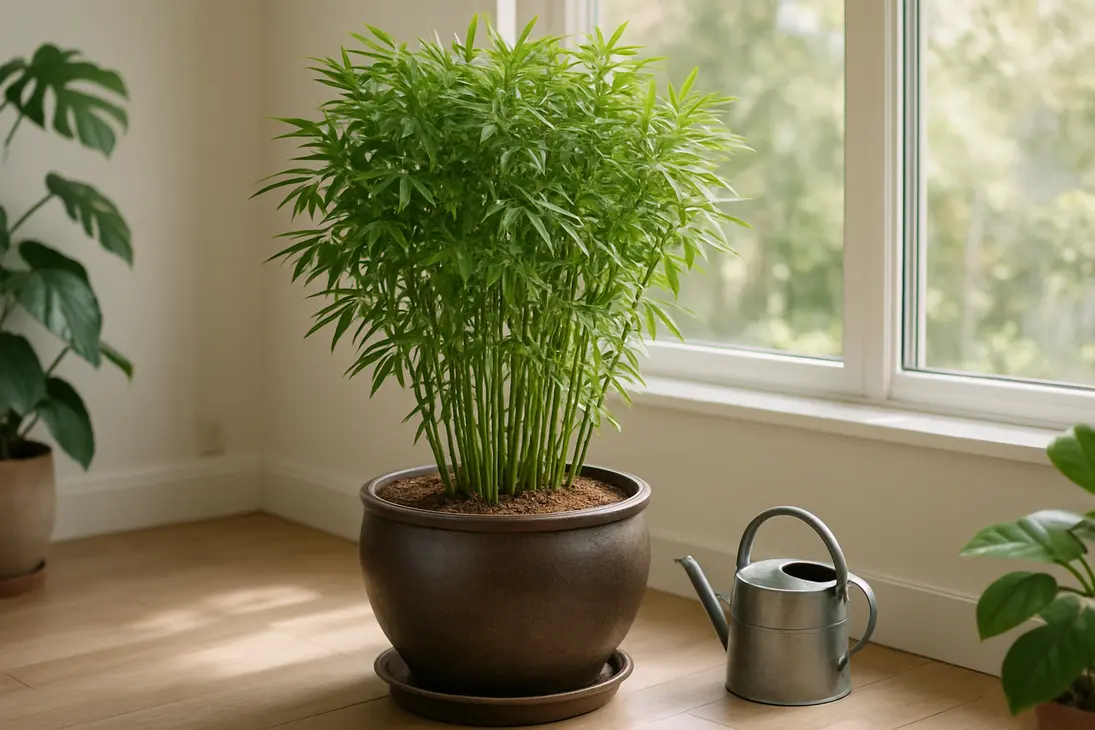
Keep the plant in a location suited to its usual light needs, avoiding abrupt changes. Bright indirect light supports recovery without the rapid water loss caused by intense direct sun.
Maintain stable temperatures and keep the plant away from cold windows, heating vents, hot appliances, and strong fans. Consistency is more useful than moving it daily to find a “perfect” spot.
Remove only clearly dead leaves or stems
Leave partly green leaves unless they are diseased or collapsing. They can still contribute energy during recovery.
Remove leaves that are fully yellow, brown, crispy, blackened, or mushy using clean scissors or pruners. If a stem is soft and black near the base, cut it back to firm, healthy tissue, since soft rot can spread.
Watch for worsening yellowing, mushy stems, odor, or fungus gnats
Check the plant every few days and look for trends.
| What you notice | What it may mean | What to do |
|---|---|---|
| Soil drying and leaves stabilizing | The plant is recovering | Maintain steady conditions |
| New yellow leaves while soil stays wet | Continued root stress | Improve drainage and reduce watering |
| Mushy stems or sour odor | Possible rot | Remove affected tissue and consider repotting |
| Fungus gnats | Soil is staying wet too long | Let the mix dry more and check drainage |
| Crisp edges but wet soil | Prior drought, salts, low humidity, or root trouble | Do not automatically water; assess conditions |
Some leaf loss after severe stress is normal. Firm stems, stable moisture, and eventual new growth are better recovery signs than perfect old leaves.
Adjust Your Watering Routine to Prevent Future Wilting
Once the immediate problem has passed, adjust the conditions that caused it. Fixed weekly watering schedules commonly lead to both under- and overwatering.
Match watering frequency to the plant, pot, and growing conditions
The same plant can need very different care depending on its location and container. A pothos in a small terracotta pot near a bright window dries much faster than one in a large plastic pot in a dim room.
Water use changes with:
- Light level
- Temperature and season
- Pot size and material
- Potting mix texture
- Root size relative to the pot
- Humidity and airflow
- Active growth versus winter slowdown
Check the soil instead of relying on last week’s schedule.
Use a moisture check instead of a fixed watering schedule
Make soil checks routine. Lift the pot when possible: a light pot often indicates dry mix, while a heavy pot suggests moisture remains. Confirm by checking below the surface.
Check plants on a regular day if convenient, but water only those that need it. Notes on watering dates and soil conditions can help identify patterns for difficult plants.
Choose a well-draining potting mix and container
Use a pot with at least one drainage hole and an emptyable saucer. Do not seal holes with rocks, broken pottery, or gravel; these layers do not fix poor drainage.
Choose a mix suited to the plant:
- Aroids and many tropical foliage plants benefit from airy mixes with bark or perlite.
- Cacti and succulents need fast-draining soil.
- Moisture-loving plants still need oxygen around their roots and should not sit in dense, muddy mix.
When repotting, choose a pot only slightly larger than the root ball. Oversized pots hold too much unused wet soil around small root systems.
Increase humidity without keeping the roots constantly wet
Low humidity can brown leaf edges or increase moisture loss, but watering more is not the best solution. Humidity affects the air around leaves, not how much water roots can safely handle.
Group compatible plants, use a humidifier, or place plants near a pebble tray with water below the pot base. Keep the pot above the waterline so roots are not sitting in water. Good airflow still matters, especially when soil is moist.
Conclusion
After heavily watering a wilted plant, stop adding water, empty standing water, and allow the pot to drain. Then determine why it wilted rather than assuming every drooping leaf means thirst.
A wilted plant may recover from drought, heat, or temporary root stress, but additional watering can worsen saturated roots. Proper drainage, careful soil checks, stable light, and patience give it the best chance to produce healthy new growth.
FAQ
Can a wilted plant recover after being overwatered?
Yes, many plants recover if roots have not been extensively damaged. Empty standing water, ensure the pot drains, and allow the mix to dry to the plant’s appropriate level before watering again.
Recovery can take days or weeks. Firm stems and new growth are encouraging signs. Sour soil, mushy stems, or dark, slimy roots may indicate root rot that requires removing damaged roots and repotting into fresh, well-draining mix.
How long does it take a wilted plant to perk up after watering?
A plant wilted solely from dry soil may improve within a few hours or by the following day. Very dry plants can take longer, especially if the root ball did not absorb water evenly.
Scorched, crisp, or damaged leaves may not become firm again. Judge recovery by healthy new growth and firm stems rather than the appearance of older damaged leaves.
Should I repot a plant that was soaked with too much water?
Not always. If the pot drains well and the mix begins drying normally, leave the plant alone and monitor it.
Repot when the container lacks drainage, soil remains wet unusually long, there is a persistent sour odor, or roots are rotted. Use a clean pot with drainage holes and fresh mix suited to the plant.
How much should I water a wilted plant after the soil dries?
When the plant is ready for water again, moisten the root ball slowly and thoroughly until a small amount drains from the bottom. Empty the saucer afterward.
Avoid constantly wet soil, but also avoid repeated tiny splashes that do not reach deeper roots. Let soil moisture, plant type, pot size, and growing conditions guide the next watering.
You Might Also Like