What Are the Benefits of Grow Lights for Indoor Plants?
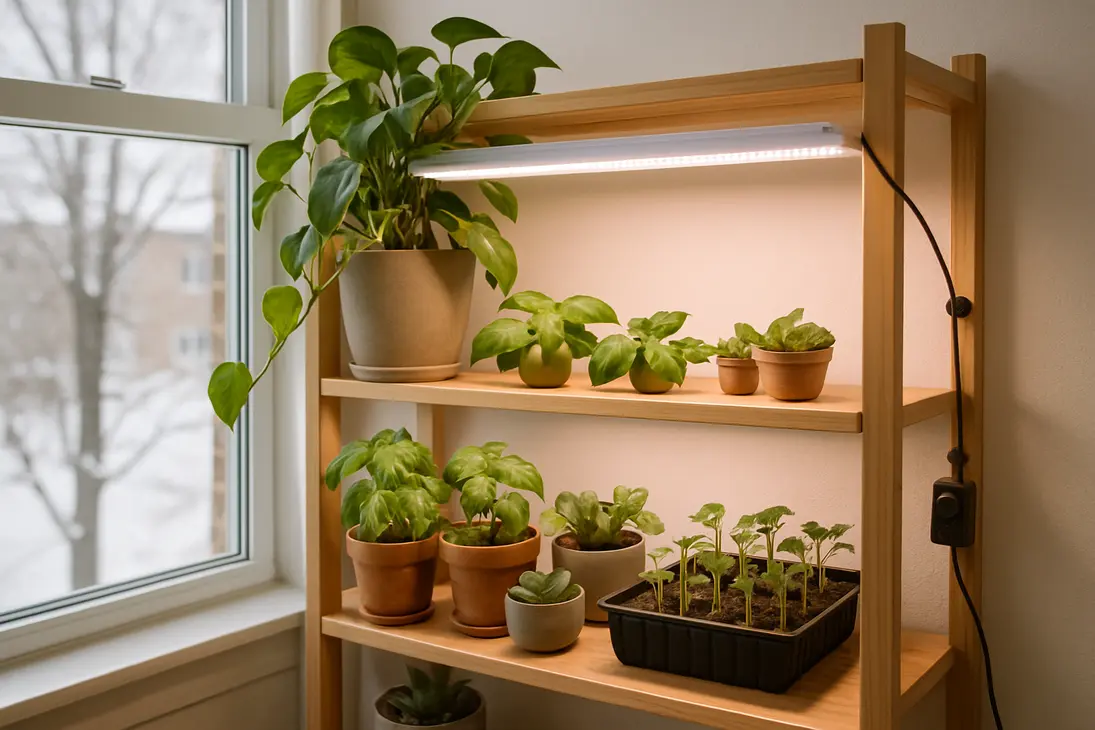
Grow lights benefit indoor plants by providing dependable light when natural sunlight is too weak, too brief, or too far from the plant. Indoors, even a bright-looking room may not give plants enough usable light, especially in winter or in homes with north-facing windows, tinted glass, deep overhangs, or plants placed several feet from a window.
A grow light does not fix every plant problem, but it can solve one of the most common indoor growing limits: inadequate light. With the right setup, grow lights help plants grow more compactly, produce healthier leaves, recover from dim conditions, and make it possible to grow herbs, seedlings, vegetables, and some flowering plants indoors with more predictable results.
How Grow Lights Help Indoor Plants Thrive
Plants use light for photosynthesis, the process that lets them turn light energy into sugars for growth. Outdoors, sunlight is intense and broad. Indoors, it is filtered through windows, reduced by distance, and affected by season. A plant near a window may receive only a fraction of the light it would get outside.
Grow lights supplement or replace natural sunlight by delivering usable light directly to the plant. They are especially helpful when plants stay alive but do not actively grow, produce smaller new leaves, or stretch toward the nearest window.
They prevent weak, leggy growth
Leggy growth is one of the clearest signs of insufficient light. Stems become long and thin, gaps between leaves increase, and the plant leans toward the light source.
Grow lights help by providing stronger light from a better direction, often from above. This encourages more compact, even growth in:
- Seedlings started indoors
- Herbs such as basil and cilantro
- Succulents that stretch in dim rooms
- Vining houseplants with sparse stems
- Flowering plants that stop blooming in low light
A grow light will not instantly reverse stretched stems that already formed, but it can improve new growth. For many plants, prune weak growth where appropriate, then provide better light so the next growth is stronger.
They support stronger leaves, stems, and roots
When plants receive enough usable light, they can make more energy to support leaves, stems, roots, and new shoots.
With better light, indoor plants often show:
- Larger or more evenly sized new leaves
- Better leaf color, especially in variegated plants
- Thicker stems on seedlings and young plants
- More frequent growth during the active season
- Better root development
Roots depend on energy produced by leaves. A plant in very low light may use water slowly, leaving soil wet too long and increasing the risk of root stress or rot. Better light can help the plant use water more normally, though careful watering is still essential.
They help plants recover in low-light homes
Some homes are naturally difficult for plants. Apartments may have only one window direction, offices may have filtered glass or closed blinds, and winter can reduce daylight for months.
Grow lights give struggling plants a better chance in these conditions. A plant losing older leaves, producing pale growth, or sitting dormant for long periods may improve with consistent supplemental light.
Recovery still depends on the full care routine. If roots are damaged, pests are present, soil is compacted, or watering is inconsistent, a grow light alone will not solve everything. Light is one major part of plant health, alongside watering, drainage, soil, humidity, and nutrients.
The Main Benefits of Using Grow Lights Indoors
The biggest practical benefit of grow lights is control. You are no longer limited to the brightest windowsill in the house. You can place plants where they fit your space and give them the light they need more reliably.
Year-round growing, even in winter
Winter is when many indoor gardeners notice the value of grow lights most. Days are shorter, the sun is lower, and rooms often receive far less light than in spring and summer. Plants may slow down, drop leaves, or stop producing new growth.
Grow lights help extend the indoor growing season. They are useful if you want to:
- Start seeds before outdoor planting season
- Keep herbs producing through colder months
- Maintain tropical plants in a darker home
- Prevent succulents from stretching
- Encourage some flowering plants to keep blooming
Not every plant needs strong winter growth. Some naturally slow down and need less water and fertilizer. But a grow light can prevent the deep decline that often happens after months in poor light.
Better results in apartments, offices, and low-window spaces
Many people do not have a sunny south-facing window or dedicated plant room. Grow lights make indoor gardening more realistic in:
- Studio apartments
- Basement rooms
- Offices with limited natural light
- Kitchens with small windows
- Shelves away from windows
- Rooms shaded by buildings or trees
Instead of crowding every plant onto one windowsill, you can create a plant shelf, brighten a dark corner, or grow herbs on a kitchen counter.
There are limits. A small decorative grow bulb may help a pothos or philodendron on a desk, but it will not be enough for fruiting tomatoes or peppers. Matching the light to the plant matters.
More control over light duration and intensity
Grow lights let you control two key factors: how long plants receive light and how intense that light is. A simple plug-in timer keeps plants on a regular schedule and prevents forgetting the lights or leaving them on too long.
You can adjust light by:
- Moving fixtures closer or farther from plants
- Choosing stronger or weaker lights
- Running lights for more or fewer hours
- Grouping plants with similar light needs
- Using shelves to keep light distance consistent
This makes indoor gardening easier to troubleshoot. If a plant stretches, increase light. If leaves bleach, curl, or look stressed near the lamp, raise the light or reduce the duration.
Support for herbs, vegetables, seedlings, and flowering plants
Grow lights expand what you can grow indoors. Many decorative houseplants tolerate moderate light, but edible and flowering plants often need more.
With suitable lights, you can grow or start:
- Herbs such as basil, parsley, cilantro, mint, thyme, and oregano
- Leafy greens such as lettuce, arugula, and baby kale
- Seedlings for outdoor gardens
- Microgreens
- African violets and other compact flowering houseplants
- Some compact peppers or tomatoes under strong lights
The benefit is not just survival. Edible plants need enough light to produce flavorful leaves and repeat harvests. Seedlings need enough light to avoid becoming thin and floppy. Flowering plants need enough energy to form buds, not just leaves.
Grow Lights for Different Indoor Gardening Goals
The best grow light setup depends on your goal. A houseplant shelf has different needs than a seed-starting station or indoor herb garden.
For houseplants
For houseplants, grow lights are usually used to supplement low natural light. Many common indoor plants can tolerate lower light, but “tolerate” does not always mean “thrive.” A plant may survive in a dim room while producing smaller leaves, fewer vines, duller variegation, or slower growth.
Grow lights are especially helpful for:
- Variegated plants that lose contrast in low light
- Succulents and cacti kept indoors
- Tropical foliage plants placed away from windows
- Plants overwintering indoors
- New cuttings that need energy to root and grow
For foliage houseplants, moderate LED grow lights are usually enough. Placement matters more than appearance: a light mounted too far away may brighten the room without giving the plant much usable energy.
For seedlings and seed starting
Seed starting is one of the best uses for grow lights. Seedlings grown on a windowsill often lean, stretch, and become weak because the light is not strong or consistent enough.
Grow lights help seedlings grow:
- Shorter and sturdier
- More upright
- With better leaf development
- With stronger stems before transplanting
- More evenly across a tray
For seed starting, lights usually need to be placed fairly close to the seedlings and adjusted upward as they grow. Fluorescent shop lights, T5 fixtures, and LED grow lights can all work if they deliver enough light across the tray.
A common mistake is using a light that only covers the center of the tray. Seedlings at the edges may still stretch, so choose a fixture long enough for even coverage or rotate trays regularly.
For herbs and vegetables
Herbs and vegetables generally need more light than many houseplants. Grow lights can make the difference between a plant that merely stays alive and one that produces enough to harvest.
Leafy herbs and greens are the easiest indoor edibles under grow lights. Basil, parsley, mint, cilantro, lettuce, and microgreens can do well with a bright setup. Rosemary and thyme prefer strong light and excellent drainage, so they need brighter placement and careful watering.
Leafy greens are realistic for many home setups. Fruiting crops such as tomatoes, peppers, cucumbers, and strawberries need much stronger light, more space, and more attention to pollination, feeding, and container size.
Grow lights help edible plants most when paired with:
- Containers with drainage holes
- Quality potting mix
- Regular harvesting
- Adequate airflow
- Plant-specific watering habits
For flowering and fruiting plants
Flowering and fruiting plants need enough light to support energy-heavy growth. Producing flowers and fruit takes more resources than producing leaves alone.
Good candidates include:
- African violets
- Orchids that need bright indirect light
- Some begonias
- Compact flowering houseplants
- Dwarf peppers under strong lights
- Small tomato varieties under high-output fixtures
For flowering plants, both light intensity and day length can matter. If a flowering plant looks healthy but refuses to bloom, lack of light is a common reason. However, pot size, fertilizer balance, temperature, maturity, pruning, and natural bloom cycles can also affect flowering.
LED vs. Fluorescent Grow Lights: Which Benefits Matter Most?
LED and fluorescent grow lights can both be useful indoors. The better choice depends on your plants, budget, space, and how long you plan to use the light.
| Factor | LED grow lights | Fluorescent grow lights |
|---|---|---|
| Energy use | Usually more efficient | Usually less efficient than LEDs |
| Heat | Low heat for most home fixtures | Cool to moderately warm |
| Lifespan | Typically long-lasting | Bulbs need replacement more often |
| Upfront cost | Often higher | Often lower |
| Best uses | Houseplants, herbs, shelves, long-term setups | Seedlings, propagation, budget setups |
| Spectrum options | Many full-spectrum options | Useful white-light options |
| Ease of setup | Many styles, from bulbs to panels | Simple but often bulkier |
LED grow lights: efficient, long-lasting, and low heat
LED grow lights are the most popular choice for many indoor gardeners because they are efficient, long-lasting, and available in many forms. You can find LED bulbs for a single plant, strip lights for shelves, panels for seed starting, and stronger fixtures for edible crops.
The main benefits include:
- Lower energy use
- Less heat when properly placed
- Long lifespan
- Compact designs
- Full-spectrum options that look natural indoors
- Stronger models for herbs, vegetables, and flowering plants
LEDs are not all equal. A small clip-on light may work for a few low- to medium-light houseplants but not vegetables. A high-powered panel may be excessive for shade-tolerant tropical plants if placed too close.
Fluorescent grow lights: affordable and useful for seedlings
Fluorescent lights, especially tube-style fixtures, have long been used for seed starting and propagation. They are often affordable, easy to find, and good at covering a wide area such as a seed tray.
Their benefits include:
- Lower upfront cost
- Good coverage for trays and shelves
- Reliable performance for seedlings and cuttings
- Relatively low heat
- Simple seasonal setup
Fluorescent lights are less efficient and usually do not last as long as LEDs. Bulbs also lose strength over time, even before they burn out. For a few trays of seeds each spring, they can still be practical. For year-round indoor growing, LEDs often make more sense over time.
Choosing based on plant type, space, and budget
Choose LED if you want:
- A long-term houseplant shelf
- Lower electricity use
- A compact fixture
- A cleaner look in living spaces
- Stronger options for herbs or vegetables
- Less frequent bulb replacement
Choose fluorescent if you want:
- An affordable seed-starting setup
- Broad coverage over trays
- A simple seasonal system
- A budget-friendly way to grow seedlings or cuttings
For one or two houseplants, a full-spectrum LED bulb in a suitable lamp may be enough. For seed starting, a rectangular LED or fluorescent fixture that covers the full tray is usually better. For fruiting vegetables indoors, use a stronger LED fixture designed for higher light output.
How to Get the Most Benefit From Grow Lights
Grow lights work best when used thoughtfully. The same light can help or disappoint depending on distance, duration, strength, and the plant’s other care needs.
Place lights close enough without burning plants
Distance matters because light intensity drops quickly as a lamp moves farther from the plant. A grow light that is too far away may not do much, even if it looks bright.
As a general approach:
- Seedlings usually need lights close above their leaves, adjusted upward as they grow.
- Houseplants often do well with lights above or slightly in front of them.
- Succulents, herbs, and vegetables usually need stronger light or closer placement.
- If leaves look bleached, crispy, or curled away from the light, move the fixture higher or reduce duration.
Follow the manufacturer’s placement guidance when available. LEDs produce less heat than many older lamps, but strong LEDs can still stress leaves if placed too close.
Use the right number of hours per day
Most indoor plants benefit from a regular light schedule. A timer is the easiest way to keep it consistent.
| Plant group | Typical grow light duration |
|---|---|
| Low- to medium-light houseplants | 8–12 hours |
| Bright-light houseplants and succulents | 10–14 hours |
| Seedlings | 14–16 hours |
| Herbs and leafy greens | 12–16 hours |
| Flowering and fruiting edibles | 14–16 hours, with strong enough light |
Plants also need darkness. Leaving lights on 24 hours a day is usually not helpful and can interfere with normal plant processes.
Match light strength to plant needs
A small desk grow light may keep a pothos happy but will not grow strong tomato plants. A powerful panel meant for vegetables may be too intense for shade-tolerant tropical plants if placed close.
Think in groups:
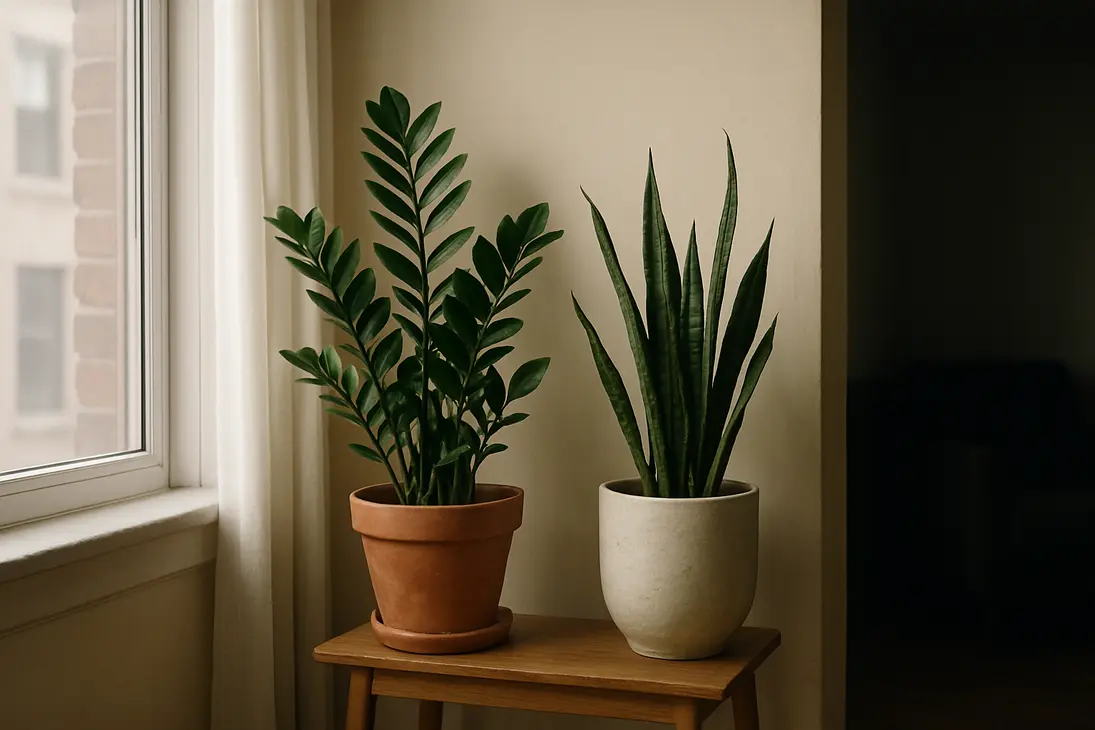
- Low-light tolerant plants: pothos, snake plant, ZZ plant, heartleaf philodendron
These may need only modest supplemental light. - Medium to bright houseplants: monstera, hoya, ficus, many orchids
These benefit from stronger or longer light exposure. - High-light plants: succulents, cacti, herbs, vegetables
These need bright lights, close placement, or longer duration. - Fruiting crops: tomatoes, peppers, strawberries
These require the strongest indoor setups and more space.
If a plant still stretches under a grow light, the light may be too weak, too far away, or running for too few hours. If leaves pale or scorch near the top, the light may be too intense or too close.
Remember that light does not replace water, soil, or nutrients
Grow lights improve plant growth, but they do not replace basic care. In fact, plants receiving more light may use water faster, grow more actively, and need nutrients during the growing season.
To get the full benefit, also watch:
- Watering: Check soil moisture before watering.
- Drainage: Use pots with drainage holes whenever possible.
- Soil: Choose potting mix suited to the plant.
- Fertilizer: Feed actively growing plants as needed, but avoid overfertilizing stressed plants.
- Airflow: Crowded, damp shelves can encourage fungal issues.
- Pests: Watch for spider mites, fungus gnats, aphids, and scale.
A grow light should be part of a balanced setup. If a plant is declining, consider the whole environment before assuming more light is the only answer.
Conclusion
Grow lights benefit indoor plants by providing consistent, controllable light where natural sunlight is limited. They can improve growth, reduce legginess, support year-round gardening, and make it easier to grow herbs, seedlings, vegetables, and flowering plants indoors.
The key is matching the light to the plant. A modest LED may be enough for a houseplant shelf, while seedlings, herbs, and fruiting crops need brighter and more carefully positioned lights. Used with good watering, proper soil, and realistic expectations, grow lights make indoor gardening healthier, more flexible, and more reliable.
FAQ
Are grow lights good for all indoor plants?
Grow lights can help most indoor plants, but not every plant needs the same amount of light. Low-light tolerant plants such as snake plants, pothos, and ZZ plants may only need gentle supplemental light. Herbs, succulents, seedlings, and flowering plants usually need brighter light.
The key is matching the grow light to the plant’s natural preference. Too little light may not help, while too much light placed too close can stress sensitive plants.
Can grow lights replace sunlight completely?
Yes, grow lights can replace sunlight for many indoor plants if the fixture is strong enough, placed correctly, and used for the right number of hours per day. Many seedlings, herbs, leafy greens, and houseplants can grow entirely under artificial light.
High-light plants, especially fruiting vegetables, need more planning. Tomatoes, peppers, and similar crops require strong light, adequate space, proper feeding, and good airflow.
How many hours a day should indoor plants be under grow lights?
Most houseplants do well with about 8–12 hours of grow light per day. Seedlings, herbs, leafy greens, and high-light plants often need 12–16 hours. Plants should also have a dark period each day, so avoid leaving grow lights on continuously.
A timer is the easiest way to keep the schedule consistent.
Are LED grow lights better than fluorescent grow lights?
LED grow lights are usually better for long-term use because they are energy-efficient, long-lasting, compact, and relatively low heat. They are a good choice for houseplant shelves, herbs, and many year-round indoor gardens.
Fluorescent grow lights can still be useful, especially for seed starting. They are often affordable and provide even coverage over trays. For ongoing indoor growing, LEDs usually offer more benefits over time.
You Might Also Like