How Often Should You Water a Cut Christmas Tree?
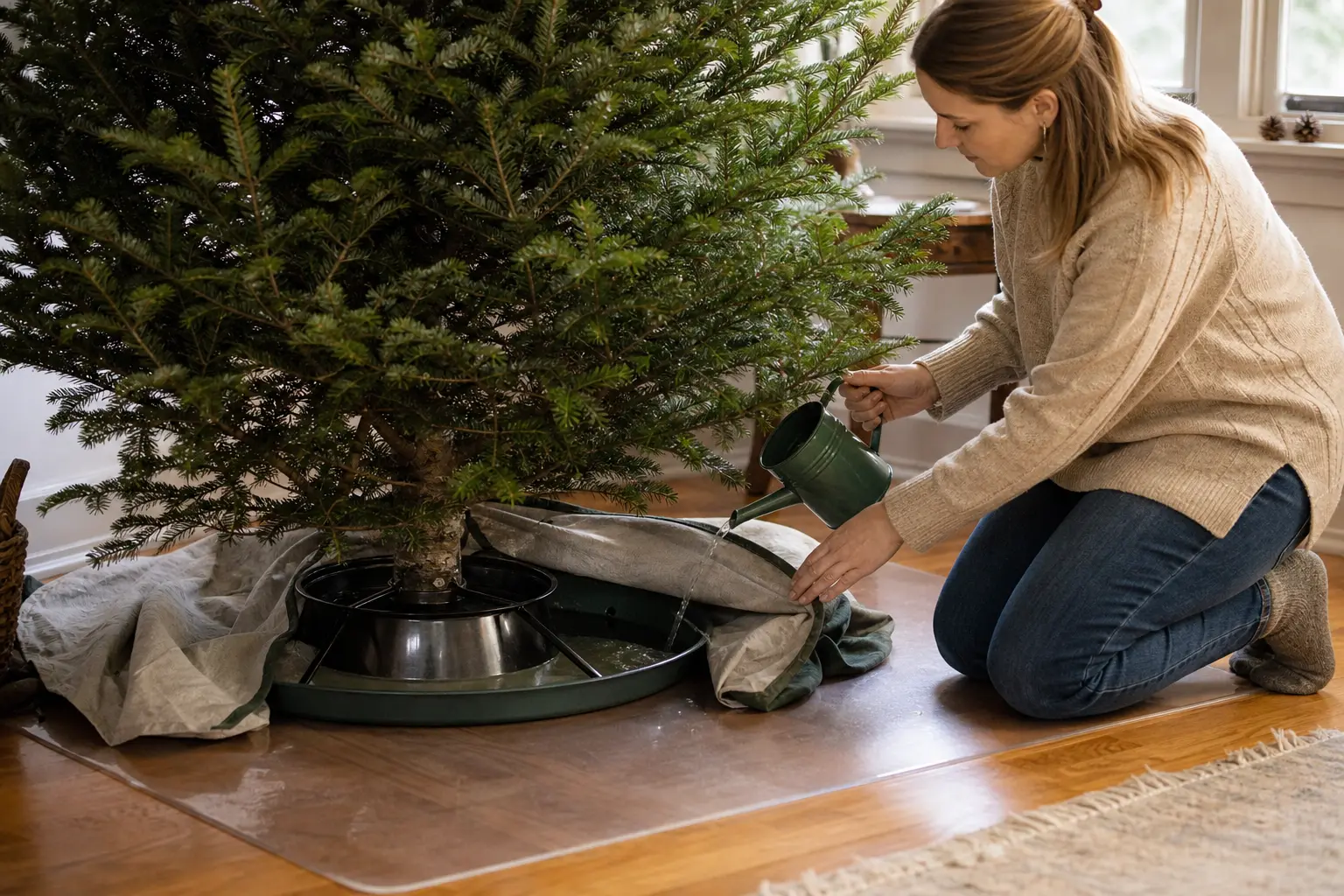
Water a Cut Christmas Tree Every Day
For most homes, watering a cut Christmas tree means checking the stand every day and topping it up whenever the level drops. Do not rely on watering it every few days or on a set number of cups or gallons. A fresh tree’s water use changes with its size, species, freshness, room temperature, and how close it sits to a heat source.
During the first week indoors, check the reservoir at least once daily—twice daily is sensible for a large, very fresh tree or one displayed in a warm room. The goal is simple: never let the water fall below the bottom of the trunk.
A cut tree cannot replace water through its roots. Instead, it draws water upward through the exposed wood at the base of the trunk. If that cut end dries out, the tree’s ability to take up water may be reduced, even after you refill the stand.
How Much Water a Fresh Tree Can Drink
A newly cut Christmas tree can take up a surprising amount of water, particularly in the first several days after it is brought indoors. A tall tree with a thick trunk may empty a modest stand reservoir in a day, while a smaller or older tree may use far less.
Rather than trying to predict exactly how much your tree will drink, use its first few days at home as a guide:
| Tree situation | What to expect | What to do |
|---|---|---|
| Freshly cut, large tree | Often drinks heavily at first | Check morning and evening for several days |
| Small tree or tabletop tree | Usually uses less water, but can still dry out | Check daily |
| Tree in a warm, sunny room | May lose moisture faster | Check twice daily |
| Tree displayed in a cool room | May use water more slowly | Still check daily |
| Tree that has been indoors for more than a week | Water use may slow | Continue daily checks; do not assume it no longer needs water |
As a practical starting point, select a stand with a generous reservoir. A common rule of thumb is that it should hold about one quart of water for every inch of trunk diameter, measured near the base. More capacity gives you a useful buffer, but it does not replace daily monitoring.
Why the First Few Days Matter Most
The first few days are the most important because the tree is adjusting from outdoor conditions to the drier, warmer air inside your home. If the trunk was freshly cut and promptly placed in water, it may begin taking up water readily. That is when the reservoir can drop quickly.
Dry indoor air, central heating, fireplaces, and warm lights all increase moisture loss from needles and branches. A tree that starts out well hydrated is more likely to retain flexible needles and stay attractive through the holiday period.
This early period is also when missed watering does the most damage. If you fill the stand on the first day and do not look again until the weekend, the tree may already have stood dry for hours or longer. At that point, simply adding more water may not restore normal uptake.
Keep the Water Level Above the Cut End
The water level must remain above the trunk’s cut surface at all times. This is more important than filling the reservoir to its maximum line once and assuming the tree is covered.
Check where the trunk enters the stand. Some stands have a deep basin, a narrow water well, or a water-level indicator that can be hard to read. Use a flashlight if the tree skirt or branches make the reservoir difficult to see.
If you cannot easily check the water level, improve access now. Move the tree skirt aside, keep a small watering can nearby, or use a funnel that fits between branches. A watering routine only works if it is convenient enough to follow every day.
Check Whether Your Tree Needs Water
A cut Christmas tree does not follow a perfect schedule. One tree may need a refill every morning; another may need only a smaller top-up. The dependable approach is to observe the stand, not the calendar.
Make checking the reservoir part of an existing routine, such as turning on the lights in the morning or switching them off at night. For the first week, a second check later in the day is worthwhile.
Check the Stand Reservoir Daily
To check the tree properly:
- Turn off and unplug the lights before reaching around the stand.
- Pull back the tree skirt or protective mat if needed.
- Look directly into the water reservoir or use the stand’s level indicator.
- Add plain water whenever the level has dropped, keeping the cut end fully submerged.
- Wipe up spills before replacing the skirt.
Do not wait until the reservoir looks nearly empty. If the stand is difficult to inspect, add water cautiously each day while still checking the actual level often enough to avoid overflow.
A tree may drink more on days when indoor heating is running constantly, when the sun reaches the room, or when the house is full of guests and doors are opening and closing. These small environmental changes are another reason a fixed “water every three days” routine is unreliable.
Look for Signs the Tree Is Drying Out
The stand’s water level is the best early warning sign. By the time a tree visibly looks dry, it may already have lost a substantial amount of moisture.
Still, examine the tree as you decorate and water it. Signs of drying can include:
- Needles that feel stiff, brittle, or prickly rather than flexible
- Needles dropping when branches are gently touched
- Dull or faded-looking foliage
- Dry, brittle twigs that snap easily
- Branches that begin to sag or lose their springiness
- A noticeable increase in fallen needles beneath the tree
Needle behavior varies by species, so compare the tree with how it looked when it arrived. Some evergreens naturally shed a few older interior needles, especially after being moved indoors. A little shedding does not automatically mean the tree is failing. Rapid needle loss, dry outer branches, or a completely empty stand are more concerning.
A dry tree is also a reason to take holiday-light safety seriously. Use lights in good condition, turn them off when unattended, and remove the tree promptly if it has become noticeably dry.
What to Do if the Water Level Falls Below the Trunk
If you find that the reservoir has run dry or the cut end has been exposed, refill the stand immediately. Then check the water level again later that day and the following morning.
The tree may resume drawing water, particularly if the dry period was brief. However, the exposed cut surface can dry and seal over, making uptake less efficient. If the tree is no longer taking in water after refilling, a fresh cut may help.
If possible, have another person support the tree while you remove it from the stand. Saw a thin slice—roughly half an inch—from the bottom of the trunk to expose fresh wood, then return the tree to a stand filled with water right away. Avoid shaving bark from the sides of the trunk or cutting it into a point to force it into a too-small stand. Those shortcuts can reduce stability and do not improve water uptake.
Recutting a decorated tree is inconvenient, so prevention is far easier: check the stand before it runs dry.
Help Your Christmas Tree Stay Fresh Longer
Consistent watering matters most, but a few setup choices can make it easier for a cut tree to retain moisture and continue drinking. Start with a fresh cut, choose a stable stand with adequate capacity, and keep the tree out of hot, dry conditions.
Make a Fresh Cut Before Placing the Tree in Water
If the tree was cut more than a short time before you bring it home, ask the seller to make a fresh cut from the base. If that is not possible, make one yourself before setting up the tree.
Remove a thin, even slice from the bottom of the trunk with a saw. The purpose is to expose fresh wood so water can move into the trunk. Place the tree in water as soon as possible afterward.
Do not drill holes in the base, split the trunk, or cut away bark around the sides. A level cut across the trunk and a stand that fits the original trunk diameter are the better choices.
If you are not ready to decorate immediately, keep the tree upright in a bucket or stand of water in a sheltered, cool location. Do not leave it dry in a garage, on a porch, or against the side of the house while you wait.
Use a Stand That Holds Enough Water
A good stand needs to do two jobs: keep the tree stable and hold enough water that the trunk base remains submerged between checks.
Before purchasing or setting up a stand, consider:
- Trunk diameter: The stand must accommodate the trunk without carving it down.
- Tree height and weight: A taller, heavier tree needs a broad, sturdy base.
- Reservoir capacity: Larger trees need more water storage.
- Access: You should be able to pour water in and see the level without dismantling decorations.
- Floor protection: Place a waterproof mat beneath the stand in case of spills.
Avoid a stand that is so small that it becomes empty within hours. A larger reservoir offers a margin of safety overnight, but daily checks remain necessary.
Keep the Tree Away From Heat Sources
Heat accelerates drying. Position the tree away from fireplaces, wood stoves, radiators, heating vents, space heaters, and sunny windows. If a warm-air vent blows directly toward the lower branches or stand, redirect it if you can.
Lower room temperatures generally help a cut tree hold moisture longer. You do not need to keep your home uncomfortably cold, but avoid giving the tree the warmest spot in the room.
Use LED holiday lights where possible because they produce less heat than older incandescent sets. Regardless of light type, inspect cords and bulbs before use, follow the manufacturer’s instructions, and switch lights off before going to bed or leaving the house.
Use Plain Water Rather Than Additives
Plain tap water is usually the simplest choice for a cut Christmas tree. Fill the stand with clean water and keep the cut end submerged.
You may see suggestions to add sugar, corn syrup, bleach, aspirin, soda, flower food, or homemade “tree preservative” mixtures. These additions are unnecessary for routine watering and can create messes, odors, residue, or accidental exposure risks for children and pets.
Water is what the tree needs. The more useful investment is a stand with enough capacity and a reliable daily-check habit.
Common Watering Mistakes to Avoid
The most common mistake is treating a cut tree like a houseplant that only needs occasional watering. A tree may look fine one day and have an empty stand the next, especially soon after installation.
Avoid these problems:
- Filling the stand once and forgetting it. Check daily, even if the tree seemed to use little water yesterday.
- Letting the reservoir run dry. The trunk’s cut end should never sit above the waterline.
- Waiting for needles to fall before acting. Visible dryness is a late warning sign.
- Using a stand that is too small. A small reservoir makes missed checks much more likely to matter.
- Placing the tree beside heat. Warm air speeds moisture loss and can make water use less predictable.
- Trimming down the trunk to fit the stand. This can compromise stability; use a properly sized stand instead.
- Trying additives instead of consistent watering. Plain water and attention to the reservoir are more dependable.
- Assuming a reduced water intake means the tree no longer needs water. Continue checking until the tree is removed.
If you will be away overnight, fill the stand before leaving and ask someone to check it if you expect to be gone for more than a day. For a large tree in a heated home, this small precaution can prevent the reservoir from running empty.
Conclusion
Water a cut Christmas tree by checking its stand every day and refilling it whenever necessary. In the first week, and especially with a large fresh tree in a warm room, check twice daily.
The key rule is to keep the trunk’s cut end below the waterline at all times. Start with a fresh cut, use a stand with a generous reservoir, keep the tree away from direct heat, and use plain water. These simple steps give your tree the best chance of staying fresh throughout the season.
FAQ
Can you overwater a cut Christmas tree?
You cannot overwater a cut Christmas tree in the same way you can overwater a potted plant, because the tree is not rooted in soil. The important point is to keep water in the stand reservoir without overflowing it onto the floor.
Fill the stand to its recommended level and top it up as the tree drinks. Do not submerge the trunk far above the stand’s intended water basin, and do not allow standing water to spill into electrical connections, extension cords, or light plugs.
How much water should a Christmas tree stand hold?
Choose a stand that holds enough water to keep the cut end submerged for at least a day under normal indoor conditions. As a general rule of thumb, look for capacity of about one quart of water per inch of trunk diameter.
A larger reservoir is especially helpful for tall, fresh trees because they may drink heavily during their first days indoors. Capacity is not a substitute for checking, though: even a large stand should be inspected daily.
What happens if a Christmas tree stand runs out of water?
When the stand runs out, the cut end of the trunk is exposed to air and can begin drying out. That can reduce the tree’s ability to take up water after the reservoir is refilled. The tree may then dry faster, shed more needles, and become increasingly brittle.
Refill the stand immediately. If the tree does not seem to resume taking up water, making a fresh cut across the base and promptly returning it to water may help, provided you can do so safely and keep the tree stable.
Should you use sugar, bleach, or tree preservatives in the water?
Plain water is the best default for watering a cut Christmas tree. Sugar, bleach, aspirin, soda, and other homemade additives are not necessary to keep the tree hydrated.
Focus instead on the practices that make the greatest difference: a fresh cut at the base, enough clean water in the stand, daily reservoir checks, and a location away from heat sources.
You Might Also Like