Common Orchid Growing Mistakes and How to Avoid Them
Orchids have a reputation for being difficult, but most problems come from a few fixable mistakes: overwatering, poor drainage, the wrong potting medium, inadequate light, too much fertilizer, or reacting too quickly to normal orchid behavior.
Most grocery-store orchids are Phalaenopsis, or moth orchids. Many Dendrobiums are also sold as houseplants. These orchids do not grow like pothos, ferns, or peace lilies in regular soil. Many are epiphytes, meaning their roots naturally cling to trees and receive air, rain, and quick drying. Once you understand that, orchid care becomes much less mysterious.
Treating Orchids Like Regular Houseplants
Typical houseplants often grow in moisture-retentive soil around fine roots. Many common orchids need the opposite: chunky, airy media, free drainage, bright indirect light, and a rhythm of thorough watering followed by drying.
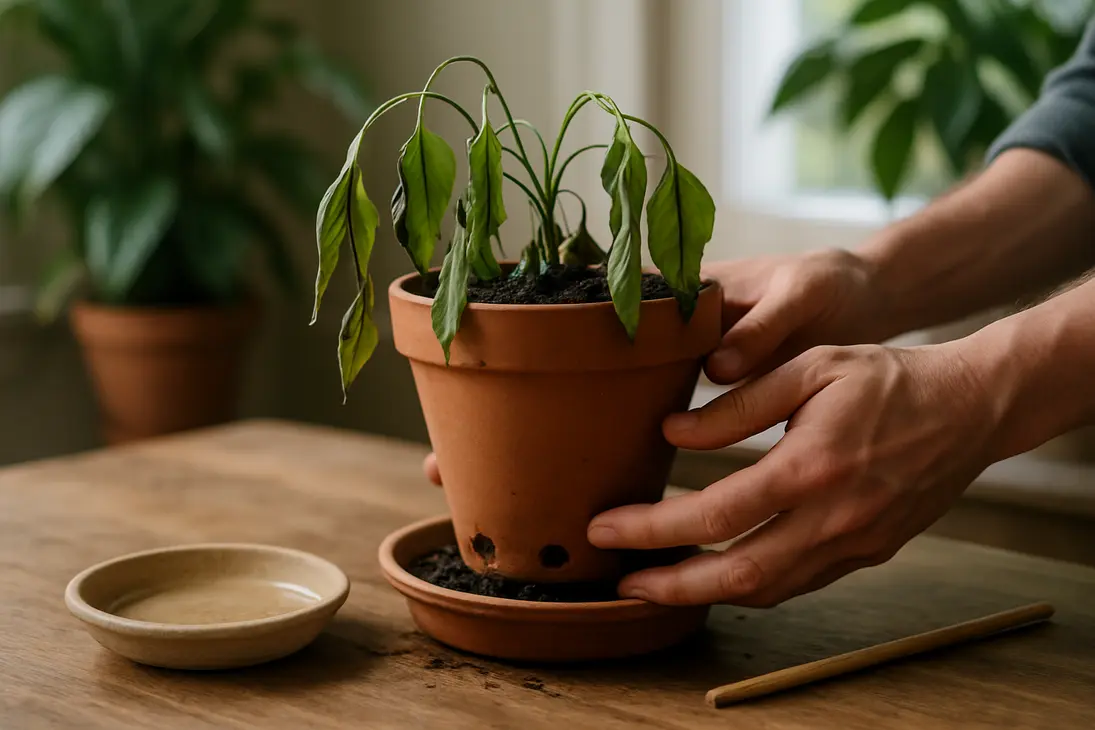
When orchids are treated like ordinary potted plants, they may decline slowly. Limp leaves, rotting roots, and lack of blooms are often caused by too much moisture around roots, not neglect.
Assuming Orchids Need Constant Attention
Orchids need observation, not constant intervention. A healthy Phalaenopsis may sit quietly for weeks after flowering while it grows roots, stores energy, or rests before the next bloom cycle.
Avoid repeatedly moving, repotting, trimming roots, watering “just in case,” or fertilizing to force growth. A better approach is simple:
- Check the mix before watering.
- Watch root color and leaf firmness.
- Keep the plant in stable bright indirect light.
- Avoid heavy feeding or repotting when stressed.
- Accept that orchids grow slowly.
Consistency is usually better than fussing.
Keeping Them in Decorative Pots Without Checking Conditions
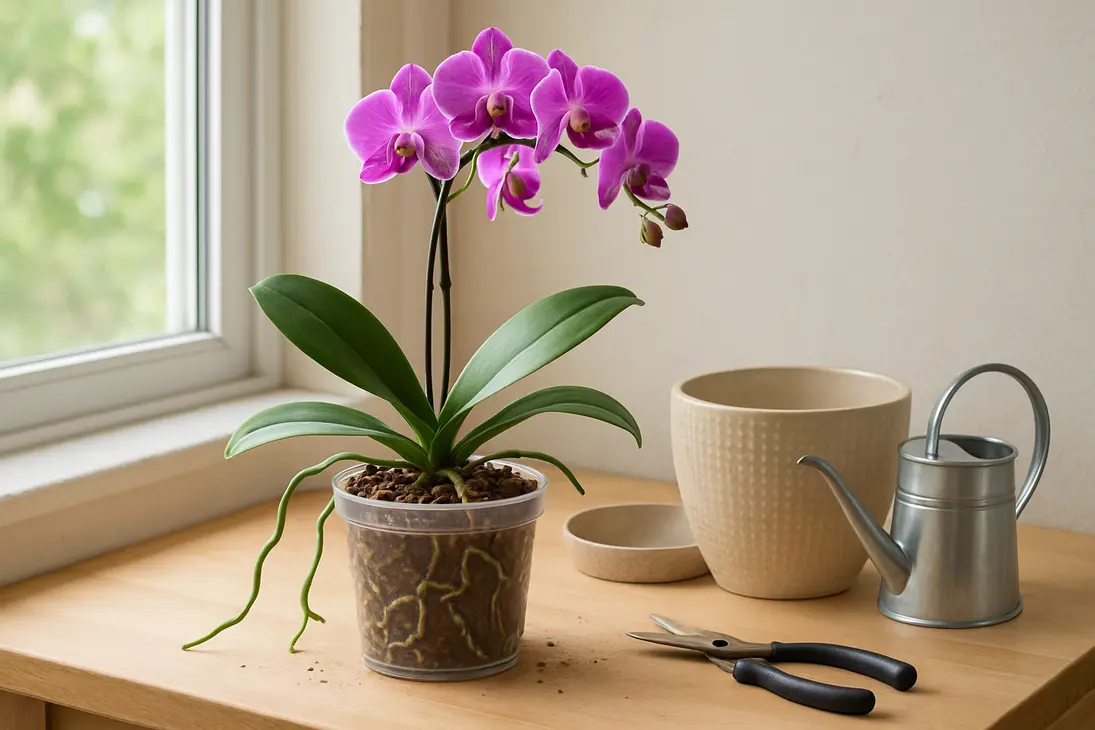
Many orchids are sold in a clear plastic pot inside a decorative cachepot. This is fine if you check it regularly, but water can collect unseen in the outer pot and keep roots wet for days.
After watering, lift out the inner pot and empty any pooled water. If the pot is clear, inspect the roots: healthy Phalaenopsis roots are usually silvery when dry and green after watering. Brown, mushy, or hollow roots suggest rot.
Ignoring the Specific Orchid Type You Own
“Orchid” covers many plants. Phalaenopsis, Dendrobium, Cattleya, Oncidium, Cymbidium, and terrestrial orchids can have different needs. Most beginner advice assumes Phalaenopsis, but it is not universal.
If your plant has a tag, keep it. If not, identify it before making major care changes. Phalaenopsis generally like warm indoor conditions and bright indirect light, while some Dendrobiums need brighter light or a seasonal rest to bloom well.
Watering Mistakes That Cause Root Problems
Watering causes many orchid failures. Overwatering and underwatering can both lead to limp leaves, but for different reasons. Overwatered orchids often lose roots to rot, so the leaves cannot take up water. Underwatered orchids may have dry, shriveled roots.
The goal is to water thoroughly, then allow the medium to dry enough for air to return to the roots.
Watering Too Often
Overwatering is not just about how much water you pour in. It is about how long roots remain wet afterward. Fresh bark in a ventilated pot may dry quickly; old compacted bark in a cool, dim room may stay wet too long.
Signs of overwatering or poor aeration include:
- Limp leaves despite frequent watering.
- Yellowing lower leaves.
- Brown, mushy roots.
- Sour or musty smell.
- Bark that stays wet for many days.
- Soft or black areas near the crown or base.
Water at the sink with room-temperature water until it drains freely. Let the pot drain fully before returning it to a saucer or cachepot. Avoid tiny daily splashes, which keep the top damp without flushing the pot.
Letting Orchids Sit in Standing Water
Orchid roots need oxygen. Standing water blocks air and encourages rot, especially in decorative pots without drainage or saucers that are not emptied.
After watering, wait a few minutes, then dump out collected water. Also avoid leaving water in the crown of a Phalaenopsis, where the leaves meet. If water collects there, blot it gently with a paper towel, especially in cool or still conditions.
Watering on a Fixed Schedule Instead of Checking the Mix
“Water once a week” is only a rough starting point. Drying speed changes with pot size, medium, season, temperature, humidity, and light. A plant may need water every five days in warm bright conditions and every two weeks in a cooler room.
Use the plant and potting mix as your guide:
| Check | What to Look For | What It Means |
|---|---|---|
| Clear pot roots | Silvery roots | Usually ready for water |
| Roots after watering | Green roots | Hydrated |
| Pot weight | Very light | Medium may be dry |
| Wooden skewer | Barely damp or dry | Water soon |
| Bark feel | Dry several inches down | Usually ready |
Do not judge by the surface only. The bottom of the pot often stays wetter.
Mistaking Aerial Roots for a Problem
Aerial roots are normal, especially on Phalaenopsis orchids. They may grow upward, sideways, or over the pot edge. They are not automatically a sign of sickness or a need to repot.
Healthy aerial roots are firm and often silvery-white, sometimes with green growing tips. Do not cut them unless they are dead, hollow, or mushy. The mistake is treating normal orchid growth as an emergency.
Light, Temperature, and Location Mistakes
An orchid can survive for a while in a poor location, but it may not thrive or bloom. Light powers growth and flowering, while temperature and airflow affect drying and disease risk.
Giving Too Little Light
Low light is a common reason orchids stay alive but never rebloom. A Phalaenopsis in a dim corner may keep its leaves for years without flowering.
Many Phalaenopsis orchids prefer bright indirect light. East windows often work well. South or west windows may work if filtered with a sheer curtain or set back from hot sun. Leaves are often medium green in good light; very dark green can suggest too little light.
If your orchid looks healthy but has not bloomed in a long time, reassess light first.
Exposing Orchids to Harsh Direct Sun
Too little light prevents blooms, but harsh direct sun can scorch leaves. This is especially common when a plant is moved suddenly from low light into hot afternoon sun.
Sunburn appears as pale, tan, brown, or bleached patches. The damaged tissue will not turn green again, though the plant can recover if the burn is limited. Move orchids into brighter positions gradually, and filter hot windows for Phalaenopsis.
Keeping Orchids Too Cold or Near Drafts
Many common orchids prefer normal indoor temperatures. Cold windowsills, winter drafts, open doors, and heating or cooling vents can stress them.
Cold, wet roots are especially risky because rot develops more easily. Avoid placing orchids:
- Against cold glass in winter.
- Under air-conditioning vents.
- Beside frequently opened exterior doors.
- Near heaters or radiators.
- On windowsills that chill overnight.
Some orchids need cooler nights to trigger bloom, but that does not mean cold drafts. Exact needs depend on the orchid type.
Placing Orchids Where Humidity and Airflow Are Poor
Orchids often appreciate moderate humidity, but stagnant damp air can encourage disease. A closed, dark, humid corner is not ideal.
You can improve humidity by grouping plants, using a humidity tray that keeps the pot above water, or running a room humidifier nearby. Gentle air movement helps, but avoid strong drafts. Bathrooms only work if they also provide good light and stable temperatures.
Potting and Repotting Mistakes
Repotting helps when media break down, roots need inspection, or the plant has outgrown its pot. But repotting too often, at the wrong time, or into the wrong material can cause damage.
Repotting Too Often or at the Wrong Time
Orchids do not need repotting simply because they look untidy. Repotting can break roots, interrupt flowering, and stress weak plants.
For many orchids, a good time to repot is after blooming, especially when new roots are beginning. Avoid disturbing a plant in full bloom unless there is a serious issue such as rot, pests, or badly decomposed media.
Repot when:
- The mix is breaking down and staying wet.
- Roots are rotting and need trimming.
- The plant is unstable because roots have failed.
- The orchid has clearly outgrown the pot.
- The medium smells sour or compacted.
- A new orchid is packed in dense moss you cannot water safely.
Leaning or aerial roots alone are not urgent reasons to repot.
Waiting Too Long to Replace Broken-Down Bark Mix
Bark mix decomposes over time. As it breaks down, it becomes smaller, darker, and more compact, holding more water and less air. A watering routine that once worked may suddenly cause rot because the medium has changed.
Replace bark when it looks crumbly, soil-like, compacted, or stays wet too long. Fresh bark should be chunky and airy, allowing water to drain while holding some moisture on the bark surface.
Using Regular Potting Soil
Regular potting soil is a major orchid mistake. It is too dense and wet for most epiphytic orchids and can suffocate roots.
Use an orchid mix suited to your plant. Common ingredients include:
- Fir or pine bark.
- Charcoal.
- Perlite.
- LECA or clay pellets.
- Sphagnum moss in controlled amounts.
Sphagnum moss is not bad, but it holds a lot of water. It can work well for some plants and homes, but bark-based mixes are usually more forgiving for beginners who water often.
Choosing a Pot With Poor Drainage
An orchid pot should drain freely. Clear plastic pots are useful for Phalaenopsis because you can see roots and moisture. Slotted pots or pots with side holes add airflow.
Avoid oversized pots. Extra medium around the roots stays wet longer. Choose a pot that fits the root system with a little room to grow, not a much larger container chosen for appearance. If using a decorative outer pot, treat it as a sleeve and empty it after watering.
Panicking When an Orchid Leans or Grows Roots Outside the Pot
Orchids do not always grow upright. In nature, many lean on trees or grow toward light. A Phalaenopsis may tilt as new leaves form or as it reaches toward a window.
Check whether the plant is stable and whether the roots are healthy. If so, you can rotate the pot occasionally, stake the flower spike, or place the nursery pot in a heavier cachepot. Repot only if the root system has failed, the medium has collapsed, or the pot is genuinely too small.
Fertilizing and Blooming Mistakes
Fertilizer supports growth, but it cannot replace light, healthy roots, or proper watering. Overfeeding can damage roots, and poor light can prevent blooms even when fertilizer is used correctly.
Using Too Much Fertilizer
Orchid roots can be sensitive to fertilizer salts. Too much fertilizer may burn root tips, damage leaf tips, or leave crusty deposits on the medium.
Use a balanced orchid fertilizer or a diluted houseplant fertilizer. Many growers feed lightly during active growth and flush with plain water between feedings to reduce salt buildup. The exact frequency depends on the plant, medium, water quality, and season.
If you suspect overfertilizing, flush thoroughly with plain water and pause feeding.
Fertilizing a Sick or Stressed Orchid
A sick orchid does not need stronger fertilizer. It needs the cause of stress corrected. If roots are rotting, fertilizer cannot make them absorb water. If light is too low, fertilizer cannot replace energy from photosynthesis.
Before feeding a struggling orchid, check:
- Are the roots firm and alive?
- Is the mix airy or broken down?
- Is the light adequate?
- Is the pot sitting in water?
- Has the plant suffered cold, heat, or sunburn?
Fertilize only when the orchid has functioning roots and is growing or maintaining good health.
Trying Unproven Home Remedies Like Coffee
Coffee, banana peels, eggshell water, and similar kitchen remedies can cause more problems than they solve. They may leave residue, alter the medium, encourage decomposition, or attract fungus gnats.
Coffee is not a reliable orchid fertilizer because it does not provide controlled nutrition. A known fertilizer used lightly and flushed periodically is safer.
Expecting Constant Blooms
A blooming orchid will not stay in flower forever. After flowers fade, the plant needs time to rest, grow leaves and roots, and store energy.
Phalaenopsis orchids often bloom once or sometimes twice a year indoors. Individual flowers can last a long time, but the plant is not meant to bloom continuously.
After flowering, keep caring for the leaves and roots. You can cut a spent spike:
- Back to a node if it stays green and you want to try for a side spike.
- Near the base if it turns brown.
- Completely off if the plant is weak and needs to focus on roots and leaves.
Do not judge orchid health by flowers alone.
Missing the Light or Temperature Cues Needed for Reblooming
If an orchid will not rebloom, the cause is often environmental. Phalaenopsis orchids commonly need enough bright indirect light and a modest day-night temperature difference to initiate spikes. In dim, consistently warm conditions, they may grow leaves but not flowers.
Dendrobiums vary more. Some need brighter light, seasonal changes, or a drier rest. This is why identifying your orchid matters.
To encourage reblooming:
- Give healthy Phalaenopsis brighter indirect light.
- Avoid hot direct sun.
- Keep care stable.
- Let the mix approach dryness between waterings.
- Feed lightly during active growth.
- Allow safe, natural cooler nights if appropriate.
A plant with poor roots should recover before you expect blooms.
Conclusion
Most orchid problems come from a small set of avoidable mistakes: watering too often, letting roots sit in stagnant water, using regular potting soil, keeping plants in too little light, overfertilizing, or repotting because of normal aerial roots and leaning growth.
Orchids are not impossible. They need care that matches how they grow: airy medium, drainage, bright indirect light, careful watering, light feeding, and time between bloom cycles. Check conditions before acting, and resist the urge to fix every unusual root or pause in flowering.
FAQ
Why is my orchid dying even though I water it regularly?
Regular watering can still kill an orchid if roots stay wet too long. Broken-down media, poor drainage, or hidden water in a decorative pot can cause root rot. Once roots die, leaves become limp because the plant cannot take up water.
Inspect the roots. Firm green, white, or silvery roots are usually alive. Brown, mushy, or hollow roots are dead or rotting. Trim dead roots with clean tools and repot into fresh orchid mix if needed.
Should I repot my Phalaenopsis orchid if it has aerial roots or is leaning?
Not necessarily. Aerial roots and leaning growth are normal for Phalaenopsis orchids. Repot only if the bark is broken down, roots are unhealthy, the plant is unstable because roots have failed, or the pot is clearly too small.
If the orchid is healthy, leave aerial roots alone. Do not cut them off or force them into the pot.
Why hasn’t my orchid bloomed again?
Common reasons include too little light, no suitable temperature cue, weak roots, or a normal rest period. A Phalaenopsis may survive in low light but fail to rebloom.
Move it to brighter indirect light, keep watering consistent, avoid overfeeding, and make sure the roots are healthy. For Dendrobiums and other types, check their specific bloom requirements.
Can too much fertilizer damage an orchid?
Yes. Too much fertilizer can burn roots, leave salt deposits, and stress the plant. Use fertilizer lightly and only when the orchid has healthy roots. Do not fertilize heavily to force blooms or revive a sick plant.
If you used too much, flush the pot with plain water and pause feeding while you correct watering, light, and root health.
You Might Also Like