How to Care for an Acacia burkei Bonsai Indoors
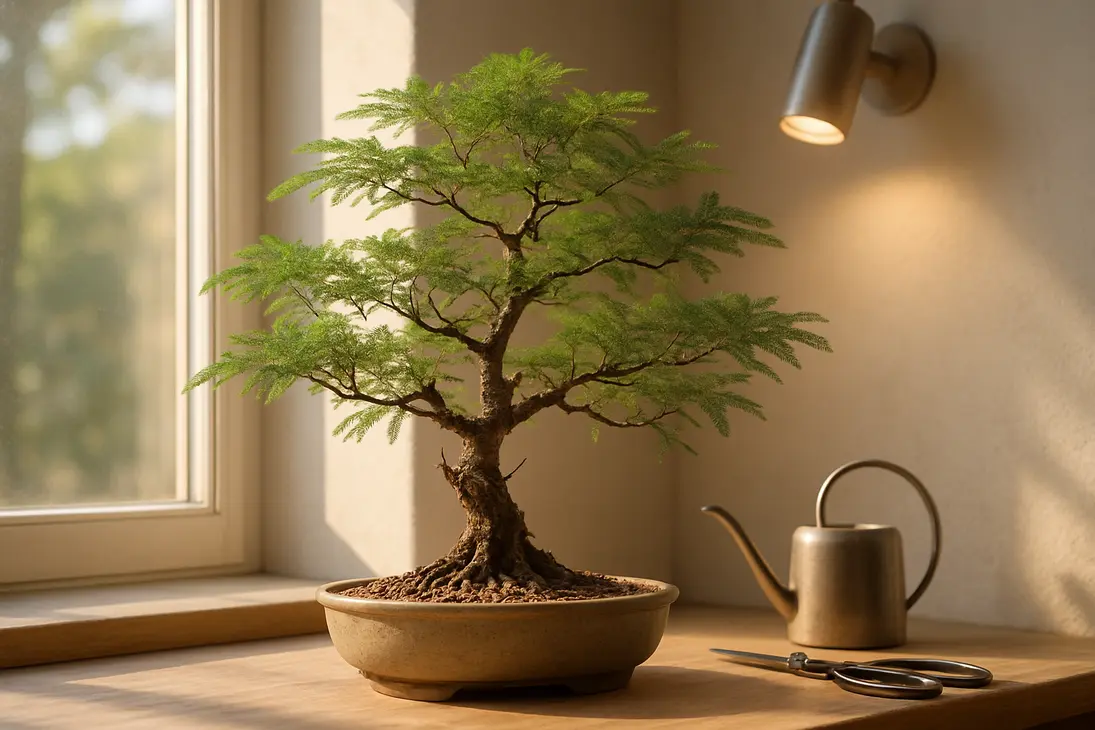
Acacia burkei, often sold as black monkey thorn and now commonly placed in the genus Senegalia, is a warm-climate African tree with fine compound leaves, thorny growth, and a rugged natural look. It can make a striking bonsai, but it is not an easy indoor bonsai.
Successful Acacia burkei bonsai care indoors depends on intense light, warmth, sharp drainage, and patient styling. If kept too dim, too wet, or repeatedly worked while weak, it may develop yellow leaves, closed leaflets, weak shoots, or branch dieback.
Getting Acacia burkei Right as an Indoor Bonsai
What makes Acacia burkei different from common indoor bonsai
Many beginner indoor bonsai, such as ficus, tolerate household conditions fairly well. Acacia burkei is different. It is a sun-loving, seasonally responsive tree with thorny, sometimes brittle shoots. Treat it first as a warm-climate container tree, then as bonsai.
Its strengths include fine divided foliage, rugged bark potential, natural savanna-style forms, and fast growth when warm, bright, and healthy. Its main challenges are high light demand, sensitivity to soggy soil, brittle branches, seasonal slowing, and stress after moving, pruning, repotting, or wiring.
Indoor growing limits: light, dormancy, and seasonal growth
Light is the biggest indoor limit. A room that looks bright to people may still be dim for an acacia. Without direct sun or a strong grow light, the tree may stretch, weaken, drop leaves, or fail to produce compact growth.
Acacia burkei may slow when light decreases, temperatures cool, or watering changes. Indoors, this can appear as reduced growth, yellow older leaves, leaflets staying closed longer, or partial leaf drop. Do not assume every yellow leaf means it needs water or fertilizer. Check new buds, stem firmness, soil moisture, and recent care changes.
Best placement in the home
Place the tree in the brightest practical position available.
Best options:
- Directly in front of an unobstructed south-facing window in the Northern Hemisphere, or north-facing in the Southern Hemisphere.
- An east or west window plus a grow light, especially in winter.
- A warm sunroom or enclosed porch if temperatures are stable and drafts are avoided.
Avoid decorative shelves, spots several feet from a window, closed blinds, heating vents, and cold winter glass. If moving the tree outdoors in warm weather, acclimate it gradually; indoor-grown foliage can scorch in sudden strong sun.
Light, Temperature, Watering, and Soil
Light needs: bright window vs grow light
Light is the foundation of indoor Acacia burkei care. The tree should receive several hours of direct sun if grown only by a window. If the window is shaded by buildings, trees, screens, overhangs, or winter cloud, add a grow light.
| Situation | Care approach |
|---|---|
| Sunny south-facing window | Keep close to the glass, avoiding cold or heat stress |
| East or west window | Add a grow light |
| North-facing or shaded window | Grow light is usually necessary |
| Winter indoors | Extend light duration |
| Weak, long internodes | Increase light before fertilizer |
A grow light should support the canopy without overheating or drying it. Compact green growth suggests adequate light; pale, stretched, sparse growth means more light is needed.
Temperature and humidity indoors
Acacia burkei prefers warmth during active growth. Normal warm household temperatures can work if the tree is kept away from cold drafts, cold glass, and sudden swings.
Humidity matters less than light, roots, and watering. Very dry air can add stress, but a pebble tray will not fix poor watering or weak roots. Good airflow helps prevent stale damp conditions around wet soil.
How often to water without overwatering
There is no fixed watering schedule. Water use changes with pot size, soil, light, temperature, and growth rate. Routine watering every few days regardless of conditions is a common cause of decline.
Use these rules:
- In warm, bright, active growth, water thoroughly when the upper soil begins to dry.
- In cooler, darker, slower periods, wait longer.
- Never keep the root ball constantly wet.
- Do not let a small bonsai pot stay bone dry during active growth.
When watering, soak the soil until water runs through the drainage holes, then let the pot drain freely. Empty saucers.
Overwatering signs include sour soil, algae, persistent wetness, yellowing with soft growth, and leaf drop in heavy soil. Underwatering signs include crispy leaflet edges, rapid wilting in dry soil, and fine twig dieback after repeated drought.
Soil mix and drainage for healthy roots
Acacia burkei needs a free-draining bonsai mix. Dense potting soil is risky indoors because it holds water too long and reduces oxygen around the roots.
Suitable components include pumice, lava rock, akadama or similar bonsai clay, coarse grit, and sometimes a little fine bark or organic material in very dry homes. Avoid peat-heavy mixes that stay wet for days.
If the tree came in dense nursery soil, adjust watering carefully until the proper repotting time. Do not rush into emergency repotting unless the soil is clearly causing decline and the tree is strong enough to recover.
Fertilizing during active growth
Fertilize only when the tree is actively growing in strong light. A weak tree in dim conditions will not recover simply because it is fed, and excess fertilizer can worsen root stress.
Use a balanced bonsai or general-purpose fertilizer at conservative strength during active growth. Reduce or stop feeding when growth slows, after major repotting, or during recovery. If new growth is pale in low light, improve light first.
Pruning, Wiring, and Shaping Acacia burkei
Letting the tree grow before major styling
Do not heavily style Acacia burkei immediately after purchase, shipping, repotting, or decline. Let it regain strength first. A season of strong growth is often more useful than forcing an early design indoors.
Signs it is ready for work include strong new shoots, leaves opening normally, steady water use, no recent major yellowing or dieback, firm branches, and active buds. If the tree is weak, improve culture before styling.
When and how to prune
Prune during active growth, not when the tree is stalled or adjusting. Light pruning can encourage branching, but repeated hard pruning weakens a tree that has not built reserves.
A simple method:
- Let shoots extend enough to strengthen the branch.
- Cut back to a suitable node or bud.
- Leave foliage on branches you want to keep.
- Remove dead, crossing, or badly placed growth gradually.
- Avoid stripping the tree bare.
Because compound leaves can make the canopy look fuller than it is, inspect the branch structure before cutting. Preserve useful lower and inner branches; reliable back-budding on old bare wood indoors should not be assumed.
Wiring tips for brittle acacia branches
Acacia branches can be brittle, especially once young shoots harden. Wire gently and avoid sharp bends.
Better habits include wiring when branches are flexible, using gradual curves, anchoring wire securely, supporting the outside of bends, checking often for wire marks, and cutting wire off rather than unwinding if thorns, buds, or bark may be damaged.
For small corrections, clip-and-grow, guy wires, or directional pruning may be safer than heavy wiring.
Avoiding branch drop after styling
Avoid stacking stress. Do not repot, hard prune, defoliate, and wire heavily all at once. Indoors, spread major work over time.
After styling, keep light strong, watering even, and fertilizer light. Watch wired branches for shriveling or discoloration. If a branch begins to fail, remove constricting wire, stabilize care, and wait.
Suitable bonsai styles for black monkey thorn
Acacia burkei usually looks best when styled to suit its natural character rather than forced into a dense conifer shape.
Suitable styles include:
- Informal upright, with a rugged trunk and irregular branching
- Flat-top or umbrella style, echoing African savanna trees
- Slanting style, especially with trunk movement
- Literati-inspired forms, for sparse, aged-looking material
- Forest or group planting, with several young trees
Aim for an open, architectural canopy rather than a tight triangular outline.
Repotting and Long-Term Indoor Maintenance
When to repot an Acacia burkei bonsai
Repot as the tree enters active growth, usually when warmth and light are increasing and buds begin to move. Avoid repotting during a weak indoor winter unless the soil problem is urgent.
Repot if water runs off without penetrating the root ball, roots are tightly circling, soil has broken down and stays wet too long, growth has slowed despite good care, or the tree has outgrown its container. Check the root ball rather than following a strict calendar.
Choosing the right pot size
A shallow display pot may look refined, but it gives little margin for watering mistakes. While developing an indoor Acacia burkei, a slightly roomier training pot is often safer.
Choose a pot with generous drainage holes, enough room for free-draining soil around the roots, good stability, recovery space after pruning, and a size that does not stay wet too long. Refinement can come later.
Root pruning precautions
Be conservative with root pruning. Remove dead, circling, or excessively long roots, but do not cut away too much at once.
Repot only a healthy tree unless urgent. Keep roots from drying during the work, avoid aggressive bare-rooting unless experienced, and do not remove all foliage at the same time. After repotting, keep conditions warm, bright, and stable. Wait for renewed growth before normal fertilizing or more styling.
Seasonal care adjustments indoors
Even indoors, care changes through the year.
| Season indoors | Likely change | Care adjustment |
|---|---|---|
| Spring | New growth begins | Increase watering; resume light feeding |
| Summer | Strongest growth if bright and warm | Water more often; prune selectively |
| Autumn | Growth slows as light drops | Reduce feeding; avoid overwatering |
| Winter | Slow growth or partial rest | Keep bright and warm; water less often |
Grow lights reduce seasonal swings but do not remove them completely.
Common Problems: Yellow Leaves, Closed Leaves, and Weak Growth
Why Acacia burkei leaves turn yellow
Yellow leaves can come from low light, overwatering, poor drainage, underwatering, moving or shipping stress, seasonal slowing, root disturbance, nutrient shortage during strong growth, cold drafts, or temperature swings.
Look at the pattern. A few older yellow leaves with healthy new growth is less alarming than widespread yellowing with wet soil and limp shoots. Yellowing after a move often means the tree is adjusting, so avoid making several new changes at once.
What it means when the leaves stay closed
Acacia leaflets naturally close at night and may also close under stress. One day of closed leaves is not automatically a crisis, but it is a cue to check conditions.
Leaves may stay closed because of low light, cloudy weather, dry soil, wet stressed roots, recent repotting or pruning, temperature shock, or the normal night response extending into morning.
Check the soil before watering. If dry, water thoroughly. If wet, do not add more water; improve warmth, light, and airflow.
Signs of too much or too little water
Watering problems can look similar, so check soil condition as well as foliage.
| Symptom | More likely issue | What to do |
|---|---|---|
| Yellowing with wet soil | Too much water or poor drainage | Let soil dry appropriately; improve light and airflow |
| Crispy leaflets with dry soil | Too little water | Water thoroughly |
| Leaves closed, pot very light | Dry root ball | Soak and drain well |
| Limp growth, sour soil smell | Wet-root stress | Stop routine watering; assess drainage |
| Repeated wilt after watering | Root damage or compacted soil | Stabilize care; consider repotting at the right time |
Avoid swinging between drought and saturation.
Light stress vs nutrient deficiency
Poor light is usually the first thing to suspect when indoor growth is pale, weak, or stretched. In low light, the tree cannot use fertilizer effectively.
Nutrient deficiency is more plausible when the tree is in strong light, actively growing, planted in draining soil, and watered correctly, yet pale growth continues. Even then, feed moderately because bonsai soil volumes are small.
When to leave the tree alone and let it recover
Sometimes the best response is stability, not more intervention. If the tree has recently been moved, repotted, wired, pruned, or allowed to dry too far, give it time.
Leave it alone when it has just been repotted, is pushing recovery buds, has dropped leaves after a move, has uncertain soil moisture, has a stressed wired branch, or has paused after major work.
“Leave it alone” means keep light strong, temperature warm, watering careful, and scissors and wire away until vigor returns.
Conclusion
Acacia burkei can be grown as an indoor bonsai, but it needs more than ordinary houseplant care. Give it the brightest position possible, add a grow light if needed, keep it warm, and use a sharply draining bonsai mix. Water thoroughly, then let the soil dry appropriately instead of following a fixed schedule.
For styling, be patient. Let the tree grow strongly before major pruning or wiring, bend brittle branches gently, and avoid stacking stresses such as repotting and heavy styling together. If leaves yellow, stay closed, or growth weakens, check light, roots, and watering before reaching for fertilizer or making more cuts.
FAQ
Can Acacia burkei bonsai live indoors year-round?
Yes, if it has very bright light, warmth, and careful watering. Many homes will need a grow light, especially in winter. Warm-season outdoor exposure can improve vigor if introduced gradually.
Why are my Acacia burkei bonsai leaves turning yellow?
Common causes include low light, overwatering, poor drainage, underwatering, seasonal slowdown, moving stress, root disturbance, or nutrient shortage. Check soil, drainage, light, and recent changes before acting.
How much light does an indoor Acacia burkei need?
It needs the brightest indoor position available, ideally several hours of direct sun or a strong grow light. Bright indirect light is often not enough for compact bonsai growth.
Is Acacia burkei easy to wire as a bonsai?
It can be wired, but branches may be brittle. Use gentle bends, wire at the right stage, check often for marks, and consider clip-and-grow or guy wires for safer shaping.
Sources
- Reddit discussion on yellowing Acacia burkei: https://www.reddit.com/r/Caudex/comments/n8xmtq/help_with_a_yellowing_acacia_burkei
- Reddit discussion on letting acacia grow before more work: https://www.reddit.com/r/Bonsai/comments/9j5rct/acacia_dealbata
- Reddit discussion mentioning wiring stress on Senegalia burkei: https://www.reddit.com/r/Bonsai/comments/9o5gyc/my_acaciasenegalia_burkei_think_its_coming_along
- Reddit discussion on Acacia burkei leaves staying closed: https://www.reddit.com/r/Caudex/comments/jw3w43/any_idea_why_my_acacia_burkeis_leaves_didnt_open
You Might Also Like