Why Are Plant Leaves Turning Yellow Despite Frequent Watering?
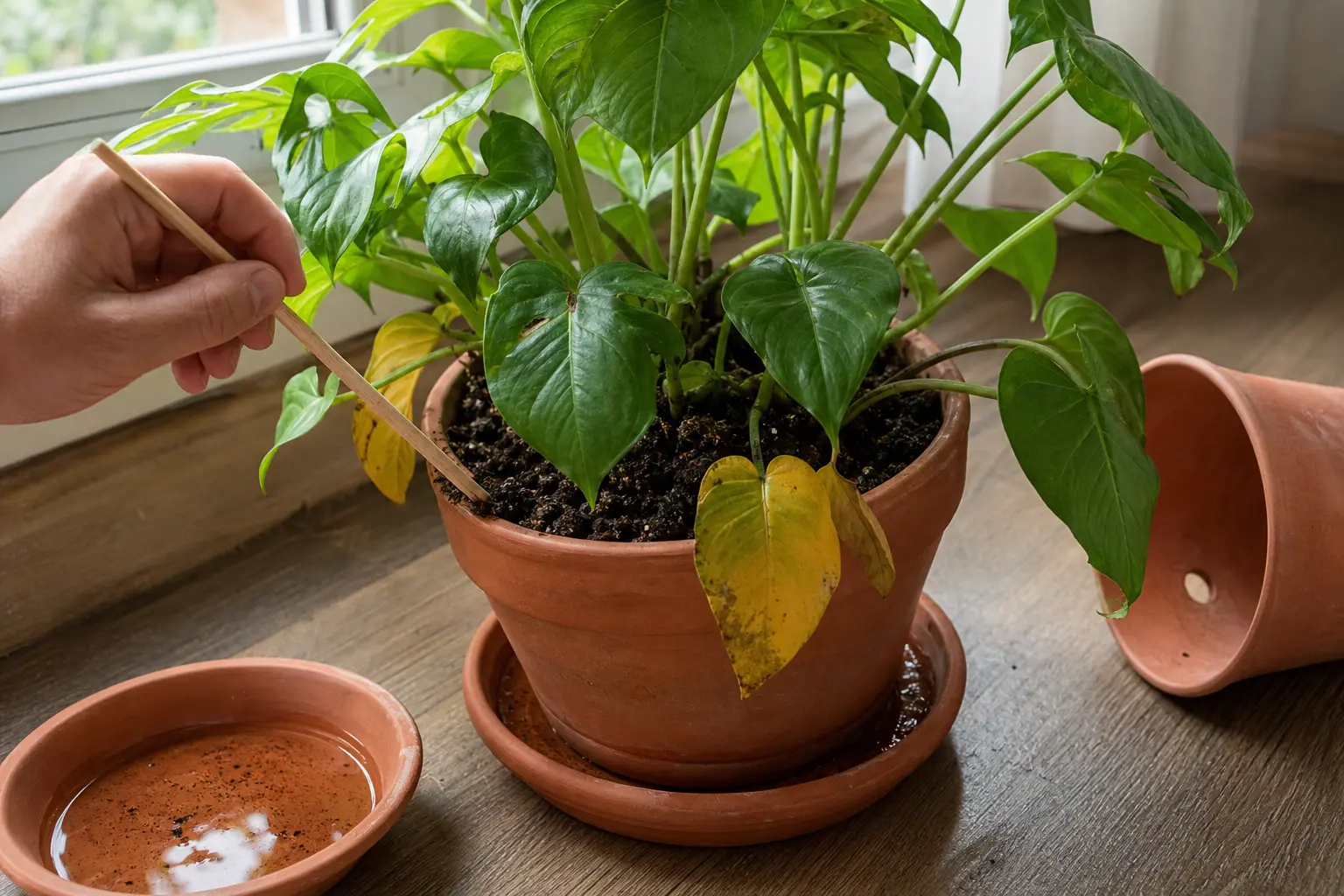
Yellow leaves despite watering often point to a watering problem—but not necessarily a lack of water. Watering every other day can keep many pots too wet for too long, especially indoors or in low light. Saturated soil limits oxygen around the roots, and damaged roots cannot absorb water or nutrients properly. The result can be yellowing, drooping, and leaf drop that look surprisingly similar to drought stress.
Before adding more water, check what is happening at the roots and in the growing conditions. Yellowing can also be related to weak light, depleted or compacted potting mix, pests, temperature shock, or the normal aging of older leaves.
Start With a Quick Diagnosis Before Watering Again
When leaves turn yellow, pause the watering routine rather than trying to correct the problem with another drink. A plant’s needs change with its size, season, light level, temperature, pot size, and soil mix. A fixed schedule is rarely reliable.
Start with a short inspection:
- Feel the soil several inches below the surface, not only the top layer.
- Check whether the pot has open drainage holes.
- Empty any saucer or cachepot holding standing water.
- Look for mushy, brown, or foul-smelling roots if the plant can be slipped from its pot.
- Consider whether the plant recently moved, experienced colder temperatures, lost light, or was fertilized.
- Notice which leaves are yellow: a few old lower leaves tell a different story from rapid yellowing throughout the plant.
Check the Soil, Not the Watering Schedule
Push a finger into the soil, use a wooden chopstick, or lift the pot to judge its weight. A pot that remains heavy and damp days after watering is not ready for more water, even if the calendar says it is.
For many leafy houseplants, the upper inch or two of mix should dry before watering again. Larger pots need a deeper check because the surface may look dry while the lower root zone remains wet. Succulents and drought-tolerant plants need substantially more drying time.
On the other hand, soil that is dry all the way through, pulling away from the pot edge, or unable to absorb water may indicate underwatering or a water-repellent old potting mix. In that case, water slowly and thoroughly until excess drains from the bottom.
Inspect Drainage, the Pot, and the Roots
A decorative pot without drainage is a frequent cause of chronically wet roots. Even if the plant is in a nursery pot inside a cover pot, water can collect unnoticed at the bottom and wick back into the soil.
Check for:
- Drainage holes: At least one open hole is essential for most potted plants.
- Compacted soil: Dense mix holds too much water and leaves little air space around roots.
- A pot that is too large: Extra unused soil stays wet longer than a small root system can manage.
- Root condition: Healthy roots are usually firm. Depending on the plant, they may be white, cream, tan, or reddish. Soft, dark, hollow, or sour-smelling roots suggest rot.
- Root crowding: A dense mass of roots can cause uneven watering, with water rushing around the root ball or drying unusually fast.
Not every yellowing plant needs immediate repotting. Pulling apart roots unnecessarily can add stress. Inspect and repot only when the potting mix or root condition clearly calls for it.
Look at Which Leaves Are Yellowing and How Fast It Is Happening
The pattern provides useful clues.
| Symptom pattern | More likely explanation | What to check |
|---|---|---|
| A few oldest, lowest leaves yellow gradually | Normal aging or mild adjustment stress | New growth and overall plant vigor |
| Many leaves turn pale yellow while soil stays wet | Overwatering, root stress, poor drainage, low light | Root zone moisture, drainage, root condition |
| Leaves yellow, curl, and soil is dry through the pot | Underwatering or uneven watering | Dryness at root depth and pot weight |
| Yellowing between green veins, especially on newer leaves | Nutrient availability issue or high-pH conditions | Root health, fertilizer history, soil age |
| Yellow leaves with sticky residue, stippling, or webbing | Pest damage | Leaf undersides and stems |
| Sudden yellowing after a move or cold draft | Environmental shock | Light, temperature, and recent changes |
Yellow leaves do not automatically mean the plant is dying. The important question is whether new leaves remain healthy after you correct the underlying cause.
Too Much Water: The Most Common Reason Leaves Yellow Despite Watering
For many indoor plants, frequent watering is the most likely explanation for yellow leaves. Roots need both moisture and oxygen. In soil that stays saturated, air spaces fill with water. Roots become stressed, then begin to die back or rot. As root function declines, the plant cannot take up enough water and minerals—even though it is surrounded by wet soil.
That is why more watering can worsen yellowing rather than fix it.
Signs of Overwatering and Root Stress
Overwatering does not always mean you used a huge amount of water at one time. It often means the mix never had enough time to dry to the level the plant needs.
Common signs include:
- Yellowing that begins on older leaves but spreads
- Soft, limp foliage rather than dry, crisp leaves
- Leaf drop, often while soil remains damp
- Brown or black spots, especially if tissue is soft
- A pot that feels heavy for many days
- Soil with a sour, stagnant smell
- Mushy or dark roots
- Little or no healthy new growth
These symptoms overlap with other problems, so use the soil and roots as your deciding evidence. Do not diagnose overwatering from yellow leaves alone.
Why a Plant Can Wilt in Soggy Soil
Wilting seems like a signal to water, but it is not always a drought signal. Roots damaged by lack of oxygen or rot cannot transport water efficiently to the leaves. The leaves then lose firmness and droop despite wet soil.
This is one of the most common mistakes with houseplants: a gardener sees a wilted plant, waters again, and further deprives the roots of oxygen. If the mix is wet, do not respond to wilting with more water. Improve conditions at the root zone instead.
Why Rain Does Not Always Cause the Same Problems as Frequent Watering
Rain can cause waterlogging and yellow leaves, especially in containers with poor drainage or garden beds that remain saturated. It is not automatically harmless.
However, outdoor plants often dry faster after rain because of wind, warmth, sunlight, larger root zones, and freer-draining soil. Rainwater may run through a well-built container quickly rather than sitting around the roots. An indoor pot in dim conditions can remain wet for a week or longer after a small watering.
The difference is not that rain is always better than tap water. It is whether the root zone drains and re-aerates between wet periods.
Other Causes of Yellow Leaves When Watering Is Not the Main Problem
Frequent watering may be happening at the same time as another issue. For example, a plant in low light uses water slowly, while an old, compacted mix makes the resulting wetness more damaging. Treat the whole growing setup rather than focusing on one symptom.
Low Light and Slow-Drying Soil
Plants use less water when light is weak. A pothos in a bright room may dry moderately quickly; the same plant several feet from a window may remain wet much longer and need far less frequent watering.
Low light can also cause leaves to fade, growth to stretch, and older leaves to yellow as the plant sheds foliage it cannot support. Move the plant gradually to brighter, appropriate light rather than abruptly placing a shade-loving plant in harsh direct sun.
If your plant’s soil never seems to dry, improving light and airflow may help—but drainage and potting mix still matter.
Nutrient Problems and Poor Nutrient Uptake
Nitrogen deficiency commonly shows as general yellowing of older leaves, while deficiencies involving iron or other micronutrients may appear as yellow tissue with greener veins, often on newer leaves. But nutrient symptoms can be misleading when roots are unhealthy.
A plant sitting in soggy soil may show nutrient-deficiency-like yellowing because damaged roots cannot absorb available nutrients. Adding fertilizer to a stressed, waterlogged plant can burn weakened roots or create salt buildup without solving the cause.
First restore suitable moisture, drainage, and light. Once the plant is actively growing again, use a fertilizer appropriate for that plant and follow the product label. Do not fertilize simply because leaves are yellow.
Rootbound Plants, Compacted Mixes, and Poor Drainage
A rootbound plant may dry very quickly, repel water, or become difficult to wet evenly. Water can run down the sides of a shrunken root ball and out the drainage hole without reaching roots in the center.
At the other extreme, old potting mix can break down into fine particles and become dense. Dense mix stays wet and poorly oxygenated. A pot may also have drainage holes that are blocked by a saucer, compacted soil, or an outer container.
Repotting is useful when roots are tightly circling, the plant is pushing itself from the pot, water channels straight through dry soil, or the mix remains soggy and airless. Choose a pot only slightly larger than the existing root ball, with drainage holes, and use a mix suited to the plant.
Pests, Disease, Temperature Changes, and Natural Leaf Aging
Inspect yellow leaves closely for pests. Spider mites can cause pale stippling and fine webbing; scale insects may look like small raised bumps; mealybugs resemble white cottony clusters. Sap-feeding pests weaken foliage and can cause yellowing even when watering is correct.
Leaf-spot diseases often create distinct brown, black, or yellow-ringed lesions rather than an even yellow fade. Remove severely affected leaves, avoid splashing foliage repeatedly, and improve airflow. If disease is spreading quickly, isolate the plant from nearby plants while you assess it.
Cold drafts, hot air from vents, sudden moves, and abrupt changes in light can also trigger yellow leaves. Finally, a plant may simply retire its oldest leaves. If one or two lower leaves yellow occasionally while new growth is healthy, it is usually not a crisis.
How to Help a Yellowing Plant Recover
Recovery depends on whether enough healthy roots remain and whether the growing conditions improve. Yellow leaf tissue will not turn green again, but a plant can recover if it produces healthy new growth.
Avoid changing everything at once. Correct the clearest problem, then watch the plant for several weeks.
Adjust Watering Based on Moisture and Plant Type
Water thoroughly when the plant needs it, rather than giving small amounts on a schedule. Apply water until the root ball is evenly moistened and a little drains from the bottom, then discard runoff from the saucer or cover pot.
Use the dryness of the mix—not “every other day”—to decide when to water again. As a general starting point:
- Many tropical foliage plants prefer partial drying near the top of the pot.
- Herbs, flowering annuals, and some vegetable containers may need more consistently moist soil, especially in sun and heat.
- Succulents, cacti, and plants with water-storing stems or leaves need much more drying between waterings.
- Seasonal conditions matter: plants typically use less water in winter, during cloudy spells, and in cooler rooms.
Repot Only When Roots or Soil Conditions Call for It
Repot if you find rotting roots, dense degraded mix, blocked drainage, or severe root crowding. Gently remove loose wet soil from rotten areas and trim only roots that are clearly soft, dark, hollow, or dead. Use clean scissors or pruners.
Place the plant in a pot with drainage that is no more than modestly larger than the root system. A huge new pot holds excessive wet soil around a reduced root system, increasing the chance of recurring rot.
If roots appear healthy and the mix is suitable, skip repotting. Let the soil dry to the appropriate level, adjust watering, and improve light if needed.
Remove Damaged Leaves and Monitor New Growth
You can remove fully yellow leaves because they will not recover and may be unattractive. Use clean scissors, cutting the leaf stem close to its base without damaging the main stem. Leave partly green leaves in place if they are still contributing energy to the plant, unless disease or pests are involved.
Then monitor:
- Whether the soil dries at a reasonable rate
- Whether yellowing stops spreading
- Whether new leaves emerge green and properly formed
- Whether stems remain firm
- Whether roots smell clean and look firm at the next inspection
A stressed plant may lose a few more leaves before stabilizing. Improvement is usually shown by healthier new growth, not by old yellow leaves becoming green again.
Common Indoor-Plant Cautions
- Pothos and peace lilies: Let the upper soil dry slightly before watering again. Peace lilies may droop when thirsty, but check the soil before reacting; drooping in wet soil suggests root stress instead.
- ZZ plants, jade plants, and most succulents: Use a fast-draining mix and allow soil to dry much more thoroughly. These plants store water and are especially vulnerable to frequent watering.
- Venus flytraps: Keep the growing medium consistently moist with appropriate low-mineral water, but avoid applying typical houseplant watering rules. They have specialized needs and should not be treated like drought-tolerant indoor plants.
- Plants grown in water: Refresh water, check for crowded or rotting roots, and provide appropriate nutrients. A plant can grow in water, but stagnant water, decaying roots, overcrowding, and lack of nutrition can still lead to yellowing.
Conclusion
If leaves are turning yellow despite frequent watering, do not assume the plant needs even more water. For many houseplants, watering every other day is too frequent, particularly in low light or dense soil. Constantly wet roots can become oxygen-starved and unable to take up water or nutrients.
Check moisture at root depth, make sure the pot drains, consider the plant’s light level and species, and inspect roots when the symptoms are severe. A flexible watering routine based on the plant’s actual conditions is far more reliable than a fixed schedule.
FAQ
Can yellow leaves mean a plant is underwatered even if I water it often?
Yes. Watering often does not guarantee that the root ball is being moistened. Very dry, compacted, or rootbound soil can repel water, allowing it to run down the pot edges and out the bottom. The surface may look wet while roots in the center remain dry.
Check deeper in the pot. If the root ball is dry, water slowly in stages so the mix can absorb moisture. If it is wet, underwatering is unlikely to be the immediate issue.
Should I cut off yellow leaves?
You can remove leaves that are completely yellow, since they will not become green again. This improves appearance and lets you monitor whether new yellowing is continuing.
Removing leaves does not cure the cause, however. Correct the watering, drainage, light, pest, or root problem first. If only a few old lower leaves are yellowing naturally, removal is optional.
How do I tell whether yellow leaves are caused by overwatering or nutrient deficiency?
Start with the soil and roots. Overwatering is more likely when soil remains wet, the pot is heavy, leaves feel soft or limp, and roots are brown or mushy. Nutrient deficiency is more plausible when roots are healthy, drainage is good, the plant has adequate light, and its potting mix has not been refreshed or fertilized for a long time.
The symptoms can overlap because damaged roots often cause poor nutrient uptake. Solve drainage and root health before adding fertilizer.
Can a plant recover after its leaves turn yellow?
Often, yes. Yellow leaves themselves will not turn green again, but the plant can recover if its root system is still viable and its conditions improve. Stop watering on a fixed schedule, correct drainage problems, provide suitable light, and avoid overfertilizing while the plant is stressed.
Watch for firm stems, soil that dries appropriately, and healthy new green leaves. Those are stronger signs of recovery than the appearance of older damaged foliage.
You Might Also Like