Why Is My Grass Turning Yellow?
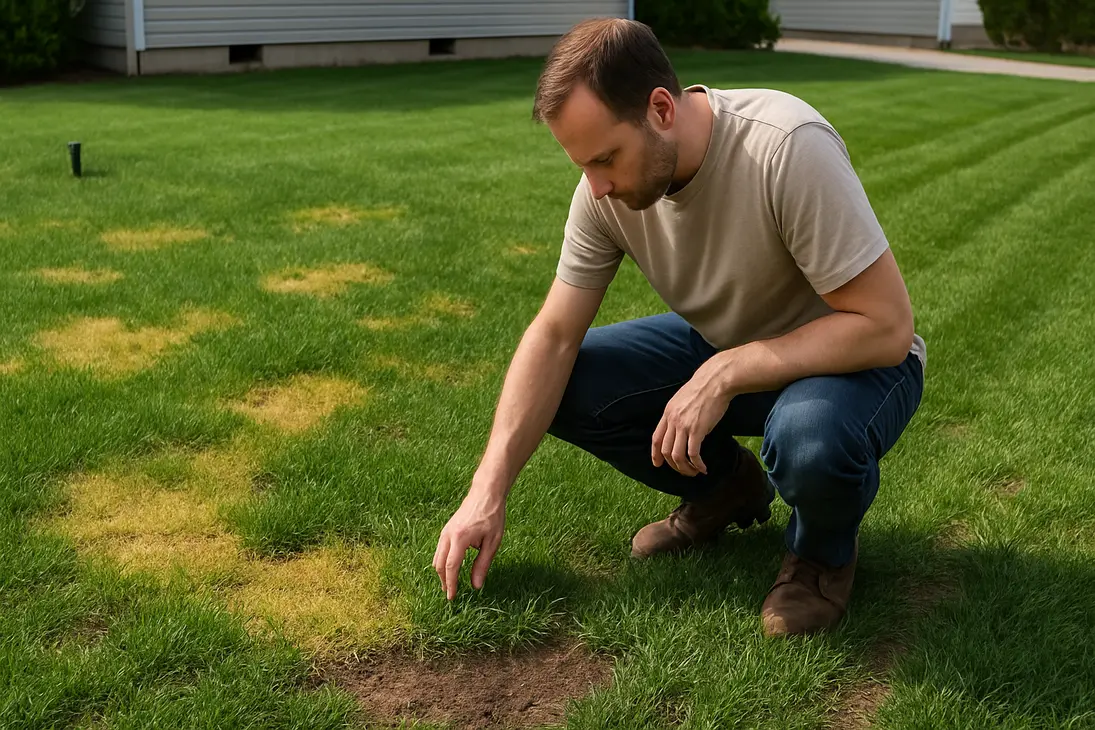
Yellow grass is usually a sign of stress, not one specific problem. Common causes include water stress, fertilizer mistakes, compacted soil, mowing damage, pet urine, pests, disease, chemical injury, nutrient deficiency, or normal dormancy.
Before you fertilize, spray, or reseed, look at the pattern. A few yellow circles mean something different from an entire lawn fading to straw.
How to Diagnose Yellow Grass Before You Treat It
Do not treat yellow grass until you narrow the cause. Drought, fungus, fertilizer burn, and nutrient deficiency can look similar from a distance.
Start with three questions:
- Is the yellowing in patches, streaks, rings, or across the whole lawn?
- Did it appear after mowing, fertilizing, spraying, seeding, heat, heavy rain, or watering changes?
- Is the grass rooted and flexible, or brittle and easy to pull up?
These clues usually point to the right fix.
Yellow patches vs. an entire yellow lawn
Yellow patches often come from localized problems such as pet urine, spilled fertilizer, uneven irrigation, grubs, disease, foot traffic, or chemical drift.
| Pattern | Likely causes |
|---|---|
| Small round yellow or brown spots | Pet urine, fertilizer granules, fungal disease |
| Irregular dry patches | Poor sprinkler coverage, compaction, shallow roots |
| Yellow streaks or stripes | Uneven fertilizer, mower damage, spray overlap |
| Rings or expanding patches | Fungal disease, localized soil issues |
| Sunny areas fading first | Heat, drought, mowing too short |
| Whole lawn turning pale | Low nitrogen, iron deficiency, dormancy, overwatering, poor soil |
If the whole lawn is yellow-green, think nutrients, pH, water, or seasonal growth habits. If only one area is affected, look for something that happened there.
Newly seeded grass vs. established turf
New grass yellows more easily because its roots are shallow. Patchy yellowing may come from uneven seed, inconsistent moisture, thick straw, poor seed-to-soil contact, or too much starter fertilizer.
Seedlings may look pale briefly as they shift from stored seed energy to soil nutrients. Persistent yellowing usually means stress. Keep the surface consistently damp during germination, but not soggy. After several mowings, water less often but more deeply.
Established turf is tougher, but it can still yellow from shallow roots, compacted soil, disease, heat, or harsh maintenance.
Seasonal yellowing, dormancy, and grass type differences
Not all yellow grass is dying. Grass type matters.
Cool-season grasses such as tall fescue, Kentucky bluegrass, and perennial ryegrass grow best in spring and fall. They may yellow or go dormant in hot, dry summers. Warm-season grasses such as Bermuda, zoysia, centipede, and St. Augustine grow in warm weather but often turn tan in cool weather.
Dormant grass is alive but not actively growing. It may green up after rain, irrigation, or better temperatures. Dead grass becomes brittle, pulls up easily, and does not recover when conditions improve.
Water, Heat, and Drought Stress
Water problems are among the most common reasons grass turns yellow. Too little water causes wilting and dormancy. Too much water drives oxygen from the soil, weakens roots, and encourages disease.
Signs your lawn is underwatered
Underwatered grass often turns dull blue-gray before yellowing or browning. Footprints or mower tracks may stay visible because the blades do not spring back. Leaf blades may fold, curl, or feel dry. Sunny slopes, driveway edges, and areas under trees usually show stress first.
Uneven irrigation is common. A sprinkler system can run for a long time while one corner receives very little water because of wind, blocked heads, low pressure, or poor spacing.
To check coverage, place several straight-sided cans around the lawn and run the sprinklers. Compare how much water each catches. If the yellow area receives less, fix the irrigation before blaming fertilizer or disease.
How overwatering can also yellow grass
A constantly wet lawn can turn pale, soft, and yellow-green. Roots need oxygen, and saturated soil limits air movement.
Signs of overwatering include:
- Squishy soil or standing water
- Moss or algae in thin areas
- Frequent mushrooms
- Grass that feels soft, not dry and crisp
- Disease pressure
- Soil that stays wet for days
Overwatered lawns may also lose nutrients, especially in sandy soil. Fertilizer may not help because the root system is already stressed.
Established lawns usually do better with deep, less frequent watering. The goal is to moisten the root zone, then let the surface dry somewhat before watering again.
Why some grass types stay greener than others
One lawn may stay green while another yellows because the grass species, soil depth, shade, mowing height, and irrigation coverage are different.
Tall fescue can handle heat better than some cool-season grasses when roots are deep. Kentucky bluegrass may go dormant but recover from rhizomes. Bermuda handles heat well but browns in cold weather. Zoysia is dense and drought-tolerant once established, but it can green up slowly in spring.
Compare grass type and site conditions before assuming your care routine is wrong.
Fertilizer and Soil Problems
Fertilizer can green up a hungry lawn, but it can also burn grass or mask deeper soil problems. Soil pH, compaction, drainage, and root health matter as much as nutrients.
Fertilizer burn from too much nitrogen or quick-release products
Fertilizer burn occurs when excess salts damage grass tissue or overload the root zone. It often appears as yellow, tan, or brown patches, streaks, or sharply defined spots where granules were spilled.
Quick-release nitrogen is more likely to burn turf if applied too heavily, used during hot dry weather, or not watered in when required.
If you suspect fertilizer burn:
- Remove visible granules.
- Water deeply if the soil is not already saturated.
- Do not add more fertilizer until recovery begins.
- Reseed or patch dead areas.
Timing is the biggest clue. Yellowing that appears within days of fertilizing, especially in streaks or concentrated patches, is likely fertilizer injury.
Nutrient deficiencies that cause pale or yellow grass
A uniformly pale yellow-green lawn may be low in nitrogen, especially during active growth. Nitrogen deficiency often causes slow growth, thin turf, and faded color.
Iron deficiency can also make grass yellow or light green, even when growth is not especially slow. It is more common when soil pH is high because iron may be present but unavailable.
Guessing is unreliable. Adding nitrogen to a lawn with a pH or iron problem may create weak, fast growth without fixing the cause. A soil test is the best way to check pH, phosphorus, potassium, and other useful indicators before choosing fertilizer.
Soil pH, compaction, and poor root growth
Compacted soil restricts air, water, and root growth. Grass may yellow even when you water and fertilize because roots cannot function well.
Common signs include hard soil, puddling, thin turf, weeds that tolerate poor soil, and yellowing in paths or high-traffic areas. If a screwdriver barely pushes into the ground, compaction may be part of the problem.
Soil pH also affects nutrient availability. Lime or sulfur may be recommended after a soil test, but do not apply them blindly. Improving poor soil usually takes time through core aeration, better drainage, higher mowing, deep watering, and appropriate topdressing.
Lawn Care Mistakes That Cause Yellowing
Routine maintenance can stress grass enough to turn it yellow, especially during heat, drought, or active disease pressure.
Scalping the lawn or cutting more than one-third at a time
Mowing too short removes too much leaf surface and exposes soil to more sun. Scalped grass often looks yellow or straw-colored shortly after mowing because the mower cuts into older, lower, less-green tissue.
Avoid removing more than one-third of the blade at one mowing. If the lawn is tall, lower it gradually over several cuts.
Dull mower blades can also create a yellow or whitish cast. They tear leaf tips instead of cutting cleanly, and the damaged tips dry out. If the lawn looks straw-tipped after mowing, sharpen the blade.
Pet urine spots and other localized burns
Dog urine often causes small yellow or brown spots with a darker green ring. The center burns from concentrated salts and nitrogen, while the outer ring may green up from diluted nitrogen.
Water fresh urine spots thoroughly. For recurring problems, train pets to use a mulched or gravel area, rotate access, or rinse favorite areas. Dead spots may need flushing, dead grass removal, and reseeding.
Other localized burns can come from spilled fertilizer, gasoline, cleaning products, ice melt, pool water, or hot objects left on the lawn. Sharp edges and sudden timing often reveal the cause.
Herbicide, salt, or chemical damage
Herbicides can yellow grass when applied at the wrong rate, during heat stress, to the wrong grass type, or when spray drifts. Always check the label for your grass species and temperature limits.
Salt damage is common along sidewalks, roads, and driveways where de-icers are used. It may show as yellow or brown margins in late winter or spring. Where drainage is good, flushing with water may help, but prevention is better: use de-icers carefully and keep salty slush off turf.
For chemical spills, avoid spreading contaminated soil and do not keep adding products until you know what caused the damage.
Pests, Disease, and New Grass Issues
Pests and disease often appear in patches, especially when grass is already stressed by weather, poor soil, mowing, or watering problems.
Grubs and insect damage
Grubs feed on grass roots. Damaged turf turns yellow, wilts, and may brown in irregular patches. A classic sign is grass that lifts like loose carpet because the roots have been eaten.
To check, cut and peel back a small section at the edge of the damaged area. Look for white, C-shaped grubs in the root zone. A few grubs do not always require treatment, but many grubs plus root damage may.
Other pests, including chinch bugs, sod webworms, and billbugs, can also yellow lawns depending on region and grass type. Avoid broad insecticide use “just in case.”
Fungal lawn diseases
Fungal diseases often develop during humid weather, warm nights, prolonged leaf wetness, or after excessive nitrogen. They may appear as yellow patches, thinning areas, rings, spots on blades, or smoky-gray edges on active patches.
Conditions that encourage disease include evening watering, frequent shallow watering, dull mower blades, poor airflow, thick thatch, and heavy nitrogen during disease-prone weather.
Not every yellow patch needs fungicide. Many diseases improve when watering, mowing, and fertility are corrected. If the problem spreads quickly or returns every year, identify the disease before treating.
Why newly seeded grass may yellow in patches
New grass may yellow because of uneven moisture, poor seed-to-soil contact, compacted soil, shade, thick mulch, concentrated starter fertilizer, or seedling disease.
Seedlings dry out quickly. A patch that germinated and then dried during a hot afternoon may yellow while nearby areas survive. Low spots that stay soggy can also yellow because roots lack oxygen.
For yellowing new grass:
- Check moisture at and just below the surface.
- Thin overly thick straw or mulch.
- Avoid strong fertilizer until seedlings are established.
- Keep traffic off the area.
- Mow only when grass is tall and rooted enough, using a sharp blade.
Some uneven color is normal during establishment. Correct the stress before repeatedly reseeding.
Conclusion
Yellow grass is a symptom, not a diagnosis. Common causes include drought, uneven watering, overwatering, fertilizer burn, nutrient deficiency, compacted soil, mowing too short, pet urine, chemical injury, pests, disease, and seasonal dormancy.
Read the pattern first. A whole lawn fading evenly suggests a different issue than yellow circles, streaks, or patches after fertilizing. Check recent changes, soil moisture, mowing height, sprinkler coverage, and root health.
Most yellow lawns can recover if the stress is corrected instead of guessed at.
FAQ
Will yellow grass turn green again?
Often, yes. Yellow grass can turn green again if the crowns and roots are alive and the stress is corrected. Drought-stressed grass may recover after rain or proper irrigation. Nutrient-deficient grass may improve after soil-based fertilization. Scalped grass may recover with higher mowing and time.
Recovery is less likely if the grass is brittle, pulls up easily, has rotted roots, or stays brown after good conditions return.
Does yellow grass mean my lawn is dead?
No. Yellow grass is often stressed, dormant, or nutrient-deficient rather than dead. Dormant grass may look tan while still alive.
Gently tug the grass. Living turf usually stays anchored. Dead grass often pulls away easily or lacks a firm crown at the base. New green growth near the soil surface is a good recovery sign.
Can too much fertilizer make grass yellow?
Yes. Too much fertilizer, especially quick-release nitrogen, can burn grass and turn it yellow, tan, or brown. Burn often appears soon after application as streaks, spots, or patches where product was spread unevenly or spilled.
Remove visible granules and water deeply if the soil drains well. Do not apply more fertilizer until the lawn begins to recover.
Why is my new grass seed turning yellow in some spots?
New grass seed may yellow in patches because of uneven watering, poor seed-to-soil contact, too much or too little mulch, concentrated starter fertilizer, compaction, shade, or seedling disease.
Keep the soil consistently moist during germination, limit traffic, use fertilizer carefully, and gradually shift to deeper watering once seedlings are established.
You Might Also Like