When Should You Use Soap Water on Indoor Plants?
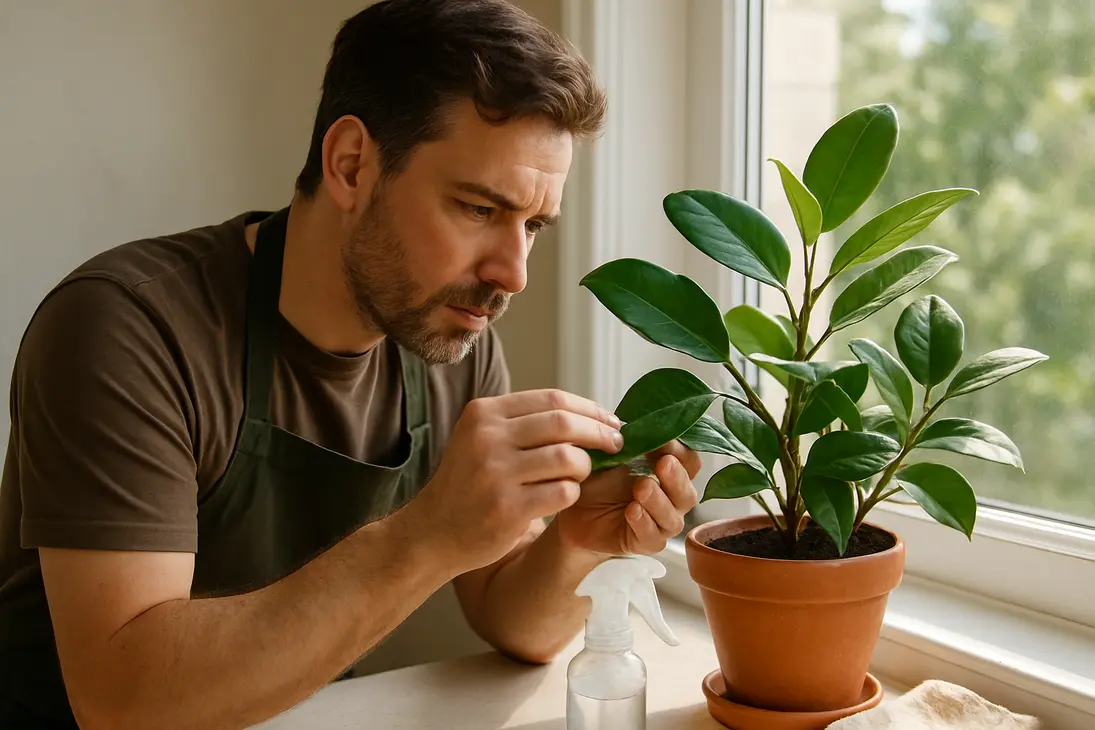
Use soap water on indoor plants when you have clear signs of soft-bodied insect pests, not simply because a plant looks unhappy. The most useful indoor gardening soap water signs are visible insects, sticky leaves, cottony white clusters, fine webbing, speckled foliage, or distorted new growth with pests nearby.
Soap water works by contacting small pests directly. It is not a fertilizer, tonic, disease cure, or fix for poor watering habits. Used carefully, it can help reduce aphids, mealybugs, spider mites, whiteflies, and young scale insects. Used unnecessarily or too strongly, it can irritate foliage, especially on stressed or delicate plants.
Signs Your Indoor Plant May Need Soap Water
Soap water is most appropriate when symptoms are on the plant’s surface and connect clearly to pest activity. A yellow leaf by itself is not enough. Sticky, speckled, webbed, or insect-covered leaves are much stronger clues.
Check the areas pests prefer: undersides of leaves, tender new shoots, leaf joints, and stems.
You Can See Small Insects on Leaves or Stems
The clearest sign is seeing pests. Aphids may cluster on soft new growth. Whiteflies lift off in tiny white clouds when disturbed. Mealybugs look like small white fluff. Spider mites are harder to see, but tiny moving dots may be visible under good light.
Check:
- The undersides of leaves
- New shoots and buds
- Where leaves meet stems
- Along soft green stems
- Around tight crevices or old leaf scars
If you only see one or two insects, you may be able to wipe them away. If you see clusters or repeated activity over several days, soap water may be worth using.
Leaves Feel Sticky or Look Shiny
Sticky leaves often point to sap-feeding pests such as aphids, mealybugs, whiteflies, or scale. They leave behind a sugary residue called honeydew, which can make leaves, shelves, windowsills, or floors feel tacky.
This is one of the more useful indoor gardening soap water signs, but inspect before treating. Some plants naturally have glossy leaves or harmless sap droplets. If the shine is new, patchy, sticky, and appears with insects or white specks, soap water may help. You may still need to wipe leaves afterward to remove residue.
White Cottony Clusters Appear in Leaf Joints
White, cottony material in leaf joints is a classic sign of mealybugs. They hide where leaves attach to stems, under sheaths, around aerial roots, and in succulent crevices.
Soap water can help with exposed mealybugs, especially when combined with physical removal. Wipe or dab visible clusters first, then treat the areas where they were found. Recheck the plant over the next couple of weeks because one treatment rarely solves a heavy infestation.
Fine Webbing or Speckled Leaves Show Up
Fine webbing between leaves, along stems, or on leaf undersides can indicate spider mites. You may also see tiny pale speckles, stippling, bronzing, curling, or dropping leaves.
Soap water can reduce spider mites only when it reaches them directly. A light spray over the top of the plant will not do much if mites are feeding underneath. Focus on leaf undersides and inspect again within a few days.
New Growth Looks Distorted or Weak
Pests often prefer tender new growth. Curling, puckered, twisted, stunted, or weak new leaves can be linked to aphids, thrips, mites, or mealybugs.
However, distorted growth can also come from low light, root stress, inconsistent watering, nutrient issues, or normal juvenile leaf shape. Use soap water only if the distortion appears with visible insects, sticky residue, webbing, or cottony patches.
Common Indoor Plant Pests Soap Water Can Help With
Soap water works best on small, exposed, soft-bodied pests. It is less useful on insects with hard protective covers, pests hidden deep in soil, or diseases inside plant tissue.
| Pest | Common signs | Where to look | Soap water usefulness |
|---|---|---|---|
| Aphids | Clusters, sticky leaves, curled new growth | New shoots, buds, leaf undersides | Often helpful with direct contact |
| Mealybugs | White cottony clusters, sticky residue | Nodes, crevices, stems, leaf joints | Helpful with repeated removal and checks |
| Spider mites | Fine webbing, pale speckling | Leaf undersides, dry inner foliage | Helpful if coverage is thorough |
| Whiteflies | Tiny white flying insects, sticky leaves | Leaf undersides | Helpful on exposed insects |
| Scale crawlers | Sticky leaves, tiny mobile young scale | Stems and leaf undersides | Mainly helpful against young crawlers |
Aphids
Aphids are small, pear-shaped insects that gather on tender growth. They may be green, black, brown, yellow, or pinkish. Indoors, they often appear after a plant has spent time outside or near open windows.
Signs include curled new leaves, sticky residue, and clusters along stems or buds. Aphids often respond well to mild soap water because they are soft-bodied and exposed. Before spraying, dislodge or wipe away as many as possible, then treat where clusters remain.
Mealybugs
Mealybugs look like bits of white lint, cotton, or wax. They are common on plants with tight growth points, thick stems, or leaf joints, including hoyas, pothos, philodendrons, jade plants, orchids, and succulents.
They often return because hidden insects or eggs remain. Remove visible mealybugs with a cotton swab, soft cloth, or gentle water spray first. Then treat feeding areas and isolate the plant if possible, since mealybugs can spread.
Spider Mites
Spider mites are tiny arachnids that thrive in warm, dry rooms. The first sign is often damage rather than the mites themselves: pale stippling, dull leaves, fine webbing, or fading foliage.
Soap water can help when it contacts mites directly. The challenge is coverage. Mites gather on undersides and sheltered spaces, so showering or wiping the plant first can make treatment more effective.
Whiteflies
Whiteflies are tiny white insects that flutter up when leaves are disturbed. They usually sit on leaf undersides and feed on sap, often leaving sticky honeydew.
Soap water can reduce whiteflies, especially immature stages on leaf undersides, but adults may fly away and return. Move the plant away from others, spray where insects are present, and inspect again later.
Scale Crawlers
Scale insects are harder to manage with soap water. Mature scale looks like small brown, tan, or gray bumps stuck to stems or leaves, and the protective covering makes them difficult to treat.
Young scale insects, called crawlers, are softer and more vulnerable. Soap water may help if you catch them early. For mature scale, physical removal is usually important before any soap treatment.
When Soap Water Is Not the Right Fix
Many indoor plant problems look alarming but are not caused by pests. If you cannot find insects, webbing, sticky residue, cottony clusters, or pest-related damage, pause before spraying.
Yellow Leaves Without Visible Pests
Yellow leaves have many causes. Older leaves naturally yellow and drop. Plants may also yellow from overwatering, underwatering, low light, cold drafts, root damage, nutrient issues, or recent repotting.
Soap water will not turn yellow leaves green again. If there are no pest signs, check soil moisture, drainage, light, roots, and recent environmental changes first.
Wilting From Overwatering or Underwatering
Wilting can mean too little water, too much water, root rot, heat stress, or severe pests. Soap water only helps with pests.
Check the soil before spraying. Bone-dry soil suggests the plant needs water. Wet, heavy, sour-smelling soil suggests root trouble. Pest-related wilting usually appears with insects, sticky residue, stippling, webbing, or weakened new growth.
Seedlings That Have Stopped Growing
Stalled seedlings are usually dealing with light, temperature, moisture, nutrition, airflow, or root-space problems. Soap water is rarely the answer unless pests are visible.
Seedlings are also sensitive. Their thin leaves are easy to damage. Use soap water only if you clearly see pests on the foliage, and test carefully first.
Fungal Spots, Rot, or Mold Issues
Soap water is not a reliable fix for fungal leaf spots, root rot, stem rot, or moldy soil. These problems are usually tied to moisture, airflow, sanitation, and infected tissue.
Fungal spots may look brown, black, yellow-ringed, or water-soaked. Rot may cause mushy stems or foul-smelling roots. Mold on soil usually means the surface is staying damp. Improve airflow, adjust watering, and remove badly affected tissue instead of spraying soap water.
Sensitive or Stressed Plants
Some plants react poorly to soap water, especially if stressed. Thin-leaved plants, fuzzy-leaved plants, ferns, some palms, certain succulents, orchids, seedlings, and newly repotted plants may be more sensitive.
Avoid spraying when a plant is:
- Wilted from drought
- Sitting in soggy soil
- Recently repotted or root-pruned
- In direct hot sun
- Under strong grow lights
- Experiencing heat or cold stress
- Pushing very tender new leaves
If treatment is necessary, test a small area first.
How to Check Before Treating the Whole Plant
A careful inspection helps you avoid unnecessary spraying and target the right areas. A hand lens or phone camera zoom can help with mites and tiny crawlers.
Move the plant to a bright spot, preferably away from other plants, and inspect slowly.
Inspect the Undersides of Leaves
Many pests feed under leaves where they are protected. Lift leaves one by one and look for dots, eggs, webbing, sticky shine, or clusters.
Start with:
- Speckled or yellowing leaves
- Curled leaves
- Leaves near sticky residue
- Inner foliage with poor airflow
- Lower leaves near the soil line
If you see tiny specks but are unsure whether they are alive, tap a leaf over white paper. Moving dots may indicate mites or other small pests.
Check Stems, Leaf Nodes, and New Growth
Leaf nodes and new growth are common hiding places because the tissue is tender and sap-rich.
Look for:
- White fluff in crevices
- Small bumps along stems
- Clusters on new shoots
- Sticky residue near nodes
- Distorted young leaves
- Shed skins or tiny pale specks
Inspect dense plants carefully, especially hoyas, pothos, philodendrons, tradescantia, and tight succulents.
Look for Recurring Mealybugs or Hidden Eggs
If mealybugs keep returning, hidden survivors may be the problem. They can tuck into leaf axils, pot rims, stakes, moss poles, cachepots, and even the surface of the potting mix.
Before spraying the whole plant again, remove visible clusters, wipe the pot exterior, check the rim, and inspect nearby plants. More soap is not necessarily better; better inspection and repeated gentle treatment are usually safer.
Test One Leaf Before Spraying the Whole Plant
Before treating the entire plant, test one leaf or a small section. Wait until the next day if possible and check for dullness, spotting, browning, curling, or a greasy-looking film.
A patch test is especially important for:
- Ferns
- Calatheas and marantas
- Fuzzy-leaved plants
- Thin-leaved tropical plants
- Succulents with powdery coatings
- Seedlings
- Recently stressed plants
If the test area is damaged, do not continue with the same solution. Try physical removal, rinsing, pruning affected leaves, or a product labeled for that plant and pest.
How to Use Soap Water Safely on Indoor Plants
Soap water should be used gently and deliberately. The aim is to contact pests, not coat the plant repeatedly for no reason.
Use Mild Soap, Not Harsh Detergents
Use a mild soap, not a degreasing dish detergent, laundry detergent, disinfectant, or cleaner with fragrance, bleach, ammonia, solvents, or antibacterial additives. Many household detergents strip grease and can damage the protective surface of leaves.
If you use commercial insecticidal soap, follow the label exactly. A stronger solution is not safer or more effective; it can burn leaves, leave residue, or stress the plant.
Spray Where Pests Are Present
Target the pests directly. Soap water needs contact to work, so spraying clean leaf surfaces while missing undersides will not help much.
A practical approach:
- Isolate the affected plant.
- Remove visible pests by wiping, rinsing, or pruning badly infested parts.
- Spray affected leaf undersides, nodes, and stems.
- Avoid drenching the soil.
- Let the plant dry in a shaded, comfortable spot.
- Reinspect after a few days.
For mealybugs and scale, physical removal is often necessary because soap may not reach insects hidden under wax or covers.
Avoid Hot Sun, Grow Lights, or Heat Stress
Do not spray soap water when leaves are hot, in direct sun, or right before strong grow lights. Wet, treated leaves can be more prone to spotting or burn under intense light.
Treat in mild conditions, such as morning or evening, and keep the plant out of harsh light until leaves are dry. Avoid treating a severely wilted plant; stabilize it first, then reassess.
Rinse if Leaves Look Dull or Damaged
Some plants tolerate soap water well; others show dullness, residue, spotting, or edge burn. If leaves look coated, sticky, grayish, or irritated, gently rinse them with clean, lukewarm water.
Let the plant drain well afterward. If a plant reacts badly, stop using soap water on it.
Repeat Only if Pest Signs Remain
Do not use soap water on a fixed schedule unless pests are still present. Recheck first for live insects, fresh webbing, new sticky residue, or newly distorted growth.
If signs remain, repeat carefully. If new growth looks clean and no pests are visible, stop spraying and continue monitoring.
For persistent infestations, consider whether nearby plants are reinfesting it, pests are hiding in supports or crevices, the plant is too dense to treat, or a labeled pest product is needed.
Conclusion
Soap water is useful on indoor plants when you see clear signs of soft-bodied pests: visible insects, sticky honeydew, white cottony mealybug clusters, fine spider mite webbing, speckled leaves, or distorted new growth with pest activity nearby.
It is not the right fix for every struggling plant. Yellowing, wilting, stalled seedlings, fungal spots, rot, and general decline often come from water, light, roots, airflow, or stress rather than insects.
Inspect first, test a small area, use mild soap only when needed, and treat the places where pests are actually present. Soap water can be a helpful tool, but it works best as part of careful indoor plant care rather than as a cure-all.
FAQ
Can I use soap water on all indoor plants?
No. Some indoor plants tolerate mild soap water better than others. Thick, smooth leaves are often less reactive than thin, fuzzy, delicate, or stressed leaves. Ferns, seedlings, some succulents, calatheas, and recently repotted plants may be more sensitive.
Always test one leaf or a small area first.
How do I know if my plant has mealybugs?
Mealybugs usually look like small white cottony clumps or bits of lint. Check leaf joints, stems, undersides of leaves, crevices, and new growth. You may also notice sticky leaves or shiny residue nearby.
If they keep coming back, check the pot rim, plant supports, nearby plants, and tight growth points.
Should I use soap water if my plant’s leaves are turning yellow?
Only if you also find pest signs. Yellow leaves alone are not a strong reason to use soap water. Overwatering, underwatering, low light, old leaves, root stress, and temperature changes are more common causes.
Inspect undersides of leaves, stems, and new growth. If you find sticky residue, insects, webbing, or cottony clusters, soap water may help.
How often should I apply soap water for indoor plant pests?
Apply it only when pest signs remain. After the first treatment, wait a few days and inspect again. If you still see live pests, fresh webbing, sticky residue, or new clusters, another careful treatment may be needed.
Avoid spraying repeatedly without checking. Too much soap can stress foliage, especially on sensitive plants.
You Might Also Like