When Should You Repot a Golden Pothos?
Quick Answer: Repot Golden Pothos When It Outgrows Its Pot
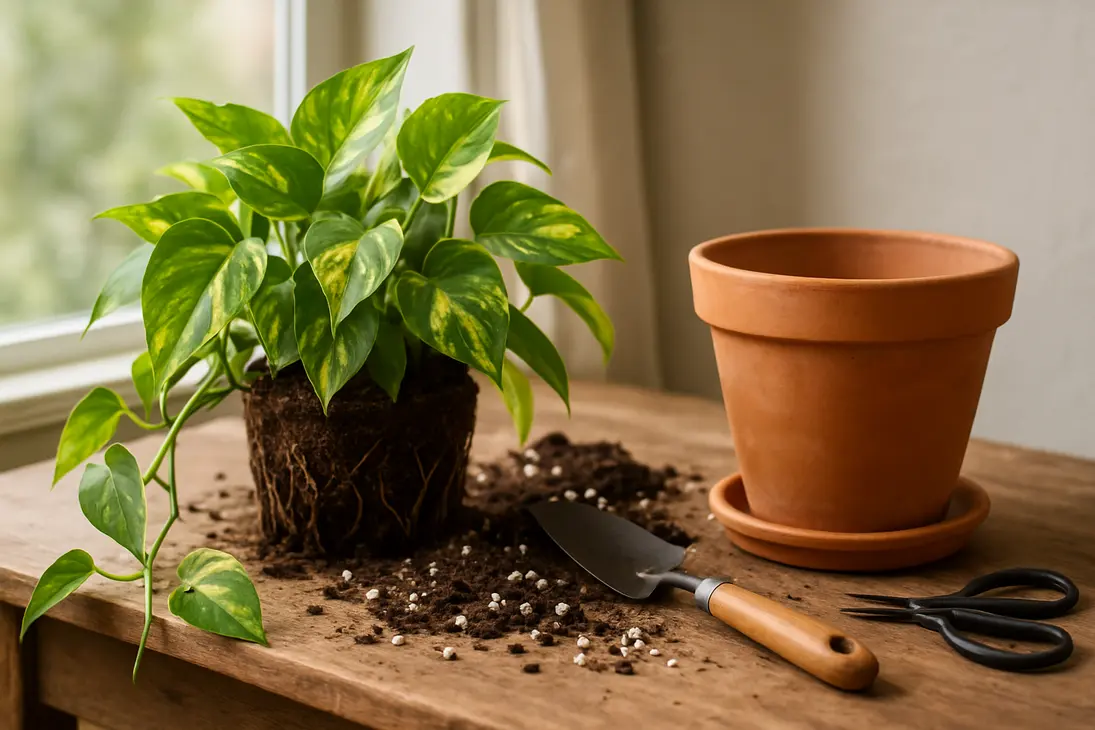
Golden pothos needs repotting when its roots have filled the pot, the soil no longer holds moisture well, or the plant becomes difficult to water or keep upright. For many indoor pothos plants, this happens every 1–2 years, but the calendar should not be your only guide.
Pothos tolerates snug roots better than many houseplants. Repotting too soon, especially into a much larger pot, can leave excess soil wet for too long and increase the risk of root rot. If your plant is growing steadily, drying at a normal pace, and not tightly root-bound, it may not need repotting yet.
Best Time of Year to Repot
The best time to repot golden pothos is spring through early summer, when the plant is actively growing and can recover faster.
Summer is also fine if the plant is badly root-bound, drying out constantly, or sitting in failing soil. Early fall can work for a healthy plant in a warm, bright home.
Avoid winter repotting unless there is a real problem, such as root rot, compacted soil that will not absorb water, or a pot with no drainage. In low light and cooler temperatures, pothos recovers more slowly.
How Often Golden Pothos Typically Needs Repotting
Most golden pothos plants need repotting every 1–2 years, but growth rate varies. Plants in bright, indirect light may fill a pot faster, while lower-light plants may stay comfortable for several years.
| Plant situation | Likely repotting timing |
|---|---|
| Young, fast-growing pothos | Every 12–18 months |
| Mature pothos in moderate light | Every 18–24 months |
| Slow-growing pothos in low light | Every 2–3 years if soil stays healthy |
| Root rot, bad soil, or no drainage | Repot as soon as possible |
If the plant is thriving, do not disturb it just because a year has passed.
Why You Shouldn’t Repot Just Because the Plant Is New
A newly purchased pothos is already adjusting to different light, humidity, temperature, and watering. Repotting immediately adds stress.
Wait 2–4 weeks unless there is an urgent issue. During that time, watch how fast the soil dries, check for pests, and see whether the plant is settling in.
Repot sooner if the pot has no drainage, the soil smells rotten, water cannot soak into the root ball, the soil stays wet too long, or roots look mushy. If the plant looks healthy and only has a small root showing at the drainage hole, it usually does not need immediate repotting.
Signs Your Golden Pothos Needs Repotting
The strongest signs involve roots, watering behavior, and growth. One yellow leaf or an unattractive nursery pot is not enough.
Roots Circling the Pot or Coming Through Drainage Holes
Roots growing through drainage holes can mean the plant needs more room. A single root tip is not urgent, but many roots emerging from the bottom often indicate crowding.
To check, water the plant a day before inspection so the root ball is slightly moist. Slide it out gently. If you see a dense mat of roots circling the outside and little loose soil remains, the plant is root-bound.
A mildly root-bound pothos can still be healthy. Repot when the roots are packed tightly enough that the soil can no longer hold moisture or nutrients well.
Soil Drying Out Much Faster Than Usual
If your pothos used to need water every 7–10 days but now wilts after 2–3 days in the same conditions, the pot may be mostly roots.
First rule out seasonal changes. Soil dries faster in hot weather, near heaters, in bright windows, and in terracotta pots. But if the environment has not changed and the plant dries unusually fast, inspect the roots.
A slightly snug pothos is fine. A plant that becomes hard to keep hydrated likely needs a larger pot.
Slowed Growth Despite Good Light and Care
Golden pothos may grow slowly indoors, especially in low light. But if it has good light, appropriate watering, and occasional feeding during the growing season, yet growth has stalled for months, the pot or soil may be limiting it.
Old potting mix also breaks down over time. It can become compacted, less airy, and poor at balancing moisture and oxygen. Fresh, well-draining mix can help if the plant is otherwise healthy.
Water Running Straight Through the Pot
If water immediately runs out of the drainage holes without soaking in, the root ball may be too dense, or the potting mix may have become hydrophobic after drying out.
Try bottom-watering once. Place the pot in a shallow container of water for 20–30 minutes, then drain thoroughly. If the soil still will not absorb water, or the plant is tightly root-bound, repotting is usually better.
A Top-Heavy Plant or Crowded Pot
A long, trailing pothos can become physically unbalanced. If the pot tips easily, vines are heavy, or the container is crowded with stems and roots, a slightly larger and heavier pot can make care easier.
Do not jump to a huge pot. Move up one size, or prune long vines and propagate cuttings if the plant is hard to manage.
When Yellow Leaves Mean Repotting — and When They Don’t
Yellow leaves do not automatically mean your pothos needs repotting. Yellowing can come from overwatering, underwatering, low light, cold drafts, pests, old age, or root damage.
Look at the pattern. One older yellow leaf near the base is very different from many yellow leaves appearing quickly across the plant.
Overwatering and Poor Drainage
Overwatering is one of the most common causes of yellow pothos leaves. The problem is usually soil staying wet too long, which limits oxygen around the roots.
Signs include several yellow leaves, soft stems, soil that stays wet for many days, fungus gnats, wilting despite moist soil, or a pot with no drainage.
Repotting may help if the soil is dense, compacted, or the pot lacks drainage. If the mix is decent and the pot drains well, adjust watering first. Let the top few inches dry before watering again.
Underwatering or Letting the Plant Stay Too Dry
Underwatering can also cause yellow leaves, especially when the plant repeatedly wilts hard before being watered.
Signs include limp vines, crispy brown edges, soil pulling from the pot sides, a very light pot, and yellowing after repeated dry spells.
If the plant perks up after thorough watering, repotting may not be needed. If it dries out again extremely fast because the pot is packed with roots, repotting can help.
Root Rot Warning Signs
Root rot is a reason to repot promptly. It usually develops when roots sit in wet, poorly aerated soil too long.
Warning signs include a sour smell, black or mushy roots, soft stems near the soil line, yellow leaves with wet soil, wilting that does not improve after watering, or soil that stays wet for a week or more.
Healthy pothos roots are firm and light-colored to tan. Rotten roots are dark, slimy, soft, and may fall apart.
If root rot is present, remove the plant, cut away rotten roots, discard soggy soil, and repot in fresh, airy mix in a pot with drainage. If most roots are gone, take healthy vine cuttings as backup.
Normal Older Leaf Yellowing
Golden pothos occasionally sheds older leaves, especially near the base. If one lower leaf turns yellow while the rest of the plant looks firm and healthy, it is usually normal aging.
Normal yellowing is occasional, limited to older leaves, and not paired with mushy stems, foul soil, or sudden wilting. Do not repot a healthy pothos because of one yellow leaf.
How to Repot a Golden Pothos Without Harming It
Repotting golden pothos is simple if you avoid oversized pots and unnecessary root damage. The goal is to give the plant a little more room and fresher soil, not to strip the roots clean.
If the soil is bone dry, water lightly the day before. Slightly moist roots are more flexible and less likely to break.
Choose a Pot Only Slightly Larger
Move up one pot size, usually 1–2 inches wider than the current pot. For example, move a pothos from a 6-inch pot to a 7- or 8-inch pot.
A much larger pot holds excess soil that roots cannot use quickly. That soil stays wet longer and raises the risk of root rot, especially indoors.
Always choose a pot with drainage holes. If using a decorative cachepot, keep the pothos in a draining nursery pot inside it and empty collected water after watering.
Use a Well-Draining Potting Mix
Golden pothos likes soil that holds some moisture but does not stay soggy. A standard indoor potting mix can work if amended for drainage.
A simple mix is 2 parts indoor potting mix and 1 part perlite or pumice. You can also add 1 part orchid bark or coco chips for extra structure.
The mix should feel loose and springy, not muddy or heavy. Avoid garden soil indoors because it compacts in pots and may drain poorly.
Gently Loosen the Root Ball
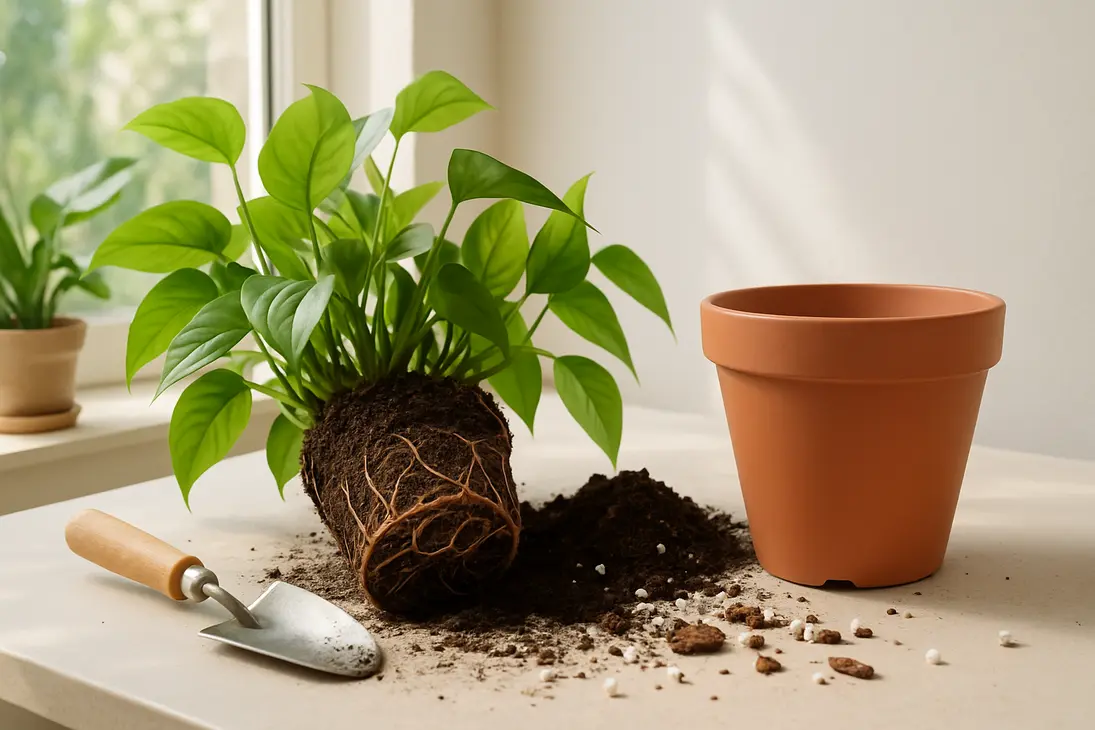
Slide the plant out and inspect the roots. If they are only lightly wrapped around the soil, leave most of the root ball intact.
If roots are tightly circling, gently tease the outer roots loose with your fingers, focusing on the sides and bottom. You do not need to remove all old soil unless there is rot or a serious soil problem.
For very dense roots, make a few shallow vertical cuts along the outside of the root ball with clean scissors or a clean knife. Keep this minimal to avoid slowing recovery.
Remove Rotten or Dead Roots Only
Do not prune healthy roots just to make the plant fit back into a small pot. Trim only roots that are mushy, slimy, hollow, blackened and soft, or clearly dead.
Use clean scissors or pruners. If you remove many roots, consider trimming some vines too so the reduced root system has less foliage to support.
Replant at the Same Depth
Add fresh mix to the bottom of the new pot, set the root ball in place, and keep the plant at the same depth as before. Do not bury the stems deeper than they were.
Fill around the sides with fresh soil and press lightly to remove large air pockets. Do not pack the soil hard. Leave a little space at the top so water does not spill over.
Aftercare: What to Do After Repotting
A repotted pothos may droop slightly or pause growth for a short time. Good aftercare helps it settle in.
Water Thoroughly, Then Let Soil Partly Dry
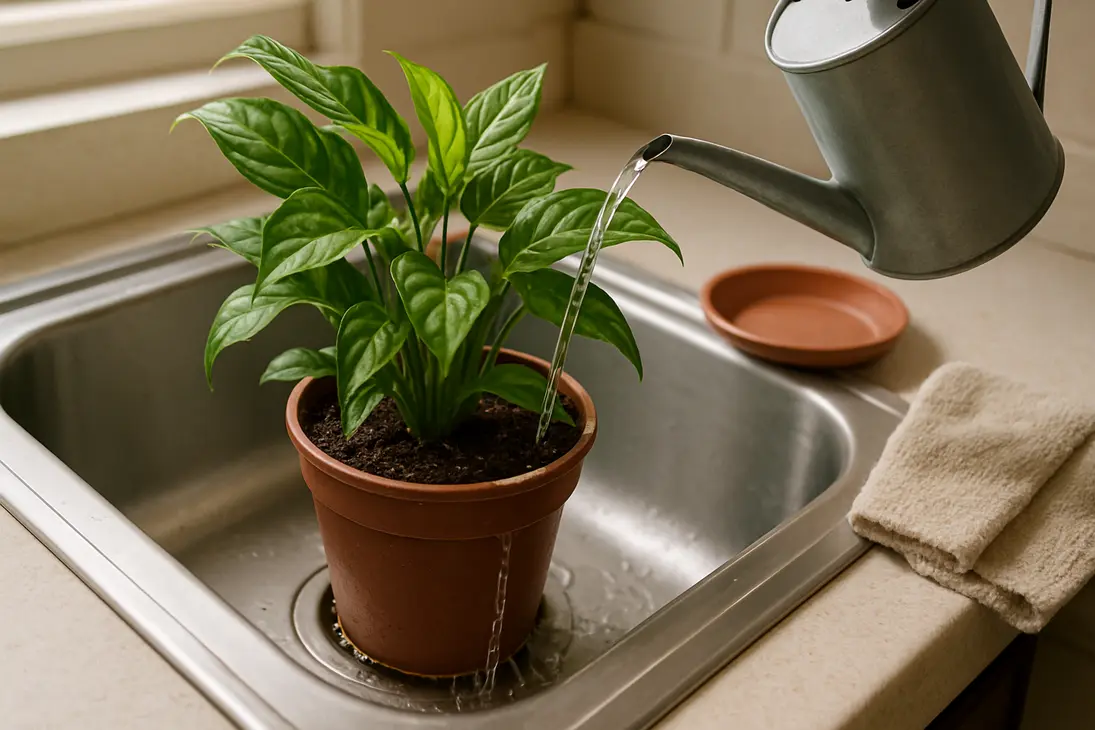
After repotting, water until moisture drains from the bottom. This settles the mix around the roots.
Then return to normal watering. Let the top few inches of soil dry before watering again. Do not keep the soil constantly wet because recovering roots need both moisture and air.
Check moisture with your finger, a wooden skewer, or pot weight. Moisture meters can help, but use them with observation.
Keep It in Bright, Indirect Light
Place the repotted pothos in bright, indirect light. This supports recovery without the stress of harsh direct sun.
Avoid moving it into a dark corner right after repotting. Also avoid strong midday sun through a hot window. An east-facing window, a spot set back from a bright south- or west-facing window, or a grow light usually works well.
Wait Before Fertilizing
Do not fertilize immediately after repotting. Fresh potting mix often contains nutrients, and disturbed roots can be sensitive to fertilizer salts.
Wait about 4–6 weeks before feeding, and fertilize only during active growth. Use a balanced houseplant fertilizer at a mild rate according to the label. If you repotted because of root rot, wait until you see recovery before feeding.
Expect Minor Drooping or Pause in Growth
Some drooping after repotting is normal. The plant may also stop producing new leaves for a few weeks while it adjusts.
Normal signs include slight droop for a few days, a temporary pause in growth, one or two older yellow leaves, and slower water use at first.
Concerning signs include mushy stems, soil staying wet too long, rapid yellowing across many leaves, a foul smell, or decline that worsens over time.
If the plant declines, check soil moisture first. Most post-repotting problems come from soil staying too wet or from using a pot that is too large.
Conclusion
Repot golden pothos when the current pot or soil is no longer working. Roots circling the pot, very fast drying, water running straight through, stalled growth in good conditions, and top-heavy growth are stronger signals than age alone.
Do not repot just because the plant is new, and do not assume one yellow leaf means it needs more room. Choose a pot only slightly larger, use airy soil, keep the plant at the same depth, and provide steady aftercare.
When in doubt, inspect the roots and soil before acting.
FAQ
Should I repot my golden pothos if no roots are coming out of the bottom?
Not necessarily. Some root-bound plants circle inside the pot without growing out the bottom.
If your pothos is growing well, drying at a normal pace, and not tipping over, wait. If it dries very fast, growth has slowed, or water runs straight through, slide the root ball out and inspect it.
Is it okay to repot golden pothos after buying it?
Yes, but it is usually better to wait 2–4 weeks so the plant can adjust to your home. Repot right away only if there is no drainage, soggy or foul-smelling soil, severe root-binding, soil pests, or visible root rot.
If the plant looks healthy and is producing new growth, there is no rush.
What size pot should I use for repotting golden pothos?
Choose a pot 1–2 inches wider than the current pot. Moving up one size is enough for most pothos plants.
Avoid jumping to a much larger container. Extra soil holds extra moisture, which can lead to root problems. Drainage holes are essential.
Can repotting fix yellow leaves on golden pothos?
Sometimes, but only if yellowing is caused by root-bound conditions, depleted soil, poor drainage, or root rot. Repotting will not fix normal aging, sudden light changes, cold drafts, or basic watering mistakes.
Leaves that are already yellow will not turn green again. The goal is to correct the cause so new growth stays healthy.
You Might Also Like