Why Are My Epipremnum Pothos Leaves Thin and Flimsy?
Thin leaves on Epipremnum pothos usually mean the plant is growing under stress. Common causes include low light, inconsistent watering, root problems, crowded roots, old soil, low nutrients, dry air, or sudden environmental changes.
First, separate normal new growth from a real issue. New pothos leaves often open soft and flexible, then firm up over several days. If many leaves stay papery, limp, small, or weak, especially on long bare vines, the plant’s care likely needs adjusting.
What “Thin Leaves” Usually Means on a Pothos
A healthy mature pothos leaf should feel smooth, flexible, and slightly leathery. It should not feel tissue-thin, brittle, or permanently limp.
“Thin” can mean the leaf grew weak, the plant is wilting from water stress, or the vine is stretching in low light. Diagnose the whole plant, not leaf texture alone.
New leaves vs. mature leaves
New pothos leaves are naturally softer, lighter, and thinner when they first unfurl. Give them a week or two. If they darken, flatten, and firm up, the plant is probably fine.
If every new leaf stays small, floppy, pale, or papery, check light, watering, and roots. Highly variegated pothos may also need brighter indirect light because pale leaf sections contain less chlorophyll.
Thin leaves vs. wilting or shriveling
A genuinely thin leaf developed with less thickness or strength. It may be small and papery from the start.
A wilted leaf has lost water pressure. It may droop, curl inward, or feel limp. This can happen from underwatering, but also from overwatering if damaged roots cannot absorb water.
Shriveled leaves are more serious. They may look wrinkled, dry-edged, or collapsed. Check both soil moisture and root health before adding more water.
When thin leaves are a warning sign
Investigate thin leaves when they appear with:
- New leaves much smaller than older leaves
- Long sparse vines with wide gaps between leaves
- Limp leaves even when soil is not dry
- Yellowing, browning, or leaf drop
- Soft, blackened, or mushy stems near the soil
- Soil that stays wet for many days
- Roots circling the pot or growing from drainage holes
- Potting mix that has not been refreshed for years
One thin leaf is not an emergency. A pattern of weak new growth is the warning.
The Most Common Causes of Thin Pothos Leaves
Indoor pothos plants most often develop thin, flimsy leaves because of low light, watering stress, root problems, old soil, low nutrients, or environmental stress.
Not enough bright, indirect light
Low light is one of the most common causes. Pothos can survive in dim spaces, but survival is not the same as strong growth.
In low light, pothos often produces smaller, thinner leaves, longer gaps between leaves, slower growth, less variegation, and vines that lean toward the window.
Move the plant to bright, indirect light: near an east-facing window, a few feet from a bright south or west window, or behind a sheer curtain. If the room is too dim to read comfortably during the day without a lamp, your pothos likely needs more light.
Underwatering or inconsistent watering
Pothos leaves need water pressure to stay firm. If the soil gets too dry, leaves may droop, curl, wrinkle, or feel thin.
Underwatering is likely if the pot feels very light, soil pulls away from the pot edge, or leaves perk up within a day after watering. Repeated dry spells can also cause yellowing, crisping, and leaf drop.
Inconsistent watering weakens growth too. A plant that goes bone-dry, then very wet, then bone-dry again may keep producing stressed leaves. Pothos prefers to dry slightly between waterings without repeatedly collapsing.
Overwatering and root stress
Overwatering can also make leaves limp and flimsy. Wet soil limits oxygen around the roots. Stressed or rotting roots cannot absorb water well, so leaves may look thirsty even when the soil is wet.
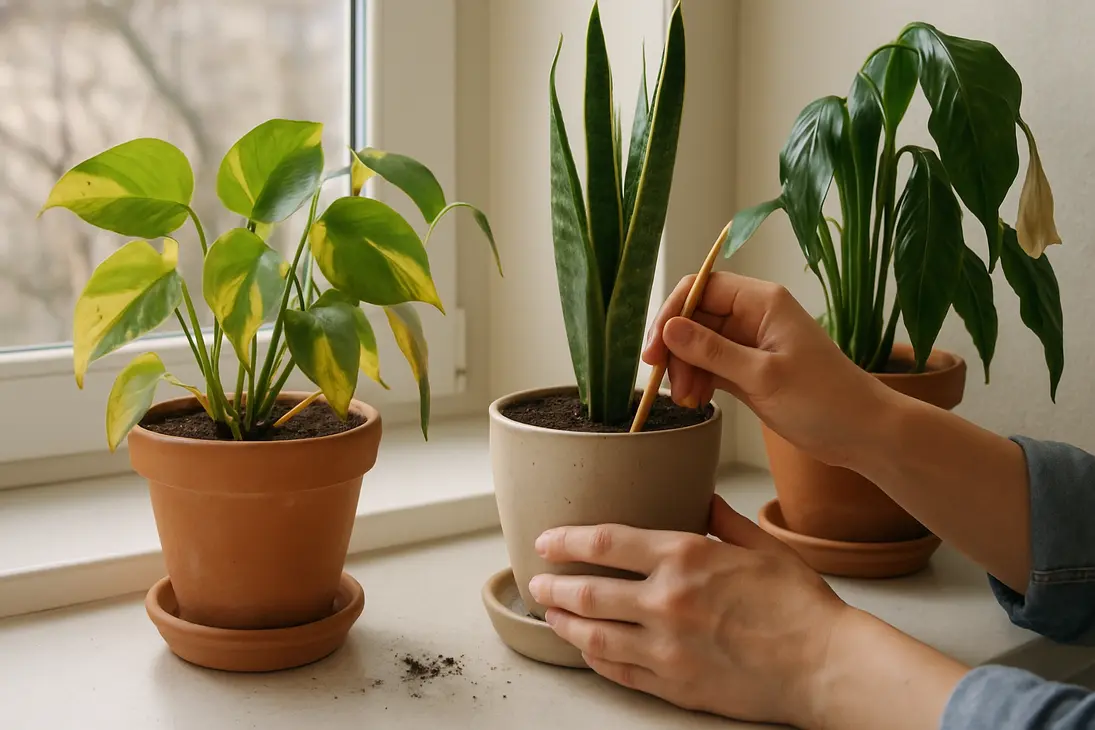
Signs include soil that stays wet, poor drainage, several yellow leaves at once, mushy stems near the base, sour odor, fungus gnats, or brown, soft, slimy roots.
Pothos roots need both moisture and air. Heavy soil, oversized pots, and frequent watering all increase root stress.
Rootbound plants or compacted old potting mix
A slightly rootbound pothos can cope, but a severely crowded plant may struggle to absorb enough water and nutrients. Water may run straight through the pot, or the soil may dry almost immediately.
Old potting mix can break down, compact, and lose air space. It may hold too much water in some spots while repelling water in others.
Suspect root or soil trouble if roots circle tightly, grow from drainage holes, show at the surface, or if the soil has hardened, shrunk, or become dense. If the plant has been in the same mix for two or more years, inspect it.
Low nutrients after long-term growth in the same soil or water
Pothos is not a heavy feeder, but it still needs nutrients. A plant growing for years in the same soil may produce smaller, paler, weaker leaves. A pothos grown long-term in plain water can also decline without nutrition.
Do not use fertilizer as a cure-all. Feeding a plant with poor light or damaged roots will not fix thin leaves and may worsen stress. Fertilize lightly only when the plant is actively growing and the roots are healthy.
Dry air, heat, or sudden environmental changes
Pothos tolerates average indoor humidity, but heaters, radiators, fireplaces, drafty windows, and air-conditioning vents can dry delicate new leaves.
Sudden changes can also trigger weak growth, including moving from a humid greenhouse to a dry home, shifting from bright light to a dim corner, repotting, or moving from water to soil. If the timing matches a recent change, provide stable care while the plant adjusts.
How to Tell Which Problem Your Pothos Has
Look at the leaves, vines, soil, roots, pot size, light, and watering pattern together.
| What you notice | Most likely issue | What to check next |
|---|---|---|
| Thin leaves plus long bare vines | Too little light | Window distance, vine direction |
| Limp leaves and bone-dry soil | Underwatering | Pot weight, dry root ball |
| Limp leaves and wet soil | Overwatering or root stress | Drainage, roots, smell |
| Small leaves despite regular care | Low light, rootbound pot, or low nutrients | Roots, soil age, light |
| Yellow leaves and soft stems | Root rot risk | Inspect roots |
| Water runs straight through | Rootbound or hydrophobic soil | Root ball and mix |
Signs of underwatering
Underwatered pothos leaves usually droop, curl, and feel soft. The soil is dry at least a couple of inches down, and the pot feels light.
Water thoroughly and watch the plant for 12 to 24 hours. If leaves regain firmness quickly, underwatering was likely involved. If they stay limp while the soil is wet, root damage may be the problem.
Very dry potting mix can repel water. If water runs straight out, water slowly, pause, and water again until the root ball is evenly moist.
Signs of overwatering
Overwatered pothos can look thirsty while the soil is damp. Do not keep watering without checking.
Look for wet soil, yellow leaves, mushy stems, and sour odor. Healthy roots are firm and pale cream to light tan. Rotten roots are dark brown or black, soft, slimy, and may break apart easily.
If many roots are damaged, some thin or limp leaves may not recover. Pruning and propagating healthy vine sections can be a good backup.
Signs of too little light
A low-light pothos often looks stretched rather than immediately sick. Common signs include long internodes, vines reaching toward light, smaller new leaves, slower growth, and reduced variegation.
If the plant sits across the room from a window, on a dim shelf, or in an office with little natural light, low light is likely. A grow light can help when a brighter window is not available.
Signs the pot or roots are the issue
Root problems often show up as watering problems. The plant may dry too fast, stay wet too long, or fail to perk up after watering.
Slide the plant from the pot. A rootbound but healthy pothos will have many firm roots circling the bottom. A stressed overwatered plant may have dark, mushy roots. Also check for compacted, crusty, sour-smelling, or hardened mix.
How to Help Your Pothos Grow Thicker, Healthier Leaves
You usually cannot make old thin leaves become thick. The goal is to improve conditions so future leaves grow stronger. Start with light, then watering, roots, soil, nutrients, and pruning.
Move it to brighter indirect light
Move the plant to bright, indirect light. Avoid harsh afternoon sun, especially if the plant has been in a dim spot. Increase light gradually over about a week.
Good locations include an east-facing window, a few feet from a south or west window, beside a bright window with a sheer curtain, or under a full-spectrum grow light.
Rotate the pot every week or two. Shorter gaps between leaves and larger new leaves mean the light improvement is helping.
Water when the top soil dries, not on a fixed schedule
Do not water by the calendar. Pothos may need water often in warm bright conditions and much less in winter, low light, or a large pot.
Water when the top 1 to 2 inches of soil feel dry in a small or medium pot. Check deeper in larger pots. Water thoroughly until excess drains out, then empty the saucer.
Simple rule: if the soil is damp, wait. If it is dry and the pot feels light, water. Aim for evenly moist soil, not constant wetness.
Check the roots and repot if needed
Check roots if thin leaves come with yellowing, persistent wilting, rapid drying, or old compacted soil.
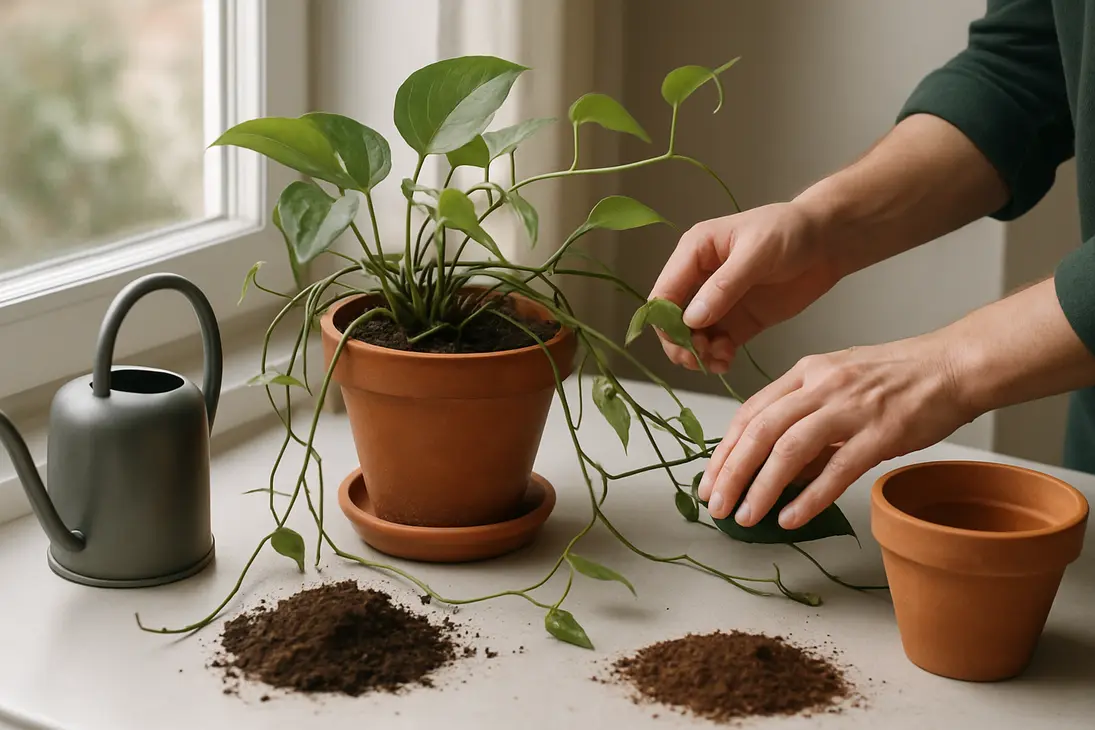
To repot, slide the plant out gently, loosen the outer roots, trim only dead or rotten roots, and use a pot with drainage holes. If it is rootbound, move up only one pot size. Use fresh, well-draining indoor potting mix, water thoroughly, then let the top soil dry before watering again.
Avoid oversized pots because extra soil stays wet longer. If the plant has grown in water long-term, refresh the water regularly and use diluted suitable fertilizer during active growth.
Refresh depleted soil or fertilize lightly
If the roots are healthy and light is good, weak new leaves may point to depleted soil. For a pothos in the same mix for years, fresh potting mix is often better than fertilizer alone because it improves nutrients and aeration.
If fertilizing, use a balanced houseplant fertilizer at diluted strength during active growth. Do not fertilize heavily, and do not feed a plant with soggy soil or root rot symptoms.
Prune leggy vines to encourage stronger growth
Pruning will not thicken existing leaves, but it can improve the plant’s shape and encourage new shoots.
Cut just above a node, the small bump where a leaf or aerial root emerges. Cuttings with nodes can often be propagated in water or potting mix.
Prune bare vines, weak low-light growth, yellow or damaged leaves, and vines too long for the plant to support well. After pruning, provide bright indirect light so new growth comes in stronger.
What to Expect After You Fix the Cause
Recovery shows in new growth. Old leaves that developed thin, small, or damaged usually will not become large and thick later, though wilted leaves may regain firmness if they were only dehydrated.
How long new healthy growth takes
If underwatering was the issue, leaves may perk up within a day. Stronger new growth usually takes weeks.
In good conditions, look for firmer new leaves, better color, and shorter gaps between leaves. In winter or low light, recovery is slower. After repotting, the plant may pause while roots adjust, so avoid changing care every few days.
Whether to remove thin or damaged leaves
You do not need to remove every thin leaf. If it is green, it still helps the plant photosynthesize.
Remove leaves that are yellow, brown, crispy, mushy, diseased-looking, or badly damaged. Use clean scissors and avoid stripping a stressed plant heavily unless you are also propagating healthy vines.
How to prevent the problem from returning
Prevent thin leaves with steady care:
- Keep pothos in bright, indirect light.
- Water based on soil dryness.
- Use pots with drainage holes.
- Do not let the pot sit in water.
- Refresh old compacted soil.
- Repot crowded roots without oversizing the pot.
- Feed lightly during active growth when needed.
- Keep the plant away from heaters, cold drafts, and harsh direct sun.
Watch the newest leaves. If they are firmer, larger, and closer together, the plant is improving.
Conclusion
Thin leaves on Epipremnum pothos are usually caused by low light, watering stress, root problems, crowded roots, or depleted soil. Improve the basics: brighter indirect light, sensible watering, healthy roots, and fresh well-draining mix when needed.
Existing thin leaves may not change much, but healthier new growth should appear once the cause is corrected.
FAQ
Can pothos survive in low light, or will low light cause thin leaves?
Yes. Pothos can survive in low light, but it often grows smaller, thinner leaves with longer gaps between them. Bright indirect light produces stronger growth.
Should I water my pothos more if the leaves feel thin?
Not automatically. Thin or limp leaves can come from underwatering or from overwatered, damaged roots. Check the soil first. Water if it is dry and the pot feels light. If it is wet or smells sour, inspect drainage and roots.
Do thin pothos leaves mean the plant needs a bigger pot?
Sometimes. A bigger pot may help if the plant is rootbound, drying very quickly, or showing roots through drainage holes. But thin leaves can also come from low light, poor watering, or old soil. Check the roots before repotting, and move up only one pot size.
Will thin pothos leaves become thick again?
Usually not. Wilted leaves may firm up after proper watering, but leaves that developed thin or small generally stay that way. Recovery shows in new leaves that grow firmer, larger, and healthier.
You Might Also Like