Can Prolonged Soap Water Use Harm Plants?
Yes. Soap water can harm plants, especially when used repeatedly, mixed too strongly, sprayed on leaves in hot sun, or made with modern dish liquids that contain detergents and additives. Occasional exposure to very diluted, mild soap water may not kill established outdoor plants, but prolonged use can damage foliage, stress roots, alter soil conditions, and weaken sensitive plants over time.
“Soapy water” can mean insecticidal soap sprays, reused bathwater or laundry greywater, or accidental watering with soap residue. These are not equally risky. The plant’s response depends on the product, dilution, frequency, plant species, weather, drainage, and whether the solution touches leaves or only soil.
Can Soap Water Hurt or Kill Plants?
Soap water is not automatically fatal, but it is not the same as clean irrigation water. A small accidental splash of diluted mild soap is usually less concerning than weeks of watering with bathwater, dishwater, or homemade pest sprays.
The biggest concern is repeated exposure. Leaves can develop spotting, browning, or crispy edges. Roots may struggle if salts and surfactants build up in soil or potting mix. Young seedlings, houseplants, herbs, vegetables, and thin-leaved ornamentals often show damage sooner than mature shrubs or trees.
Occasional exposure vs. repeated watering
One accidental watering with weak soap water rarely means a plant is doomed. If exposure was minor, rinse leaves if needed, flush the soil with clean water, and monitor the plant.
Repeated use is different. If soap water becomes the regular water source, several problems can accumulate:
- Soap residues may remain in soil.
- Salts from cleaning products can concentrate as water evaporates.
- Surfactants can affect how water moves through soil and across leaves.
- Fragrances, degreasers, antibacterial ingredients, or softeners may stress roots and soil life.
- Potted plants have limited soil volume, so buildup happens faster.
A plant may tolerate one exposure and still decline after several weeks of the same treatment.
Why concentration and frequency matter
Soaps and detergents disrupt oils and surface tension. That helps clean dishes or control some soft-bodied insects, but plant leaves also have protective waxy coatings. Strong soap solutions can disturb those surfaces, making leaves dry out or burn.
Frequency matters because even weak solutions can leave residues if used often. Sink, bath, or laundry water may contain sodium compounds, fragrances, emulsifiers, preservatives, degreasers, fabric softeners, or body care residues. A weak solution used once on a mature shrub is much lower risk than a stronger solution sprayed weekly on basil, lettuce, seedlings, ferns, or houseplants.
Plants most likely to show damage
Some plants are more sensitive to soap water than others:
| Higher-risk plants | Why they are more vulnerable |
|---|---|
| Seedlings and new transplants | Small root systems and tender leaves recover poorly |
| Houseplants | Residues build up quickly in pots |
| Ferns, calatheas, orchids, and other thin-leaved plants | Delicate foliage can spot, scorch, or dry out |
| Vegetables and herbs | Edible leaves should not be coated with household soap residues |
| Strawberries and soft-leaved fruiting plants | Leaves and flowers can burn from sprays |
| Drought-stressed plants | Stressed tissues are more likely to scorch |
| Container plants | Less soil volume and less natural leaching |
Hardy landscape shrubs and mature trees are usually more forgiving, but soap water is still not ideal irrigation.
Why Soap Water Can Be Harmful to Plants
Soap water can harm plants through the soap itself, detergent ingredients, salts, added oils, or other chemicals in household products. Risk rises when the solution is concentrated, applied during heat or bright sun, or used repeatedly.
Soap vs. detergent: why dish “soap” is often riskier
Many products called “dish soap” are actually detergents. True soaps are made from fats or oils reacted with an alkali, while detergents are synthetic cleaning agents designed to cut grease and foam well.
Some mild, plain soaps may be tolerated in very dilute amounts. Many dish liquids are formulated for dishes, not leaves or soil, and may contain:
- Strong surfactants
- Degreasers
- Fragrance
- Dyes
- Preservatives
- Antibacterial additives
- Ingredients that leave salts behind
Commercial insecticidal soap is not the same as a random squirt of dish liquid in a spray bottle. Insecticidal soaps are made for plant use and should still be applied according to the label.
Leaf burn from spraying soap water on foliage
Soap sprays can burn leaves when they are too strong, left on too long, applied in sun, or used on sensitive plants. Symptoms may include pale spots, brown patches, crispy margins, curling, or a dull water-soaked look that later turns brown.
Foliar damage is more likely when you:
- Spray during hot weather or direct sunlight
- Spray drought-stressed plants
- Spray young, soft growth
- Use dish detergent instead of insecticidal soap
- Add oil, vinegar, alcohol, or other home-remedy ingredients
- Repeat sprays too often
- Skip a small test area first
Oil-and-soap mixtures are a common source of trouble. Oil can help smother pests, but too much can coat leaves and interfere with normal gas exchange.
Root and soil problems from repeated greywater use
Greywater from baths, showers, bathroom sinks, or laundry can sometimes be reused in landscapes, but it is not risk-free. It may contain soap, shampoo, conditioner, skin oils, hair products, laundry residues, salts, and cleaning chemicals.
Possible soil and root issues include:
- Salt buildup: Excess salts make it harder for roots to take up water.
- Soil structure problems: Sodium can worsen structure in some soils, especially clay-heavy soils.
- Root irritation: Detergents and additives may stress fine feeder roots.
- Microbial disruption: Harsh residues can disturb beneficial soil organisms.
- Uneven wetting: Surfactants change how water spreads through soil.
Open garden soil has more buffering capacity, and rain or deep watering may leach some residues. Pots are much less forgiving, which is why greywater is usually a poor choice for routine houseplant watering.
Additives to avoid: bleach, antibacterial agents, boron, fragrances, degreasers, and softeners
Avoid using water around plants if it contains:
| Additive | Why it is a concern |
|---|---|
| Bleach or disinfectants | Can burn plant tissue and harm soil organisms |
| Antibacterial agents | May suppress useful soil microbes |
| Boron-containing products | Excess boron can be toxic to plants |
| Strong fragrances and dyes | Add unnecessary residues |
| Degreasers | More likely to strip leaf waxes |
| Fabric softeners | Not intended for soil or edible gardens |
| Dishwasher detergent | Usually too harsh and alkaline |
| Cleaning sprays or bathroom cleaners | May contain unsuitable solvents, acids, or alkalines |
If you would not want it soaking into a vegetable bed or coating edible leaves, do not treat it as garden water.
When Soap Water Is Less Likely to Cause Problems
Soap water is less likely to harm plants when it is mild, highly diluted, used occasionally, applied to soil rather than foliage, and followed by clean water at later irrigations. Even then, treat it as a compromise, not a plant tonic.
Mild biodegradable soaps and castile soap
Plain biodegradable soaps and unscented castile soap are generally lower-risk than strong dish detergents, antibacterial soaps, or fragranced body washes. “Lower-risk” does not mean harmless; it only means they are less likely to contain the harshest additives.
If you are trying to reduce risk, choose products that are:
- Unscented or lightly scented
- Free of bleach, disinfectants, and antibacterial claims
- Free of fabric softener
- Low in dyes and unnecessary additives
- Labeled biodegradable
- Used sparingly
For pest control, a labeled insecticidal soap is safer than guessing at a homemade dish-soap mixture.
Dilution with clean water or rainwater
Dilution reduces risk. A small amount of mild bathwater mixed with plenty of clean water is much less likely to cause visible damage than concentrated soap water. Still, if soap water is used every time you irrigate, residues may accumulate.
A practical approach is:
- Use clean water as the default.
- Reserve diluted mild greywater for occasional outdoor use.
- Do not store greywater for long periods.
- Do not use greywater that smells bad or contains cleaning chemicals.
- Follow local greywater rules if they apply.
Outdoor landscape plants vs. houseplants and vegetables
Outdoor landscape plants usually tolerate occasional mild greywater better than houseplants or vegetables. Outdoor soil volume is larger, rainfall may help flush residues, and established shrubs and trees have broader root systems.
Houseplants are less forgiving because roots sit in confined potting mix and salts can build quickly. Many also have sensitive foliage that spots easily.
Vegetables and herbs need extra caution because they are eaten. Avoid applying soap water to edible leaves, stems, flowers, or fruit. If greywater is used near food crops, keep it on the soil and away from harvestable parts.
Why soil application is usually safer than foliar spraying
Applying diluted soap water to soil is usually less risky than spraying it on leaves because soil provides some buffering. Leaves are exposed directly, and their waxy cuticle can be disrupted. Sunlight and heat can intensify injury.
The safer hierarchy is:
- Clean water
- Occasional diluted mild greywater to outdoor ornamental soil
- Labeled insecticidal soap used as directed
- Homemade soap sprays or repeated greywater use
- Concentrated dish soap, cleaners, or detergent water — avoid
How to Use Soapy Water Around Plants More Safely
The safest advice is not to make soap water your normal irrigation method. If you are reusing water during drought, dealing with accidental exposure, or using a soap spray for pests, focus on reducing plant stress.
Use it intermittently, not as the main water source
Do not water plants with soap water every day or every time they need moisture. Use it only occasionally, and only when the soap source is mild and free of harsh additives.
For outdoor ornamentals, that may mean using diluted bathwater once in a while and returning to clean water for the next several waterings. For containers, seedlings, and houseplants, it is better to avoid soap water unless you are using a plant-safe product for a specific purpose.
Apply to soil, not edible leaves, flowers, or young seedlings
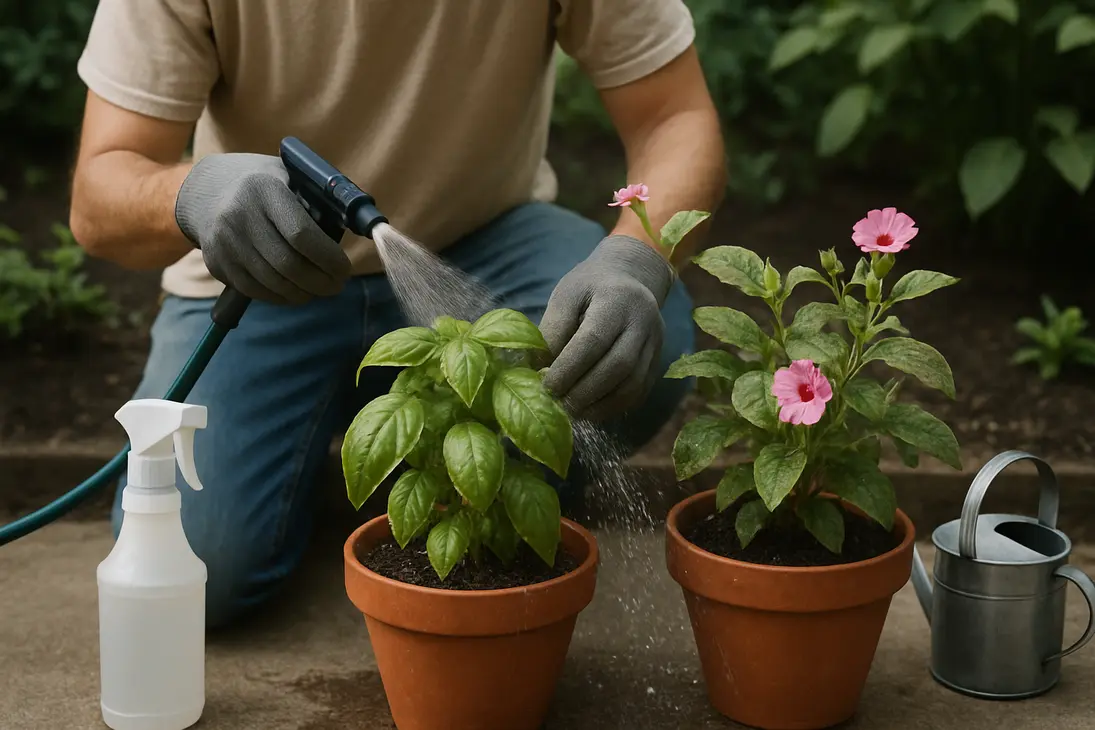
When reusing mild greywater, pour it onto the soil surface around the root zone. Avoid splashing leaves, flowers, developing fruit, and edible parts.
Be especially careful with:
- Lettuce, spinach, kale, and other leafy greens
- Basil, cilantro, parsley, and other herbs
- Strawberries
- Seedlings in trays
- Newly transplanted vegetables
- Plants in bloom
If using soap for pest control, spray only plants and pests listed as suitable for that product, and avoid spraying open flowers when pollinators are active.
Rotate with fresh water to prevent buildup
Fresh water helps move residues through soil and reduces buildup. This matters most in dry climates, during drought restrictions, or in containers where rainfall does not reach the pot.
For potted plants, water deeply with clean water until excess drains from the bottom whenever you suspect residue buildup. Empty saucers afterward. In garden beds, occasional deep watering can help leach mild residues if the soil drains well. Do not overwater heavy clay soil just to flush it; waterlogged roots can create a new problem.
Test on a small area before spraying plants
Before spraying any soap solution over a plant, test a few leaves first. Wait at least a day or two and look for spotting, curling, dullness, or browning. If the test leaves react badly, do not spray the rest.
Testing is especially important for ferns, succulents with waxy coatings, palms, citrus, Japanese maples, herbs, tender annuals, and plants stressed by heat, drought, pests, or recent repotting. Spray in the cooler part of the day and avoid direct hot sun.
Avoid using oily homemade sprays too heavily
Homemade pest sprays often combine soap with oil, such as vegetable oil, olive oil, or neem oil. These mixtures can damage plants if applied too heavily or too often. Oil can coat leaf surfaces, trap heat, and worsen burn in sunlight.
If you use commercial horticultural or neem oil, follow the label. Avoid improvising strong kitchen-oil mixtures. More is not better, especially on plants already stressed by pests.
What to Do If You Already Watered or Sprayed Plants With Soap Water
If you already used soap water, do not panic. Many plants recover if the exposure was mild and you act promptly. The goal is to remove residue, reduce further stress, and give the plant time.
Signs of soap damage on plants
Soap damage may appear within hours or over the next few days. Watch for:
- Brown or tan leaf spots
- Crispy leaf edges
- Yellowing leaves
- Curling or cupping
- A dull, grayish, or water-soaked look
- Wilting even when soil is moist
- Dropping flowers or buds
- Slowed growth
- White or crusty residue on soil or pot edges
- Soil that stays oddly wet or repels water unevenly
These symptoms can overlap with sunburn, fertilizer burn, drought stress, or overwatering. Timing helps: if symptoms appeared soon after soap exposure, soap injury is a likely contributor.
How to rinse leaves safely
If soap water was sprayed on foliage, rinse leaves with clean water as soon as practical. Use a gentle stream, not a harsh blast.
A safe rinse process:
- Move potted plants out of direct sun.
- Rinse the tops and undersides of leaves with clean, room-temperature water.
- Let the plant dry in bright shade or gentle morning light.
- Avoid fertilizer, oil, or another spray immediately afterward.
- Watch new growth over the next week.
For outdoor plants, rinse in the morning or early evening so leaves have time to dry. Avoid rinsing late at night if the plant is prone to fungal disease.
How to flush potted plants or garden soil
For potted plants, place the pot where it can drain freely. Slowly run clean water through the potting mix and let it drain out the bottom. Empty any saucer afterward.
Do not flush a pot with no drainage hole. If exposure was heavy, repotting into fresh mix may be safer.
For garden soil, water with clean water to dilute and move residues downward. Sandy or well-drained soil can be flushed more easily than compacted clay. If the soil is already saturated, wait until it drains before adding more water.
After flushing, return to a normal watering cycle. Constantly wet soil can damage roots as much as the soap did.
When damaged leaves can recover and when to prune
Leaves with mild spotting may continue functioning, even if they look unattractive. Brown, crispy, or translucent tissue will not turn green again, but the plant can still recover through healthy new growth.
Prune only when leaves are fully dead or mushy, damaged foliage is inviting disease, or broken stems are not recovering. Avoid heavy pruning right away if the plant has lost many leaves; it needs remaining green tissue to photosynthesize. Also avoid fertilizing immediately after soap injury because fertilizer salts can add stress.
Conclusion
Soap water is not guaranteed to kill plants, but prolonged or concentrated use can harm them. The risk depends on the product, dilution, frequency, plant sensitivity, and application method. Mild, diluted, biodegradable soap water used occasionally on soil around established outdoor ornamentals is much less risky than strong dish detergent sprayed on leaves or repeated greywater use in pots.
For regular plant care, clean water is best. If you reuse greywater, keep it mild, diluted, intermittent, and off edible plant parts. If you use soap for pests, choose a plant-labeled insecticidal soap when possible, test first, and avoid spraying in heat or sun. When in doubt, rinse, flush, and give the plant time to recover.
FAQ
Is dish soap and water safe for plants?
Dish soap and water can damage plants, especially if the mixture is strong or used repeatedly. Many dish liquids are detergents rather than true soaps and may contain degreasers, fragrances, dyes, antibacterial ingredients, or other additives not intended for plant leaves or soil.
A very weak, occasional exposure may not kill a hardy plant, but dish soap should not be used as a routine spray or irrigation source. For pest control, use a labeled insecticidal soap instead.
Can I water my garden with bathwater that contains soap?
Sometimes, but cautiously. Mild bathwater may be tolerated occasionally by established outdoor landscape plants if the soap is biodegradable, diluted, and free of harsh additives. Apply it to soil, not leaves, flowers, fruit, or vegetables you will eat.
Do not use bathwater containing bleach, disinfectants, strong fragrances, bath oils, harsh shampoos, medicated products, or cleaning chemicals. Avoid soapy bathwater on houseplants, seedlings, leafy greens, herbs, root crops, and container plants.
Will soapy water kill insects without harming plants?
It can, but there is a trade-off. Insecticidal soap can help control soft-bodied pests such as aphids, whiteflies, and spider mites when it contacts them directly. However, homemade soap sprays can burn leaves if too concentrated, made with harsh dish detergent, mixed with too much oil, or sprayed during sun and heat.
Always test a small area first. Spray during cooler conditions, avoid stressed plants, and follow the label if using commercial insecticidal soap.
How often can I use soap water on plants?
Soap water should not be used regularly as irrigation. Occasional, well-diluted, mild soap water may be tolerated by some established outdoor plants, but repeated use increases the risk of leaf burn, root stress, salt buildup, and soil problems.
For most plants, especially houseplants, vegetables, herbs, seedlings, and container plants, clean water should be the normal watering source. Use soap products only for a specific reason, sparingly, and with careful observation.
Sources
- Reddit gardening discussion about strawberry leaf damage after an olive oil, water, and soap spray: https://www.reddit.com/r/gardening/comments/uy9nvr/strawberry_plant_help_sprayed_natural_pesticide/
You Might Also Like