Should You Soak the Soil When Watering a Holiday Cactus?
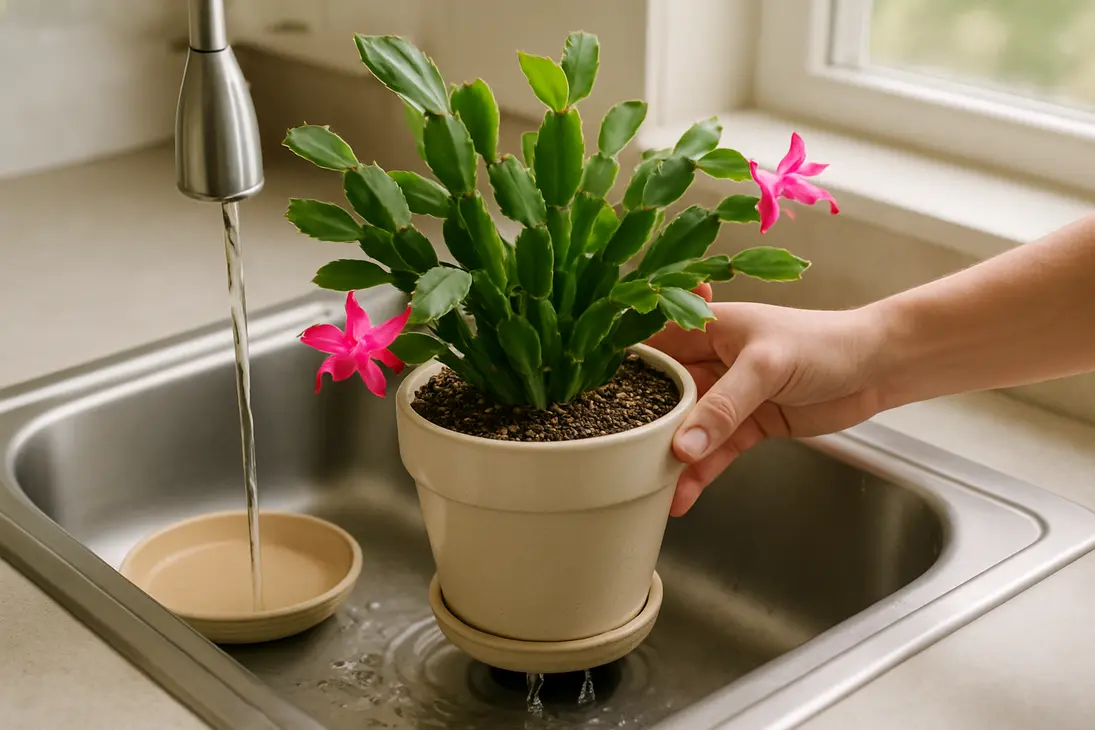
Yes—when you water a holiday cactus, you should usually soak the soil thoroughly, then let the pot drain completely. The goal is to moisten the whole root ball, not leave the plant sitting in wet soil.
Holiday cacti, including Thanksgiving cactus and Christmas cactus, are forest cacti, not desert cacti. They naturally grow in humid, airy places with organic material around their roots. They appreciate more moisture than desert cacti, but their roots still need oxygen.
The best rule is simple: water deeply, drain fully, and wait until the mix has dried partway down before watering again.
Why Holiday Cacti Need Thorough Watering
Holiday cacti do best when the entire root zone is evenly moistened. A light splash may wet only the surface while lower roots stay dry. Over time, that can lead to limp segments, weak growth, bud drop, or roots concentrated near the top of the pot.
Thorough watering sends moisture through the full depth of the container. After excess water drains, air returns to the mix, giving roots both water and oxygen. The problem is not deep watering; it is deep watering in a pot or mix that stays wet too long.
“Soak and drain” vs. leaving soil soggy
“Soak and drain” means watering until the mix is fully moist and water runs from the drainage holes. Then the pot should drain freely, and any water in a saucer or decorative cachepot should be emptied.
Soggy soil happens when water cannot escape or the mix holds moisture too long. Common causes include:
- No drainage hole
- Standing water in a saucer
- Dense or compacted potting mix
- A pot much larger than the root ball
- Watering again before the mix dries enough
Holiday cactus roots need air. In constantly saturated soil, air spaces fill with water, roots become stressed, and rot becomes more likely. Deep watering is good; prolonged wetness is the danger.
Why shallow watering can weaken roots
Shallow watering encourages shallow roots. If only the top inch of soil gets wet, lower roots may stay dry and underused. The plant can become less resilient and may wilt even when the surface looks damp.
This is especially common with peat-heavy mixes that have dried completely. Dry peat can repel water, causing it to run down the sides of the pot and out the drainage holes while the center remains dry.
For holiday cacti, a deliberate soak followed by full drainage is usually better than frequent small sips.
How to Water a Holiday Cactus the Right Way
The right method is straightforward: check the soil, water enough to moisten the full root ball, let excess drain, and wait until the mix has partly dried before watering again.
Use room-temperature water when possible. Very cold water can stress roots, especially indoors. If your tap water is heavily softened with salts, use rainwater, filtered water, or another low-salt option when practical.
Always use a pot with drainage. If the plant sits inside a decorative outer pot, remove the inner pot for watering or empty the cachepot afterward.
Top watering method
Top watering is the easiest method for most holiday cacti.
- Check the soil first. Do not water just because it is a certain day.
- Water slowly over the surface. Move around the pot instead of pouring in one spot.
- Continue until water drains from the bottom. This shows the full pot has been wetted.
- Repeat if the mix is very dry. If water runs through instantly, pause and water again.
- Let the pot drain fully. Leave it until dripping stops.
- Empty the saucer. Never let the pot sit in standing water.
Top watering also helps flush some mineral salts from the potting mix. Avoid constantly soaking the stem joints and crown in cool conditions, but occasional splashing is not a major concern.
Bottom watering method
Bottom watering can help when a dry mix repels water or a small pot needs even rehydration.
To bottom water:
- Set the pot in a basin or sink with a few inches of water.
- Let water absorb through the drainage holes.
- Check the top of the mix after 15–30 minutes.
- Remove the pot once the upper mix feels slightly moist or the pot feels heavier.
- Let it drain completely before returning it to its spot.
Do not leave a holiday cactus soaking for hours. Bottom watering is for rehydrating the root ball, not keeping roots submerged. Since it does not flush salts as well as top watering, top water occasionally with plenty of runoff.
When to stop watering
Stop when the full root ball has had a chance to become moist and excess water is running from the drainage holes. More water after that is just runoff.
There is no fixed number of cups that works for every plant. A small 4-inch pot needs much less than a large hanging basket. Soil type, pot size, and dryness all matter. Use drainage and soil moisture as your guide.
How Often to Water After Soaking the Soil
After soaking the soil, do not water again immediately or follow a rigid schedule. Frequency depends on how fast the mix dries.
A holiday cactus in a warm, bright room may need water more often than one in a cool, dim room. Terracotta dries faster than plastic. A barky mix dries faster than dense peat. A plant in active growth or bloom may use more water than one resting after flowering.
Many indoor holiday cacti are watered every one to three weeks, but that is only a starting point. The soil should decide.
Check the soil before watering again
Check the potting mix before each watering. Useful methods include:
- Finger test: If the top 1–2 inches are still moist, wait.
- Wooden skewer test: Damp mix clings to or darkens the wood.
- Pot weight: A watered pot feels heavier than a dry one.
- Drainage behavior: Instant runoff can mean the mix is too dry or water-repellent.
For many holiday cacti, watering when the top third of the mix has dried works well. In a small pot, that may mean the top inch. In a deeper pot, check farther down.
Do not rely only on appearance. Wrinkled or limp segments can mean underwatering, overwatering damage, or general stress. Always check the soil before assuming.
Watering during active growth and blooming
Holiday cacti usually need steadier moisture while growing, setting buds, or flowering. Let the mix dry partly, then water thoroughly.
Do not keep the soil constantly wet to support blooming. That can damage roots. Aim for even moisture followed by partial drying.
Bud drop can be caused by water stress, but also by sudden changes in temperature, light, drafts, dry air, or moving the plant. When buds are forming, avoid extremes: do not let the root ball become bone dry, but do not water daily.
Watering during rest periods
After flowering, holiday cacti often slow down and need less water. “Less water” usually means longer intervals between thorough waterings, not tiny sips.
If the plant is kept cooler to encourage bud formation, the mix will dry more slowly. Check carefully before watering, because cool, wet soil increases the risk of root problems.
| Situation | How to adjust watering |
|---|---|
| Bright room, active growth | Check more often; water when partly dry |
| Flowering or budding | Keep moisture steadier; avoid extremes |
| Cool room or winter rest | Wait longer between waterings |
| Large plastic pot | Expect slower drying |
| Small terracotta pot | Expect faster drying |
| Dense soil mix | Water less often; consider repotting |
The Best Soil and Pot Setup for Proper Soaking
A holiday cactus can only be watered deeply and safely if the pot and soil allow drainage and airflow. The ideal setup holds some moisture but does not stay waterlogged.
Think of the goal as a moist, airy root zone. The plant should be able to receive a full soak, drain well, and then dry partway before the next watering.
Use a loose, well-draining mix
A good holiday cactus mix should be light, airy, moisture-retentive, quick to drain, and resistant to compaction.
A quality houseplant potting mix can work if amended with perlite, pumice, or fine orchid bark. Some cactus mixes are designed for desert succulents and may dry too fast, so judge by texture rather than label.
If you water thoroughly and the soil stays wet for many days, the mix may be too heavy, the pot too large, or the conditions too cool and dim.
Adding perlite, pumice, or bark for aeration
Perlite, pumice, bark, and grit can improve drainage and airflow.
| Amendment | Best use |
|---|---|
| Perlite | Lightens mix and improves drainage |
| Pumice | Adds stable aeration and drainage |
| Fine orchid bark | Creates chunky air spaces |
| Coarse grit | Adds drainage and weight |
The aim is not to make the mix desert-dry. It is to create a root zone that can be soaked, drained, and partly dried without becoming swampy or dust-dry.
Avoid fine sand in dense potting mix. It can fill air spaces and make the soil heavier.
Why regular garden soil is risky in pots
Regular garden soil is not ideal for potted holiday cacti. In a pot, it often compacts, drains poorly, and holds too much water around roots.
Garden soil can also bring pests, weed seeds, or disease organisms indoors. Use a container potting mix instead, then adjust it with perlite, pumice, or bark if needed.
Drainage holes are just as important. A pot without drainage can make even a good mix unsafe because excess water has nowhere to go.
Common Watering Mistakes to Avoid
Most watering problems come from misunderstanding what kind of cactus this is. Holiday cacti like more moisture than desert cacti, but they still rot in stale, saturated soil.
Good care sits in the middle: not dry for weeks like a desert succulent, and not constantly wet like a bog plant.
Letting the plant sit in water
Letting the plant sit in water turns good watering into overwatering. After soaking the soil, always empty the saucer or cachepot.
Standing water keeps the bottom of the pot saturated and deprives lower roots of oxygen. If the plant is in a decorative outer pot, check it after watering because runoff can collect unnoticed.
A simple rule: runoff is good; stored water is not.
Waiting until the soil is bone dry for too long
Because holiday cacti are called cacti, some owners let them dry like desert plants. Long dry periods can stress them, especially during active growth or bud formation.
Prolonged dryness may cause:
- Wrinkled or limp segments
- Slowed growth
- Bud drop
- Shrunken roots
- Potting mix that becomes hard to rewet
Let the top portion of the mix dry before watering again, but avoid leaving the whole root ball bone dry for weeks. If the soil has pulled away from the sides of the pot, water may run around the root ball. Use repeated top watering or brief bottom watering to rehydrate it.
Using heavy soil that stays wet
Heavy soil makes thorough watering risky. Warning signs include:
- Soil still wet a week or more after watering
- Sour or swampy smell
- Fungus gnats
- Yellowing or limp segments despite moist soil
- Water pooling on the surface
If the plant is healthy but the mix stays wet too long, repot after flowering or during active growth. Use an airy mix and a pot only slightly larger than the root ball.
If the plant wilts in wet soil, inspect the roots. Healthy roots are firm and light-colored. Rotten roots may be brown, black, mushy, or foul-smelling. Remove damaged roots and repot into fresh, airy mix.
Conclusion
Soaking soil for a holiday cactus is usually the best way to water. These plants prefer a thorough drink over tiny surface sips, as long as the pot drains freely and the mix partly dries before the next watering.
The basic pattern is: water deeply until water runs from the drainage holes, let the pot drain completely, empty the saucer, and wait until the mix has dried partway down before watering again.
If deep watering causes problems, check the setup. A pot without drainage, heavy soil, an oversized container, or watering too often can keep roots wet too long.
FAQ
Should I soak my holiday cactus every time I water it?
Yes, if “soak” means watering thoroughly enough to moisten the full root ball. Water until excess drains from the bottom, then let the pot drain completely. Do not leave it sitting in water.
How do I know if my holiday cactus soil is dry enough to water?
Check below the surface. If the top 1–2 inches are dry in a small or medium pot, or the top third of the mix has dried in a deeper pot, it is often time to water.
A wooden skewer, finger test, or pot-weight check can help. If the mix still feels cool and damp, wait.
Can soaking the soil cause root rot?
Soaking itself usually does not cause root rot if the pot drains well and the mix dries partly afterward. Rot is more likely when soil stays wet too long, the pot has no drainage, the plant sits in water, or the mix is dense.
What kind of soil is best for watering holiday cacti properly?
Use a loose, well-draining potting mix that still holds moderate moisture. A houseplant mix amended with perlite, pumice, or fine orchid bark often works well.
Avoid regular garden soil in pots because it can compact, drain poorly, and stay wet around the roots.
You Might Also Like