Is Your Low-Maintenance Plant Struggling? Early Warning Signs to Watch For
“Low-maintenance” does not mean “no-maintenance.” Snake plants, pothos, ZZ plants, succulents, peace lilies, and easy outdoor perennials tolerate missed care better than fussy plants, but they still react to unsuitable light, compacted soil, root problems, pests, and inconsistent watering.
Most plant problems develop gradually. Before a plant dies, it often shows clues: changed leaf color, stalled growth, soil that stays wet too long, or stems that feel soft. Noticing these signs early gives you time to correct the cause.
Spot the Early Signs of Plant Stress
One yellow leaf or a few dropped older leaves do not automatically mean trouble. Plants replace foliage, react after being moved, and slow down seasonally. Look for symptoms that spread, affect new growth, or worsen over a week or two.
Yellowing, browning, curling, or drooping leaves
Leaf changes are common signs a plant is struggling, but the pattern matters more than the color alone.
- Yellow lower leaves can indicate overwatering, poor drainage, or normal aging. If several leaves yellow while soil stays wet, check the roots.
- Yellow leaves with dry soil may mean underwatering.
- Brown, crisp tips or edges can result from dry soil, dry indoor air, fertilizer salt buildup, or intense direct sun.
- Brown patches in the middle of leaves may be caused by sun scorch, cold damage, injury, or disease.
- Curled leaves can signal thirst, heat, harsh sun, pests, or cold drafts. Check leaf undersides for mites, aphids, or thrips.
- Drooping leaves may mean thirst, but waterlogged roots can also cause drooping. Check soil moisture before watering.
Compare older and newer leaves. Pale, misshapen, or unusually small new growth often points to a current problem.
Leaf drop, soft stems, or crispy foliage
Leaf drop is concerning when it is sudden, heavy, or paired with yellowing, bare stems, or wet soil. A ficus may drop leaves after a move, but ongoing loss needs attention.
Pay attention to texture:
- Soft, dark, or mushy stems often signal rot, especially in succulents, snake plants, and ZZ plants.
- Crispy leaves and brittle stems usually indicate severe dryness, heat stress, or root damage.
- Blackened or translucent tissue can follow cold exposure.
- Wrinkled succulent leaves usually mean the plant is using stored water. If soil is dry, water thoroughly; if soil is wet, root damage may be preventing uptake.
Remove fully dead or rotting leaves, but leave healthy green tissue in place.
Spots, holes, webbing, and other pest or disease clues
Inspect both sides of leaves, stems, leaf joints, and the soil surface. Common clues include:
- Fine webbing or stippling, often linked to spider mites
- Sticky residue, which may suggest aphids, scale, or mealybugs
- White cottony clusters in stem joints, typical of mealybugs
- Raised brown or tan bumps, often scale insects
- Silvery scarring, black specks, or distorted new growth, which can occur with thrips
- Chewed holes or ragged edges, especially outdoors
- Expanding spots with yellow halos, which may indicate disease
Old tears and holes do not heal, so focus on fresh damage. Isolate plants with suspected pests, remove heavily infested leaves, and rinse or wipe off visible pests where practical.
Wilting that does not improve after checking moisture
Wilting does not always mean “water now.” A thirsty plant should regain some firmness after thorough watering, although badly dried-out plants may take a day or two.
If soil is already wet and the plant remains limp, roots may be stressed by poor oxygen, rot, cold soil, or disease. A root-bound plant may also wilt quickly because little soil remains to hold moisture.
Before watering:
- Feel soil below the surface.
- Lift the pot if possible; a very light pot is often dry, while a heavy one may still be saturated.
- Confirm the pot has drainage and empty any standing water from saucers or cachepots.
- Inspect roots if wilting continues despite appropriate moisture.
Stalled Growth Can Mean the Plant Is Under Stress
A plant can remain green and alive while producing no new leaves, shoots, flowers, or roots. Slow growth is not always a problem, but a prolonged pause can signal stress.
When slow growth is normal
Many plants slow down in lower light, cooler temperatures, and shorter winter days. They may also pause after repotting, pruning, relocation, or propagation.
Some plants naturally grow slowly or in bursts. Snake plants, ZZ plants, hoyas, and many succulents may not show visible growth every week. Outdoor plants can also be delayed by cool weather, heat, transplant shock, or poor seasonal conditions.
Signs growth has stalled beyond the plant’s usual seasonal slowdown
A slowdown is more likely stress-related when it continues through a suitable growing season or comes with declining leaf quality. Watch for:
- No new growth for months in warm, bright conditions
- New leaves that are much smaller, paler, or distorted
- Buds that repeatedly drop
- Long stems with wide gaps between leaves, suggesting insufficient light
- Soil that dries extremely fast without corresponding growth, suggesting crowded roots
- Several plants in the same area slowing down, possibly because of changed light, temperature, or watering habits
Do not assume a lack of growth means nutrient deficiency. Fertilizer can worsen problems if roots are damaged or soil is dry.
Check light, temperature, roots, nutrients, pests, and available growing space
Work through likely causes instead of changing everything at once.
Light: “Low light tolerant” does not mean a plant will grow actively in dim conditions. Move it gradually to brighter indirect light if growth has stopped or stems are stretching.
Temperature: Keep houseplants away from heating vents, air conditioners, exterior doors, and cold windows. Outdoor plants may pause during heat or cold stress.
Roots and space: If roots circle densely, emerge from drainage holes, or leave little soil visible, move the plant to a slightly larger pot. Oversized containers can keep soil wet too long.
Nutrients: If the plant is actively growing in suitable light and its mix is old, a light application of balanced fertilizer may help. Do not fertilize wilted, root-rotted, pest-infested, or recently repotted plants.
Pests: Examine tender new growth closely. Small pests can reduce growth before obvious damage appears.
Check Water and Soil Before Changing Your Care Routine
Watering mistakes are among the most common causes of decline because plants can show similar symptoms when too dry and too wet. A fixed weekly schedule rarely matches actual needs.
Signs of underwatering
Underwatered plants often show:
- Dry soil several inches below the surface
- A very light pot
- Drooping, curled, wrinkled, or thin leaves
- Crispy brown edges or tips
- Soil pulling away from the pot sides
- Improved firmness after a thorough watering
Water slowly until moisture drains from the bottom, then allow the pot to drain fully. If very dry mix repels water, water in stages or briefly soak the nursery pot in shallow water before draining.
Signs of overwatering and poor drainage
Overwatering means roots remain wet for too long, limiting oxygen and increasing the risk of rot.
Look for:
- Soil that remains wet for many days
- Yellowing leaves, often lower leaves first
- Limp leaves despite damp soil
- Soft, dark stems or a sour smell
- Fungus gnats around consistently moist soil
- Soft brown or black roots rather than firm roots
Causes include pots without drainage, decorative pots that trap runoff, dense old mix, and containers that are too large. Rocks at the bottom of a pot do not replace a drainage hole.
How to test soil moisture before watering
Use more than one method when a plant has been struggling.
- Insert a finger 1 to 2 inches into the mix, or deeper for large pots.
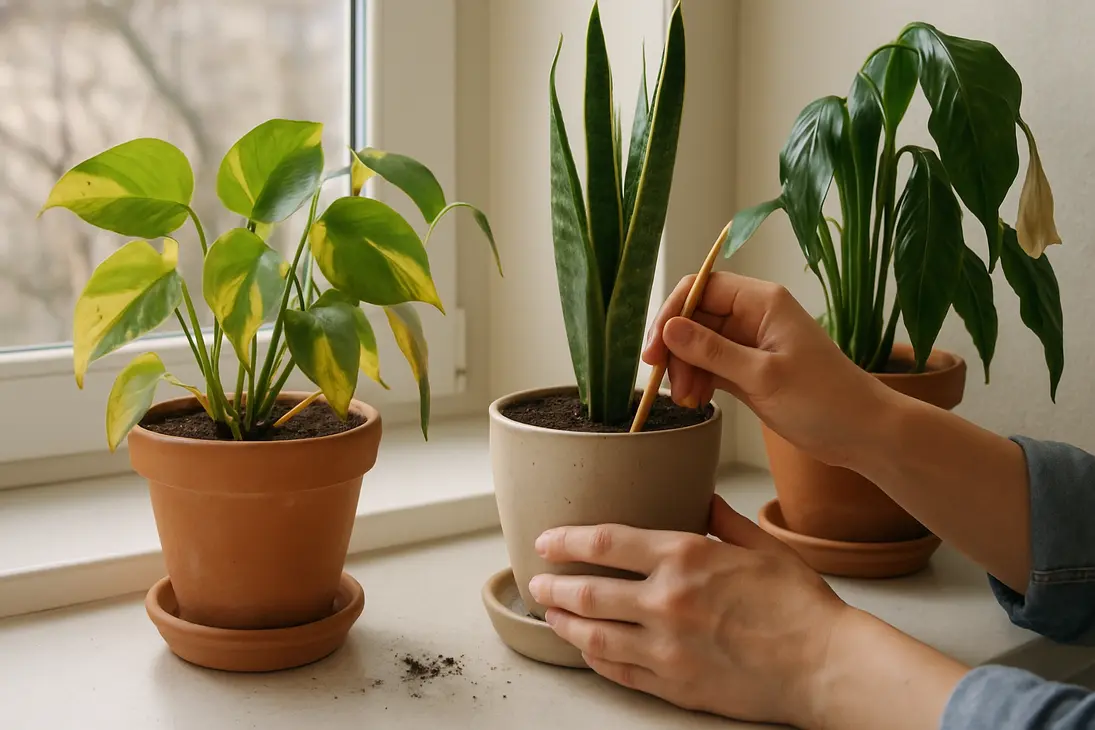
- Use a wooden chopstick or skewer; damp soil will cling to it or darken the wood.
- Lift the pot and compare its weight when dry and freshly watered.
- Check drainage holes for wet soil or signs of rot.
Different plants need different dry-down periods. A pothos may prefer moisture deeper in the pot, while a cactus or snake plant should dry much more thoroughly.
Adjust watering for the plant type, pot size, weather, light, and drainage
Watering frequency changes with the environment.
| Factor | What usually happens | Practical adjustment |
|---|---|---|
| Brighter light or warmer weather | Soil dries faster | Check more often, but water only when needed |
| Lower light or cool weather | Soil dries slowly | Extend the interval |
| Small pot or terracotta | Faster evaporation | Monitor closely |
| Large pot or plastic container | More moisture retained | Check deeper before watering |
| Pot without drainage | Water accumulates around roots | Repot into a draining container if possible |
| Dense or aged soil | Less air around roots | Refresh with an appropriate airy mix |
Find the Most Likely Cause and Make One Correction at a Time
When a plant looks unwell, avoid moving it, repotting it, fertilizing it, pruning it, and watering it all at once. Make the most likely correction, then observe.
Review recent changes in light, location, temperature, or routine
Think about the last few weeks. Did you move the plant closer to a window, begin using heating or air conditioning, change potting mix, or alter watering habits?
Timing is useful. Yellowing after a move to a dim corner may point to low light. Scorched leaves after a move to a sunny sill suggest direct sun. Decline after a cold night near an open window is unlikely to be a fertilizer issue.
Inspect the roots, pot, drainage holes, and soil condition
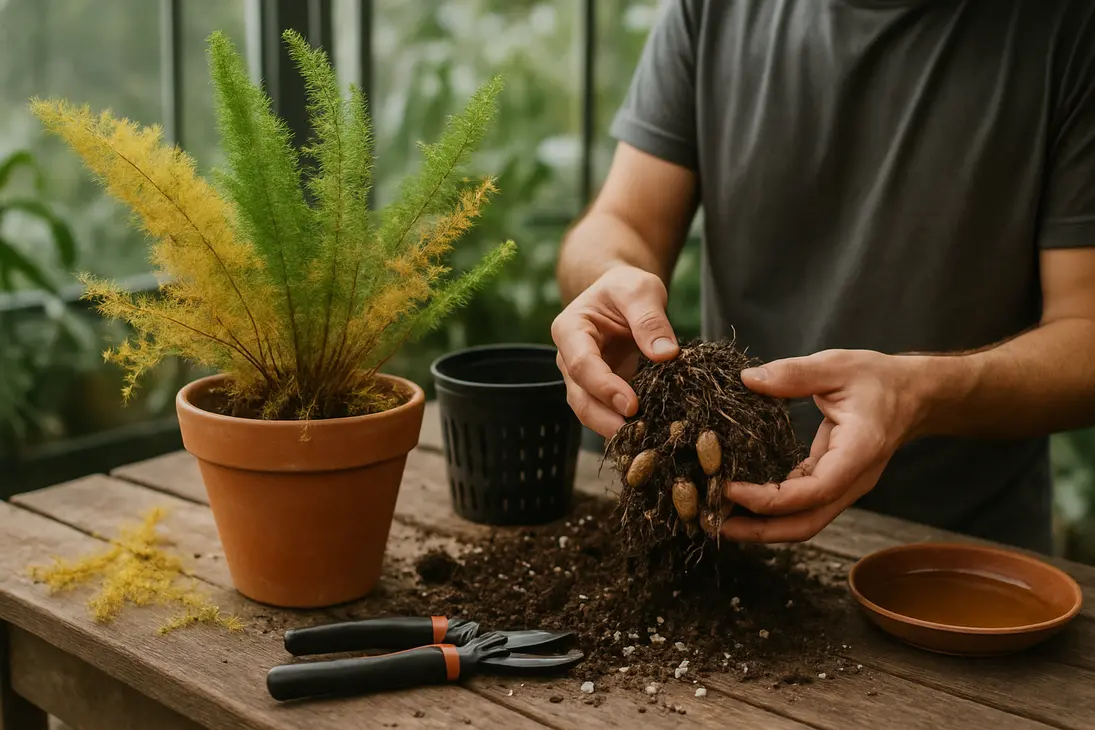
Inspect roots when symptoms persist, especially if soil stays wet, smells sour, or stems begin collapsing. Healthy roots are usually firm; color varies by plant and soil type.
Remove clearly dead, slimy, hollow, or blackened roots with clean scissors. Repot into fresh, suitable mix when soil is compacted, contaminated, chronically wet, or when roots need more space.
Look closely for pests and disease
Check new leaves, undersides of foliage, and stem joints, where pests often hide. Separate affected plants before adding fertilizer or making major changes.
For possible disease, remove badly affected leaves, avoid wetting foliage unnecessarily, and improve air circulation without exposing tropical plants to cold drafts. Rapidly spreading spotting may need more targeted diagnosis.
Avoid overfertilizing, frequent repotting, or watering on a strict calendar
More care is not always better care. Excess fertilizer can burn roots, frequent repotting disturbs them, and “just in case” watering can cause root rot.
Keep simple notes on watering dates, soil condition, location, and symptom changes. This helps reveal patterns, especially with plants that decline slowly.
When a Struggling Plant Can Recover—and When It May Not
Many plants recover if enough healthy roots, stems, or growing points remain. Recovery is rarely instant: damaged leaves do not turn green again, and brown edges will not repair themselves. Look for healthy new growth instead.
A plant has a reasonable chance of recovery when it still has:
- Firm stems or a firm crown
- Some healthy root tissue
- Green tissue and viable nodes
- New buds, shoots, or leaves after conditions improve
Prune dead leaves and stems back to healthy tissue. Healthy pothos or philodendron sections with nodes can often be propagated if the base has rotted. For succulents, take firm cuttings above rot and allow cut ends to dry before rooting.
Replacement may be practical when rot has reached the crown, all stems are soft, roots are entirely decayed, or pests and disease have overwhelmed the plant. Replacing a plant can also help you reassess the conditions in that location.
Conclusion
The most reliable signs a plant is struggling are changes in leaves, growth, soil moisture, roots, and stem texture. Yellow leaves, drooping, crispy edges, pests, and stalled growth are clues, but they must be read alongside the plant’s conditions.
Check moisture before watering, review recent changes, inspect for pests and root problems, and make one sensible adjustment at a time. This gives low-maintenance plants the best chance to recover without added stress.
FAQ
Why is my plant still alive but not growing?
It may be in a normal seasonal slowdown, especially in winter or low light. If the pause continues during its growing season, check light, root crowding, soil moisture, pests, and nutrients. A plant can remain green while lacking the conditions needed for new growth.
How do I know whether my plant is overwatered or underwatered?
Check soil below the surface. Underwatered plants usually have dry mix, a light pot, and crisp or wrinkled foliage. Overwatered plants often have wet soil, yellowing leaves, limp growth, and sometimes soft stems or a sour smell. Both can wilt, so do not diagnose from drooping alone.
How often should I water a low-maintenance plant?
Water when the soil has dried to the level appropriate for that plant instead of following a fixed schedule. Snake plants may need soil to dry almost completely, while pothos usually prefer some moisture deeper in the pot. Light, temperature, pot size, soil, and drainage all affect timing.
Can a plant recover after its leaves turn yellow or brown?
Yes, if the underlying cause is corrected and the roots and growing points remain healthy. Existing yellow or brown areas will not turn green again, but healthy new growth is a positive sign. Remove fully dead foliage and give the plant time to respond.
You Might Also Like