How to Save a Dying Orchid After Its Flowers Wilt
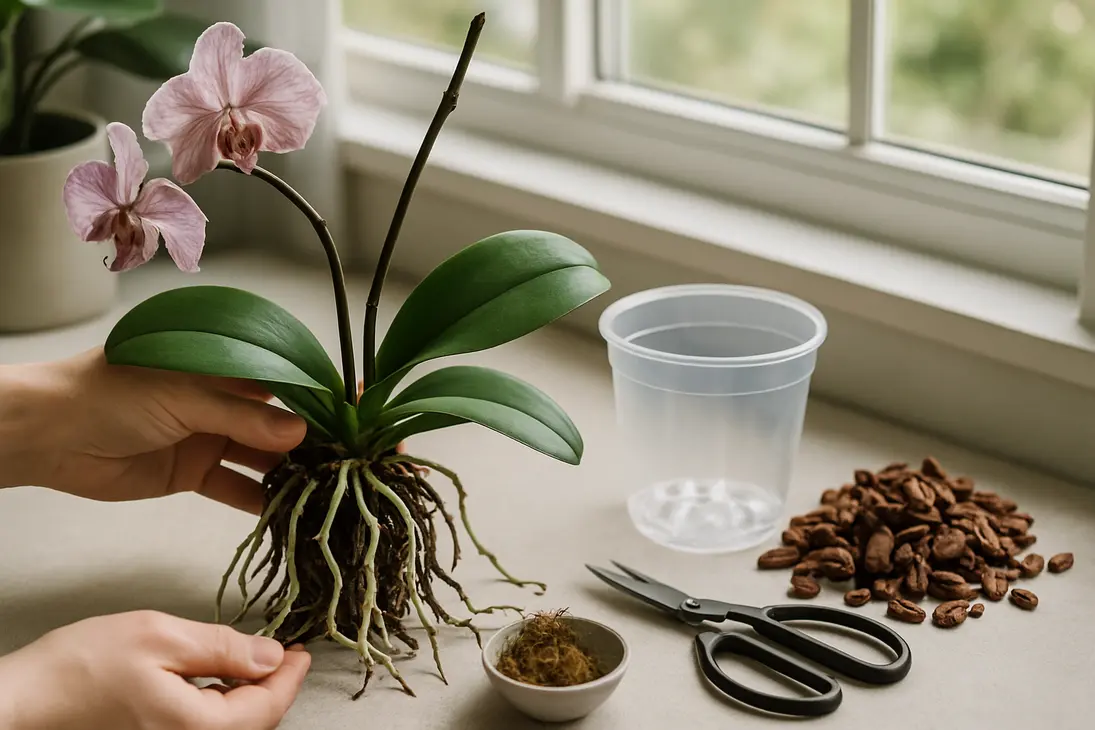
When orchid flowers wilt and fall, the plant may look dead. Often, it is only finished blooming. Most common houseplant orchids, especially Phalaenopsis orchids, bloom for weeks or months, then drop flowers and rest before growing again.
The key is checking the leaves, roots, crown, and potting mix. Firm leaves and living roots usually mean routine care is enough. Mushy roots, soggy mix, limp leaves, or a soft crown mean you need to act.
Is Your Orchid Dying or Just Finished Blooming?
Flower loss alone does not mean an orchid is dying. Orchids naturally grow roots and leaves, bloom, then let flowers fade. A bare spike can look alarming, but the plant may be healthy.
Normal Signs After Blooming
Your orchid is probably just done blooming if you see:
- Flowers fading one by one
- Soft, papery, or translucent petals
- A green spike or one that slowly browns
- Firm green leaves
- Roots that turn green when wet and silvery when dry
- No sour smell, slime, or black mushy tissue
This stage means the orchid is shifting energy back into roots and leaves.
Warning Signs Your Orchid Is Actually in Trouble
Your orchid may be declining if several of these signs appear together:
| Symptom | Likely issue |
|---|---|
| Limp, wrinkled leaves | Dehydration, root loss, or underwatering |
| Rapid yellowing | Overwatering, stress, root rot, or normal aging if one lower leaf |
| Black, mushy roots | Root rot |
| Hollow, papery roots | Dead roots |
| Wet mix for many days | Poor drainage, old medium, or oversized pot |
| Black or soft crown | Crown rot |
| Sour smell | Decay |
| Scorched or bleached leaves | Too much direct sun or heat |
Roots are the best clue. Leaf symptoms often appear after root damage has already happened.
Diagnose the Problem Before Reviving Your Orchid
Before cutting, repotting, or watering heavily, identify the cause. Orchids can wilt from too much water or too little water, and the treatments are different.
Wilted or Dropping Flowers
Wilted flowers are normal at the end of blooming. If leaves and roots are healthy, remove spent blooms and continue regular care.
Flowers may also drop early because of:
- Moving from shop to home
- Cold drafts
- Heater vents
- Dry indoor air
- Inconsistent watering
- Ripening fruit nearby
Early flower drop is disappointing, but it does not always damage the plant. Stabilize conditions instead of trying to force another bloom.
Yellow, Limp, or Wrinkled Leaves
One older bottom leaf turning yellow can be normal. Several yellowing leaves, limp leaves, or deep wrinkles are more concerning.
Wrinkled leaves mean the plant is not getting enough water into its tissues. That may happen because roots are too dry, dead, rotten, or trapped in old compacted medium. Adding water is not always the answer; a plant with rotten roots cannot absorb moisture well even if the pot is wet.
Black, Mushy, Brittle, or Hollow Roots
Healthy orchid roots are firm. In many common orchids, they are green when wet and silvery-gray when dry. Roots inside the pot may be pale from lack of light, which is fine if they are firm.
Problem roots may be:
- Black or brown and mushy: rotten
- Hollow and papery: dead
- Brittle and dry: dead from dehydration or old damage
- Slimy or foul-smelling: actively decaying
If most roots are dead, recovery is possible but slow. The orchid must grow new roots before leaves improve.
Wet Potting Mix That Never Dries
A pot that stays wet is a common cause of orchid decline. Gift orchids are often sold in decorative pots without drainage or packed in moss that stays wet in cool, low-light rooms.
Old bark also breaks down and compacts, reducing airflow. If the medium smells sour, looks muddy, or stays wet long after watering, repotting is usually needed.
Poor Light, Heat Stress, or Drafts
Orchids need bright light, not harsh direct sun. A plant in a dark corner may weaken and fail to rebloom. A plant in strong afternoon sun may scorch.
Avoid placing orchids:
- Against cold glass
- Near exterior doors
- Above heating vents
- Beside radiators or fireplaces
- In direct air-conditioning blasts
Stable conditions are better than frequent moving.
How to Revive a Dying Orchid Step by Step
If your orchid has limp leaves, rotting roots, or old wet mix, treat it as a recovery project. The goal is to stop decay, restore airflow, and encourage new roots.
Remove Dead Flowers and Damaged Growth
Remove spent flowers first. They will not recover and make inspection harder.
You can also remove:
- Brown, dry flower spikes
- Fully yellow leaves that come away easily
- Soft, black, mushy tissue
Do not cut off firm green leaves just because they are wrinkled. They may still photosynthesize. If the orchid is weak, cut the flower spike near the base, even if part is green, so the plant can focus on roots and leaves.
Take the Orchid Out of Its Pot and Inspect the Roots
Gently slide the orchid out of its pot. If roots cling, squeeze the pot or soak it briefly to loosen them. Avoid yanking, especially if few living roots remain.
Remove old bark or moss with your fingers. If there is a dense plug of moss or sponge-like material near the center, remove as much as possible without tearing healthy roots.
Check the crown where the leaves meet. It should be firm. A soft, black, waterlogged crown is serious, but cleaning the plant and improving conditions may still help if some tissue remains healthy.
Trim Dead or Rotten Roots With Sterile Tools
Use clean, sharp scissors or pruners. Wipe blades with rubbing alcohol before cutting and again if moving from rotten tissue to healthy tissue.
Trim roots that are mushy, black, hollow, papery, rotten-smelling, or completely brittle. Keep roots that are firm, even if they are tan, white, or silvery instead of bright green. If unsure, squeeze gently: living roots have substance; dead roots collapse.
Let wet cut surfaces dry briefly before repotting. Clean tools and airy conditions matter more than home remedies.
Repot in a Fresh Orchid Potting Mix
Repot into fresh orchid-specific medium. For most Phalaenopsis orchids, a bark-based mix works well. Many mixes also include perlite, charcoal, or a little sphagnum moss.
Do not use regular potting soil. Most common indoor orchids are epiphytes, so their roots need air as well as moisture. Dense soil suffocates them.
Choose a pot with drainage holes. A clear plastic orchid pot is useful because you can see roots and moisture, but it is not required. Use a pot only large enough for the root system; oversized pots stay wet too long.
When repotting:
- Keep the crown above the medium.
- Tuck fresh mix around the roots.
- Do not bury the crown.
- Tap the pot to settle the bark.
- Keep the plant stable without packing tightly.
If few roots remain, stake the orchid gently so wobbling does not damage new root tips.
Water Carefully While the Orchid Recovers
After repotting, water according to the plant’s condition. If roots were rotten and the plant was very wet, wait a short time before watering. If it was dehydrated and remaining roots are firm, water thoroughly and let all excess drain.
Water well, then let the medium approach dryness before watering again. Do not use a rigid schedule; drying speed depends on pot size, mix, temperature, humidity, and light.
To check moisture:
- Lift the pot; dry pots feel lighter.
- Look through a clear pot; silvery roots often mean dryness.
- Feel bark below the surface.
- Use a wooden skewer; if it comes out damp, wait.
Never leave water standing in a decorative outer pot. Avoid letting water sit in the crown or between leaves, especially in cool rooms.
Move It to Bright, Indirect Light
Place the orchid in bright, indirect light. An east-facing window often works well. A bright north-facing window may work, while south or west windows usually need filtering with a sheer curtain or distance from direct afternoon sun.
Too much light can cause bleached patches, tan sunken spots, or hot leaves. Too little light can cause dark green leaves, weak growth, and failure to rebloom.
During recovery, choose a good spot and monitor the plant over several weeks instead of moving it repeatedly.
Wait Before Fertilizing a Stressed Orchid
Fertilizer will not fix rotten roots. Weak roots cannot use nutrients efficiently, and feeding too soon may add stress.
Wait until you see recovery signs such as new root tips, a new leaf, firmer leaves, or roots gripping the fresh medium. When feeding resumes, use orchid fertilizer diluted according to the label and apply it only to a hydrated plant.
What to Do With an Orchid Once the Flowers Are Gone
If your orchid is healthy after blooming, you are not rescuing it. You are caring for it through the next growth cycle.
When to Cut the Flower Spike
What you do depends on the spike and the plant:
- Brown and dry spike: cut near the base.
- Green spike on a healthy plant: leave it or cut above a node to possibly encourage a side branch.
- Weak or root-damaged plant: cut the spike near the base.
Reblooming from an old spike can happen, but flowers may be fewer or smaller. Cutting the spike fully lets the plant rest.
How Often to Water After Blooming
After blooming, orchids still need water, but may use it more slowly if growth has paused. Check the medium instead of watering automatically once a week.
For many Phalaenopsis orchids in bark, watering every several days to ten days may be typical, but conditions vary. Moss dries more slowly than bark, while warm, bright rooms dry faster than cool, dim rooms.
Water thoroughly when needed, then let excess drain completely.
Light and Temperature for Reblooming
To rebloom, an orchid needs healthy roots, healthy leaves, and enough light. Keep it in bright, indirect light and avoid extremes.
Many Phalaenopsis orchids initiate spikes after a modest difference between day and night temperatures. You do not need to chill the plant harshly. A slightly cooler autumn night near a window may be enough, as long as there are no cold drafts.
If your orchid grows leaves but never blooms, low light is often the reason.
When to Resume Orchid Fertilizer
If the plant is healthy, resume light fertilizing after blooming as new leaf or root growth begins. Use orchid fertilizer or a balanced houseplant fertilizer diluted appropriately. Follow the label.
Flush the pot with plain water occasionally to reduce mineral buildup.
Common Mistakes That Make a Dying Orchid Worse
Good intentions often cause extra damage. When an orchid looks bad, it is tempting to water more, feed more, move it more, or repot repeatedly. Recovery is usually slow and steady.
Overwatering “Just in Case”
Watering because the orchid looks sad can be dangerous. Limp leaves may be caused by rotten roots, not dry roots. If the pot is already wet, more water makes oxygen deprivation worse.
Always check roots and medium before watering a struggling orchid.
Leaving the Orchid in Old, Soggy Medium
If bark has broken down or moss stays wet too long, the plant may keep declining even with better watering habits. Roots need air. Repotting into fresh orchid mix is often the turning point for a plant with root rot.
Using Regular Potting Soil or Decorative Pine Bark
Regular potting soil is too dense for most common indoor orchids. Decorative bark mulch is not a reliable substitute. Use a purpose-made orchid medium that drains freely and allows air around the roots.
Putting It in Direct Sun or a Dark Corner
A weak orchid should not be baked in direct sun or hidden in a dark corner. Aim for bright, indirect light: enough light to rebuild energy, but not enough to scorch the leaves.
Repotting Too Often During Recovery
Repot once to remove rotten roots and bad medium, then let the plant settle. Frequent repotting breaks new root tips and keeps the orchid stressed.
After repotting, focus on stable care: correct watering, good drainage, bright indirect light, and patience.
Conclusion
Saving a dying orchid starts with inspection. Wilted flowers are often normal, but limp leaves, rotten roots, and soggy potting mix point to a real problem.
Check the roots before assuming the plant needs more water. Remove dead flowers and rotten roots, repot into fresh orchid mix if needed, and place the orchid in bright, indirect light. Water only when the medium is approaching dryness, and wait to fertilize until new growth appears.
An orchid with some living roots and a firm crown has a fair chance of recovery, but it may take weeks or months.
FAQ
Can an orchid come back after all the flowers fall off?
Yes. Flower drop is normal. If the leaves are firm and the roots are healthy, the plant is not dying and may flower again in a future cycle.
How do I know if my orchid roots are dead?
Dead orchid roots are usually mushy, black, brown, hollow, papery, brittle, or foul-smelling. Healthy roots feel firm and may be green when wet, silvery when dry, or pale inside the pot.
Should I cut off wilted orchid flowers?
Yes. Wilted flowers will not perk back up. If the whole spike turns brown and dry, cut it near the base. If the plant is weak or root-damaged, cutting the spike helps redirect energy to recovery.
How long does it take to revive a dying orchid?
Expect weeks to months, not days. Wrinkled leaves may not improve until new roots grow. A severely root-damaged orchid may take several months to look better and longer to rebloom.
You Might Also Like