How to Care for Sansevieria in Water
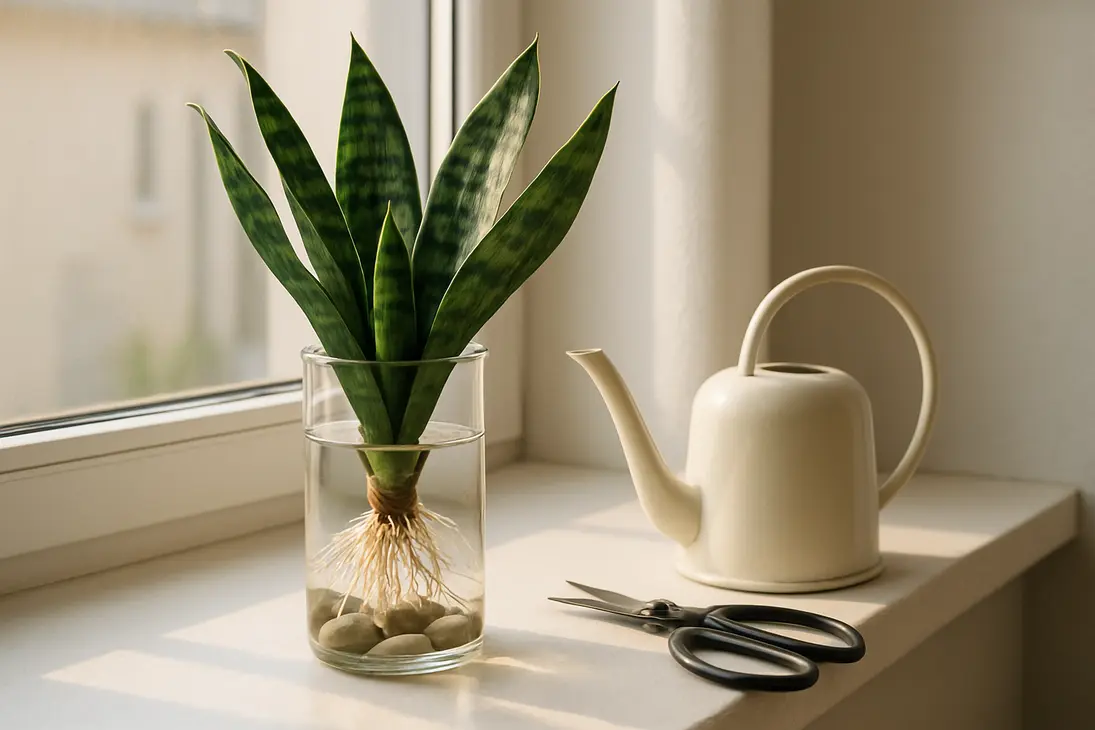
Sansevieria, commonly called snake plant and now grouped botanically under Dracaena, can grow in water as a rooted division, pup, or leaf cutting. It is a clean, decorative way to display the plant, rescue a division from poor soil, or propagate new plants.
Water culture is not maintenance-free, though. Sansevieria still needs bright indirect light, clean water, a stable container, occasional diluted nutrients, and a waterline that keeps the crown and leaf bases dry. Most failures happen when the plant sits too deep, old soil is left on the roots, or the water becomes stagnant.
Can Sansevieria Grow in Water Long Term?
Yes. Sansevieria can live in water long term if only the roots are submerged, the water is refreshed regularly, and the plant receives light and light feeding during active growth. It does not need soil to survive, but plain water cannot supply minerals forever.
Small pups and divisions with roots usually adapt best. Leaf cuttings can root in water too, but they are slower and more vulnerable to rot if the cut end is kept too wet or too deep.
Water-grown Sansevieria vs. soil-grown Sansevieria
The main difference is moisture exposure. In soil, Sansevieria roots dry between waterings. In water, roots stay constantly wet, so the plant may shed some old soil roots and grow new water-adapted roots.
| Factor | In water | In soil |
|---|---|---|
| Moisture | Roots stay submerged | Soil dries between watering |
| Nutrients | Must be added lightly | Potting mix buffers nutrients |
| Rot risk | High if crown is underwater | High if soil stays wet |
| Growth | Usually slow to moderate | Often faster |
| Maintenance | Water changes and root checks | Less frequent watering |
Think of water-grown Sansevieria as simple hydroponics, not as a jar you can ignore indefinitely.
Best Sansevieria types for growing in water
Most common snake plants can be grown or propagated in water. Good choices include:
- Sansevieria trifasciata / Dracaena trifasciata types.
- ‘Hahnii’ bird’s nest types, which stay compact.
- Cylindrical snake plants, if started from firm rooted divisions.
- Small pups, which adapt better than large, heavy leaves.
Variegated snake plants can grow in water, but leaf cuttings from some yellow-edged types may produce plain green new growth. To preserve variegation, use a pup or division rather than a leaf cutting.
What to expect from growth in water
Growth is usually slow. Expect roots first, then occasional new leaves or pups if light and nutrients are adequate. A plant may look unchanged for weeks while adjusting.
Firm leaves and clear water are good signs. A soft base, black roots, sour smell, or leaves collapsing from the bottom indicate rot.
How to Set Up Sansevieria in Water
A successful setup starts with clean plant material, a supportive container, and shallow water. Too much submerged tissue is the most common cause of failure.
Starting with cuttings, pups, or bare-root plants
You can start Sansevieria in water three ways:
Leaf cuttings: Cut a healthy leaf section and let the cut end callus for a day or two. Place the same end down that was originally closest to the roots. Upside-down cuttings usually fail.
Pups or divisions: These are best for long-term water culture, especially if they already have roots. They adapt faster and keep the parent plant’s traits.
Bare-root plants: Soil-grown plants can be moved to water, but smaller divisions are easier than mature clumps. Old soil roots may decay during the transition.
Use only firm, healthy material. Avoid mushy bases, deep yellowing, or rotten smells.
Cleaning soil from the roots before transferring
If moving a plant from soil to water, remove as much potting mix as possible. Soil left in a vase clouds the water, feeds bacteria, and hides root problems.
Basic steps:
- Remove the plant from its pot.
- Gently loosen and shake away soil.
- Rinse roots with room-temperature water.
- Trim black, slimy, hollow, or mushy roots.
- Let the plant rest briefly before placing it in water.
Healthy roots are firm and may be pale, tan, cream, or orange. Dead roots feel slippery, stringy, or hollow.
Choosing the right jar or vase
Choose a container that is clean, stable, and narrow enough to support the plant without crushing it. Clear glass makes roots easy to monitor, but it can encourage algae in strong light. Amber glass, ceramic, or an opaque outer cachepot can help.
Look for:
- A heavy base.
- A narrow neck or support for upright leaves.
- Enough room for roots.
- Smooth edges.
- Easy access for cleaning.
Avoid large vases filled with deep water. More water does not mean better care; it can simply hide decay longer.
How deep the water should be
Keep only the roots, or the very bottom of a cutting, in water.
For rooted divisions, cover the roots but keep the crown and leaf bases above the waterline. The crown is where leaves emerge from the base, and it should stay dry.
For leaf cuttings, submerge only the bottom 1–2 inches. Use pebbles, a propagation lid, or a narrow jar to hold the cutting upright without sinking it too deeply.
Check the waterline every few days. Evaporation may expose roots, while overfilling may wet the base.
Routine Care for Sansevieria in Water
Routine care is simple but consistent: refresh the water, keep the plant supported, provide enough light, and inspect for rot.
How often to change the water
Change water weekly for new cuttings or newly transferred plants. Once the plant is stable and the water stays clear, every 1–2 weeks is usually enough. Change it immediately if it becomes cloudy, green, slimy, or smelly.
During water changes:
- Rinse the jar.
- Rinse slimy roots gently.
- Remove dead or mushy roots.
- Refill with room-temperature water.
- Return the plant at the same shallow depth.
Tap water is often fine, but filtered water, rainwater, or water left out overnight may help if your tap water is very hard or heavily chlorinated. Avoid softened water that contains added salts.
Best light conditions
Sansevieria tolerates low light, but it grows better in bright indirect light. Place it near an east-facing window, a few feet from a bright south or west window, or under a grow light.
Low light slows growth and can increase rot risk because the plant uses water and nutrients slowly. Harsh direct sun can heat the jar, encourage algae, or scorch leaves.
If you can comfortably read in the spot during the day without a lamp, the light may be adequate. A dim room may keep the plant alive, but it may not grow well.
Temperature and placement tips
Keep water-grown Sansevieria in normal indoor temperatures and away from stress points.
Avoid:
- Cold windowsills in winter.
- Direct afternoon sun heating the water.
- Radiators and forced-air vents.
- Spots where the jar may be bumped.
- Dark bathrooms without strong light.
The plant should stand upright. If it wobbles, use clean pebbles, a narrower container, or a propagation lid. Constant movement can bruise the base and invite rot.
Signs the plant is healthy in water
A healthy water-grown Sansevieria may grow slowly, but it should look firm and stable.
Good signs include:
- Upright leaves.
- Clear or lightly tinted water.
- No sour smell.
- Firm roots.
- New pale root tips.
- Occasional new leaves or pups.
Some old soil roots may die after transfer. That is normal if the plant base stays firm and new roots appear.
Feeding Sansevieria Grown in Water
Plain water has little nutrition. Sansevieria does not need much fertilizer, but long-term water-grown plants benefit from very diluted feeding during active growth.
Best fertilizer options for water-grown Sansevieria
Use a balanced liquid houseplant fertilizer or a hydroponic nutrient solution that dissolves cleanly. A mild cactus or succulent fertilizer can also work.
Avoid coffee, sugar water, milk, compost tea, or other homemade additions. They can rot, smell bad, and encourage bacterial growth in the vase.
How much fertilizer to use
Use far less than the label rate for potted plants. About one-quarter strength or weaker is a safe starting point. For a small jar, that may mean only a drop or two, depending on the product.
Too much fertilizer can burn roots because salts build up in the water. If root tips brown, residue appears, or leaves yellow after feeding, empty the jar, rinse the roots, and refill with plain water.
When unsure, underfeed. Sansevieria is slow-growing and stores moisture and nutrients in its thick leaves and rhizomes.
How often to feed
Feed only during active growth, usually spring through early fall. Once every 4–6 weeks at a very diluted rate is usually enough.
| Season | Feeding approach |
|---|---|
| Spring | Start light feeding if the plant is healthy |
| Summer | Feed every 4–6 weeks |
| Fall | Reduce or stop |
| Winter | Usually skip unless under strong grow lights |
Refresh with plain water at the next change to prevent nutrient buildup.
When not to fertilize
Do not fertilize a stressed, rotting, freshly cut, or newly transferred plant. Fertilizer is not a cure for poor roots.
Skip feeding when:
- Water smells bad or clouds quickly.
- Roots are black or slimy.
- The leaf base is soft.
- The plant was just moved from soil.
- Light is very low.
- Growth has paused in winter.
Stabilize the plant first with clean water, correct depth, and better light.
Common Problems and Mistakes
Most problems come from submerged leaf bases, dirty water, leftover soil, low light, or overfeeding. The goal is not to keep the whole plant wet; it is to keep healthy roots in clean water while the crown stays dry.
Root rot or mushy leaf bases
Rot often starts when the crown or leaf base sits below the waterline. Mushy, translucent, blackened, or foul-smelling tissue is a bad sign.
What to do:
- Remove the plant.
- Cut away mushy roots and soft tissue.
- Cut leaf cuttings back to firm tissue if needed.
- Let cuts callus for a day or two.
- Restart in a clean jar with shallower water.
If rot has moved far into the crown, the plant may not be salvageable. A firm leaf section above the rot may still be propagated.
Yellowing, wrinkling, or soft leaves
Yellowing and wrinkling can have different causes, so inspect the roots, water, light, and temperature.
| Symptom | Likely cause |
|---|---|
| Yellow leaf with mushy base | Rot |
| Wrinkled leaves | Root loss or dehydration |
| Pale, floppy growth | Low light |
| Yellowing after feeding | Fertilizer too strong |
| Soft leaves in a cold room | Chilling or root stress |
Wrinkling can happen even in water if the roots are dead or not functioning. The fix is healthier roots, not deeper water.
Cloudy, smelly, or green water
Cloudy or smelly water usually means organic matter is decomposing. Green water or film is algae. It is not always an emergency, but it signals that the setup needs cleaning.
To improve water quality:
- Change water more often.
- Wash the container.
- Remove dead roots and debris.
- Keep the jar out of direct sun.
- Use amber or opaque containers if algae returns.
- Reduce fertilizer.
If bad smells return within a day or two, inspect the base for hidden rot.
Overwatering vs. underwatering in water culture
In soil, overwatering means roots lack air because the mix stays wet. In water culture, the equivalent is stale, contaminated water or plant tissue submerged that should be dry.
Underwatering usually means the water level has dropped below active roots, or the roots have died and cannot absorb water.
Remember:
- Healthy setup: roots in clean water, leaf bases dry.
- Too wet: crown or base underwater.
- Too dry: active roots exposed too long.
The correct waterline prevents many problems.
Mistakes to avoid when transitioning from soil to water
Avoid these common mistakes:
- Leaving soil packed around roots.
- Submerging the crown.
- Moving a large stressed plant instead of a small division.
- Fertilizing immediately.
- Keeping the jar in dim light.
- Ignoring dying roots.
- Using a vase that hides the base.
- Letting the plant wobble.
Watch new transfers closely for the first month. Change water weekly, remove decaying roots, and wait for fresh growth before feeding.
Conclusion
Sansevieria can grow well in water if the setup stays clean and shallow. Keep roots submerged, but keep the crown and leaf bases dry. Give the plant bright indirect light, stable indoor temperatures, and enough support to stand upright.
For long-term growth, add very diluted fertilizer during the growing season once the plant is stable. Refresh the water regularly and act quickly if you notice soft tissue, bad smells, or black roots.
FAQ
Can Sansevieria live in water permanently?
Yes. Sansevieria can live in water long term if roots stay in clean water, leaf bases remain above the waterline, and the plant receives bright indirect light plus occasional diluted fertilizer during active growth.
How often should I change the water for Sansevieria?
Change it weekly for new cuttings or transfers. For established plants, every 1–2 weeks is usually enough. Change it sooner if the water turns cloudy, green, slimy, or smelly.
What fertilizer should I use for Sansevieria in water?
Use a balanced liquid houseplant fertilizer or hydroponic nutrient solution diluted to about one-quarter strength or weaker. Feed sparingly every 4–6 weeks in spring and summer.
Why is my Sansevieria rotting in water?
Rot usually comes from a submerged crown or leaf base, stagnant water, leftover soil, low light, or overfeeding. Cut away mushy tissue, clean the container, and restart with only the roots or bottom of the cutting in fresh water.
You Might Also Like