How to Revive an Overwatered Pothos
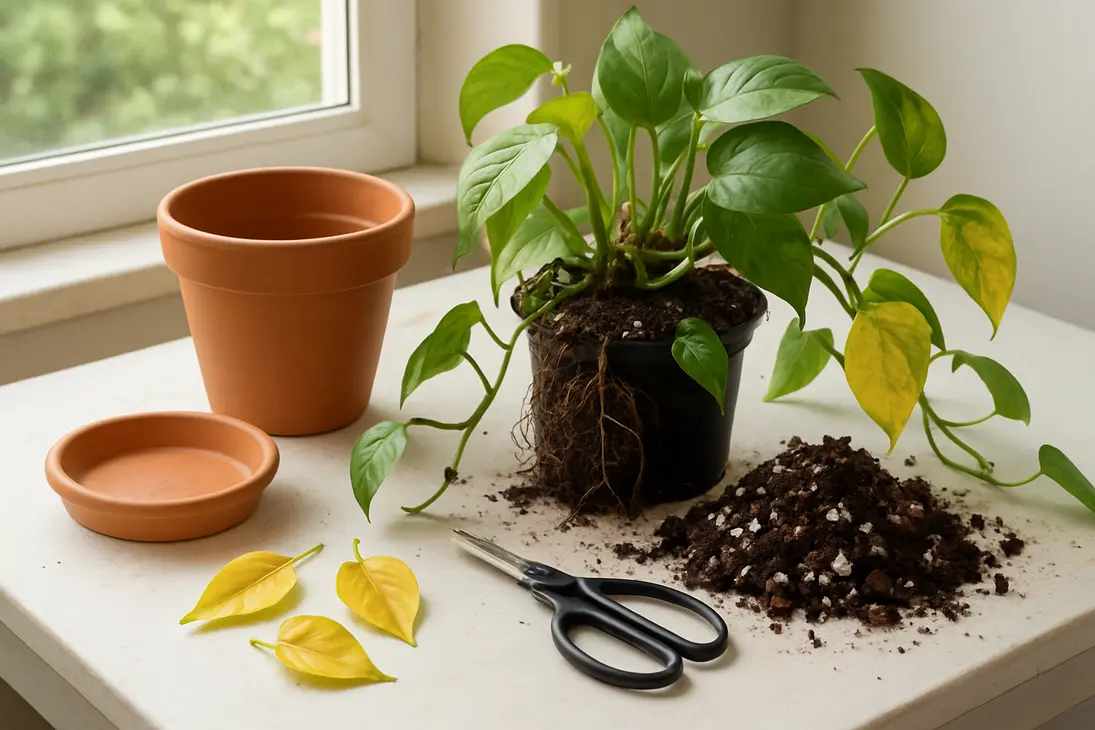
Reviving overwatered pothos starts with getting oxygen back around the roots. Pothos is tough, but it declines when potting mix stays wet too long. Constant moisture pushes air out of the soil, weakens roots, and can lead to root rot. The plant may yellow, droop, or look thirsty even though the soil is soaked.
Most overwatered pothos plants can recover if you act early: stop watering, improve drainage and light, check roots if symptoms are serious, and rebuild your watering routine around soil moisture instead of a calendar.
Confirm the Pothos Is Actually Overwatered
Do not repot or cut roots until overwatering is likely. Pothos can yellow from old age, underwatering, low light, cold stress, pests, or fertilizer issues. The strongest clue is yellowing or drooping leaves plus soil that stays wet.
Yellowing leaves after watering
One or two yellow leaves are normal, especially older leaves near the base of long vines. Overwatering is more likely when several leaves turn yellow soon after watering, feel soft, or collapse quickly.
| Symptom | More likely overwatering | More likely underwatering |
|---|---|---|
| Leaves | Soft yellow, sometimes spotted | Wilted, dull, crispy edges |
| Soil | Damp below the surface | Dry through most of pot |
| Stems | Soft if severe | Usually firm |
| Pot weight | Heavy for days | Very light |
Do not water just because leaves are yellow. That often makes the problem worse.
Drooping or limp vines despite wet soil
A dry, drooping pothos may need water. A wet, drooping pothos is more concerning. Soggy roots cannot absorb water well because they lack oxygen or have begun to rot, so the plant wilts even though moisture is present.
If vines are limp and the mix is wet several inches down, pause watering and check drainage, light, and roots.
Brown spots, soft stems, or mushy leaf bases
Dark, water-soaked brown spots with yellow halos can point to overwatering. Soft stems are a stronger warning sign. Pothos vines should be flexible but firm; mushy, blackened, or collapsing stems suggest rot may have moved beyond the roots.
A foul smell, mushy leaf bases, or slimy soil means drying alone may not be enough. You may need to inspect roots and take cuttings from healthy vines.
Soil that stays wet for days
Pothos should dry partly between waterings. Soil that stays wet for many days puts roots at risk, even before leaves look bad.
Common causes include:
- No drainage hole
- Water sitting in a saucer or cachepot
- Dense, peat-heavy soil
- A pot much larger than the root ball
- Low light or cool temperatures
- Fixed weekly watering
The top inch can feel dry while the lower pot remains saturated, so check deeper before watering.
Dripping leaves after watering: when it is normal guttation vs. a warning sign
Pothos leaves sometimes drip from the tips after watering. This is usually guttation, a normal release of excess water when root pressure is high, especially overnight or in humid rooms.
It becomes a warning sign only when it happens with wet soil that will not dry, yellowing after each watering, limp vines, soft brown spots, or a rotten smell. Occasional dripping on a firm, healthy plant is not a crisis.
Take Immediate Steps to Stop the Damage
Once overwatering seems likely, skip fertilizer, misting, and extra water. Focus on drying the root zone and restoring airflow.
Stop watering until the soil dries
Stop watering immediately. Let the potting mix dry significantly through much of the pot, not just on the surface. Mild cases may recover from this alone.
Drying can take several days to two weeks or more depending on pot size, soil, light, and temperature. Do not “flush” the plant unless you have a separate reason, such as severe fertilizer buildup.
Empty saucers and cachepots
Check beneath the nursery pot. Decorative cachepots often hide standing water.
Do this right away:
- Remove the inner pot from the cover pot.
- Pour out standing water.
- Let the plant drain fully in a sink or tub.
- Do not return it to a tight cachepot while it is still dripping.
If the pothos is planted directly in a container without drainage, plan to repot it into one with drainage holes.
Move the plant to bright, indirect light
Bright, indirect light helps pothos use water and recover. Move it near a bright window, behind a sheer curtain, or under a grow light. Avoid harsh direct sun on a stressed plant, which can scorch leaves while roots are weak.
Increase airflow without exposing it to harsh drafts
Gentle airflow helps soil dry and reduces stagnant conditions. Use a ceiling fan on low, open a nearby door, or run a small fan in the room. Avoid cold drafts, heating vents, and air conditioning blowing directly on the plant.
Remove dead, yellow, or rotting leaves
Fully yellow leaves will not turn green again. Remove dead, yellow, or rotting leaves with clean scissors so the plant is easier to monitor. Cut away mushy or blackened vine sections, but keep mostly green leaves if the plant is sparse.
Check for Root Rot and Repot if Needed
Not every overwatered pothos needs repotting. If symptoms are mild and the soil begins drying normally after you improve drainage and light, let it recover undisturbed. If symptoms worsen, inspect the roots.
When you should take the pothos out of the pot
Unpot the plant if you notice:
- Soil stays wet for a week or more
- Several leaves yellow quickly
- Vines droop while the mix is wet
- Stems near the soil are soft or black
- The pot smells sour or rotten
- Fungus gnats increase with soggy soil
- The pot has no drainage
Slide the root ball out gently. Squeeze a plastic pot or tap the rim if needed; do not yank the vines.
What healthy vs. rotten pothos roots look like
Healthy pothos roots are usually white, cream, tan, or light brown and feel firm. Older roots may be darker but should not be slimy or hollow.
Rotten roots are often black, dark brown, gray, mushy, slimy, hollow, easy to pull apart, or foul-smelling. If the outer layer slips off and leaves a thin string behind, that root is dead.
How to trim mushy or black roots
Use clean, sharp scissors or pruners. Remove only roots that are clearly rotten; firm brown roots may still function.
Basic process:
- Remove loose, soggy soil.
- Rinse gently only if rot is hard to see.
- Cut mushy, black, slimy, or hollow roots.
- Remove rotted stem bases.
- Keep as many firm roots as possible.
- Repot into fresh, airy mix.
If many roots are removed, shorten long vines slightly so the reduced root system has less foliage to support.
Best pot and drainage setup for recovery
Use a pot with drainage holes. This is essential for a recovering pothos.
Choose a pot only slightly larger than the remaining root ball. Oversized pots hold excess wet soil around damaged roots and can restart rot.
Plastic pots retain moisture longer but are easy to handle. Terracotta dries faster and may help chronic overwaterers. Either can work if the pot drains and the watering routine changes.
Use a lighter potting mix with perlite, bark, or other aerating material
Dense soil keeps pothos wet too long. For recovery, use a mix that holds some moisture while leaving air pockets.
A simple mix is about two parts indoor potting soil to one part perlite, pumice, or fine orchid bark. In cool or low-light rooms, make the mix airier. Do not pack the soil tightly; firm it only enough to support the plant.
When to propagate healthy cuttings instead of saving the whole plant
If most roots are rotten, the stem base is collapsing, or vines are mushy at soil level, propagation may be the safest rescue.
Take cuttings from firm, healthy vines. Each cutting needs at least one node—the bump where a leaf or aerial root emerges. A leaf without a node will not grow into a new plant.
Root cuttings in water or a light potting mix. If using water, change it regularly and pot the cuttings once roots are a few inches long. If using mix, keep it lightly moist, not soggy.
Water Your Pothos Correctly After Recovery
After rescue, pothos needs a wet-dry rhythm: water thoroughly, let the mix dry most of the way, then water again.
Check moisture below the surface, not just the topsoil
The surface dries first, while the lower root zone may still be wet. Check deeper before watering.
Use one or more methods:
- Insert your finger about two inches into the soil.
- Use a wooden skewer; damp soil clings or darkens it.
- Lift the pot to compare heavy-wet and light-dry weight.
- Use a moisture meter as a rough guide, not the only decision.
For large pots, check deeper than the first inch.
Water when the soil is mostly dry, not on a fixed schedule
Do not water on a fixed weekly routine. A pothos may need water every several days in bright summer conditions or only every few weeks in low winter light.
Water when the mix is mostly dry, often when the top half to two-thirds has dried. If the plant is recovering from root rot, be more conservative because damaged roots use water slowly.
Water thoroughly, then let excess drain
When it is time to water, water evenly until excess runs from the drainage holes. This moistens the full root ball and prevents dry pockets.
Let the pot drain completely. If very dry soil repels water and it runs down the sides, water once, wait a few minutes, then water lightly again.
Thorough watering is not the same as overwatering. Overwatering usually means watering too often or keeping the root zone wet too long.
Avoid letting the pot sit in water
Empty the saucer after watering. If you use a cachepot, check again after 10 to 20 minutes because more water may drain out.
A brief draining period is fine. Long-term standing water deprives roots of oxygen.
Adjust watering for light, season, pot size, and soil type
Water less often in low light, winter, cool temperatures, large pots, dense soil, or recovery after root loss.
Water more often in bright indirect light, active growth, small pots, chunky fast-draining mix, or warm, dry homes.
Instead of asking how often to water pothos, ask how long this pot takes to mostly dry in its current spot.
Common Mistakes That Keep Pothos Overwatered
Most overwatering comes from trying to help. The skill is knowing when the plant needs water and when it needs oxygen.
Watering because leaves look sad without checking the soil
Drooping can mean too dry, too wet, cold, heat, shock, or root damage. Always check soil moisture first. If the soil is dry, water. If it is wet, wait and improve conditions.
Assuming yellow leaves always mean the plant needs more water
Yellow leaves are a symptom, not a diagnosis. They can come from overwatering, underwatering, old age, low light, pests, or root disturbance. If leaves yellow after watering and the pot stays damp, overwatering is more likely than thirst.
Using a pot with no drainage hole
A pot without drainage leaves no margin for error. Excess water collects at the bottom, even when the top looks fine.
Use decorative pots as cachepots instead. Keep the pothos in a nursery pot with drainage, water it outside the cover pot, let it drain, then place it back.
Repotting into dense soil that holds too much moisture
Fresh soil is not always better. Heavy, compact mixes can suffocate stressed roots. If you repot, use aerating material such as perlite, pumice, or bark, and avoid oversized pots.
Watering too frequently in low light or winter
Pothos uses less water in low light and winter. A plant that dried in a week during summer may take two or three weeks in December. Let soil moisture, not the calendar, decide.
Conclusion
To revive an overwatered pothos, confirm the signs first: yellowing, limp vines, soft tissue, and soil that stays wet. Then stop watering, empty saucers or cachepots, move the plant to bright indirect light, increase gentle airflow, and remove dead or rotting growth.
If symptoms are serious, inspect the roots. Trim mushy or black roots, repot into a draining pot with airy mix, or propagate healthy cuttings if the base is badly rotted.
Once the plant stabilizes, water only when the mix is mostly dry and never let the pot sit in water. With patience, pothos often replaces damaged foliage with healthy new growth.
FAQ
Can an overwatered pothos recover?
Yes, if enough healthy roots and stems remain. Mild cases may recover after the soil dries and conditions improve. Serious cases need root trimming, fresh airy mix, and better drainage. If roots are mostly rotten, propagate healthy stem cuttings.
Should I cut off yellow pothos leaves?
Yes. Fully yellow leaves will not turn green again. Remove them with clean scissors near the vine. Keep mostly green leaves if the plant is sparse, but remove mushy, black, or rotting growth immediately.
How long does it take an overwatered pothos to bounce back?
Mild cases may improve in one to three weeks. Plants with root damage can take several weeks to a few months to produce strong new growth. Judge recovery by firm stems, stable remaining leaves, and new shoots.
Why is my pothos dripping water from its leaves?
It is usually guttation, a normal release of excess water from leaf tips or edges after watering. It is only concerning if it happens with yellowing, limp vines, soil that stays wet, soft brown spots, or a rotten smell.
You Might Also Like