How Can You Balance Roof Overhangs and Natural Light for Indoor Plants?
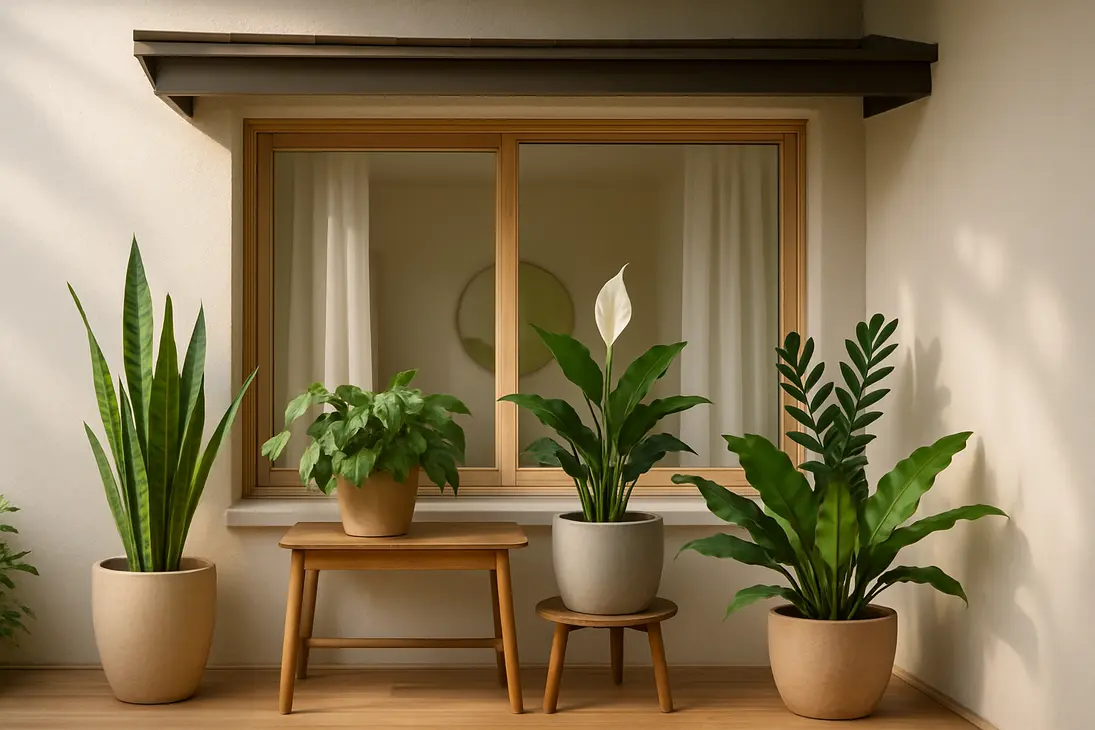
Roof overhangs shade windows, protect walls from rain, reduce glare, and make outdoor areas more comfortable. The trade-off is that deep eaves, porch roofs, balconies, and awnings can reduce the natural light available to indoor plants.
That does not mean you cannot grow houseplants under shaded windows. It means you need to match plants to the light the room actually receives, improve brightness where possible, and adjust care so plants are not overwatered in dim conditions.
How Roof Overhangs Affect Indoor Plant Light
A roof overhang affects indoor plant light in two main ways: it blocks direct sun and reduces the amount of visible sky your window receives.
Direct light is sunbeam light that lands on leaves and casts sharp shadows. Bright indirect light is softer light from the open sky, reflected surfaces, pale walls, or filtered sun. Many tropical houseplants prefer bright indirect light, but they still need enough brightness to grow.
A south-facing window without an overhang may be intense. The same window under a deep porch may act more like a medium-light location. A north-facing window under an overhang may be too dim for many plants.
Season also matters. Some overhangs block high summer sun but allow lower winter sun to reach the glass. Others keep rooms dim year-round, especially when combined with trees, neighboring buildings, or covered balconies.
Direct Light vs. Bright Indirect Light
For plant care, use these practical definitions:
| Light description | What it looks like indoors | Plant meaning |
|---|---|---|
| Direct light | Sunbeams hit leaves; shadows are sharp | Best for cacti, succulents, many herbs, and some flowering plants |
| Bright indirect light | Room is bright; shadows are soft; no harsh sunbeam | Ideal for many tropical foliage plants |
| Medium light | Comfortable to read; shadows are faint | Suitable for tolerant foliage plants |
| Low light | Dim but usable to human eyes; little shadow | Only some plants tolerate it, usually with slow growth |
| No light | No window light and no grow light | Not suitable long term |
Near an overhang, “bright indirect light” usually means the plant is close to a bright window, but the overhang keeps direct sun from hitting the leaves. Large windows, pale surfaces, and an open sky view can make this workable.
Why “Low Light” Does Not Mean No Light
“Low light” does not mean darkness. It means a plant can tolerate less light than sun-loving plants. In very dim conditions, plants grow slowly, stretch toward the window, produce smaller leaves, and use water more slowly.
Some houseplants can survive for months in a dim corner, but survival is not the same as healthy growth. If a room has no usable natural light because of overhangs, interior placement, or lack of windows, use a grow light or choose another location.
Assess the Light Your Plants Actually Receive
Window direction alone can be misleading. A west window under a balcony may be darker than an east window with open sky. A large north window beside pale paving may outperform a small south window buried under a porch roof.
The real question is: how much light reaches the plant’s leaves?
Observe Morning, Midday, and Afternoon Light
Check the room at three times of day:
- Morning: Does soft sun enter before the overhang blocks it?
- Midday: Is the room bright from sky light, or flat and gray?
- Afternoon: Does low-angle sun enter under the overhang and increase heat or brightness?
Stand where the plant will sit. Light drops quickly with distance from the glass. A plant one foot from a shaded window may do well while the same plant six feet back declines.
Use shadows as clues. A soft but visible hand shadow suggests bright indirect to medium light. Barely any shadow at midday usually means low light. Sharp sunbeams on leaves count as direct light, even if the window is shaded at other times.
Check Seasonal Changes Under the Overhang
Overhangs interact strongly with sun angle. In summer, they may block intense light and protect plants from scorching. In winter, shorter days and weaker outdoor light may make the room dimmer, though lower winter sun may sometimes slip under the eave.
Watch the room across several weeks if possible, especially before buying expensive or high-light plants. You may need seasonal placement: a snake plant might stay put year-round, while a ficus may need to move closer to the glass in winter.
Outdoor changes also matter. Deciduous trees, vines, privacy screens, patio shades, and nearby buildings can all change the amount of light reaching the window.
Use Simple Light Clues or a Light Meter App
You do not need professional equipment. Ask:
- Can you read comfortably without a lamp?
- Does the plant cast a shadow?
- Is the room still bright on a cloudy day?
- Can you see open sky from the plant’s position?
- Does light reflect from pale walls, paving, fencing, or water?
A phone light meter app can help compare spots, although readings vary by device. Use it to compare the windowsill, a table two feet back, and a shelf across the room at the same time of day. Even imperfect readings show how fast brightness drops with distance.
Choose Plants That Match Overhang-Shaded Rooms
The easiest solution is choosing plants for the light you have, not the light you wish you had. A shaded window can support many foliage plants, but it is usually a poor place for succulents, fruiting plants, herbs, or repeat bloomers unless you add grow lights.
In lower light, expect slower growth. Variegated plants may lose contrast, flowering may stop, and stems may stretch. If you want fast, lush growth, provide brighter conditions or supplemental light.
Good Options for Lower Natural Light
For medium to low natural light from an overhang, choose tolerant plants such as:
- Snake plant: Handles lower light and irregular watering; faster in bright indirect light.
- ZZ plant: Very tolerant of dim interiors and slow growth.
- Pothos: Adaptable, though it may become leggy in low light.
- Heartleaf philodendron: Reliable in medium light.
- Aglaonema: Often performs well, especially green varieties.
- Cast iron plant: Slow but durable.
- Peace lily: Tolerates lower light; blooms better in brighter indirect light.
- Parlor palm: Better suited to soft indoor light than many palms.
- Bird’s nest fern: Good in bright indirect to medium light with steady moisture.
Green-leaved varieties usually tolerate shade better than heavily variegated ones because variegated leaves contain less chlorophyll.
Plants That Need Brighter Window Conditions
Deeply shaded, overhung windows are usually not ideal for:
- Cacti and most succulents
- Aloe and echeveria
- Citrus trees
- Herbs such as basil, rosemary, and thyme
- Fiddle leaf fig
- Croton
- Hibiscus
- Bougainvillea
- Most flowering indoor plants if you expect repeat blooms
These plants generally need strong light. In shaded windows, they may stretch, drop leaves, stop flowering, or become more prone to overwatering. If you want to grow them, use your brightest unobstructed window or add a grow light.
Signs a Plant Is Not Getting Enough Light
Low-light decline is often gradual. Watch for:
- Long, weak stems reaching toward the window
- Smaller new leaves
- Wide spacing between leaves
- Fading variegation
- Leaning or one-sided growth
- Soil staying wet much longer than usual
- Leaf drop, especially on ficus
- Little growth during the active season
- Flowering plants producing leaves but no flowers
Not every yellow leaf is a light problem. Yellowing can also come from watering issues, pests, temperature stress, or normal aging. But if a plant is stretching, staying wet, and growing weakly in an overhang-shaded room, light is likely part of the issue.
Improve Natural Light Without Removing the Overhang
You usually do not need to remove an overhang. It may be protecting your home from rain, glare, and heat. Instead, make small changes that increase usable light indoors.
Place Plants Closer to the Brightest Windows
Distance is one of the biggest factors you can control. In overhang-shaded rooms, plants that need the most light should sit close to the glass.
Useful changes include:
- Moving medium-light plants from tables to window-side stands
- Using narrow shelves near the window
- Hanging trailing plants in the window area, not a dark corner
- Keeping large floor plants close enough that the whole canopy receives light
Also watch temperature. Leaves should not press against cold glass, and plants should not sit in drafts from doors, vents, or poorly insulated windows.
Use Light-Colored Walls, Mirrors, and Reflective Surfaces
Reflection will not turn a dim room into a greenhouse, but it can help distribute light. Try light-colored walls, pale curtains or blinds, light plant stands, pale flooring, and mirrors that reflect a window or bright wall.
Clean windows matter too. Dust, pollen, hard water marks, dirty screens, and heavy curtains can reduce light. Opening curtains during the day may help more than any decorative change.
Prune Outdoor Obstructions Where Appropriate
Sometimes the overhang is only part of the problem. Shrubs, vines, tree branches, porch railings, privacy screens, and outdoor furniture can block light before it reaches the glass.
If you own the landscape and can do it safely, selective pruning may help. Raise a shrub canopy, thin a dense vine, or move large porch plants to open a view of the sky.
Be cautious with trees. Large limbs, branches near power lines, and trees over roofs should be handled by qualified professionals. Also consider the value of outdoor shade; removing too much vegetation may increase heat and glare.
Rotate Plants for Even Growth
Plants grow toward light. Near overhung windows, light often comes from one direction, so plants may lean. Rotate pots a quarter turn every week or two during active growth. For slow growers, monthly rotation may be enough.
Rotation does not solve low light, but it keeps growth more balanced and gives you a regular chance to check soil moisture, pests, leaf color, and drafts.
Adjust Plant Care in Lower-Light Conditions
Light and watering are connected. When an overhang reduces light, plants photosynthesize less, grow more slowly, and use water more slowly. If you water on the same schedule used for a brighter window, the soil may stay wet too long.
Water Less Often to Avoid Root Rot
Do not water by calendar alone. Check the soil first:
- For many foliage plants, let the top inch or two dry.
- For snake plants and ZZ plants, let more of the mix dry.
- For ferns, keep soil lightly moist but not soggy.
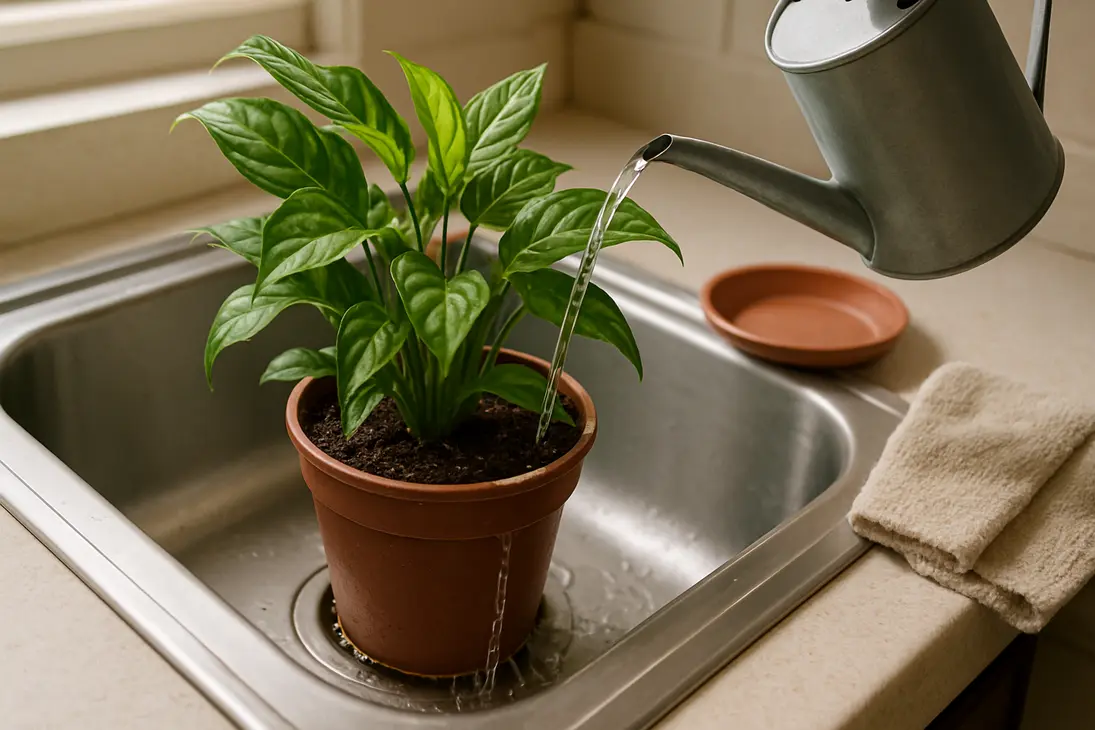
Use your finger, a wooden skewer, or the weight of the pot. If the pot feels heavy and the soil is cool and damp, wait. Make sure pots have drainage holes, and do not let plants sit in water inside decorative cachepots.
Overwatering signs include yellow leaves, mushy stems, fungus gnats, sour-smelling soil, and sudden collapse.
Reduce Fertilizer During Slow Growth
Fertilizer does not replace light. In a dim room, heavy feeding can stress roots because the plant is not growing fast enough to use the nutrients.
Use less fertilizer when growth is slow, especially in winter or very low light. If the plant is producing healthy new leaves, modest feeding may help. If it has not grown for months, focus first on light, watering, drainage, and root health.
Add Grow Lights When Natural Light Is Not Enough
If your overhang makes a room too dim for the plants you want, grow lights are often easier than architectural changes. They are useful for windowless rooms, deep rooms, winter months, high-light plants under shaded windows, and dim plant shelves.
Choose a full-spectrum LED grow light sized for the area. Place it close enough to reach the leaves without overheating them, and use a timer for consistency. Watch for stretching, scorch, or improved growth, then adjust distance and duration as needed.
Conclusion
Roof overhangs and indoor plants can coexist. Evaluate the real light near your windows, choose plants that match it, and make small improvements such as moving plants closer to the glass, using reflective surfaces, pruning outdoor obstructions, and rotating pots.
Care should also change in lower light. Plants usually need less frequent watering and lighter fertilizing because they grow more slowly. If natural light is still not enough, a grow light can bridge the gap without changing the roof structure.
A shaded window is not a failure. It is simply a specific growing environment.
FAQ
Can indoor plants survive with no natural light?
Not long term unless you provide artificial light. Plants need light to photosynthesize. Low light is not the same as darkness.
What does bright indirect light mean near an overhang?
It means the plant is close to a bright window, but direct sunbeams do not land on the leaves for long periods. The plant may cast a soft shadow and may have a view of open sky.
Which houseplants tolerate lower light from shaded windows?
Good choices include snake plant, ZZ plant, pothos, heartleaf philodendron, aglaonema, cast iron plant, peace lily, parlor palm, and bird’s nest fern. They still need some light and usually grow more slowly in shade.
Should I water plants less if my roof overhang blocks sunlight?
Usually, yes. Less light means slower growth and slower water use. Check the soil before watering, wait if it is still damp, and make sure the pot drains well.
Sources
- Reddit discussion on low-light houseplants and watering concerns: https://www.reddit.com/r/houseplants/comments/1c8pk1a/recommendations_for_low_light_house_plants
- Reddit discussion on plants and zero sunlight: https://www.reddit.com/r/houseplants/comments/uhn7h3/i_hate_this_so_much_no_plant_can_survive_a_zero
- Reddit discussion on “bright indirect light”: https://www.reddit.com/r/houseplants/comments/1bd56mr/what_does_bright_indirect_light_mean_to_you
You Might Also Like