How to Restore a Bay Tree’s Color
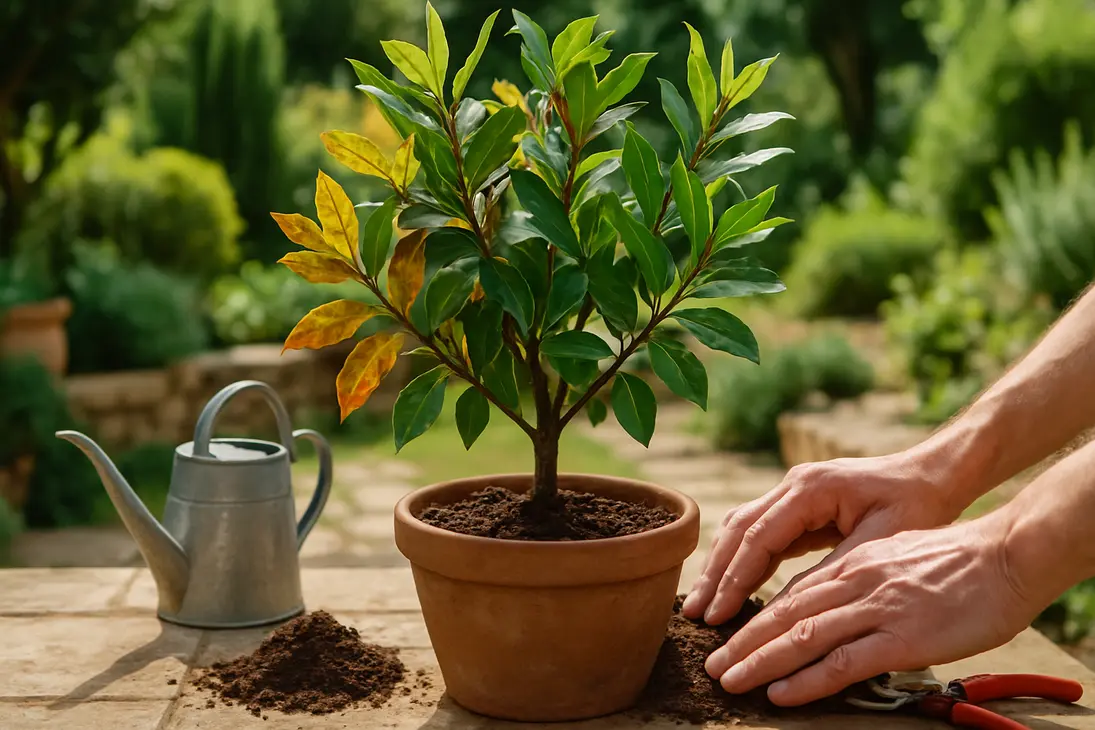
Restoring Bay tree color starts with finding out why the leaves changed. Bay, or sweet bay laurel (Laurus nobilis), is an evergreen Mediterranean shrub or small tree with naturally deep green, aromatic leaves. When it turns yellow, pale, brown, blackened, or patchy, the cause is usually stress rather than one single “bay tree disease.”
Damaged leaves often do not turn fully green again. Brown, scorched, badly yellow, or spotted leaves may stay that way until they drop or are pruned off. Recovery usually appears as new, healthy green growth after watering, drainage, light, feeding, or pest problems are corrected.
Start by Identifying What Kind of Color Change You’re Seeing
Before fertilizing, pruning, or spraying, look closely at the discoloration. Different symptoms point to different causes, and treating the wrong issue can make a stressed bay tree worse.
| What you see | Likely causes | First thing to check |
|---|---|---|
| Yellow leaves | Overwatering, underwatering, nutrient shortage, root stress, old leaves aging | Soil moisture and drainage |
| Pale, washed-out leaves | Low nutrients, too little light, exhausted compost, sudden move into strong sun | Light and feeding history |
| Brown tips or edges | Drought, wind scorch, frost, sun scorch, salt/fertilizer buildup | Recent weather and watering |
| Black, sticky leaves | Scale insects, aphids, honeydew, sooty mold | Undersides of leaves and stems |
| Patchy dieback or leaf drop | Root rot, cold damage, severe drought, container stress | Roots, stems, and recent conditions |
Yellowing leaves
A few yellow leaves are normal, especially older inner leaves shaded by the canopy. Bay trees are evergreen, but individual leaves still age and shed.
Widespread yellowing is different. If many leaves turn yellow at once, especially on a potted bay, check the root zone first. Bay trees dislike sitting in wet compost, but they also suffer when the root ball dries hard and water runs down the sides of the pot without soaking in.
Yellowing can also follow a sudden change, such as moving the plant, a cold snap, hot dry weather, or repotting.
Pale or washed-out foliage
Pale bay leaves usually mean the tree is alive but not growing strongly. Common causes include poor light, tired potting mix, weak feeding, or roots that have filled the container.
A bay kept in deep shade may lose its rich, glossy color. In pots, pale growth often appears when compost has been in place for several years and no longer holds nutrients well.
Do not confuse pale new spring growth with a problem. Fresh bay leaves may emerge softer and lighter, then deepen as they mature.
Brown leaf tips or scorched edges
Brown edges usually indicate damage that has already happened. Bay leaves can scorch from drying winds, frost, drought, or sudden exposure to intense sun. Container-grown trees are especially vulnerable because their roots are less insulated.
If the brown areas are crisp and mainly on exposed outer leaves, suspect weather stress. If browning starts after feeding, fertilizer salts or inconsistent watering may be involved.
Brown tissue will not turn green again. The aim is to stop further damage and encourage clean new shoots.
Black, sticky, or sooty-looking leaves
Black or sticky leaves usually point to pests. Scale insects and aphids feed on sap and excrete honeydew, a sugary residue. Sooty mold then grows on that honeydew, creating a dark coating on the leaves.
The mold is usually superficial, but the pest problem underneath needs attention. Check stems, leaf undersides, leaf joints, and midribs. Scale can look like small brown, tan, or grey bumps and is easy to mistake for part of the plant.
Patchy dieback or sudden leaf drop
Patchy dieback, bare sections, or sudden leaf drop need closer inspection. Bay trees may drop leaves after drought, waterlogging, severe cold, or root disturbance.
If one branch dies while others remain healthy, prune lightly into living wood and check for pests or damaged bark. If the whole plant wilts while the soil is wet, root rot is a serious possibility.
Fix the Most Common Care Problems First
Most bay tree color problems improve when the basics are corrected. Start here before using strong pesticides or heavy fertilizer.
Check watering and soil moisture
Bay trees prefer evenly moist but freely draining soil. They dislike being permanently wet and also suffer if left bone dry for long periods.
For a potted bay tree, test moisture before watering. Push a finger a few inches into the compost. If it feels slightly damp, wait. If it feels dry at that depth, water thoroughly until water runs from the drainage holes. A light splash on the surface is not enough, especially if the root ball has become dry and compacted.
For an in-ground bay, water deeply during prolonged dry spells, particularly in the first few years after planting. Established bay trees are fairly drought tolerant, but drought stress can still cause dull leaves, brown edges, and leaf drop.
Avoid watering on a fixed calendar. Pot size, material, weather, shade, and season all affect how quickly compost dries.
Improve drainage and avoid waterlogged roots
Poor drainage is one of the biggest obstacles to restoring Bay tree color. If soil smells sour, stays wet for days, or the pot stands in water, the roots may be struggling.
For potted bay trees:
- Make sure drainage holes are open.
- Remove decorative outer pots that trap water.
- Raise pots slightly on feet if they sit on paving.
- Empty saucers after watering.
- Use free-draining container mix rather than dense garden soil.
If the compost is sodden and the plant is declining, slide the root ball out and inspect it. Healthy roots are firm and pale to tan. Rotten roots are dark, soft, and may smell unpleasant. Trim clearly dead roots, repot into fresh free-draining compost, and water carefully while the plant recovers.
Move potted bay trees into better light
Bay trees grow best in sun to light shade. In hot climates, afternoon shade can prevent scorching. In cooler areas, good light helps maintain dense, dark foliage.
If your bay has been in deep shade, move it gradually into brighter conditions. A sudden shift to full midday sun can scorch leaves. Give it a week or two in brighter indirect light or morning sun first.
Indoors, bay trees often become pale and thin unless they receive very bright light. If overwintering indoors, keep the plant near the brightest cool window, away from hot radiators and dry drafts.
Protect from frost, wind, and harsh sun
Bay laurel is fairly tough, but cold, exposed conditions can brown or blacken leaves, especially on young plants, clipped standards, and container trees.
In winter, move pots to a sheltered wall, porch, unheated greenhouse, or other protected spot if hard freezes are likely. Wrap the pot to protect roots, and avoid late-season pruning because soft new growth is more vulnerable.
Wind can be as damaging as cold. A bay on a balcony, roof terrace, or open patio may show brown edges even when watering is correct. Move it out of the strongest wind or add a windbreak.
In summer, harsh sun combined with a dry pot can scorch leaves quickly. If browning appears on the sun-facing side, improve watering consistency and consider afternoon shade during heatwaves.
Repot if the tree is root-bound
A root-bound bay can look dull, pale, and thirsty no matter how often you water. Signs include roots circling the surface, roots growing through drainage holes, water running straight through the pot, and little new growth.
Repot in spring if possible. Choose a container only one size larger; an oversized pot can stay wet too long. Tease out tightly circling roots, refresh the compost, and water well.
For large bay standards that are too heavy to repot often, remove the top layer of old compost each spring and replace it with fresh compost.
Feed and Rebuild Healthy Foliage
Once water, drainage, and light are right, feeding can help the tree produce strong green leaves. Feeding alone will not fix root rot, pest damage, or frost scorch, but it supports recovery during active growth.
Use a balanced feed during the growing season
Feed bay trees in spring and summer, when they can use nutrients. A balanced general-purpose fertilizer is usually suitable. Follow the label and use a lighter dose for stressed plants.
Over-fertilizing can burn roots, worsen brown tips, and create soft growth that attracts pests. If the tree is very dry, water it first and feed later; never apply liquid feed to a bone-dry root ball.
Stop regular feeding in late summer or autumn in cold climates so growth can firm up before winter.
Add compost or refresh tired potting mix
Old container compost gradually loses structure and nutrients. It may become compacted, hydrophobic, or slow to drain. Refreshing the mix is often more useful than repeatedly adding fertilizer.
Each spring, scrape away the top few inches of tired compost without damaging major roots, then replace it with fresh compost. Repot smaller plants every few years. For in-ground bay trees, a modest layer of compost can improve soil life and moisture retention, but keep it away from direct contact with the trunk.
Watch for nutrient deficiencies
Nutrient problems can affect bay tree color, but symptoms overlap with watering and root issues. Treat carefully rather than adding multiple supplements at once.
Common patterns include:
- General pale green or yellow older leaves: possible nitrogen shortage, especially in containers.
- Yellowing between veins on older leaves: possible magnesium deficiency, though root stress can look similar.
- Yellow young leaves with greener veins: possible iron availability issue, often linked to alkaline conditions or poor roots.
If the plant is in wet, compacted, or exhausted compost, fix the growing medium first. Weak roots will not take up nutrients well, even when nutrients are present.
Prune lightly to encourage fresh growth
Light pruning can help a recovering bay tree produce fresh, well-colored growth. Prune in spring or early summer after the risk of hard frost has passed.
Remove dead, badly damaged, or crossing shoots first, then trim lightly to shape. Avoid hard pruning when the tree is under severe stress from drought, waterlogging, or recent frost.
If you use bay leaves for cooking, harvest healthy leaves selectively rather than stripping one section bare.
Check for Pests and Diseases That Affect Leaf Color
Many discoloration problems are caused by care conditions or pests rather than disease. Inspect the plant closely before treating.
Scale insects and sticky leaves
Scale insects are common on bay trees, especially in sheltered spots. They attach to stems and leaves, feed on sap, weaken the plant, cause yellowing, and lead to sticky honeydew.
To manage scale:
- Wipe small infestations off with a damp cloth or cotton pad.
- Prune out heavily infested weak shoots if practical.
- Improve airflow around dense plants.
- Check repeatedly, because young scale insects are easy to miss.
- Use horticultural oil or insecticidal soap only according to the label, and avoid spraying in heat or on drought-stressed plants.
Scale control takes persistence. One cleaning rarely solves a mature infestation.
Aphids, mites, and distorted new growth
Aphids gather on soft new shoots and can cause curling, sticky leaves, and distorted growth. Mites are more likely in hot, dry, sheltered conditions and may cause fine speckling, dull foliage, and sometimes webbing.
For aphids, a firm spray of water may dislodge many. Encourage natural predators outdoors by avoiding unnecessary broad-spectrum insecticides. For persistent infestations, insecticidal soap may help if it contacts the pests directly.
For mites, reduce heat and drought stress. Keep container plants evenly watered, and trim badly affected new growth once the plant is growing strongly again.
Sooty mold on leaves
Sooty mold is the black coating that grows on honeydew from pests such as scale and aphids. It blocks light from the leaf surface and makes the plant look unhealthy, but it is a symptom of the pest issue.
After controlling the pests, wipe leaves with a damp cloth or gently wash them. New growth should stay cleaner once the honeydew stops.
Leaf spot, root rot, and fungal issues
Bay leaves can develop spots from fungal or bacterial issues, especially where airflow is poor and foliage stays wet. Minor spotting on a few old leaves is usually not a crisis. Remove fallen leaves, improve airflow, and avoid overhead watering late in the day.
Root rot is more serious and is usually linked to waterlogged soil, poor drainage, oversized pots, or plants sitting in water. Symptoms may include yellowing, wilting despite wet soil, leaf drop, and dieback. Improve drainage, remove rotten roots if repotting is possible, and water less often but more carefully.
Fungicides are rarely the first answer for home bay trees. If wet conditions remain, fungal problems are likely to return.
When to isolate or discard badly affected growth
If a potted bay has heavy pests, isolate it from other container plants while treating it, especially in greenhouses, conservatories, balconies, and crowded patios.
Discard severely infested prunings rather than composting them nearby. Remove dead leaves from the pot surface and around the base. If a branch is dead, brittle, or blackened, prune it back to healthy wood using clean tools.
A severely rotted plant with collapsing stems and mostly dead roots may not recover. If it continues to decline after repotting and drainage correction, replacing it may be more practical.
Keep the Bay Tree Green After It Recovers
Once new leaves are coming through green and healthy, keep conditions steady. Bay trees are not difficult plants, but container specimens depend on consistent care.
Maintain consistent watering
Water deeply, then allow the top layer of soil or compost to dry slightly before watering again. Avoid both extremes: a pot that is constantly wet and a root ball that repeatedly dries hard.
During hot weather, check pots more often. During cool weather, reduce watering. A bay tree uses far less water in winter than in active summer growth.
Refresh container soil regularly
Potted bay trees can live for many years, but they need periodic soil renewal. Top-dress large pots each spring and repot smaller plants when roots fill the container.
If water runs straight through without wetting the compost, soak the pot thoroughly and consider repotting or refreshing the mix. A healthy root environment is the foundation of good leaf color.
Prune for airflow and shape
Bay trees respond well to clipping, which is why they are often grown as standards, cones, and hedges. Dense clipped plants, however, can trap stale air and harbor scale insects.
Prune lightly once or twice during the growing season to maintain shape. Thin congested shoots where needed, especially in the center of the plant. Avoid cutting into bare old wood unless the plant is healthy and you are prepared for slower regrowth.
Inspect leaves often for early pest signs
Early pest problems are much easier to manage. Every week or two during the growing season, check:
- The undersides of leaves
- New shoot tips
- Stems and leaf joints
- Sticky residue on leaves or nearby surfaces
- Small brown bumps that could be scale
Catching scale or aphids early can prevent the black sooty coating that makes the whole tree look discolored.
Adjust care seasonally
Bay tree care changes through the year. In spring, begin feeding and prune lightly as growth starts. In summer, focus on watering and heat protection. In autumn, reduce feeding and prepare potted plants for colder weather. In winter, protect containers from hard frost and avoid overwatering.
A bay that looks good in June can struggle in December if it remains in a cold, wet pot. Likewise, a plant that survives winter can scorch if moved suddenly from shelter to full sun.
Conclusion
Restoring Bay tree color is usually less about making damaged leaves green again and more about helping the tree produce healthy new foliage. Start by reading the symptom: yellowing, pale leaves, brown edges, black sticky coating, or dieback all suggest different stresses.
In most cases, the answer is practical care: correct watering, free-draining soil, enough light, shelter from harsh weather, fresh compost, modest feeding, and regular pest checks. Once the underlying problem is fixed, a bay tree often recovers steadily, with the best color appearing in the next flush of new growth.
FAQ
Can yellow bay tree leaves turn green again?
Slightly pale leaves may deepen in color if corrected early, but fully yellow bay leaves often do not turn green again. Recovery usually appears as new healthy leaves. Remove yellow leaves only when they come away easily or spoil the plant’s appearance.
Why is my bay tree going brown at the edges?
Brown edges are commonly caused by drought, drying winds, frost, strong sun, or inconsistent watering. In pots, brown tips can also follow fertilizer buildup or a root ball that dries out too often. Brown tissue will not repair, so focus on preventing further stress and encouraging new growth.
How long does it take for a bay tree to recover its color?
If the roots are healthy and the problem is corrected, you may see better new growth within a few weeks during spring or summer. Full visual recovery can take several months because old damaged leaves remain until they drop or are pruned away. A badly stressed bay may need a full growing season.
Should I remove discolored leaves from my bay tree?
Remove brown, dead, diseased, or pest-infested leaves. You can also trim badly scorched shoots in spring or early summer. Do not strip off every yellow or pale leaf at once if the tree is sparse; it still needs foliage to make energy. Prune gradually and let new growth replace damaged leaves.
You Might Also Like