Which Resilient Houseplants Grow Well Under Basic Grow Lights?
A basic grow light can make a dim apartment, office corner, north-facing room, or winter plant shelf usable for many tough houseplants. The best choices tolerate average indoor temperatures, dry air, imperfect watering, and moderate artificial light.
Good options include snake plant, pothos, heartleaf philodendron, ZZ plant, spider plant, dracaena, peperomia, holiday cactus, and rubber plant.
What Makes a Houseplant “Resilient” Indoors?
A resilient houseplant is not unkillable. It is simply more forgiving of common indoor problems: dry air, 65–80°F rooms, missed waterings, low natural light, and occasional delays in pruning or repotting.
Resilient plants often handle:
- Occasional missed watering
- Average household humidity
- Medium or low natural light with artificial support
- Seasonal slowdowns
- Minor care mistakes
The key caveat: “low-light tolerant” does not mean “no light.” Snake plants and ZZ plants may survive in dim rooms for a long time, but they grow slowly or decline without usable light. A basic LED grow light gives them a steadier daily source.
Best Resilient Houseplants for Basic Grow Lights
| Plant | Best under basic grow lights | Watering tolerance | Best for |
|---|---|---|---|
| Snake plant | Low to medium artificial light | Very drought tolerant | Forgetful waterers |
| Pothos | Medium artificial light | Forgiving if partly dried | Fast trailing growth |
| Heartleaf philodendron | Medium artificial light | Dislikes soggy soil | Shelves and hanging pots |
| ZZ plant | Low to medium artificial light | Very drought tolerant | Offices and low care |
| Spider plant | Medium to bright artificial light | Moderately forgiving | Pet-safer homes |
| Dracaena | Medium artificial light | Likes to partly dry | Upright floor plants |
| Peperomia | Medium artificial light | Better dry than wet | Desks and small spaces |
| Holiday cactus | Bright indirect/artificial light | Even, not soggy moisture | Seasonal blooms |
| Rubber plant | Medium to bright artificial light | Moderate drought tolerance | Bold foliage and height |
Snake Plant
Snake plant, also sold as Sansevieria or Dracaena trifasciata, is one of the most durable indoor plants for basic grow lights. Its thick upright leaves store water, so it handles dry soil and missed watering well.
Give it low to medium artificial light for about 10–12 hours a day. Water only when the mix is dry most of the way down, which may be every few weeks in cool rooms or heavy soil. Keep it away from pets that chew plants.
Pothos
Pothos is a classic beginner plant because it grows quickly, roots easily from cuttings, and adapts to many indoor settings. Under a basic grow light, it usually becomes fuller than it would in a dark corner.
Use medium artificial light. Long vines with large gaps between leaves usually mean the plant needs more light. Green varieties are most forgiving; heavily variegated types need brighter light. Let the top inch or two of soil dry before watering. Pothos is not pet-safe if chewed.
Heartleaf Philodendron
Heartleaf philodendron has soft, heart-shaped leaves and a graceful trailing habit. It works well on shelves, bookcases, and hanging planters under grow lights.
Give it medium artificial light. Too little light causes sparse vines; too much close light can fade or stress leaves. Water when the upper soil has dried, and avoid letting the pot sit wet. Like pothos, it should be kept away from chewing pets.
ZZ Plant
ZZ plant is ideal for people who want a low-maintenance plant. Its thick stems and underground rhizomes store water, allowing it to go dry for extended periods.
Under basic grow lights, ZZ plants grow slowly but steadily in low to medium artificial light. Do not water more often to force growth; that is the easiest way to rot the rhizomes. Let the soil dry thoroughly, and use a pot with drainage. ZZ plant is also unsafe for pets that chew.
Spider Plant
Spider plant is adaptable, cheerful, and more pet-friendly than many common beginner plants. It forms arching leaves and, when happy, baby plantlets on long stems.
It prefers medium to bright indirect or artificial light. Weak light may keep it alive but reduce plantlet production. Water when the top of the soil begins to dry. Brown tips are common and can come from inconsistent watering, dry air, mineral-heavy water, or fertilizer buildup.
Dracaena
Dracaenas, including dragon tree and corn plant, are useful when you want upright height without a bright window. They prefer medium artificial light under a basic grow setup.
Too little light can cause leaning, weak growth, and lower leaf drop. Too much close intensity can bleach or scorch leaves, especially variegated types. Let the top few inches of soil dry before watering. Dracaenas dislike soggy roots and are not good choices for chewing pets.
Peperomia
Peperomias are compact plants for desks, shelves, and small plant stands. Many have thick, semi-succulent leaves that tolerate occasional dryness.
Give them medium artificial light. Very low light can make them stretch, while harsh close light can damage foliage. Water carefully because peperomia roots can rot if the soil stays wet. Many peperomias are considered pet-safer, though pets should still be discouraged from chewing any plant.
Holiday Cactus
Holiday cactus, often sold as Thanksgiving cactus or Christmas cactus, is tougher than many flowering houseplants and can grow well under basic lights.
It likes bright indirect light or a good full-spectrum grow light, but not hot, intense light. Keep soil lightly moist during active growth, then a bit drier during rest. Unlike desert cacti, holiday cactus should not stay bone-dry for long. To bloom, it usually needs shorter days and cooler nights before flowering, so a timer helps.
Rubber Plant
Rubber plant, Ficus elastica, is somewhat more demanding than snake plant or ZZ plant, but it is still resilient with steady light and careful watering.
It prefers medium to bright artificial light. A weak bulb several feet away may not be enough, especially for a floor plant. Water when the top few inches of soil are dry, and avoid both soggy soil and severe repeated drought. Wipe dust from the large leaves. Its milky sap can irritate skin and mouths.
Pet-Safer Options to Consider
No houseplant should be treated as edible for pets. Even plants commonly described as non-toxic can cause stomach upset if eaten. Better options for homes with cats or dogs include spider plant, peperomia, holiday cactus, African violet, ponytail palm, and some calatheas or prayer plants, though the last group is less drought tolerant.
If your pet is persistent, use hanging planters, high shelves, plant cabinets, or rooms pets cannot access. Avoid trailing vines at cat level.
How to Set Up Basic Grow Lights for Houseplants
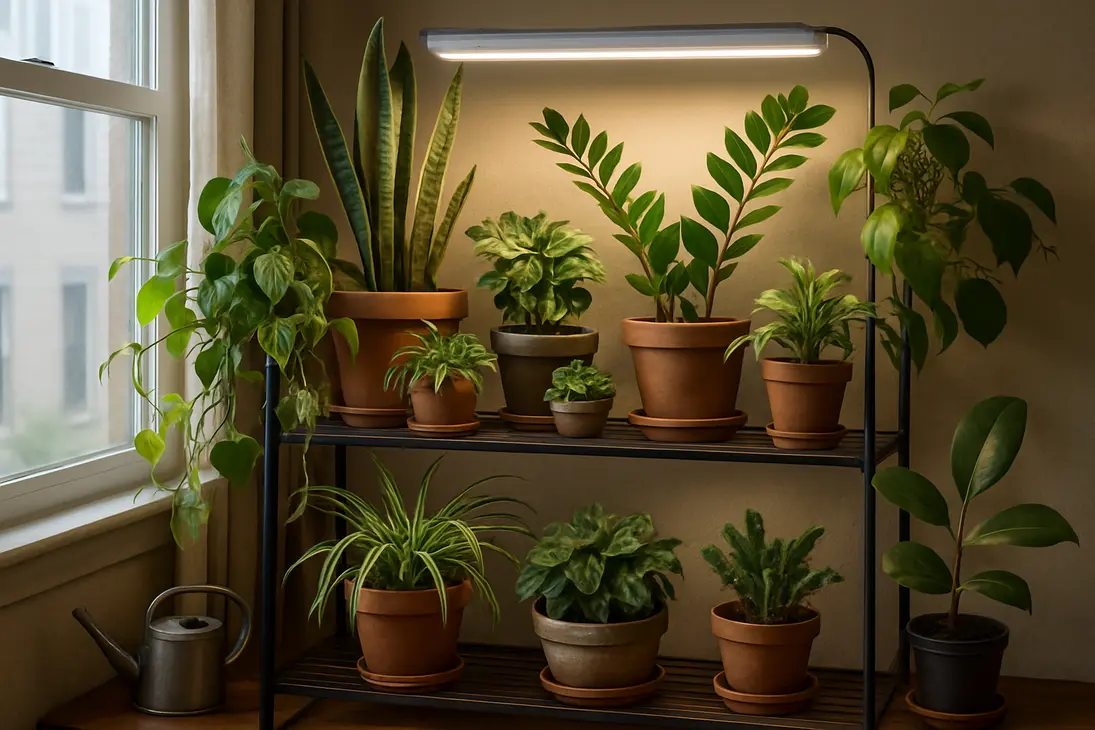
You do not need a greenhouse setup. A full-spectrum LED bulb, clip-on light, LED strip, or small panel can work if it is close enough, on long enough, and suited to the plant.
Choose a Simple Full-Spectrum LED Grow Light
For most foliage plants, choose a full-spectrum LED grow light rather than a dim decorative “plant light.” Full-spectrum LEDs usually look white or slightly warm and are easier to live with than purple-red lights.
Basic options include a full-spectrum LED bulb in a lamp, a clip-on LED for a small group, an LED strip under a shelf, or a small panel over a plant stand. For resilient plants, consistency matters more than perfect specifications.
Place Lights Close Enough Without Scorching Leaves
A common mistake is placing the light too far away. A lamp across the room may look bright to you but provide little usable light to the plant.
Starting distances:
- Small LED strips: 4–8 inches above small plants
- Basic LED bulbs: 8–18 inches from foliage
- Stronger panels: 12–24 inches above the canopy
Too little light causes leaning, stretching, small new leaves, slow growth, or fading variegation. Too much light can cause pale leaves, crispy patches, curling, or a bleached look. Adjust based on plant response.
Use a Timer for Consistent Light
Most resilient houseplants do well with 10–12 hours of artificial light per day. If artificial light is their only meaningful light source, 12–14 hours may help some plants. Do not leave grow lights on 24 hours a day; plants need darkness too.
A plug-in timer prevents forgotten lights, irregular schedules, and accidental all-night lighting.
Adjust Based on Plant Response
Group plants by light needs. Snake plant and ZZ plant can sit near the edge of the grow-light area. Pothos, philodendron, spider plant, peperomia, and dracaena usually do well in the middle. Rubber plant and holiday cactus often prefer the brighter section.
If a plant has been in dim conditions, increase exposure gradually over a week or two instead of moving it directly under strong light for long hours.
Easy Care Routine for Resilient Houseplants
Most resilient houseplants fail from overwatering, poor drainage, or ignored warning signs. A simple routine prevents most problems.
Water by Soil Moisture, Not by Calendar
Do not water every plant on the same schedule. Drying speed depends on pot size, soil mix, temperature, season, light level, and plant type.
Use these general rules:
- Snake plant and ZZ plant: let soil dry deeply.
- Pothos, philodendron, spider plant, dracaena, peperomia, and rubber plant: let the top portion dry.
- Holiday cactus: keep lightly moist, not soggy.
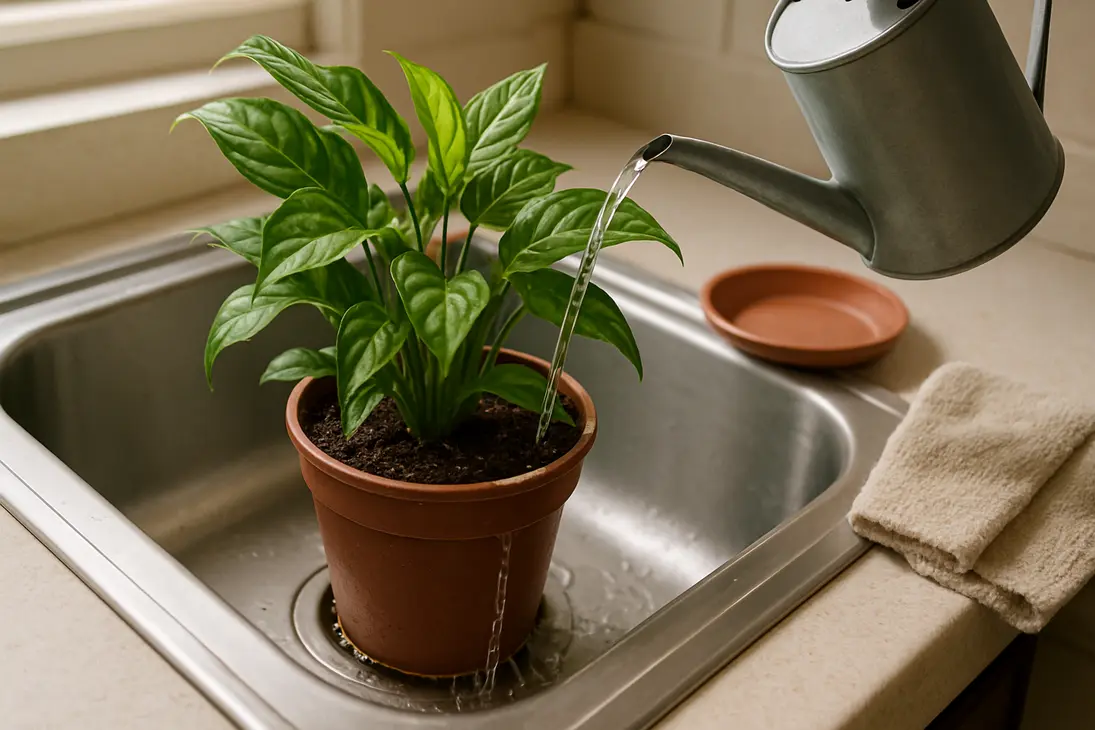
Check with your finger, a wooden skewer, or the weight of the pot. When watering, soak thoroughly until excess drains out, then empty the saucer.
Use Pots With Drainage Whenever Possible
Drainage holes are important, especially for beginners. A pot without drainage can trap water at the bottom even when the surface looks dry.
If you like decorative pots, keep the plant in a plastic nursery pot with drainage and set it inside the decorative container. Remove it to water, let it drain, then put it back. Use a well-draining indoor mix; snake plant, ZZ plant, and peperomia often benefit from extra perlite or a chunkier mix.
Fertilize Lightly During Active Growth
Resilient houseplants do not need heavy feeding. Fertilize lightly during active growth, usually spring through early fall, especially if plants are growing under lights year-round.
Use a balanced houseplant fertilizer at diluted strength. Too much fertilizer can cause brown tips, salt buildup, weak growth, or root stress. Skip fertilizer when a plant is stressed, newly repotted, cold, or in very low light.
Trim, Rotate, and Inspect Regularly
Rotate plants every week or two so they do not lean toward the light. Trim yellow leaves, prune leggy vines, and wipe dust from broad leaves.
Inspect leaves and stems for sticky residue, webbing, cottony clusters, scale bumps, or tiny insects. Catching pests early is much easier than treating a large infestation later.
Common Houseplant Mistakes That Kill Even Resilient Plants
Common beginner mistakes include watering too often, ignoring drainage, buying plants without checking their needs, and assuming a grow light fixes every problem. These themes appear frequently in beginner plant discussions on Reddit and Quora.
Overwatering and Root Rot
Overwatering means roots stay wet too long. It can happen from watering too often, using dense soil, choosing a pot without drainage, or keeping a plant in low light where it uses water slowly.
Warning signs include yellow leaves, soft stems, sour-smelling soil, fungus gnats, and wilting while the soil is wet. If root rot is suspected, remove the plant, trim mushy roots, repot in fresh well-draining mix, and water less often.
Assuming All Houseplants Need the Same Care
A snake plant and a holiday cactus should not be watered the same way. A rubber plant and a ZZ plant may both look sturdy, but they have different drought and light preferences.
Before buying, check light needs, watering preference, and pet safety. Resilient plants are forgiving, but they still have limits.
Using Grow Lights but Placing Them Too Far Away
A grow light helps only if enough light reaches the leaves. If pothos is stretching, a rubber plant is dropping leaves, or a spider plant looks pale, the light may be too weak or too distant.
Move the plant closer gradually, increase daily duration, or use a stronger bulb. A lamp in the same room is not the same as a properly positioned grow light.
Ignoring Yellow Leaves, Wilting, or Slow Decline
One yellow leaf is not always a crisis, but repeated yellowing, leaf drop, limp growth, crispy edges, or stalled growth deserves attention.
Check whether the soil is wet or dry, the pot drains, the light is close enough, pests are present, or the room has become colder, hotter, or drier. Most issues are easier to fix early.
Forgetting Pet Safety Before Buying Plants
Many resilient plants can irritate or harm pets if chewed, including pothos, philodendron, ZZ plant, snake plant, dracaena, and rubber plant. If you have cats, dogs, rabbits, or curious children, choose carefully and place plants out of reach.
Pet-safer does not mean edible. Discourage chewing, and contact a veterinarian if a pet eats a plant and develops symptoms.
Conclusion
The best resilient houseplants for basic grow lights are the ones that match your habits. Choose snake plant or ZZ plant if you forget to water, pothos or heartleaf philodendron for trailing growth, spider plant or peperomia for pet-safer homes, and dracaena or rubber plant for height.
Start with forgiving plants, give them consistent full-spectrum LED light, avoid overwatering, use drainage, and learn each plant’s basic needs. A grow light will not make every plant easy, but it can make the right resilient plants much easier to grow well.
FAQ
What is the hardest houseplant to kill under a grow light?
Snake plant and ZZ plant are usually the hardest to kill under a basic grow light. Both tolerate missed watering, average humidity, and lower light. They are most often killed by overwatering.
Can resilient houseplants survive with only artificial light?
Yes, many can survive and grow with only artificial light if the light is strong enough, close enough, and on long enough each day. Pothos, philodendron, snake plant, ZZ plant, spider plant, peperomia, and holiday cactus can all adapt.
How many hours a day should grow lights be on for houseplants?
Most houseplants do well with 10–12 hours of grow light per day. If they receive no natural light, 12–14 hours may be better. Use a timer and provide a dark period each night.
Which resilient houseplants are safest for cats and dogs?
Pet-safer resilient options include spider plant, peperomia, holiday cactus, African violet, and ponytail palm. Keep pothos, philodendron, ZZ plant, snake plant, dracaena, and rubber plant away from pets that chew.
Sources
You Might Also Like