How to Identify and Treat Mites on a Majesty Palm
Majesty palms are dramatic houseplants, but they often struggle indoors. Brown tips, yellow fronds, and dull growth can come from care problems, which makes majesty palm mites easy to miss.
The main culprit is usually spider mites. These tiny arachnids pierce leaf tissue and suck plant fluids, leaving pale speckling, webbing, and weak fronds. Majesty palms are especially vulnerable because their many narrow leaflets give mites plenty of hiding places.
If you catch them early, the palm can recover. Confirm the pest, clean the plant thoroughly, and repeat treatment long enough to stop newly hatched mites.
How to Tell If Your Majesty Palm Has Mites
Spider mites are hard to see, so damage is often the first clue. Check leaflet undersides, older fronds, new growth, and tight areas near the crown.
Common signs include:
- Fine webbing
- Pale speckling or stippling
- Dusty-looking foliage
- Yellowing or bronzing fronds
- Tiny moving dots under leaves
- Weak leaves despite decent care
A single brown tip does not prove mites. Look for a pattern, especially speckled damage and pests on leaf undersides.
Fine webbing on fronds and stems
Fine webbing is one of the clearest signs of spider mites, though it may not appear early. Look between leaflets, along the central rib of the frond, near the crown, and around dry or declining leaves.
Spider mite webbing is much finer than a house spider’s web. It may look like lint, dust, or a faint veil. Heavy webbing usually means the infestation is advanced.
Speckled, faded, or dusty-looking leaves
Spider mites feed in tiny spots, creating pale dots on the leaf surface. On majesty palms, this often appears as yellow, cream, or silvery specks; washed-out green color; fine mottling near the midrib; or dull leaves that still look dirty after watering.
This differs from normal aging. An old frond usually yellows evenly, while mite damage looks patchy, dusty, and speckled before the leaf declines.
Yellowing, browning tips, and leaf decline
Majesty palms commonly get brown tips indoors, so judge this symptom with others. Mites can cause yellowing and browning, but usually with stippling, webbing, faded foliage, or visible pests.
Mite-related decline may include scattered yellow leaflets, browning beyond the tips, bronze or gray-green fronds, dry curling leaflets, and weak new growth. Stress from dry air, poor light, or watering problems can make the decline faster.
How to check the undersides of leaves
The undersides of leaflets are the most important place to inspect because mites prefer protected areas.
Use this quick check:
- Move the palm into bright light.
- Turn leaflets upward and inspect the underside.
- Look along the midrib and near leaflet bases.
- Use a magnifying glass or phone zoom.
- Tap a frond over white paper.
- Watch for tiny moving dots.
Spider mites may look red, brown, tan, yellowish, or nearly translucent. If the specks move, treat the plant as infested. Do not inspect only the outer fronds; mites often build up inside the dense crown.
Mites or a Majesty Palm Care Problem?
Many majesty palm symptoms overlap. Brown tips, yellow leaves, and weak growth can come from dry air, watering stress, poor light, or root problems. Compare symptoms before spraying.
| Symptom | More likely mites | More likely care issue |
|---|---|---|
| Fine webbing | Yes | Rare |
| Pale stippling | Very common | Uncommon |
| Brown tips only | Not diagnostic | Very common |
| Whole lower frond yellowing | Possible | Aging, water stress, low light |
| Wet soil for many days | No | Overwatering or poor drainage |
| Moving dots under leaves | Yes | No |
Brown tips from dry air, watering stress, or water quality
Brown tips are extremely common on majesty palms and do not automatically mean pests.
Common non-pest causes include low humidity, soil drying too much, soggy soil, hard water or fertilizer salt buildup, heat vents, cold drafts, sudden moves, and low or changing light.
If the plant has crisp brown tips but no webbing, stippling, or moving mites, correct care first. However, dry, dusty palms are also more attractive to spider mites.
Yellow leaves from mites, underwatering, or overwatering
Yellow leaves can come from several causes.
Mites usually cause yellowing with speckling, bronzing, or a drained look. You may also see webbing or tiny pests under the leaves.
Underwatering often causes dry soil, drooping, crispy tips, and a light pot. Overwatering usually means wet soil, a heavy pot, yellow lower fronds, and sometimes a sour smell. Majesty palms like consistent moisture, but their roots still need air.
Check both leaves and soil. Mite treatment will not fix root stress, and watering changes will not remove mites.
Why majesty palms struggle indoors
Majesty palms prefer bright light, steady moisture, humidity, and room for their roots. Indoors, they often get low winter light, dry heated air, irregular watering, dusty foliage, poor airflow, salt buildup, and cramped pots.
Stress matters because a weak palm is less able to tolerate pests. Treat mites and improve conditions at the same time, or the plant may stay weak and become reinfested.
What to Do First When You Find Mites
Once you confirm mites, act quickly. Spider mites can spread to nearby houseplants, especially other palms and thin-leaved tropicals.
Do not begin by spraying randomly. First isolate the plant, rinse it, wipe what you can, and remove badly damaged fronds.
Isolate the palm from other houseplants
Move the majesty palm away from other plants. If it is too large, create space around it and inspect nearby plants closely.
Good isolation spots include a bright bathroom, laundry room with a window, covered porch in mild weather, or bright room away from other plants.
Avoid harsh sun, cold weather, or sudden outdoor exposure. Keep the palm isolated until several treatments are complete and you no longer see mites, new webbing, or spreading speckles.
Rinse the fronds thoroughly
A strong rinse removes many mites, eggs, webs, and dust before treatment.
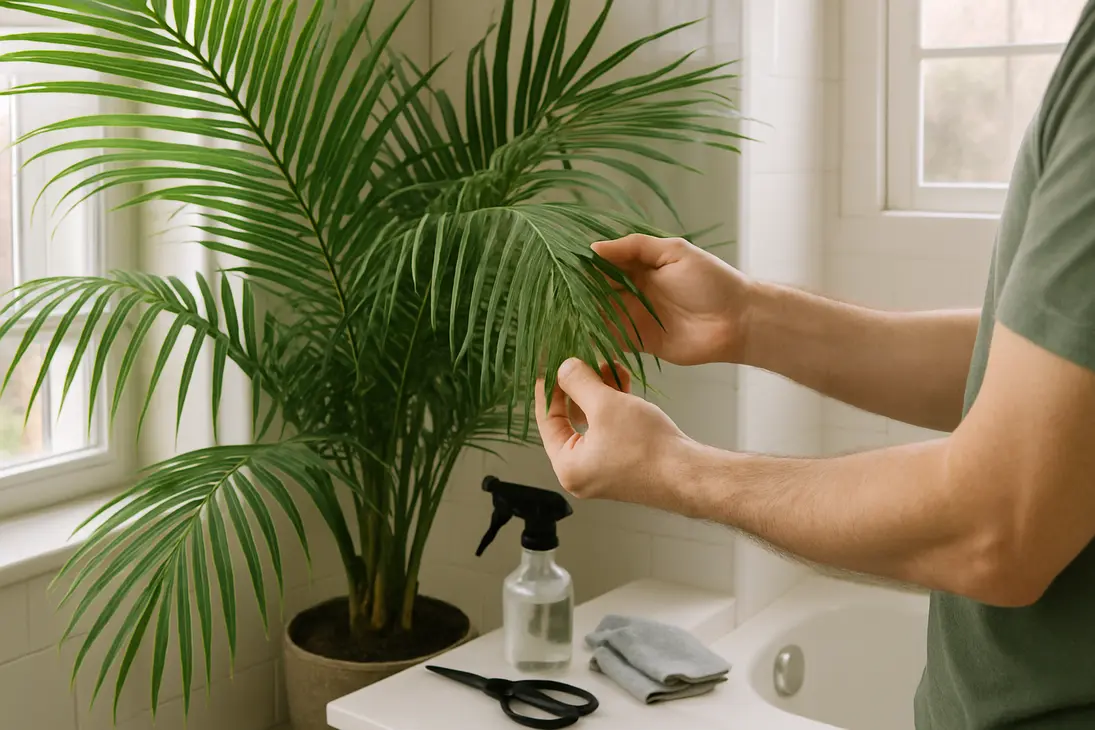
Place the palm in a shower, bathtub, or shaded outdoor spot in warm weather. Use lukewarm water and rinse the tops and undersides of fronds, stems, crown area, pot rim, and outer container.
Angle the spray upward to reach the undersides. If the soil is already wet, loosely cover it with plastic while rinsing, then remove the plastic so the mix can breathe.
Wipe leaves and stems by hand where possible
After rinsing, wipe reachable areas with a soft damp cloth or paper towel. Focus on undersides of leaflets, frond stems, webbed areas, inner fronds, and newer healthy growth.
You do not need to clean every leaflet perfectly on a large palm. Prioritize the worst areas and avoid leaf shine products, which can attract dust and complicate treatment.
Remove badly damaged or dead fronds
Dead or severely damaged fronds will not turn green again. Removing them reduces hiding places and makes treatment easier.
Use clean, sharp pruners. Cut mostly brown, dry, or heavily webbed fronds near the base without damaging the crown. Do not remove every imperfect frond; the palm needs green tissue to recover.
Seal discarded foliage in a bag and keep it away from other houseplants.
How to Treat Mites on a Majesty Palm
The best treatment combines physical removal with a labeled product such as insecticidal soap, neem oil, or horticultural oil. One spray is rarely enough because eggs may survive and hatch later.
Always follow the label, avoid spraying in direct sun, and test a small section first if the plant is stressed.
Insecticidal soap
Insecticidal soap is a common first choice for spider mites on indoor plants. It works by direct contact, so coverage is critical.
Use a product labeled for houseplants or ornamentals. Spray undersides, not only top surfaces, and wet affected areas thoroughly. Treat in low light, morning, or evening, and avoid spraying wilted or drought-stressed plants.
Repeat according to the label. The main mistake is missing hidden leaflets, so rotate the pot, lift fronds gently, and spray from several angles.
Neem oil or horticultural oil
Neem oil and horticultural oils can help by coating and smothering mites. They also require direct contact.
Follow dilution instructions exactly, shake the sprayer often, and apply in low light. Keep the palm away from hot windows until dry, and do not spray a severely dehydrated plant. Test a small area first.
More oil is not better. A fine, even coating is safer than repeated heavy drenching. Do not combine products unless labels allow it.
Showering and leaf cleaning as part of treatment
Rinsing can be part of ongoing mite control. It removes dust, webbing, and newly hatched mites between sprays.
A simple routine:
| Day | Task |
|---|---|
| Day 1 | Isolate, rinse, wipe, apply soap or oil |
| Day 4–5 | Rinse again and inspect undersides |
| Day 7 | Reapply treatment if the label allows |
| Following weeks | Keep inspecting, rinsing, and treating as needed |
After showering, let the pot drain fully. Do not leave it sitting in water.
When to repeat treatment and for how long
Expect multiple treatments. Many sprays work better on active mites than eggs.
A mild infestation may clear after several treatments over two to three weeks. A heavy infestation may require a month or more of monitoring.
Continue until no moving mites appear on white paper, no new webbing forms, speckling stops spreading, new growth looks clean, and nearby plants remain pest-free. Do not stop after one rinse just because the plant looks cleaner.
When a severe infestation may not be worth saving
Sometimes a majesty palm is too far gone. These palms are large, dense, and difficult to clean thoroughly.
Consider discarding it if most fronds are brown, gray, or webbed; mites return after repeated treatments; little healthy green foliage remains; it is spreading mites to other plants; root rot or severe decline is also present; or you cannot move, rinse, or treat it effectively.
If you discard it, bag the foliage, clean the surrounding area, and inspect nearby plants for several weeks.
How to Prevent Mites From Coming Back
Prevention means making the palm less inviting to mites and catching problems early. Spider mites thrive in warm, dry, dusty conditions.
Raise humidity without relying only on misting
Misting is not a reliable mite treatment or long-term humidity solution. It raises moisture only briefly and often misses the undersides of leaves.
Better options include using a humidifier, grouping plants with some airflow, placing the pot above water on a pebble tray, keeping the palm away from heat vents, and choosing a bright, naturally humid room.
Humidity helps reduce stress, but it does not eliminate mites. Continue inspecting and cleaning the plant.
Keep the plant evenly moist but not soggy
Majesty palms prefer evenly moist soil with good drainage. Let the upper portion of the mix begin to dry, then water thoroughly until excess drains out. Empty the saucer afterward.
Use a pot with drainage holes, water deeply instead of in tiny sips, and do not let the root ball become bone dry. Avoid leaving the pot in runoff. Water less when light is low.
If hard tap water contributes to brown tips, filtered water or rainwater may help, but it will not solve an active mite infestation.
Give bright, indirect light and good airflow
Bright indirect light helps majesty palms stay stronger and recover faster. Low light weakens growth and increases the risk of overwatering.
Place the palm near a bright window with filtered light. Morning sun is usually gentler than hot afternoon sun. If the plant has been in low light, move it gradually.
Gentle airflow also helps reduce still, protected pockets where mites multiply. Avoid placing the palm against a wall, in a dark corner, beside a heat vent, in cold drafts, or tightly packed among plants.
Inspect new and nearby plants regularly
Many mite problems start on a new plant or spread from a nearby one.
Before placing a new plant near your majesty palm, inspect leaf undersides, look for webbing and stippling, keep it separate briefly if possible, rinse foliage before grouping it, and recheck after one to two weeks.
If your palm has mites, inspect nearby plants too. Treating only one plant can lead to reinfestation.
Conclusion
Majesty palm mites are easy to miss because normal indoor stress can look similar. The strongest signs are fine webbing, pale speckled leaves, dusty fronds, and tiny moving dots on leaflet undersides.
Start by isolating the palm, rinsing it thoroughly, wiping reachable areas, and pruning badly damaged fronds. Then treat with insecticidal soap, neem oil, or horticultural oil according to the label, focusing on the undersides. Repeat treatments are usually necessary.
To prevent another outbreak, improve light, humidity, moisture consistency, airflow, and inspection habits.
FAQ
Are mites common on majesty palms?
Yes. Spider mites are common on indoor majesty palms, especially in dry air. Their dense, narrow leaflets give mites many places to hide.
Can a majesty palm recover from spider mites?
Yes, if the infestation is caught early and enough green foliage remains. Damaged leaves will not turn green again, but new growth can emerge healthy after mites are controlled.
If most fronds are brown, webbed, or collapsing, replacement may be more practical.
Does misting get rid of mites on a majesty palm?
No. Misting does not reliably remove mites, eggs, or webbing. A thorough rinse or shower is much more useful.
For an active infestation, combine rinsing and hand-cleaning with repeated labeled treatments.
Should I cut off brown or yellow majesty palm leaves?
Remove fronds that are dead, fully brown, or badly infested. You can trim brown tips for appearance.
Do not remove every partly yellow or damaged frond if it still has green tissue. The palm needs leaves to recover. Use clean pruners and dispose of infested foliage away from other plants.
You Might Also Like