How to Keep Cats Out of Potted Plants Without Repellents
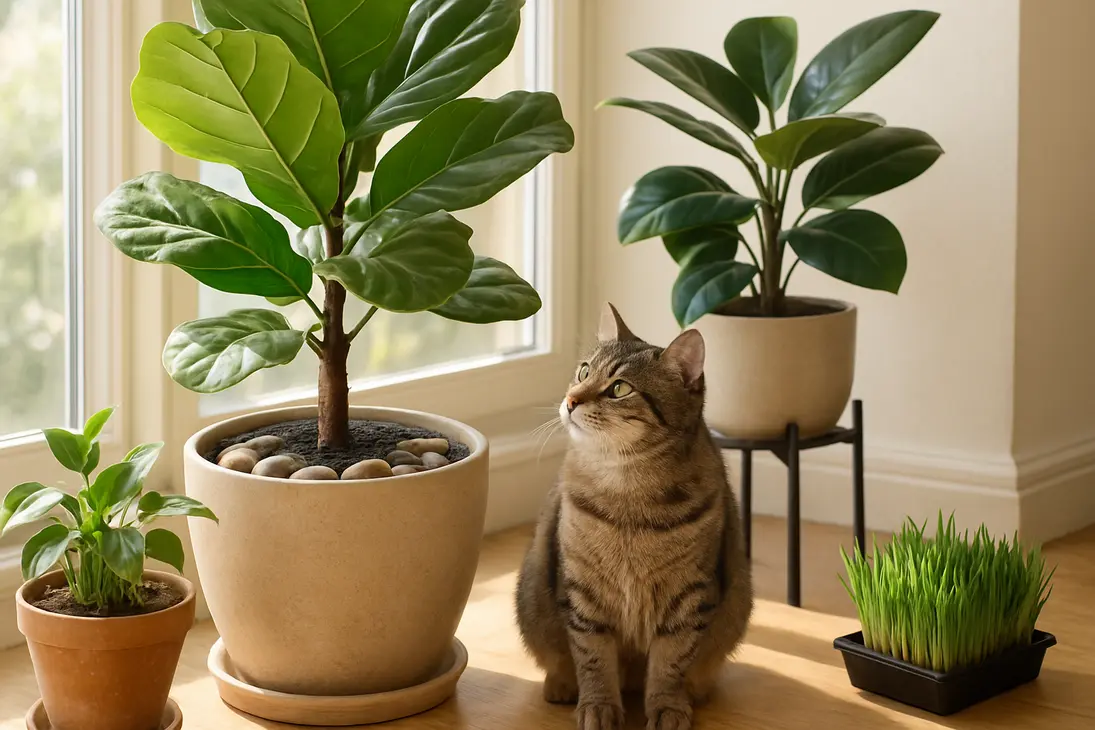
Cats and houseplants often compete for the same sunny corners, windowsills, and soft soil. If your cat is digging in pots, chewing leaves, or sleeping in planters, the most reliable fix is usually not a spray. It is a setup change.
Make the plant less rewarding while keeping your cat safe and your plant healthy: cover the soil, reduce access, and offer a better place to dig, chew, scratch, or lounge.
Why Cats Dig, Chew, or Sleep in Potted Plants
Cats are not being spiteful. Loose potting mix can feel like litter, especially in wide containers or freshly watered soil. If a cat has litter box stress, too few boxes, or a preference for softer texture, a planter may become an appealing digging spot.
Chewing is usually curiosity, boredom, or attraction to texture. Indoor cats and young cats may be especially persistent because houseplants are one of the few living things they can investigate. If chewing causes vomiting, remove access rather than assuming it is harmless.
Sleeping in pots is about comfort. A large planter in a sunny window may be warm, elevated, quiet, and partly hidden by leaves.
The best non-repellent strategy is to remove the reward: make soil hard to dig, plants harder to reach, and alternatives more appealing.
Cover the Soil So It’s No Longer Fun to Dig
A physical soil barrier is often the best first step. It should be sturdy enough that your cat cannot toss it aside, but open enough for air and water. Avoid anything that seals in moisture, presses against stems, or creates sharp edges.
Use Large Stones, Pebbles, or Decorative Gravel
Large stones can stop casual digging quickly. Choose smooth river rocks or decorative pebbles that are too large to swallow or scatter. Tiny gravel is less useful because cats can paw it out or treat it like a toy.
Leave a gap around the plant’s stem or crown. Piling stones against the base can trap moisture and increase rot risk, especially with succulents, snake plants, cuttings, and crown-sensitive plants.
After adding stones, check moisture below the surface before watering. The top may look dry while the root zone is still damp. Lift a few rocks, feel the soil, or use a wooden skewer.
Best for: large pots, sturdy established plants, and cats that dig but do not mouth objects.
Add Pine Cones, Corks, or Chunky Mulch
Pine cones, halved wine corks, and chunky orchid bark create an uneven surface that is awkward to paw through while still allowing air and water movement.
Place pine cones close together on top of the soil rather than pressing them in. Corks suit smaller containers; cut them lengthwise so they sit flat.
Chunky bark can help, but fine mulch is easy to scratch aside and may keep the surface damp. With any organic material, check underneath every week or two and remove it if you notice mold, mustiness, fungus, or soggy soil.
Cut Mesh, Hardware Cloth, or Plastic Canvas to Fit the Pot
For persistent diggers, a fitted mesh barrier is more reliable than loose materials. Plastic craft canvas is easy to cut and works well indoors. Hardware cloth is stronger, but cut wire edges must be tucked or covered.
To make a cover:
- Measure the inside of the pot.
- Cut a circle slightly smaller than the opening.
- Cut a slit from the edge to the center.
- Cut a center hole for the plant.
- Slide the mesh around the stems and lay it flat.
- Weigh it down with stones if needed.
Do not make the center hole tight. Leave room for stem movement and growth. For multi-stem plants, cut a wider opening and cover gaps with stones or bark.
Mesh is especially useful for large planters, newly repotted plants, and cats that treat soil like a litter box. For a cleaner look, hide the mesh under pebbles or bark.
Try a Plant Collar or Pot Cover
A plant collar is a disk or ring that covers exposed soil. You can buy one or make one from plastic canvas, corrugated plastic, a washable placemat, or cardboard for short-term use.
Choose materials that will not stay soggy. Cardboard may work temporarily, but it can warp, mold, or attract chewing. Mesh or washable plastic is better long term.
A good collar should sit flat, leave space around stems, allow watering or be easy to lift, and be removable for soil checks. Like stones, collars can slow surface drying, so check the actual soil before watering.
Make the Plant Harder to Reach
Soil barriers work better when placement also changes. If a plant remains in your cat’s favorite launch zone, you may still get chewed leaves, tipped pots, or a cat napping on top of the barrier. The goal is to make the easy choice a perch, bed, or toy instead.
Move Plants to Hanging Planters or Wall Shelves
Hanging planters are excellent for trailing or smaller plants if their light and watering needs are still met. Make sure the hook or bracket is secure, the pot will not drip on furniture, and the leaves do not trail within reach.
Wall shelves only work if they are truly outside the cat’s jumping route. A nearby chair, sofa, bookcase, or windowsill may turn a high shelf into an easy step.
Also consider your own access. A plant hung too high may be neglected or overwatered because it is hard to inspect.
Use Plant Stands Cats Can’t Easily Climb
A tall, narrow plant stand can help, especially with curious but not determined climbers. Choose one with a stable base, a secure pot fit, and enough weight that it will not tip if bumped.
Avoid flimsy stands and ladder-style plant shelves. To a cat, multiple tiers are a staircase. Better choices include single-pot pedestal stands, heavy pots on sturdy metal stands, narrow side tables with no lower shelf, and stands placed away from furniture launch points.
Group Plants Behind a Decorative Screen
A screen, room divider, or indoor panel can protect several plants near one window. This is useful for seedlings, young transplants, or overwintered plants with fresh, loose soil.
Choose something heavy enough not to topple and difficult to squeeze through. Open lattice may be climbable, while smooth folding screens, acrylic panels, or tightly woven dividers are harder for cats to use as ladders.
Place Pots Inside Larger Cachepots or Baskets
A cachepot is an outer decorative container that holds the actual plant pot. It can make a planter heavier, harder to tip, and harder to access if the inner pot sits below the outer rim.
Choose a cachepot with a tall rim and snug fit. Fill top gaps with large stones, corks, or a fitted collar so the cat cannot reach the soil.
Watch drainage carefully. If the outer pot has no drainage hole, water can collect unseen and rot roots. Remove the inner pot to water and drain it fully, or use a saucer system you can inspect.
Give Your Cat a Better Alternative
Blocking the plant is only half the solution. If your cat is bored, under-stimulated, or seeking something to chew, the behavior may move to another plant. Offer an acceptable “yes” option.
Offer Cat Grass or Cat-Safe Greens
Cat grass, usually grown from wheat, oat, rye, or barley seed, gives cats a safer plant to nibble. It will not solve every case, but it can reduce interest in houseplants for some cats.
Place it somewhere inviting, such as near a window or favorite perch, but not directly beside forbidden plants at first. Use a heavy, shallow container that will not tip when the cat pulls at the blades.
Replace cat grass when it yellows, molds, or gets flattened. If offering other greens, confirm they are safe for cats and untreated with pesticides or fertilizers.
Create a Dig Box Away From the Plants
Some cats simply enjoy digging. A separate dig box can redirect that habit.
Use a shallow box, tray, or bin with low sides. Fill it with shredded paper, crumpled packing paper, soft fabric strips, or a small amount of clean, dust-free play sand if you can handle the mess.
Avoid potting mix, compost, cocoa mulch, fertilizer, or anything that teaches the cat that plant soil is a toy. Hide a few toys or treats in the box, place it away from plants, and reward your cat for using it.
Add More Play, Scratching, and Window Perches
Repeated plant attacks may signal a need for more activity. Indoor cats need chances to stalk, chase, scratch, climb, and watch outside movement.
Helpful additions include a sturdy scratching post, daily wand-toy play, puzzle feeders, treat balls, a comfortable window perch, and a cat tree that does not provide access to plant shelves.
If your cat sleeps in pots, offer a better sunny bed in the same light patch. Often the cat wants the location, not the planter itself.
Keep Both Cats and Plants Safe
Many common plant deterrents are harsh or risky. Sharp objects, sticky surfaces, strong oils, and punishment can stress or injure cats and may damage plants. Humane physical prevention is safer and usually more consistent.
Remove or Relocate Toxic Houseplants
If a plant is toxic to cats, do not rely on training alone. Move it behind a closed door, hang it completely out of reach, place it behind a secure barrier, give it to a pet-free home, or replace it.
Lilies are a well-known high-risk example for cats, but many common houseplants can cause irritation, vomiting, or worse depending on the species and amount eaten. If you are unsure what a plant is, identify it before keeping it within reach.
Cats also change habits. A plant ignored for months may become interesting after new growth, a room change, boredom, or a new kitten.
If your cat eats a plant and vomits, remove access. Repeated vomiting, drooling, lethargy, loss of appetite, diarrhea, pawing at the mouth, or sudden behavior changes warrant a call to a veterinarian or pet poison helpline.
Avoid Sharp, Sticky, or Punishing Barriers
Do not use skewers, thorny cuttings, cactus pads, or anything meant to poke the cat. These can injure paws, eyes, noses, or mouths, especially if a cat jumps into the pot unexpectedly.
Sticky tape and sticky mats are also poor choices around plants. They can panic cats, pull fur, irritate skin, and quickly collect dust and soil.
Punishment is unreliable. Yelling, spraying water, or startling the cat may only teach them to avoid the plant when you are nearby. Barriers and redirection work even when you are not watching.
Skip Strong Essential Oils and Unsafe Homemade Sprays
This article focuses on non-repellent methods because strong-smelling sprays can irritate cats, damage leaves, or leave residue in soil.
Essential oils are especially risky around cats. Concentrated oils may be inhaled, licked, or absorbed through contact. Citrus, peppermint, tea tree, eucalyptus, cinnamon, and similar oils are often suggested online, but “natural” does not mean safe.
Vinegar, chili, garlic, and strong soap sprays can also bother a cat’s eyes, nose, and mouth or injure foliage. Mesh, stones, placement changes, and alternatives are usually safer.
Use Training Cues Gently and Consistently
Training can help when it supports the setup. Choose a simple cue such as “leave it” or “off,” and use it calmly.
When your cat approaches a plant:
- Say the cue once.
- Redirect with a toy, treat toss, or cat grass.
- Reward the acceptable choice.
- Reset the barrier if needed.
Interrupt early, while the cat is investigating, not after they are digging hard or chewing. If the plant is accessible all day but corrected only sometimes, the cat learns it is sometimes available.
Conclusion
Keeping cats out of potted plants is easiest when you remove the reward. Cover soil with large stones, pine cones, corks, mesh, or a fitted collar. Then reduce access with hanging planters, stable stands, screens, or cachepots.
Finally, give your cat a better option: cat grass, a dig box, daily play, scratching posts, and a sunny perch. The safest solutions are physical, humane, and consistent.
FAQ
What is the easiest way to stop cats digging in plant pots?
Cover the exposed soil with a physical barrier. Large smooth stones, plastic canvas, or a plant collar usually works better than sprays because the cat can no longer enjoy digging.
For persistent cats, use mesh cut to fit the pot and weigh it down with large pebbles. Keep space around stems and make sure water can still reach the soil.
Can I use rocks or gravel on top of plant soil?
Yes. Choose stones large enough that your cat cannot scatter or swallow them. Smooth river rocks or large decorative pebbles are better than tiny gravel.
Do not pile rocks tightly against stems or crowns. Check moisture below the stones before watering, because the surface may look dry while the roots are still damp.
What plants are safe for cats to chew instead?
Cat grass is the simplest option. It is usually grown from wheat, oat, rye, or barley and gives cats a designated plant to nibble. Keep it fresh and grow it in a heavy container.
Some owners also offer catnip or cat thyme, but responses vary. Before offering any plant, confirm it is cat-safe and untreated. If your cat eats large amounts of greenery and vomits repeatedly, contact a veterinarian.
How do I stop my cat eating plants that make them vomit?
Remove access first. Move the plant to a closed room, hang it completely out of reach, place it behind a secure screen, or give it away if it is unsafe.
Then offer cat grass and increase enrichment with play, scratching, and window perches. If your cat vomits repeatedly, drools, seems lethargic, stops eating, has diarrhea, or may have eaten a toxic plant, contact a veterinarian promptly.
You Might Also Like