How Do You Keep Bugs and Pests Out of Potted Flowers?
Bugs get into potted flowers for a few common reasons: damp potting mix, crowded plants, weak growth, outdoor exposure, or a new plant that brought pests home with it. The best way to keep them out is to identify the pest first, use the gentlest effective treatment, and fix the growing conditions that allowed the problem to start.
Potted flowers are vulnerable because their roots are confined, their soil can stay too wet, and pests can spread quickly between containers. A few fungus gnats are usually manageable, but spider mites, thrips, scale, or root-zone pests can become difficult if ignored.
Identify the Pest Before You Treat the Plant
Different pests leave different clues. Treating the wrong problem wastes time and can stress the plant.
Before applying anything, inspect:
- The soil surface
- Undersides of leaves
- New growth and flower buds
- Leaf joints and stems
- Drainage holes and pot undersides
- Nearby plants
Use a flashlight or magnifying glass if needed. Many pests hide under leaves or where stems meet.
Tiny flying bugs around the soil
Tiny dark flies hovering near the soil are usually fungus gnats. They look like miniature mosquitoes and are common when potting mix stays too damp. Adults are mostly annoying, but larvae live in moist mix and may damage tender roots, especially on seedlings or stressed plants.
Fungus gnats are likely if bugs fly up when you water, stay near the soil, and the mix rarely dries. Whiteflies also fly, but they usually lift from the leaves in a small white cloud.
Sticky leaves, yellowing, or distorted growth
Sticky leaves often mean sap-feeding pests such as aphids, whiteflies, mealybugs, or scale. These pests suck plant juices and may produce sticky honeydew, which can also attract ants outdoors.
Look for curled leaves, distorted buds, shiny residue, yellowing, or clusters of insects on new growth. Aphids gather on tender shoots, mealybugs look like bits of white cotton, and scale insects look like small bumps stuck to stems or leaf veins.
Webbing, speckled leaves, or fine dust-like pests
Fine webbing and pale speckled leaves often point to spider mites. They are tiny arachnids that thrive in warm, dry, still conditions.
Common clues include stippled or dusty-looking leaves, tiny moving dots under leaves, fine webbing close to stems, and leaf drop in severe cases. Do not confuse spider mite webbing with ordinary spider webs; mite webbing is usually finer and tighter to the plant.
Chewed leaves, holes, or slime trails
Chewed leaves usually mean a chewing pest. In outdoor pots, slugs, snails, caterpillars, earwigs, beetles, and similar pests may be responsible.
Slugs and snails are especially likely if damage appears overnight and you see ragged holes or silvery slime trails. Check under pot rims, saucers, mulch, and damp debris during the day.
Common Pests That Attack Potted Flowers
Most potted flower pest problems come from a small group of insects and soft-bodied pests. Identifying them correctly helps you choose the right fix.
Fungus gnats
Fungus gnats are small, dark, weak-flying insects attracted to moist organic potting mix. They are common in pots without good drainage, decorative cachepots that hold water, or indoor plants growing in low light and drying slowly.
Adult gnats do little direct damage, but larvae can bother seedlings, cuttings, and weak plants. Control depends mostly on drying the top layer of mix, improving drainage, and treating larvae if needed.
Aphids
Aphids are soft-bodied insects that may be green, black, yellow, gray, pink, or brown. They cluster on tender stems, buds, and new leaves.
Damage includes curled leaves, distorted buds, sticky honeydew, and weak growth. Outdoor pots may attract ants because ants feed on honeydew. Aphids are often easy to reduce if caught early with rinsing, pruning, and repeated checks.
Spider mites
Spider mites thrive in warm, dry, stagnant air and multiply quickly. Early damage looks like tiny pale speckles. Later, leaves may bronze, dry out, drop, and show fine webbing.
One treatment rarely solves a mite problem. Repeated rinsing or labeled treatments, plus improved humidity and airflow where appropriate, are usually needed.
Whiteflies
Whiteflies are small white insects that gather under leaves and flutter up when disturbed. They suck sap, produce honeydew, and can spread quickly between nearby pots.
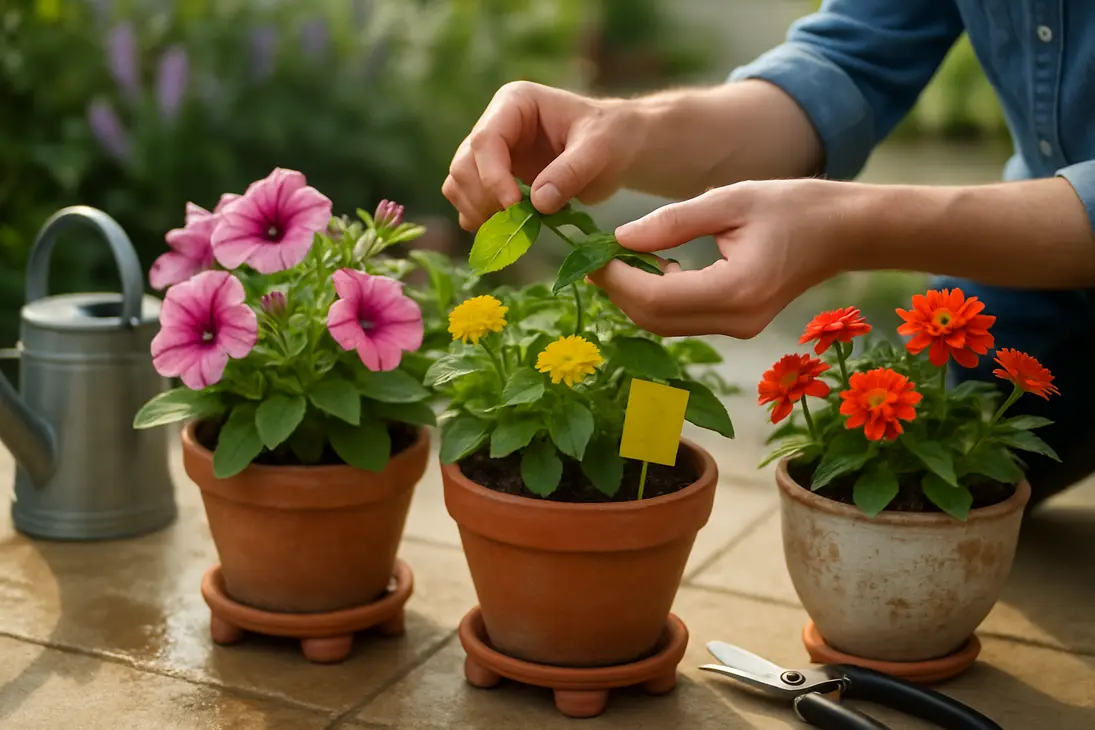
Leaves may yellow, weaken, or become sticky. Yellow sticky traps can help monitor adults, but you still need to inspect and treat the undersides of leaves.
Mealybugs and scale
Mealybugs look like white cottony clusters tucked into leaf joints, stems, or crowns. Scale insects look like small flat or raised bumps attached to stems or leaves. Both feed on sap and can be stubborn.
Signs include sticky residue, yellowing leaves, weak stems, cottony patches, hard bumps, and slow decline. Because they hide well and may have waxy coatings or shells, hand removal, pruning, and repeated treatment are often necessary.
Thrips
Thrips are tiny, slender insects that scrape plant tissue and feed on the damaged cells. They often attack flowers and buds.
Damage may appear as silvery streaks, brown-edged buds, deformed blooms, tiny black specks, or buds that fail to open. To check for them, tap a flower or leaf over white paper and look for tiny narrow insects moving across it.
Slugs and snails in outdoor pots
Slugs and snails are common in damp, shaded outdoor containers. They hide during the day and feed at night, often leaving healthy-looking plants ragged by morning.
They may hide under pots, inside saucers, beneath mulch, around pot feet, in deck or paving crevices, and under container rims. Young annuals, tender perennials, petunias, marigolds, dahlias, hostas, and leafy ornamentals can be heavily damaged.
Safe Ways to Get Rid of Bugs in Potted Flowers
Start with the lowest-risk method that fits the pest. A good process is:
- Isolate the affected pot.
- Identify the pest.
- Remove as many pests as possible.
- Treat only if needed.
- Recheck every few days.
- Correct the condition that encouraged the pest.
Remove pests by hand or rinse the plant
For aphids, spider mites, whiteflies, and mealybugs, physical removal is often the safest first step. Rinse sturdy plants with a firm but gentle stream of water, focusing on leaf undersides and new growth. Let foliage dry with good airflow afterward.
For mealybugs and scale, remove visible pests with a cotton swab, soft cloth, fingernail, or dull edge. Be gentle with tender stems.
For slugs and snails, handpick at dusk, after rain, or early in the morning. Drop them into soapy water or relocate them far from valued plants.
Prune badly infested leaves and stems
If one stem, bud cluster, or group of leaves is covered in pests, pruning may be better than repeated spraying. This is useful for aphids on soft tips, thrips-damaged flowers, mealybug clusters, and mite-infested leaves.
Use clean scissors or pruners, seal infested material in the trash, and inspect the remaining plant. Avoid removing too much foliage at once; a stressed plant still needs leaves to recover.
Use insecticidal soap or neem oil correctly
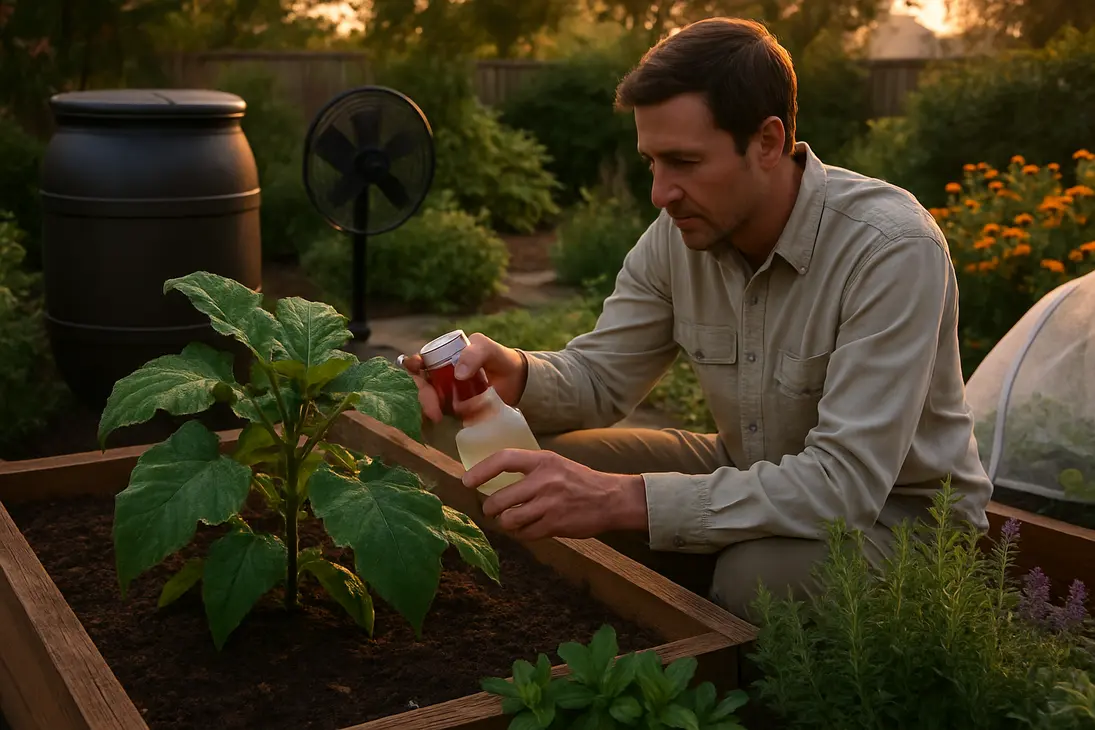
Insecticidal soap and neem oil can help with soft-bodied pests such as aphids, whiteflies, spider mites, and mealybugs. They must contact the pest to work, so spraying only the top of leaves is not enough.
Use them carefully:
- Choose a product labeled for ornamental plants or flowers.
- Follow the label exactly.
- Test a small area first on delicate plants.
- Spray undersides of leaves, stems, and pest clusters.
- Avoid drought-stressed plants and hot direct sun.
- Keep treatments off open blooms when possible, especially outdoors.
- Repeat only as the label allows.
Some flowers are sensitive to sprays, and overuse can spot or burn foliage. More product is not better control.
Treat the potting soil for fungus gnats
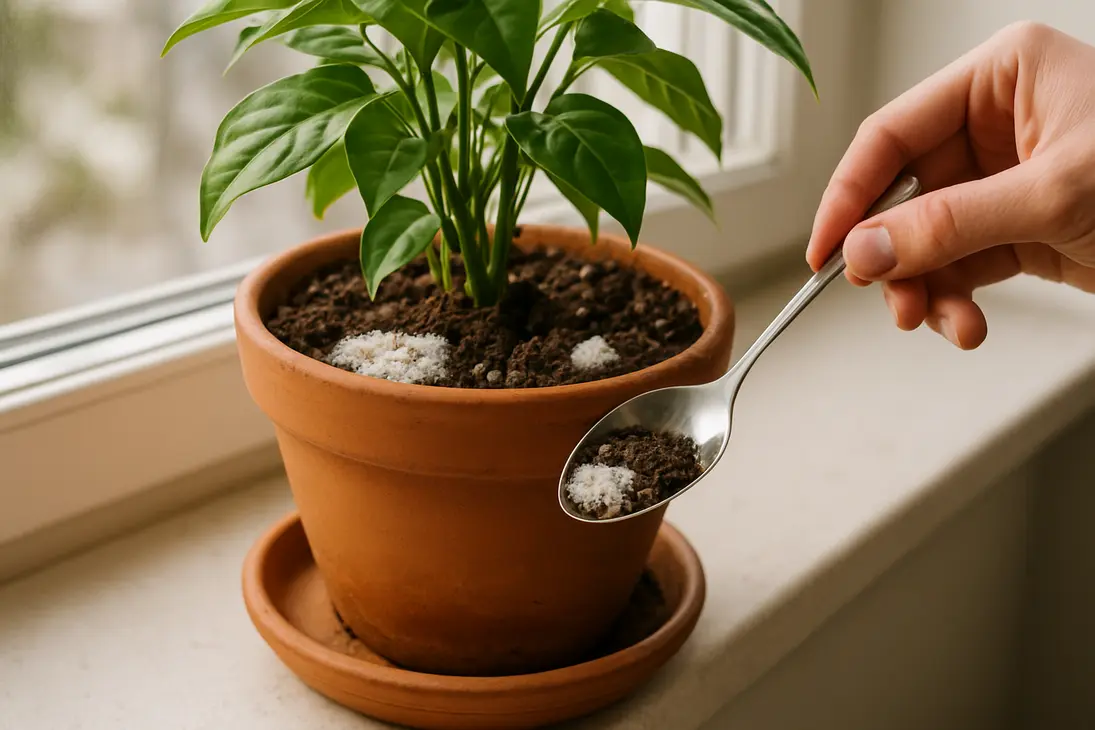
For fungus gnats, focus on the potting mix rather than the leaves. Start by letting the top layer dry as much as the plant allows, emptying saucers, checking drainage holes, improving light, and removing fallen petals or leaves from the soil.
Yellow sticky traps catch adult gnats and show whether numbers are dropping. For persistent larvae, use a potting-soil treatment labeled for fungus gnats, such as Bti-based products where available, and follow the label.
Avoid harsh home remedies poured into the pot. Strong mixtures can damage roots and stress the plant more than the gnats do.
Use organic slug and snail control around containers
For outdoor pots, organic slug and snail control works best when you combine cleanup, barriers, and monitoring.
Helpful steps include:
- Lift pots onto feet, bricks, or stands.
- Remove boards, old leaves, and dense debris.
- Check under saucers and pot rims.
- Handpick in the evening or early morning.
- Use copper tape on clean, dry container rims.
- Use organic-labeled iron phosphate slug baits where available, following the label.
- Water in the morning so surfaces are drier overnight.
Diatomaceous earth loses effectiveness when wet, so it is not reliable in rainy or humid conditions. Beer traps may catch some slugs but can require frequent cleaning and may draw more into the area.
When to repot a badly infested plant
Repotting helps when pests are tied to the soil, drainage, or root zone. Consider it if fungus gnats persist, the soil smells sour, the mix stays soggy, garden soil was used, pests are hiding around the root ball, roots are rotting, or mealybugs are near the crown or roots.
Remove the plant, shake away loose mix, trim dead roots, and repot into a clean container with fresh, well-draining potting mix. Wash old pots before reuse and discard infested mix.
Repotting is stressful, especially during bloom, so weigh the benefit against the shock if the plant is weak or heat-stressed.
How to Prevent Pests From Coming Back
Prevention means making the container less inviting and catching small problems early. Healthy plants do not need constant spraying.
Avoid overwatering and soggy soil
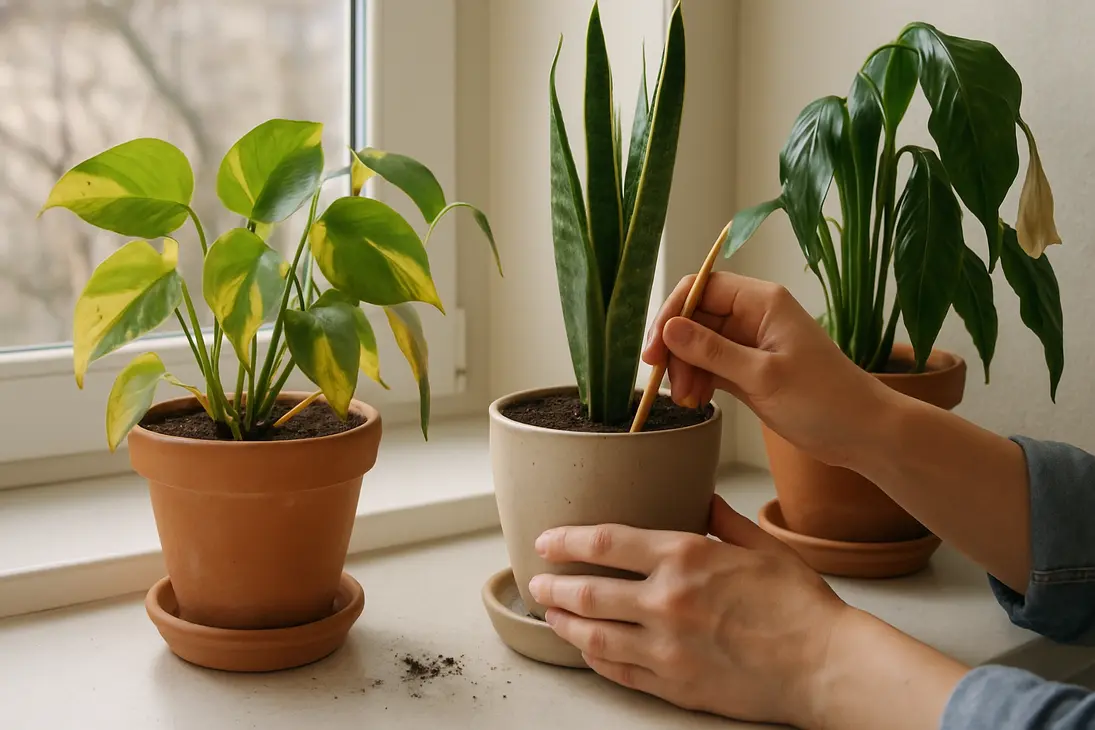
Overwatering encourages fungus gnats and root stress. Water based on the plant’s needs, not a fixed calendar. Check the mix with your finger or a moisture meter.
Many flowering plants prefer the surface to dry slightly before watering again, though moisture-loving plants need steadier moisture. Always use containers with drainage holes, and never let the inner pot sit in standing water.
Quarantine new plants before placing them nearby
New plants often bring pests home. A plant can look healthy while hiding aphids, thrips, whiteflies, or mealybugs.
Keep new plants separate for a short observation period. Inspect leaf undersides, buds, stem joints, the soil surface, drainage holes, pot rims, and labels. Treat any pest problem before placing the plant with your other pots.
Use clean pots and fresh potting mix
Old pots can hold pests, eggs, decaying roots, and residue. Reuse containers only after scrubbing away old soil.
Use fresh potting mix instead of garden soil. Garden soil often drains poorly in containers, compacts, and may introduce insects, slugs, snails, weed seeds, or disease organisms.
Improve airflow and spacing
Crowded plants create humid, still pockets where pests and diseases spread easily. Leave enough space for air to move around containers, prune dense growth when appropriate, and avoid pressing foliage against walls or windows indoors.
Good airflow means gentle circulation, not harsh wind.
Check undersides of leaves regularly
Most pest problems are easier to solve early. Make inspection part of watering.
Look for tiny insects, sticky residue, yellow speckling, webbing, cottony patches, brown bumps, distorted growth, black specks, or silvery scarring. A few aphids may rinse away easily; a full bud infestation is much harder to fix.
Keep outdoor pots off damp ground when possible
Pots sitting directly on soil, mulch, or damp paving are easier for slugs, snails, ants, and other pests to reach. The underside also stays moist and becomes a hiding place.
Use pot feet, plant stands, bricks, or shelves where practical. This improves drainage, makes inspection easier, and reduces the chance of roots growing out through drainage holes.
Mistakes That Make Potted Flower Pests Worse
The biggest mistake is overwatering. Damp mix attracts fungus gnats, stresses roots, and slows recovery. If small flies hover around the soil, watering more often usually makes the problem worse.
Another mistake is using garden soil in containers. It may seem economical, but it can compact, drain poorly, and introduce pests.
Ignoring early signs is also costly. Sticky leaves, light webbing, a few whiteflies, or distorted buds can turn into a larger infestation quickly.
Avoid over-spraying. Sprays can damage stressed plants and only work when they match the pest. Fungus gnats need soil and moisture management, slug damage needs outdoor container protection, and scale often needs hand removal and persistence.
Finally, consider the surroundings. A clean plant in a dirty saucer, damp deck corner, or crowded windowsill can become reinfested.
Conclusion
Keeping bugs and pests out of potted flowers comes down to identification, gentle treatment, and better container care. Flying bugs near soil often mean fungus gnats, sticky distorted growth points to sap-feeders, webbing suggests spider mites, and ragged outdoor holes may mean slugs or snails.
Choose the least disruptive fix that matches the pest: rinse, hand-remove, prune, use labeled insecticidal soap or neem carefully, treat fungus gnat larvae through the potting mix, and protect outdoor pots from slugs and snails. Then prevent repeat problems by avoiding soggy soil, quarantining new plants, using clean pots and fresh mix, improving airflow, and checking leaves regularly.
Potted flower pests are frustrating, but most are manageable when caught early and treated consistently.
FAQ
What are the tiny bugs flying around my potted flowers?
Tiny bugs flying around the soil are usually fungus gnats. They are attracted to damp potting mix, especially when the top layer stays wet. Let the surface dry as much as the plant allows, empty saucers, use yellow sticky traps for adults, and consider a labeled fungus gnat soil treatment if needed.
If the insects are white and fly up from leaves, they may be whiteflies. Check leaf undersides to confirm.
Can I use dish soap to kill bugs on flowers?
It is safer to use commercial insecticidal soap labeled for plants. Dish soap is made for dishes, and some formulas can burn foliage, strip protective coatings, or damage delicate flowers.
With any soap-based product, test a small area first, avoid hot sun, do not spray drought-stressed plants, and follow label directions.
How do I keep slugs and snails away from potted flowers organically?
Lift pots off damp ground, remove hiding places, check under saucers and rims, and handpick slugs and snails in the evening or early morning. Copper tape can help if it stays clean and properly placed. Organic-labeled iron phosphate slug baits are another option where available; use them exactly as directed.
Water in the morning so pots and nearby surfaces are drier overnight.
Should I throw away potting soil after a pest infestation?
Not always. If aphids, spider mites, whiteflies, or thrips were mainly on the leaves, the potting mix may be fine. Remove debris and monitor the plant.
Replace the mix if it smells sour, is compacted, has fungus gnat larvae, contains slugs or snails, is linked to root rot, or was garden soil. Clean the container before adding fresh potting mix.
You Might Also Like