Why Are There Gnats in My ZZ Plant?
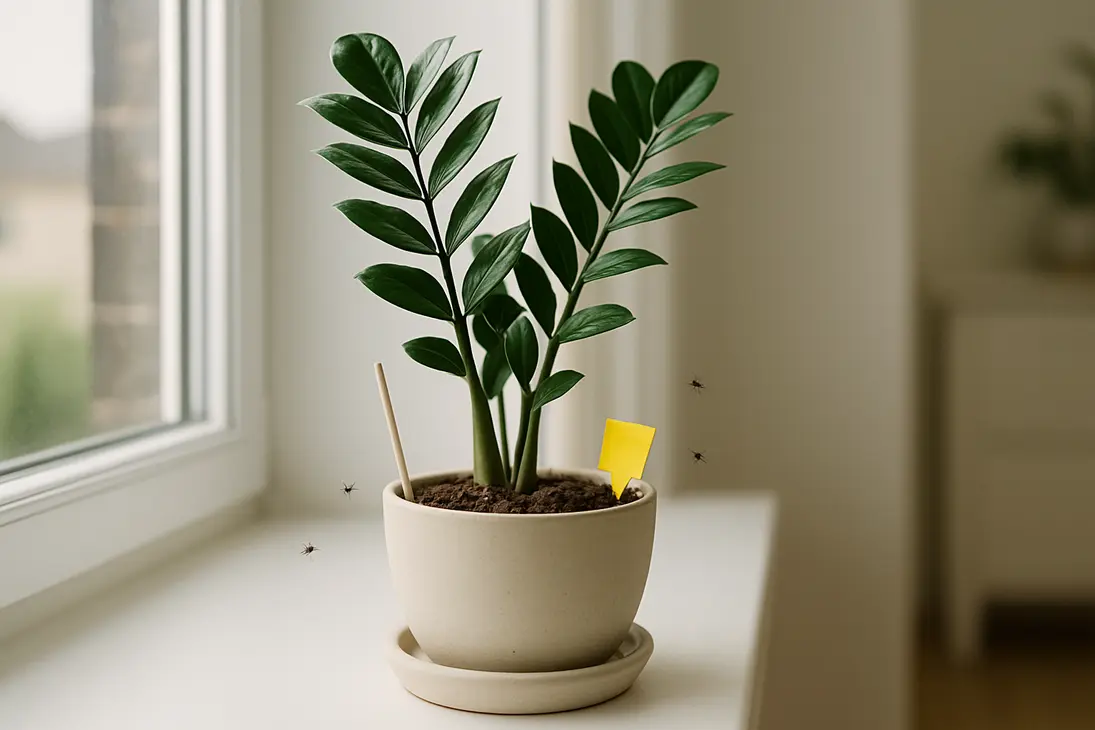
Gnats around a ZZ plant usually mean the potting mix is staying too wet. ZZ plants store water in thick underground rhizomes, so they do not need constantly moist soil. Damp, organic potting mix can quickly become a breeding site for fungus gnats.
The fix is usually straightforward: confirm the insect, let the pot dry, target larvae in the soil, trap adults, and change the conditions that attracted them.
Are They Fungus Gnats, Fruit Flies, or Something Else?
Small indoor flies are often called “gnats,” but not all come from plants. Fungus gnats breed in moist potting mix. Fruit flies usually come from ripe fruit, food scraps, drains, trash, or fermenting residue.
Watch where the insects gather. If they rise from the soil when you tap or water the pot, fungus gnats are likely. If they hover near bananas, compost, wine glasses, garbage, or sinks, the ZZ plant may not be the source.
Signs You Have Fungus Gnats
Fungus gnats are tiny, dark, mosquito-like flies that stay close to damp soil. They are weak fliers and often flutter around the pot, crawl on the soil surface, or collect near windows.
Common signs include:
- Small black or gray flies lifting from the soil
- Adults caught on yellow sticky traps near the pot
- Gnats active around soil rather than fruit or drains
- Persistently moist topsoil
- Recent overwatering, repotting, or purchase from a store
- Yellowing or decline if the plant is also too wet
The adults are annoying, but the larvae live in the soil. They feed on fungi, algae, and decaying material. In heavy infestations, they may also damage tender roots, especially on a stressed plant.
How Fungus Gnats Differ From Fruit Flies
Fruit flies are usually tan or brownish with rounder bodies. Fungus gnats are darker, slimmer, and more tied to soil.
| Feature | Fungus Gnats | Fruit Flies |
|---|---|---|
| Main source | Damp potting soil | Fruit, food waste, drains |
| Appearance | Dark, mosquito-like | Tan/brown, rounder |
| Behavior | Weak, fluttery, near plants | Active near food areas |
| Larvae live in | Moist soil | Decaying residue |
A sticky trap may catch insects passing by, so it does not prove the plant is the source. Repeated emergence from the soil is the better clue.
Where to Look for the Source Indoors
Check the room, not just the ZZ plant. Look at the ZZ plant’s soil and drainage holes, other moist houseplants, saucers with standing water, open bags of potting soil, fruit bowls, trash, compost, recycling, drains, garbage disposals, old flowers, spills, and damp cloths.
Indoor gnat problems can have more than one source. Treating the ZZ plant will not solve the issue if another plant or drain is also breeding flies.
Why Gnats Are Attracted to ZZ Plants
ZZ plants are not especially attractive to gnats. The pot environment is the issue. Fungus gnats need moisture and organic matter, and a ZZ plant sitting in wet, peaty soil provides both.
Gnats often appear after a care change: a new watering schedule, a decorative pot with poor drainage, a fresh bag of potting mix, or a recently purchased plant.
Overwatering Is the Most Common Cause
Overwatering usually means watering again before the pot has dried enough, not necessarily giving too much water at once.
A ZZ plant in low light, dense soil, a large pot, or a cool room may take weeks to dry. If you water every week on schedule, the surface can stay damp enough for fungus gnats to lay eggs.
Common overwatering patterns include:
- Watering on a fixed weekly schedule
- Giving frequent small sips
- Letting water collect inside a cachepot
- Using a pot much larger than the roots
- Assuming yellow leaves always mean thirst
If yellowing and gnats appear together, check soil moisture and drainage before adding more water.
ZZ Plants Prefer Dry Conditions
ZZ plants store water in rhizomes, which makes them more tolerant of dry spells than many houseplants. They do best when the mix dries significantly between waterings.
A safer routine is:
- Water thoroughly.
- Let excess water drain completely.
- Wait until the soil is dry well below the surface before watering again.
Timing depends on light, pot size, soil type, temperature, and season. In winter or low light, most ZZ plants use water more slowly.
Soil Mix and Drainage Problems That Invite Gnats
Many ZZ plants are sold in moisture-retentive mixes that work for retail shelves but stay too wet indoors.
Common problems include:
- Peat-heavy soil that dries slowly
- Fine, compost-rich mix with little aeration
- Pots without drainage holes
- Nursery pots sitting in decorative pots with trapped water
- Compacted soil that stays wet in pockets
- Fresh potting soil that already contains eggs or larvae
If gnats appear soon after repotting, the new mix may be part of the problem.
How to Get Rid of Gnats in a ZZ Plant
To get rid of gnats, address both adults and larvae. Sticky traps reduce visible flies, but larvae in wet soil will keep producing more.
A practical plan:
- Stop watering until the soil dries well.
- Place yellow sticky traps near the soil.
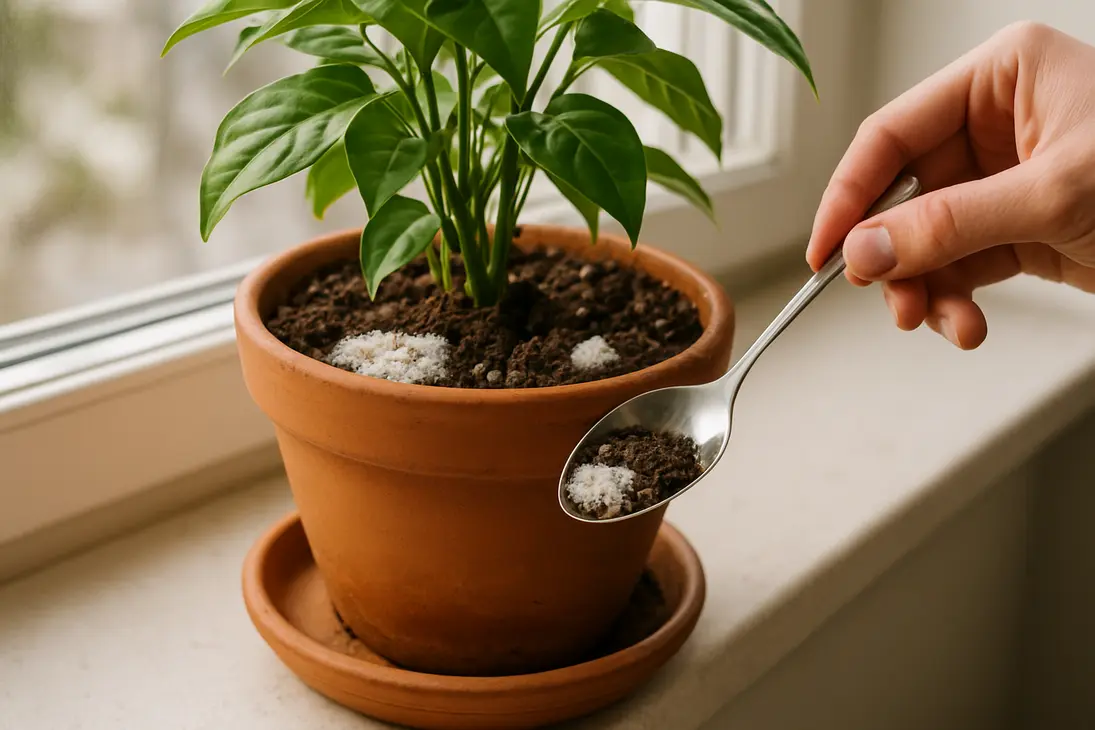
- Treat larvae with a labeled control such as mosquito bits or dunks.
- Improve drainage or repot if the mix stays wet too long.
- Change watering habits so the problem does not return.
Let the Soil Dry Out Thoroughly
This is the most important step for a ZZ plant. Do not water just because the surface looks dry; check deeper.
Ways to check:
- Push a finger several inches into the mix.
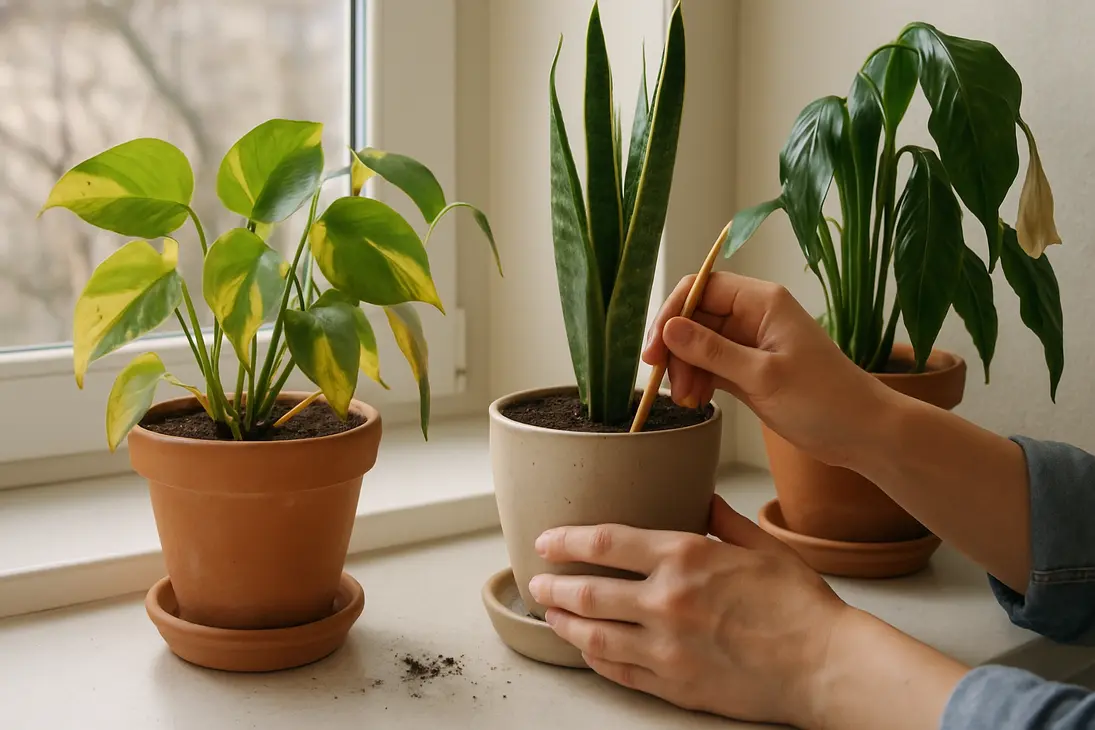
- Use a wooden skewer; damp soil will cling to it.
- Lift the pot and compare wet weight with dry weight.
- Use a moisture meter only as a rough guide.
For an established ZZ plant, drying down is usually safer than keeping the pot damp. If the plant is in a large pot or dense mix, drying may take weeks. Avoid repeated water-based treatments that keep larvae comfortable and increase rot risk.
Use Yellow Sticky Traps for Adult Gnats
Yellow sticky traps catch adult fungus gnats before they lay more eggs. Place them close to the soil surface and replace them when dusty or crowded.
Traps do not kill larvae, so use them with drying and, if needed, a soil treatment. They also help you monitor progress. If fewer gnats appear over one to three weeks, your approach is working.
Treat Larvae With Mosquito Bits or Dunks
Mosquito bits and dunks are commonly used for fungus gnat larvae because they contain Bacillus thuringiensis israelensis, or Bti. Bti targets certain fly larvae when used according to the product label.
Because the treatment is usually applied with water, be careful with ZZ plants. Do not drench already wet soil. Let the pot dry first, apply the product as directed when watering is appropriate, and let the pot drain fully.
One treatment may not remove every adult immediately. Existing adults may keep flying for a while, and some larvae may already be close to emerging.
When to Repot or Replace the Soil
You do not always need to repot a ZZ plant with fungus gnats. Repotting can stress the plant if the soil and roots are otherwise healthy.
Repot if:
- The soil stays wet for weeks
- The pot has no drainage hole
- The mix smells sour, swampy, or rotten
- You suspect root or rhizome rot
- The infestation began after using new soil
- The pot is far too large
- Drying and treatment have not helped
When repotting, remove as much old damp mix as practical without damaging the plant. Inspect the rhizomes and roots. Healthy ZZ rhizomes are firm. Mushy, foul-smelling, or collapsing tissue suggests rot and should be removed with clean tools.
Use a pot with drainage holes and a faster-draining mix. Do not size up dramatically; ZZ plants usually prefer a snug, well-drained pot over a large mass of damp soil.
Be Careful With Home Remedies Like Cinnamon, Peroxide, and Neem Oil
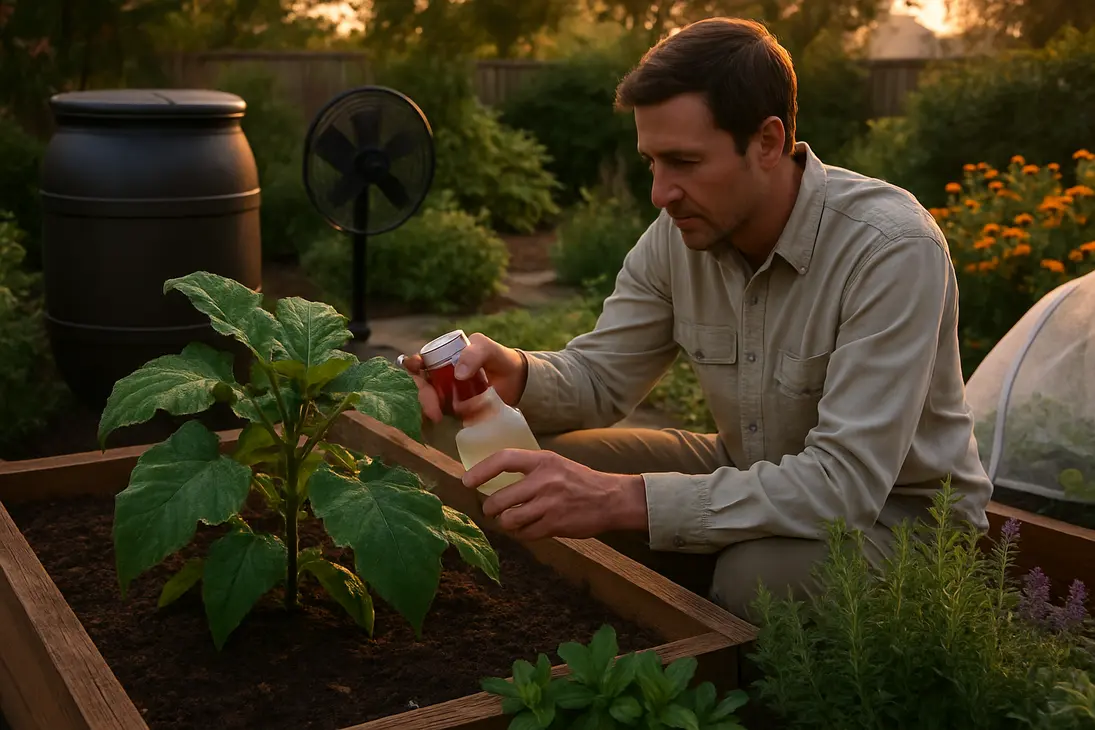
Home remedies such as cinnamon, hydrogen peroxide, neem oil, dish soap, sand, and diatomaceous earth are popular, but results are inconsistent. Misuse can stress the plant or fail to reach larvae.
Key cautions:
- Cinnamon is not a reliable stand-alone treatment.
- Hydrogen peroxide drenches can harm roots if mixed or used incorrectly and add more water to the pot.
- Neem oil is better for some leaf pests than larvae deep in soil.
- Sand or stones may discourage egg laying but can hide moisture problems.
For a ZZ plant, keep the plan simple: dry the soil, trap adults, use a labeled larval control if needed, and fix drainage.
How to Prevent Gnats From Coming Back
Prevention is mostly moisture control. Fungus gnats thrive in damp, organic soil. ZZ plants prefer a drier, airier potting environment, so good ZZ care also discourages gnats.
Water Less Often and Check Soil First
Do not water on a strict calendar. Check the soil and pot weight instead. In many homes, a ZZ plant may need water only every few weeks, and even less in winter or low light.
Good habits include:
- Waiting until the soil is dry well below the surface
- Watering thoroughly when you do water
- Emptying saucers and decorative pots
- Reducing watering in cooler, darker months
- Adjusting after repotting because fresh soil may hold moisture differently
When unsure, wait a few more days. ZZ plants usually tolerate slight underwatering better than chronic overwatering.
Choose a Better Potting Mix for ZZ Plants
A good ZZ mix drains quickly while holding modest moisture. Standard indoor potting soil can work if amended, but it is often too dense alone.
Useful amendments include:
- Perlite
- Pumice
- Orchid bark
- Coarse sand, if not too fine
- Cactus or succulent mix as part of the blend
The goal is air space, not a sterile or bone-dry medium. Roots need oxygen, and fungus gnats are less successful when the surface does not stay damp.
Always use drainage holes. A decorative pot without drainage is better as an outer cachepot. Remove the inner pot to water, let it drain, and never leave water sitting in the bottom.
Bottom Watering: When It Helps and When It Doesn’t
Bottom watering can keep the top layer drier, making it less attractive for egg laying. It helps only if the pot drains well and you remove it from water after the mix absorbs enough.
It does not help if the whole pot stays wet, the soil is dense, or the pot sits in water for hours. If you bottom water often, occasionally water from the top and let the pot drain thoroughly to flush mineral buildup.
For a ZZ plant with gnats, bottom watering can help, but only with less frequent watering overall.
Monitor New Plants and Fresh Soil
New plants and potting soil can bring fungus gnats indoors. Before placing a new plant near your collection, inspect it.
A simple routine:
- Keep new plants separate for two to three weeks if possible.
- Check the soil before and after watering.
- Place a sticky trap nearby.
- Avoid plants sitting in soggy pots.
- Store unused potting soil sealed and dry.
- Avoid soil that smells musty, sour, or swampy.
If gnats fly out of a fresh bag of soil, do not use it for indoor plants without addressing the problem first.
Can Gnats Harm a ZZ Plant?
Adult fungus gnats are mostly a nuisance. They do not chew leaves or suck sap like common houseplant pests.
Larvae are more concerning. In small numbers, they mostly feed on fungi and decaying matter. In heavy infestations, they can damage fine roots, especially if the ZZ plant is already stressed by overwatering, poor drainage, low light, rot, or repotting.
A few gnats around a healthy ZZ plant are not an emergency, but they are a warning sign. The same damp conditions that support gnats can also lead to root and rhizome rot.
Watch for:
- Yellowing stems or leaflets
- Soft stems near the soil line
- Sour smell from the pot
- Soil that stays wet for weeks
- Wilting despite wet soil
- Mushy or dark rhizomes
If you see these symptoms, treat the issue as a moisture and root-health problem, not just an insect problem.
Conclusion
Gnats around a ZZ plant are usually fungus gnats, and they usually point to damp soil, overwatering, poor drainage, or a mix that holds too much moisture. The plant itself is not the attraction; the wet soil is.
Let the ZZ plant dry thoroughly, use yellow sticky traps for adults, treat larvae with mosquito bits or dunks if needed, and repot only when drainage or soil condition clearly requires it. After that, water less often, use a grittier mix, and inspect new plants and fresh soil.
A ZZ plant is built to handle dry spells. Use that to your advantage, and fungus gnats become much easier to control.
FAQ
How do I get rid of gnats in my ZZ plant fast?
Let the soil dry thoroughly, place yellow sticky traps close to the soil, and treat larvae with a labeled fungus gnat control such as mosquito bits or dunks when watering is appropriate. Traps reduce adults quickly, but larvae must be addressed too.
Does having gnats mean I’m overwatering my ZZ plant?
Often, yes. Fungus gnats need damp soil to breed, and ZZ plants are commonly overwatered indoors. Gnats can also come from dense soil, poor drainage, contaminated potting mix, or another nearby plant.
Should I repot my ZZ plant if it has fungus gnats?
Not always. If the soil dries normally and the plant looks healthy, try drying, traps, and larval treatment first. Repot if the soil stays wet for weeks, smells bad, lacks drainage, seems infested from new soil, or if you suspect root or rhizome rot.
Are gnats dangerous to ZZ plants or just annoying?
Adult fungus gnats are mostly annoying. Larvae can harm fine roots in heavy infestations, especially on stressed plants. The bigger concern is that gnats often signal soil that is too wet, which can lead to root or rhizome rot.
You Might Also Like