Do Mushrooms Breathe?
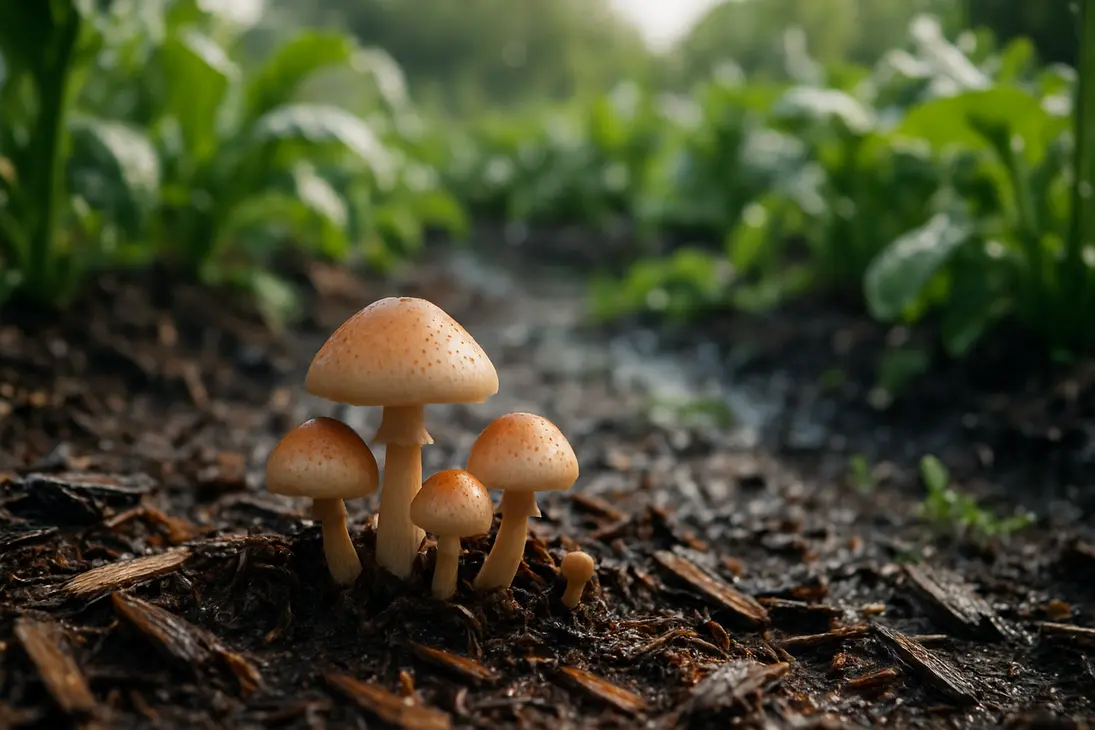
Yes, mushrooms breathe in the biological sense, but not the way animals do. They do not have lungs, noses, gills, or a circulatory system. Instead, mushrooms exchange gases with the surrounding air as part of cellular respiration: they use oxygen and release carbon dioxide.
This can be confusing because mushrooms often appear near plants, and green plants are known for taking in carbon dioxide and producing oxygen. Mushrooms are different. They are fungi, not plants, and they get energy by breaking down organic matter rather than by photosynthesis.
Understanding how mushrooms breathe helps explain why they appear in moist mulch, why indoor mushroom kits need fresh air, why crowded mushrooms may grow long and skinny, and why spores can matter for people with respiratory sensitivities.
Do mushrooms breathe air?
Mushrooms do not “breathe air” with lungs, but they do exchange gases with the air around them. Like animals, fungi need oxygen for aerobic respiration. Their cells use oxygen to release energy from food molecules and give off carbon dioxide as a waste product.
A mushroom is only the visible fruiting body of a larger fungal organism. Most of the fungus lives as mycelium: a network of fine, threadlike hyphae growing through soil, compost, wood chips, leaf litter, logs, or other organic material. Both the hidden mycelium and the visible mushroom are living tissue, and both respire.
Outdoors, gas exchange usually happens naturally. Air moves through loose mulch, soil pores, and open spaces. Indoors, where mushrooms may be grown in bags, tubs, jars, tents, or plastic-covered kits, fresh air matters more because carbon dioxide can build up in still air.
Breathing vs. cellular respiration
When people breathe, they inhale and exhale. Air enters the lungs, oxygen moves into the blood, and carbon dioxide leaves the body. Mushrooms do not do any of that.
For fungi, the more accurate term is cellular respiration. This is the chemical process inside cells that releases usable energy from food. In aerobic respiration, oxygen is used and carbon dioxide is produced. These gases move in and out of fungal tissues by diffusion, from areas of higher concentration to areas of lower concentration.
So in everyday language, it is fine to say mushrooms breathe. Scientifically, it is more precise to say mushrooms respire and exchange gases with their environment.
The key points are:
- Mushrooms do not inhale or exhale like animals.
- Mushrooms do not exchange gases the way green leaves do during photosynthesis.
- Mushrooms do use oxygen and release carbon dioxide as living organisms.
What gases mushrooms take in and release
Mushrooms mainly take in oxygen and release carbon dioxide during respiration.
A simple comparison:
| Organism/process | Takes in | Releases | Main purpose |
|---|---|---|---|
| Mushroom respiration | Oxygen | Carbon dioxide | Releases energy from organic matter |
| Animal respiration | Oxygen | Carbon dioxide | Releases energy from food |
| Green plant photosynthesis, in light | Carbon dioxide | Oxygen | Makes sugars using light energy |
| Green plant respiration | Oxygen | Carbon dioxide | Releases energy from sugars |
Mushrooms also contain a lot of water, so humidity affects their growth. However, water vapor exchange is not the same as breathing. If the air is too dry, mushrooms can crack, stall, or abort. If the air is too stagnant, carbon dioxide can accumulate. Healthy development depends on both moisture and fresh air.
How mushroom respiration differs from green plants
Mushrooms are often discussed with plants because gardeners find them in beds, lawns, pots, compost, and mulch. Biologically, fungi are their own kingdom. They are not leafy crops, herbs, shrubs, or trees.
Green plants contain chlorophyll, which allows them to capture sunlight for photosynthesis. Through photosynthesis, plants use light energy, carbon dioxide, and water to make sugars, releasing oxygen in the process.
Mushrooms do not contain chlorophyll and do not photosynthesize. They do not make sugars from sunlight. Instead, fungi absorb energy and nutrients from organic material. Depending on the species, they may decompose dead matter, form partnerships with plant roots, or live parasitically on living hosts.
Most mushrooms gardeners notice in mulch, compost, raised beds, or lawns are decomposers. They are breaking down wood chips, roots, leaves, buried organic matter, or compost ingredients. Their presence often means the area is moist and contains material fungi can digest.
Why mushrooms don’t produce oxygen like green plants
Mushrooms do not produce oxygen because they do not perform oxygen-producing photosynthesis. They lack chlorophyll and chloroplasts, the structures green plants use to convert light energy into chemical energy.
Light may still affect mushrooms. Some cultivated mushrooms use indirect light as a signal for fruiting, color, or direction of growth. But light is not their food source. Their energy comes from the substrate: straw, sawdust, compost, logs, manure-based compost, or another organic material depending on the species.
In practical terms:
- A basil plant grows by making sugars using light.
- A tomato plant grows by photosynthesis and uses those sugars for energy.
- A mushroom grows by absorbing nutrients from organic matter already present.
Because mushrooms are consumers and decomposers rather than photosynthetic producers, their gas exchange is more like an animal’s than a green plant’s: oxygen in, carbon dioxide out.
What plants and mushrooms have in common: both respire
Although mushrooms and plants differ in photosynthesis, both respire. Plant cells also use oxygen and release carbon dioxide during cellular respiration. This happens in roots, stems, leaves, flowers, fruits, and seeds.
The difference is that green plants also photosynthesize when light is available. Over a day, a healthy green plant may release oxygen through photosynthesis while also using oxygen for respiration. Mushrooms only have the respiration side of the equation.
This matters in soil. Plant roots, fungi, bacteria, and other soil organisms all use oxygen and release carbon dioxide. Well-structured soil has pore spaces that allow gas exchange. Waterlogged or compacted soil can limit oxygen, stressing roots and changing microbial activity. Most mushrooms gardeners and growers think about prefer a moist but not suffocating environment.
Why fresh air matters for mushroom growth
Fresh air matters because mushrooms and mycelium need oxygen, and because carbon dioxide affects how mushrooms develop. This is most obvious in indoor cultivation, where humidity, airflow, temperature, and carbon dioxide are partly controlled by the grower.
A mushroom fruiting body develops from mycelium when conditions are suitable. For many species, that means adequate moisture, the right temperature range, oxygen, gentle air movement, and signals such as light or a change in carbon dioxide levels. Exact needs vary among oyster mushrooms, shiitake, button mushrooms, wine caps, lion’s mane, and other cultivated species.
Fresh air is not the same as a drying draft. Mushrooms need oxygen, but they lose moisture easily. Good airflow usually means gentle, frequent air exchange paired with high humidity—not a fan blasting directly at the caps.
Respiration in the mycelium and fruiting body
The mycelium is the main body of the fungus. It grows through its food source and releases enzymes that break complex materials into simpler compounds the fungus can absorb. This active growth requires energy, and cellular respiration helps provide it.
The fruiting body—the mushroom you see—also respires. Its role is reproduction: to grow, mature, and release spores. During rapid growth, oxygen demand can be high. In indoor cultivation, a dense flush of mushrooms can quickly change the air inside a small chamber or sealed bag.
That is why mushroom kits often tell you to open, vent, mist, cut slits, or loosely tent the block rather than sealing it airtight. Mycelium may tolerate a fairly enclosed incubation stage, but once mushrooms form, they usually need more fresh air.
What happens when mushrooms don’t get enough fresh air
When mushrooms do not get enough fresh air, carbon dioxide can build up. Different species respond differently, but common signs of poor fresh-air exchange include:
- Long, thin, stretched stems
- Small or underdeveloped caps
- Pale or distorted growth
- Fuzzy mycelial growth climbing up stems
- Mushrooms leaning or growing toward openings
- Pins forming but failing to mature
- A stale, overly damp environment that encourages molds or bacteria
Oyster mushrooms are a common example. With too much carbon dioxide, they often produce elongated stems and small caps instead of broad, well-shaped clusters.
The solution is balance, not maximum airflow. Too much dry air can cause cracked caps, stalled pins, or shriveled mushrooms. For small indoor kits, this often means following the kit’s venting instructions, misting as directed, avoiding direct hot sun, and not sealing mushrooms in airtight containers unless they are designed with filtered air exchange.
Garden mushrooms vs. cultivated mushrooms indoors
Garden mushrooms and cultivated indoor mushrooms face different air conditions.
Outdoors, fresh air is usually abundant. Mushrooms in lawns, mulch, compost, raised beds, or near old roots are surrounded by a large volume of moving air. If mushrooms appear after rain, it is usually because moisture and temperature favored fruiting, not because they suddenly began breathing differently.
Indoors, mushrooms are often enclosed in plastic, tubs, bags, jars, or grow tents. Enclosure helps maintain humidity but can trap carbon dioxide. Indoor mushroom growing is therefore a balancing act: retain moisture while replacing stale air.
For gardeners who are not intentionally growing mushrooms, mushrooms in a bed are usually not an emergency. They often indicate active decomposition. You can remove visible mushrooms if you dislike them or if children or pets may touch them, but pulling them does not remove the underground mycelium.
To reduce recurring flushes, change the conditions that favor them: avoid constantly wet mulch, improve drainage, remove buried wood where practical, or increase light and air movement where appropriate. Mushrooms can be a clue that an area is moist and rich in organic matter. If the bed is also soggy or sour-smelling, the real issue is excess moisture and poor air movement in the root zone.
Are mushroom spores a breathing or health concern?
Mushroom spores can be a concern in some situations, but risk depends on the person, species, exposure level, and setting. Most people walking past occasional garden mushrooms are not harmed by brief outdoor exposure. Spores are a normal part of outdoor air.
Concern increases when exposure is heavy, repeated, or enclosed. Indoor mushroom growing, harvesting mature mushrooms that are dropping spores, disturbing moldy substrate, or working in a poorly ventilated grow room can expose someone to more fungal particles than normal outdoor air.
People with asthma, allergies, chronic lung disease, or weakened immune systems should be more cautious around heavy spore loads, moldy compost, and enclosed fungal growth. If handling mushrooms, compost, or old grow blocks causes coughing, wheezing, chest tightness, irritated eyes, or worsening allergy symptoms, step away, ventilate the area, and consider protective measures such as a well-fitting mask. Persistent or severe breathing symptoms deserve medical advice.
Can mushrooms grow in your lungs?
A common fear is that inhaled mushroom spores could sprout into mushrooms inside the lungs. For ordinary garden and culinary mushrooms, that is not a realistic concern. Human lungs are not a mushroom fruiting chamber and do not provide the conditions needed for caps and stems to develop.
That said, fungi as a broader group can cause real lung problems. Some molds and yeasts can infect people, especially those with weakened immune systems or particular exposures. Fungal lung disease is not the same as a garden mushroom growing inside the body.
The accurate summary is:
- No, casual garden exposure will not cause visible mushrooms to grow in your lungs.
- Yes, fungal spores and fragments can irritate sensitive lungs.
- People with immune suppression or lung disease should take symptoms after fungal exposure seriously.
Avoid cleaning moldy mushroom substrates, damp compost, or spore-heavy indoor grow areas in a closed room. Use ventilation, gloves, and a suitable mask if exposure is likely.
When spores may irritate breathing
Spores are microscopic reproductive particles released from gills, pores, teeth, or other spore-bearing surfaces. Outdoors, they disperse into open air. Indoors, they can collect on shelves, plastic walls, filters, fans, and other surfaces.
Spore irritation is more likely when:
- Mushrooms are grown indoors in large quantities
- Mature mushrooms are left too long and release many spores
- Air circulation is poor
- Old or contaminated grow blocks are handled roughly
- The person has asthma, allergies, or respiratory sensitivity
- Mold is also present
Symptoms can include sneezing, runny nose, itchy eyes, coughing, wheezing, throat irritation, or chest tightness. These symptoms are not proof of infection; they may simply mean the air contains particles your respiratory system does not tolerate well.
Practical precautions include harvesting cultivated mushrooms before they heavily drop spores, ventilating indoor grow spaces, avoiding moldy materials, and wearing respiratory protection when cleaning spent blocks or contaminated substrates. If indoor mushroom growing repeatedly causes breathing symptoms, reduce exposure and seek medical advice if symptoms persist.
Why you should not eat unknown mushrooms from gardens or yards
Breathing concerns are separate from eating concerns. A mushroom in your garden may be harmless, beneficial, mildly stomach-upsetting, dangerously toxic, or too difficult to identify safely from a glance. Many mushrooms look similar, and appearance changes with age, weather, and location.
Do not eat unknown mushrooms from gardens, yards, raised beds, compost piles, lawns, or wood chips unless they have been confidently identified by someone with appropriate expertise. Photo-based guesses are not enough for safety.
This caution applies even if:
- The mushrooms grow near edible vegetables
- They smell pleasant
- Insects or slugs have eaten them
- They look like store-bought mushrooms
- They appeared in “organic” soil or compost
- Nearby plants look healthy
If mushrooms appear where children or pets play, remove and discard the visible fruiting bodies. Wear gloves if you prefer, wash your hands afterward, and remember that removal is mainly for safety and tidiness. It does not necessarily eliminate the underground fungus.
For vegetable beds, mushrooms in the soil do not automatically make the vegetables unsafe. The bigger concern is someone accidentally eating the mushroom itself.
Conclusion
Mushrooms do breathe, if by “breathe” we mean they respire and exchange gases with their environment. They use oxygen and release carbon dioxide, even though they do not have lungs or actively inhale and exhale.
They are not like green plants because they do not contain chlorophyll, do not photosynthesize, and do not produce oxygen from sunlight. Instead, mushrooms get energy by breaking down organic matter such as wood, leaves, compost, roots, or other substrates.
For gardeners, mushrooms are often a sign of moisture and active decomposition. For indoor growers, fresh air is essential because low oxygen and high carbon dioxide can distort mushroom growth. And while casual outdoor exposure is usually not a breathing problem for most people, heavy spore exposure in enclosed spaces can irritate sensitive lungs.
In short: mushrooms use oxygen, release carbon dioxide, and belong to a very different biological world from the green plants growing beside them.
FAQ
Do mushrooms breathe oxygen?
Yes. Mushrooms use oxygen for cellular respiration. They do not breathe with lungs, but oxygen diffuses into fungal tissues and is used by their cells to release energy from organic matter.
Do mushrooms breathe out carbon dioxide?
Yes. Mushrooms release carbon dioxide as a waste product of respiration. This is true for both the hidden mycelium and the visible mushroom fruiting body.
Do mushrooms produce oxygen?
No. Mushrooms do not produce oxygen the way green plants do because they do not photosynthesize. They have no chlorophyll and do not make sugar from sunlight. They absorb nutrients from organic material and release carbon dioxide through respiration.
Can breathing mushroom spores make you sick?
It can, especially with heavy or repeated exposure in enclosed spaces, or in people with asthma, allergies, chronic lung disease, or weakened immune systems. Casual outdoor exposure to a few garden mushrooms is usually low risk for most people. Indoor growing areas, mature spore-dropping mushrooms, moldy substrates, and contaminated compost should be handled with ventilation and care. Seek medical advice for persistent coughing, wheezing, chest tightness, fever, or breathing difficulty after fungal exposure.
You Might Also Like