Do Houseplants Really Need Repotting?
Yes, houseplants need repotting—but not always because they need a bigger pot.
Indoor plants live in a limited amount of potting mix. Over time, roots grow, the mix breaks down, drainage changes, and nutrients become depleted or unavailable. A plant can survive in a tight container for a while, but crowded roots and tired soil eventually make watering harder and growth weaker.
Repotting should be done for a clear reason. Yellow leaves, slow growth, or drooping can also come from low light, watering problems, pests, temperature stress, or recent changes. Check the plant before assuming it needs a new pot.
Why Repotting Houseplants Matters
Repotting is not only about upsizing. Often, the biggest benefit is replacing compacted, depleted potting mix with fresh mix that holds water and air more evenly.
Roots need oxygen as well as moisture. As potting mix ages, peat or coir can collapse, bark can break down, and fine particles settle. Soil may stay soggy, dry too fast, shrink from the pot edge, or stop absorbing water evenly.
Repotting can help by:
- Refreshing broken-down potting mix
- Improving drainage and airflow
- Giving crowded roots more room
- Removing dead roots or compacted soil
- Making watering more predictable
- Supporting growth during the growing season
It also lets you inspect the roots for circling, rot, dryness, or a dense root ball that no longer absorbs water well.
Bigger is not automatically better. A plant moved into a much larger pot can sit in wet soil too long, especially indoors where light and airflow are limited. Good repotting means matching the plant, pot, and soil—not simply choosing a larger container.
Signs Your Houseplant Needs Repotting
The clearest signs involve roots, soil behavior, and watering problems. Leaves can give clues, but they are less specific.
Your houseplant may need repotting if you notice:
| Sign | What it often means |
|---|---|
| Roots tightly circle the root ball | The plant is root-bound |
| Roots grow from drainage holes | Roots have filled much of the pot |
| Water runs straight through | Soil may be compacted, hydrophobic, or mostly roots |
| Soil dries unusually fast | There may be little mix left |
| Slow growth in the growing season | Roots may be crowded or soil depleted |
| Plant tips over easily | Pot may be too small |
| Soil is hard, crusty, or shrunken | Mix has broken down |
| Watering problems continue | Soil or roots may be the issue |
A root-bound plant is not always an emergency. Some plants tolerate snug pots, and a few bloom better when slightly pot-bound. But when the pot is mostly roots, watering becomes difficult. Water may rush through without soaking the root ball or linger in compacted pockets.
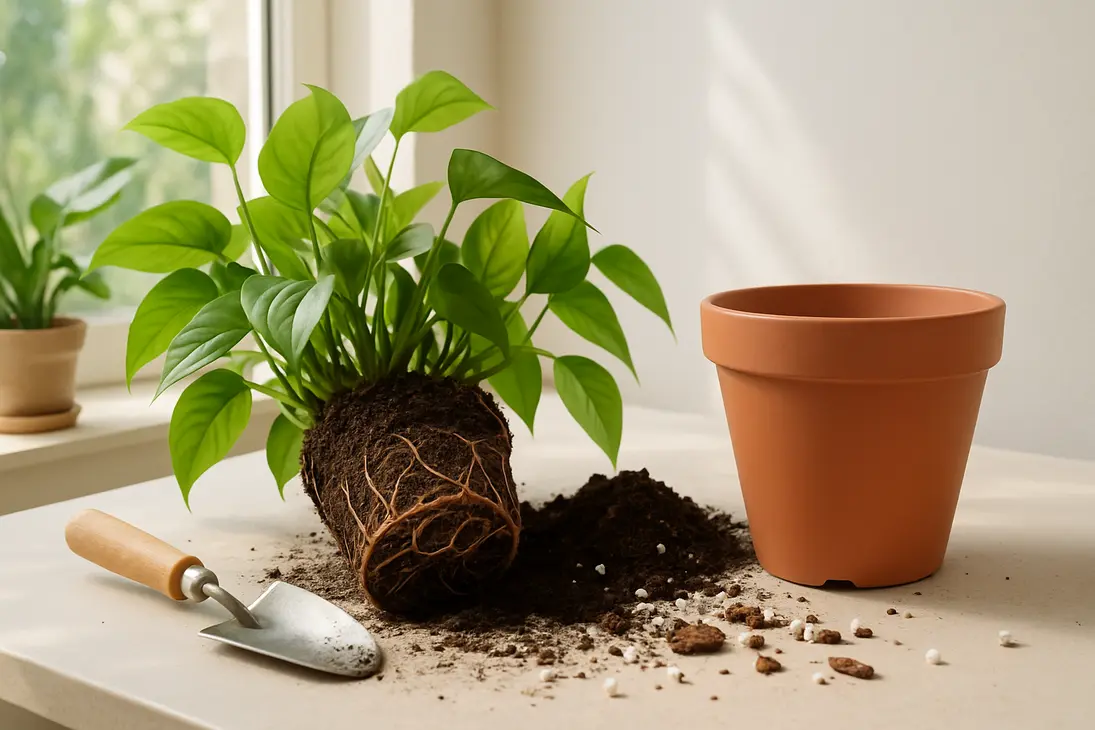
To check, slide the plant gently from its pot. If the root ball holds the pot’s shape and thick roots wrap around the outside, repotting is probably due. If roots are visible but not packed, you may only need to wait or refresh the top layer of soil.
When Repotting Is Not the Answer
Repotting is useful, but it is not a cure-all. Yellow leaves can come from overwatering, underwatering, low light, cold drafts, pests, nutrient issues, or natural aging. Brown tips may be caused by dry air, inconsistent watering, salt buildup, fertilizer burn, or water sensitivity. Drooping can mean the plant is too dry—or that roots are too wet and failing.
Before repotting, check:
- Light: Is the plant getting enough?
- Watering: Is the soil staying wet too long or drying too often?
- Drainage: Does the pot have a drainage hole?
- Pests: Are there sticky leaves, webbing, speckling, cottony clusters, or insects?
- Fertilizer: Has it been overfed?
- Recent change: Was it moved, shipped, bought, pruned, or chilled?
Repotting an already stressed plant can make things worse if the real problem is not the pot. If roots are rotting, repotting may be needed as a rescue step. But if the plant is reacting to low light, pests, or a recent move, a larger pot will not solve it.
How Often Should You Repot Houseplants?
Fast-growing houseplants often benefit from repotting every 1–2 years. This includes many pothos, philodendrons, monsteras, spider plants, peace lilies, and young tropical foliage plants.
Slow-growing plants need it less often. Snake plants, ZZ plants, cacti, succulents, and mature plants in stable conditions may be fine for several years if the soil still drains well and roots are not severely crowded.
A practical schedule:
| Plant type | Typical interval | Notes |
|---|---|---|
| Fast-growing tropical foliage plants | Every 1–2 years | Check roots in spring |
| Young plants sizing up | About yearly | Increase pot size gradually |
| Mature houseplants | Every 2–3 years | May only need soil refresh |
| Succulents and cacti | Every 2–4 years | Use sharply draining mix |
| ZZ plants, snake plants, slow growers | Every 2–4+ years | Avoid overpotting |
| Very large floor plants | As needed | Top-dressing may be easier |
These are guidelines, not rules. Bright light, warm rooms, and active growth can make a plant fill its pot faster. Low light, cool rooms, dense soil, and slow-growing species may delay the need.
If the plant is healthy, the soil drains well, and roots are not crowded, do not disturb it just because a year has passed.
Best Time of Year to Repot
The best time to repot most houseplants is during active growth, usually spring through early summer. More light and warmth help the plant repair root damage and adjust to fresh soil.
Repotting in fall or winter is possible, but less ideal. Many houseplants grow slowly during short, dim days, so fresh soil may stay wet longer.
Avoid unnecessary repotting when a plant is already stressed. First stabilize plants that are wilting badly, recovering from pests, dropping leaves after a move, or sitting in cold conditions. The exception is when the soil itself is causing the stress, such as sour, soggy mix, rotting roots, or a pot with no drainage.
How to Repot a Houseplant Without Stressing It
Repotting always causes some disturbance, but careful handling keeps it minor. The goal is to refresh conditions without tearing apart healthy roots unnecessarily.
A simple process:
-
Water lightly beforehand if the plant is very dry.
Slightly moist soil is easier to handle than bone-dry soil. -
Prepare the new pot and mix first.
Use a pot with drainage holes and a suitable potting mix. -
Remove the plant gently.
Support the base, turn the pot sideways, and slide the root ball out. Do not yank the stems. -
Inspect the roots.
Healthy roots are firm. Rotten roots are often mushy, dark, and may smell bad. -
Loosen only what needs loosening.
Tease apart circling outer roots. For a severely root-bound plant, make a few shallow vertical cuts if needed. -
Trim damaged roots only.
Remove dead, mushy, or broken roots with clean scissors or pruners. -
Add fresh mix and set the plant.
Keep the top of the root ball slightly below the rim. -
Replant at the same depth.
Do not bury stems deeper than before unless the plant tolerates it. -
Fill and firm gently.
Fill around the sides without packing the soil hard. -
Water appropriately.
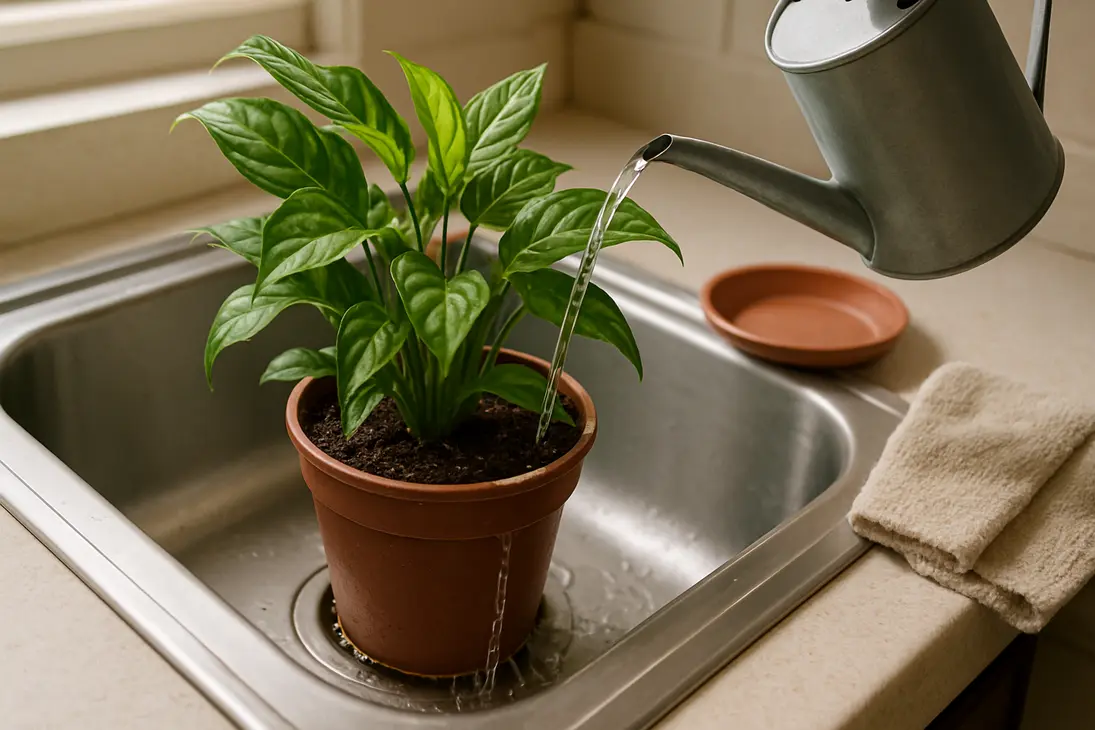
Most tropical houseplants should be watered until excess drains out. Some succulents and cacti are better left dry for a few days if roots were disturbed.
The finished plant should be stable, not buried, and not sitting in a large mass of wet soil.
Choosing the Right Pot Size
For most houseplants, move up only one pot size at a time. That usually means increasing pot diameter by about 1–2 inches for small and medium plants, or a little more for very large plants.
Oversized pots are a common mistake. When a small root system sits in a large volume of soil, the plant cannot use moisture quickly enough. The outer mix stays wet, air spaces fill with water, and roots may decline. This is especially risky in low light, cool rooms, or dense potting mixes.
Pot material also matters:
- Plastic nursery pots hold moisture longer and are lightweight.
- Terracotta pots dry faster and suit plants that dislike wet roots.
- Glazed ceramic pots often hold moisture more like plastic.
- Cachepots without drainage should hold a draining inner pot, with excess water emptied after watering.
Drainage holes matter. Pebbles at the bottom do not replace drainage and can still leave water trapped.
Choosing the Right Soil Mix
For most foliage houseplants, use an indoor potting mix that holds some moisture but drains well. Many plants benefit from added perlite, pumice, fine bark, or coco chips for aeration, especially if you water often.
Do not use garden soil straight from the yard. It is usually too dense for containers, compacts indoors, and may bring pests, weed seeds, or disease organisms. Seed-starting mix is also not ideal for established houseplants.
Common choices:
- Pothos, philodendron, monstera: Indoor potting mix with added perlite or bark.
- Snake plant, ZZ plant, jade plant: Faster-draining mix with pumice or perlite.
- Orchids: Bark-based orchid mix, not regular potting soil.
- Ferns: More moisture retention, but still enough oxygen.
- Cacti and many succulents: Sharply draining mix and careful watering.
Match the mix to both the plant and your conditions. A moisture-retentive mix may work in a bright, warm room but stay wet too long in a dim corner.
Aftercare: Watering, Fertilizer, and Recovery After Repotting
A newly repotted plant may pause growth for a while. That is normal. Roots often need time to settle and repair before the plant produces new leaves.
For the first few weeks:
- Return the plant to similar light unless the old spot was the problem.
- Avoid harsh direct sun for sensitive plants.
- Keep temperatures moderate and avoid cold drafts.
- Do not keep moving the plant.
- Watch soil moisture closely.
Some yellowing or a short growth pause can happen after repotting. Ongoing wilting, sour smell, blackened stems, or rapidly worsening leaves may point to overwatering, root damage, or unsuitable soil.
Avoiding Overwatering After Repotting
Watering habits often need to change after repotting. Fresh mix may hold water differently, and a larger pot usually dries more slowly.
Do not water on autopilot. Check the soil first.
For many tropical houseplants, water when the top inch or two has dried. For succulents, cacti, snake plants, ZZ plants, and jade plants, let the mix dry more thoroughly before watering again.
Useful checks:
- Lift the pot to compare wet and dry weight.
- Insert a finger below the surface.
- Use a wooden skewer for deep pots.
- Notice how long the pot takes to dry after watering.
If the plant moved into a larger pot, it may need water less often at first because roots have not yet grown through the new mix.
Avoiding Fertilizer Burn
Freshly disturbed roots are more vulnerable to fertilizer stress. Too much fertilizer can damage tender roots and cause brown tips, crispy edges, leaf drop, or decline.
Many potting mixes already contain fertilizer or compost-based nutrients. Even if yours does not, you usually do not need to fertilize immediately.
A cautious approach:
- Wait a few weeks after repotting before feeding most houseplants.
- Start with diluted fertilizer.
- Fertilize only during active growth.
- Do not feed wilted, root-damaged, pest-infested, or waterlogged plants.
- Flush excess salts occasionally by watering thoroughly and letting water drain out.
Fertilizer is not medicine. If a plant is struggling because of poor light, root rot, or watering problems, feeding can add stress.
Conclusion
Repotting houseplants is necessary when roots are crowded, the plant has outgrown its container, or the potting mix has broken down and no longer manages water and air well.
But it should be done for a reason. Check the roots, soil, growth, and watering behavior. Then choose a slightly larger pot only if needed, use a suitable mix, and provide calm aftercare.
Done thoughtfully, repotting supports healthier long-term growth. Done unnecessarily or into the wrong pot and soil, it can create the problems you were trying to fix.
FAQ
Is repotting always necessary for houseplants?
No. Repotting is not always necessary, especially for slow-growing plants or plants that are healthy in their current pots. Some houseplants can stay in the same container for years if the soil drains well and roots are not severely crowded.
Eventually, potting mix breaks down, roots fill the space, and watering becomes harder. If the plant dries too quickly, roots circle tightly, or water runs straight through, repotting is likely needed.
Should I repot a plant right after buying it?
Usually, no. A newly purchased plant is already adjusting to changes in light, humidity, temperature, and handling. Repotting immediately can add stress.
Wait a couple of weeks if the plant looks healthy, then inspect it. Repot sooner if the pot has no drainage, soil stays soggy, roots are severely crowded, the plant is unstable, or the nursery mix is clearly unsuitable.
Can I repot a jade plant the same way as other houseplants?
Not exactly. Jade plants are succulents, so they need faster-draining soil and more careful watering than many tropical houseplants.
Use a pot with drainage holes and avoid oversizing. A cactus or succulent mix amended with pumice or perlite is usually better than dense all-purpose soil. After repotting, many growers wait a few days before watering, especially if roots were trimmed. Then water thoroughly and let the mix dry well before watering again.
Why did my plant stop growing after repotting?
A short pause after repotting is common. The plant may be repairing roots and adjusting to the new soil before producing new leaves.
Growth can also stop if the pot is too large, soil stays wet, light is too low, fertilizer is too strong, or roots were damaged. Check moisture first, make sure the pot drains freely, avoid extra fertilizer for now, and give the plant time.
You Might Also Like