Do Animals Eat Herbs to Get High?
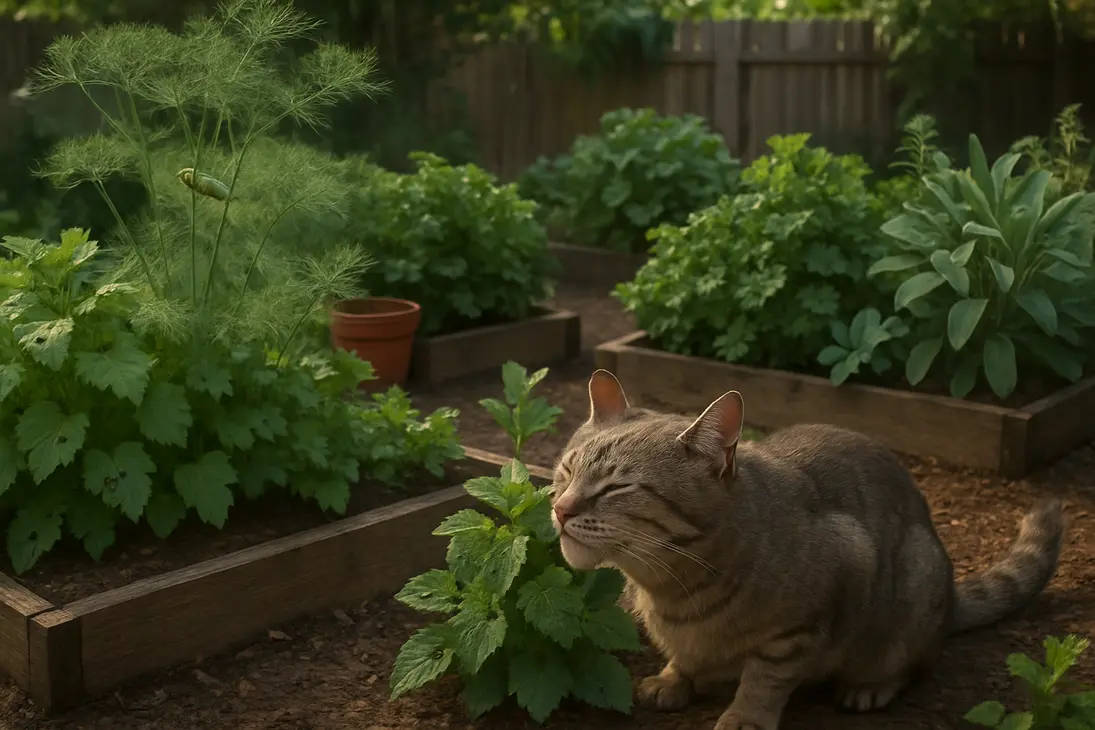
Yes—some animals eat, chew, inhale, or rub against plants, fungi, fruit, and plant chemicals that can change behavior. Cats reacting to catnip are the familiar example. Birds may become impaired after eating fermented berries. Wallabies have been reported in opium poppy fields, and reindeer are often linked with fly agaric mushrooms.
But “to get high” is hard to prove. Animals may be seeking food, medicine, parasite control, scent stimulation, play, or novelty. In gardens, chewed herbs are usually not evidence of intoxication-seeking wildlife. Caterpillars, grasshoppers, rabbits, deer, slugs, and pets eat herbs because they are edible, available, or useful host plants.
Do Animals Really Seek Out Psychoactive Herbs and Plants?
Some animals clearly respond to plant chemicals in ways that look euphoric, sedating, stimulating, or disorienting. The hard part is separating reaction from intent. A cat repeatedly seeking catnip is a stronger case than a deer nibbling sage once. A bird staggering after fermented berries may be intoxicated, but that does not prove it deliberately sought alcohol.
Animals live in chemical landscapes. Plants contain volatile oils, alkaloids, tannins, terpenes, and other compounds that affect taste, smell, digestion, parasites, and the nervous system. Some animals avoid these compounds; others tolerate or seek them.
What Counts as a Psychoactive Herb or Plant?
A psychoactive plant contains compounds that can affect the brain or nervous system. This can include:
- Aromatic herbs such as catnip, valerian, mint, sage, rosemary, and lemon balm.
- Alkaloid-containing plants such as poppies and some nightshades.
- Fermented fruits that contain alcohol.
- Fungi such as fly agaric mushrooms.
- Plants used for rubbing or scenting, even if little is eaten.
“Psychoactive” does not mean safe, pleasurable, or addictive. Depending on species and dose, plant chemicals can cause vomiting, tremors, incoordination, agitation, organ stress, or poisoning.
Accidental Exposure vs. Repeated, Purposeful Consumption
One accidental nibble means little. Repeated selection is more interesting. If an animal ignores other food, chooses one plant at a specific growth stage, and shows consistent behavior afterward, researchers can ask whether the plant provides reward, medicine, or another benefit.
Even then, purposeful use does not always mean recreation. An animal may eat a bitter plant because it affects parasites, digestion, minerals, or body odor.
Why “Getting High” Is Hard to Prove in Wild Animals
Humans can describe intoxication; animals cannot. Researchers must infer from behavior. Rolling, drooling, staggering, vocalizing, or unusual boldness may suggest intoxication, but it can also indicate illness, stress, mating, play, poisoning, heat, or scent response.
In the wild, observers may not know the dose, what else the animal ate, or whether the behavior happens regularly. The cautious answer is: some animals consume chemically active plants and sometimes show intoxication-like behavior, but clear proof of intentional recreational use is rare.
Well-Known Examples of Animals Consuming Mind-Altering Plants
The best examples combine known plant chemistry with repeated animal response. Others are plausible but often oversimplified.
Cats and Catnip, Silver Vine, and Valerian
Domestic cats are the clearest everyday example. Many react to catnip by sniffing, licking, chewing, rolling, rubbing, drooling, playing, or briefly relaxing. The response is usually short-lived, and not all cats respond.
Silver vine can trigger strong reactions, including in some cats that ignore catnip. Valerian root also attracts some cats because of its strong-smelling compounds.
Cats may seem to “get high,” but more precisely, they respond to volatile plant compounds through scent-related pathways. They often rub and roll more than they eat. Rubbing plant chemicals into fur may also help repel insects, so the behavior can be both rewarding and useful.
Reindeer and Fly Agaric Mushrooms
Reindeer and fly agaric mushrooms are a famous animal-intoxication story. Fly agaric contains compounds that can alter coordination and perception, and reindeer do eat mushrooms.
Still, reindeer consume many seasonal foods, including lichens, leaves, grasses, and fungi. Eating mushrooms does not prove they seek intoxication. The reasonable version is that reindeer may consume psychoactive mushrooms when available, and those mushrooms can affect behavior. The stronger claim—that they reliably seek them to get high—is harder to support.
Wallabies and Opium Poppies
Wallabies have been reported entering opium poppy fields, eating poppies, and moving oddly afterward. Because opium poppies contain powerful alkaloids, ingestion could plausibly affect behavior.
But crop feeding has many possible causes: tender growth, abundance, moisture, cover, and novelty. Intoxication may be a side effect rather than the original goal. This example shows why “animal drug use” stories can be plausible but too simple.
Elephants, Monkeys, and Fermented Fruit
Stories about elephants getting drunk on fermented fruit are popular. Fruit can ferment and contain alcohol, but large animals would need a large amount of sufficiently fermented fruit to become drunk. Some reports may involve other factors, including human alcohol or misread behavior.
Smaller fruit-eaters, such as monkeys, bats, and birds, encounter fermented fruit more often and may be more affected. Alcohol odor may help animals locate ripe fruit, but seeking ripe fruit is not the same as deliberately seeking drunkenness.
Birds and Other Animals Eating Intoxicating Berries or Plants
Birds provide some of the clearest accidental intoxication cases. Waxwings, robins, and other berry-eating birds may consume overripe or fermented fruit and then show impaired flight, collisions, wobbling, or unusual tameness. This often happens when fruit freezes and thaws or ferments during warm spells.
Other animals can be affected by fermented fruit, nectar, sap, or toxic plants. Usually, the food is abundant and sweet, and intoxication is a side effect.
Why Animals Eat Strong-Smelling or Chemically Active Herbs
When animals eat herbs, the plant’s chemistry may matter—but not always because it is intoxicating.
Self-Medication and Parasite Control
Some animals use plants in ways that appear medicinal. Certain primates swallow rough leaves that may help move intestinal parasites through the gut. Birds may add aromatic plants to nests, possibly to reduce parasites or microbes. Mammals may chew bitter or tannin-rich plants during digestive trouble.
This is often called self-medication, though animals do not need human-like medical understanding. Natural selection can favor behaviors that reduce parasites, ease discomfort, or improve survival.
Sensory Reward and Play-Like Behavior
Some plant interactions look more like sensory play than feeding. Cats with catnip may roll, rub, chew briefly, and leave. Dogs may mouth mint because it smells interesting. Rabbits may sample lemon balm because it is tender and fragrant.
Pleasure and usefulness can overlap. A scent can be rewarding while also masking odor or discouraging insects.
Nutritional or Digestive Reasons
Many herbs are simply edible leaves. Dill, parsley, cilantro, basil, fennel, mint, and lemon balm are soft, green, moist, and nutrient-rich compared with tougher foliage. To a caterpillar or rabbit, that is lunch.
Animals may also eat plants for fiber or digestive stimulation. Dogs and cats sometimes nibble greens. Chickens peck herbs while foraging. Deer browse widely and may include herbs when other foods are scarce or young growth is tender.
When Plant Chemicals Become Toxic
Natural does not mean safe. Species differ sharply in what they tolerate. A plant harmless to one animal may irritate or poison another. A small culinary amount may be safe, while a large amount is not. Concentrated essential oils are especially risky for pets and are not equivalent to fresh leaves.
Warning signs after plant ingestion include vomiting, diarrhea, drooling, lethargy, tremors, weakness, agitation, breathing trouble, or poor coordination. If a pet eats an unknown plant or develops symptoms after eating herbs, contact a veterinarian or poison-control service.
How Scientists Tell the Difference Between Food, Medicine, and Intoxication
No single behavior proves an animal is eating a plant to get high. Stronger cases combine repeated observation, known chemistry, dose, and consistent effects.
Repeated Selection of the Same Plant
Repeated selection matters. If an animal ignores abundant food and repeatedly chooses a chemically active plant, that suggests the plant is doing something important.
Useful patterns include:
- Repeated choice of the same plant or plant part.
- Selection at certain seasons or growth stages.
- Predictable behavior after consumption.
- Attraction in some animals but avoidance in others.
In gardens, repeated damage can also reflect pest specialization. Black swallowtail caterpillars commonly feed on carrot-family plants such as dill, parsley, and fennel. That is host-plant biology, not intoxication.
Behavioral Changes After Consumption
Behavior after consumption helps, but it is easy to misread.
| Observation | What it may suggest | What it does not prove by itself |
|---|---|---|
| Rolling or drooling after smelling a plant | Scent-triggered response | Intent to get high |
| Staggering after fermented fruit | Possible intoxication | Seeking alcohol |
| Chewing bitter plants during illness | Possible self-medication | Safety for all animals |
| Holes in mint, sage, or lemon balm | Insects, slugs, or browsing | Psychoactive use |
| Deer eating “deer-resistant” herbs | Hunger or pressure | No deterrent value |
Dose, Season, and Availability
Dose changes everything. A few bites of an herb may do little; a large amount of fermented fruit or toxic foliage may cause serious impairment. Hungry animals take more risks, and young spring growth is usually more palatable than older, tougher leaves.
Availability can also mislead observers. If poppies, mint, or parsley are abundant, animals may eat them simply because there is a lot to eat. If a rare plant is repeatedly selected, that is more suggestive.
What Anecdotes Can and Cannot Tell Us
Anecdotes are useful for noticing patterns, not proving motive. Gardeners often report surprising herb damage online, such as caterpillars destroying dill and moving to parsley, or holes and translucent patches on lemon balm, mint, and sage. These are real observations, but the likely causes are feeding insects or leaf-mining damage, not animals seeking a high.
The same caution applies to viral animal stories. To interpret them, you need plant identification, dose, repeated behavior, and alternative explanations.
When Animals Eat Garden Herbs: Usually Not Psychoactive
For gardeners, the practical answer is simple: animals eating herbs are usually feeding, browsing, nesting, or exploring. Chewed dill is more likely a caterpillar host plant than a wildlife drug attraction.
Common Herb-Eaters: Caterpillars, Grasshoppers, Rabbits, Deer, and Pets
Damage patterns can identify the culprit:
- Caterpillars leave chewed edges, missing fronds, dark droppings, and rapid defoliation.
- Grasshoppers make ragged holes and may strip leaves in hot, dry weather.
- Slugs and snails leave irregular holes and slime trails.
- Rabbits make clean, angled cuts low on the plant.
- Deer tear leaves and stems, leaving rough ends higher up.
- Pets may nibble, dig, roll, or knock over catnip, valerian, mint, or cat grass.
Check damage height, droppings, slime, frass, tracks, and timing before choosing a control method.
Why Dill, Parsley, Mint, Sage, and Lemon Balm Get Chewed
Strong smell does not make herbs pest-proof.
Dill and parsley attract certain caterpillars because they are carrot-family plants. If you grow herbs for butterflies, some chewing is expected.
Mint and lemon balm have aromatic oils but still have tender edible leaves. Flea beetles, leaf miners, caterpillars, and browsing animals may damage them.
Sage is fuzzy and strongly scented, so many animals avoid it. But hungry deer, grasshoppers, or insects may still sample it.
Are Any Herbs “Animal-Proof”?
No herb is truly animal-proof. Some are less likely to be eaten, especially when mature and woody, but hungry wildlife can surprise you.
Often less-browsed herbs include rosemary, thyme, lavender, oregano, marjoram, mature sage, chives, and garlic chives. Young transplants are more vulnerable than established plants, and local wildlife pressure matters.
Safer Ways to Protect Herbs Without Harming Wildlife
Start with observation and physical protection.
- Use mesh or row cover over young herbs.
- Handpick caterpillars only if needed, and consider leaving butterfly larvae if you can spare the plant.
- Grow extra dill, parsley, or fennel for both harvest and wildlife.
- Raise vulnerable herbs in pots on shelves, tables, or enclosed patios.
- Fence for rabbits and deer where browsing pressure is high.
- Avoid essential oils in the garden, as they can harm insects, pets, and plants.
- Identify the pest before treating, because slugs, caterpillars, and deer need different solutions.
The goal is to protect enough of your herbs while accepting that some leaves support local wildlife.
Conclusion
Animals do consume chemically active plants, and some plants can alter behavior. Cats respond to catnip, birds may become impaired by fermented berries, and wildlife may encounter poppies, mushrooms, or other strong compounds.
But animals eating herbs are not necessarily trying to get high. The behavior may involve self-medication, parasite control, scent rubbing, ordinary feeding, curiosity, or accidental intoxication. In gardens, herb damage is usually caused by insects, rabbits, deer, slugs, or pets—not recreational drug-seeking.
FAQ
Do Cats Eat Catnip to Get High?
Cats react to volatile compounds in catnip through scent pathways. Many roll, rub, chew, drool, play, or relax. Calling it a “high” is understandable casually, but scientifically it is a temporary species-specific response. Not all cats respond.
Are Wild Animals Intentionally Looking for Drug-Like Effects?
Sometimes it is possible, but it is difficult to prove. Repeated plant choice plus consistent behavior afterward is stronger evidence than one strange incident. Many cases involve food, self-medication, scarcity, parasite control, or accidental exposure.
Can Herbs Be Dangerous to Pets or Wildlife?
Yes. Many culinary herbs are safe in small amounts for some animals, but species and dose matter. Essential oils are much riskier than fresh leaves. If a pet develops vomiting, drooling, tremors, weakness, agitation, diarrhea, or poor coordination after eating a plant, contact a veterinarian.
What Is Most Likely Eating My Garden Herbs?
Common culprits are caterpillars, grasshoppers, slugs, rabbits, deer, and pets. Dill and parsley often feed caterpillars. Mint, lemon balm, and sage may show insect or browsing damage. Look for droppings, slime trails, ragged holes, clean-cut stems, and damage height.
Sources
- Reddit gardening discussion on caterpillars eating dill and parsley: https://www.reddit.com/r/gardening/comments/w8r1no/help_caterpillers_are_eating_my_herbs_they
- Reddit gardening discussion on holes in lemon balm, mint, and sage: https://www.reddit.com/r/gardening/comments/16fef2x/what_is_eating_my_herbs
You Might Also Like