Do Garden Plants Need Fertilizer to Thrive?
Garden plants need nutrients to grow, flower, fruit, and handle stress. But that does not mean every garden automatically needs fertilizer.
The practical answer to fertilizer necessity garden care is this: fertilizer is necessary only when soil or potting mix cannot supply enough nutrients for the plants you are growing. Healthy in-ground beds with compost, mulch, and moderate-feeding plants may need little added fertilizer. Vegetable beds, containers, sandy soils, raised beds, and intensively planted spaces often need more support.
The goal is not to fertilize more. The goal is to fertilize accurately.
Do Plants Actually Need Fertilizer?
Plants need nutrients, water, air, light, and suitable temperatures. Fertilizer is one way to supply nutrients, but it is not a cure for every plant problem.
In nature, nutrients recycle through leaves, roots, animal waste, fungi, and decaying organic matter. Gardens often interrupt that cycle by removing debris, harvesting crops, using containers, or growing heavy feeders close together. In those situations, nutrients may need replacement.
What fertilizer does for plants
Fertilizer supplies plant nutrients in concentrated form. Most labels list three main nutrients: nitrogen, phosphorus, and potassium, often called NPK.
- Nitrogen supports leafy growth and vigor.
- Phosphorus supports roots, flowering, fruiting, and energy movement.
- Potassium helps with water regulation, stress tolerance, and plant function.
Plants also need smaller amounts of calcium, magnesium, sulfur, iron, manganese, zinc, boron, copper, and molybdenum. Even minor nutrient shortages can affect growth.
Fertilizer is especially useful for annual vegetables, container plants, and heavy-blooming flowers because they use nutrients quickly. A tomato in a pot can only draw from the limited nutrients in that mix. Once nutrients are used or washed out, growth slows unless they are replaced.
When plants can grow well without added fertilizer
Plants can grow well without fertilizer when soil already has enough available nutrients, good structure, drainage, and biological activity.
You may not need regular fertilizer if:
- Your soil receives compost, leaf mold, aged manure, or organic mulch.
- You grow native plants, herbs, shrubs, or perennials adapted to leaner soils.
- Plants are green, sturdy, flowering normally, and producing well.
- A soil test shows adequate nutrients.
- Organic matter is left or returned to the garden.
Some plants do worse in rich soil. Mediterranean herbs such as rosemary, thyme, oregano, and lavender often prefer lean, well-drained conditions. Some native wildflowers may grow too lush or bloom less when overfed.
Why “more fertilizer” does not always mean healthier plants
Fertilizer is not plant medicine. Too much can cause:
- Root or leaf burn.
- Soft, pest-prone growth.
- Fewer flowers because the plant makes leaves instead.
- Nutrient imbalances.
- Salt buildup in containers and raised beds.
- Waste and runoff.
A weak plant may be struggling from poor light, watering problems, compacted soil, heat, transplant shock, pests, disease, or poor drainage. Fertilizer will not fix those issues and may make them worse.
How to Tell If Your Garden Needs Fertilizer
The best approach is to combine plant observation with soil knowledge. Symptoms help, but they are not always specific. Yellow leaves, for example, may mean low nitrogen, overwatering, underwatering, cold soil, root damage, or normal leaf aging.
Common signs plants may need nutrients
| What you notice | Possible nutrient issue | Other causes to rule out |
|---|---|---|
| Pale or yellow older leaves | Nitrogen shortage | Overwatering, compacted soil, root problems |
| Purple tint on leaves | Phosphorus shortage or poor uptake | Cold soil, transplant stress |
| Brown leaf edges, weak stems | Potassium shortage | Drought, salt buildup, wind scorch |
| Yellowing between veins | Iron, magnesium, or micronutrient issue | High pH, root stress |
| Lots of leaves, few flowers or fruits | Too much nitrogen | Low light, heat, immature plant |
| Stunted growth | General nutrient shortage | Pests, poor soil, low light, cold |
Look at the whole plant before fertilizing. If one plant is struggling while nearby plants of the same type look healthy, the issue may be roots, watering, pests, or planting depth rather than a general soil deficiency.
Why a soil test is the best starting point
A soil test is the most reliable way to know what your garden needs. It can show nutrient levels, pH, and sometimes organic matter. Soil pH matters because nutrients may be present but unavailable if pH is too high or too low.
Testing helps you avoid adding nutrients your soil already has. For in-ground vegetable beds, lawns, perennial borders, and new garden areas, testing every few years is usually enough unless plants show serious problems.
Containers are different: potting mix is limited, nutrients leach out, and regular feeding is often more necessary. If you cannot test right away, start with compost, observe growth, and use a mild fertilizer only when the plant type and symptoms support it.
Heavy feeders vs. low-feeding plants
Some plants need far more nutrients than others.
| Plant group | Feeding need | Practical approach |
|---|---|---|
| Tomatoes, peppers, corn, squash, cucumbers | High | Compost plus fertilizer during active growth |
| Leafy greens | Moderate to high | Steady nitrogen without overdoing it |
| Annual flowers in containers | Moderate to high | Feed regularly because pots leach nutrients |
| Roses and heavy-blooming perennials | Moderate | Feed during active growth |
| Thyme, rosemary, sage | Low | Avoid rich, wet, heavily fertilized soil |
| Native plants | Low to moderate | Often need little once established |
| Established shrubs and trees | Low to moderate | Fertilize only if growth or soil test suggests need |
| Lawns | Moderate to high | Use soil test and seasonal timing |
Vegetable gardens often benefit most from fertilizer because harvesting removes nutrients from the system. Ornamental beds with adapted perennials and shrubs usually need less.
Fertilizer vs. Compost: What’s the Difference?
Compost and fertilizer both help plants, but they work differently.
Compost is mainly a soil improver. Fertilizer is mainly a nutrient supplier.
What compost adds to the garden
Compost is decomposed organic matter made from materials such as leaves, grass clippings, kitchen scraps, plant debris, or aged manure.
Compost helps by:
- Improving soil structure.
- Helping sandy soil hold water and nutrients.
- Making clay soil easier to work.
- Feeding soil organisms.
- Supporting root growth.
- Adding small amounts of nutrients slowly.
- Improving moisture balance.
Compost is rarely a quick fix for severe deficiency, but it is one of the best long-term investments in soil health. Beds that receive compost regularly often need less fertilizer over time.
What fertilizer adds to the garden
Fertilizer adds specific nutrients in known amounts. It may be organic or synthetic, liquid or granular, fast-acting or slow-release.
Fertilizer is useful when:
- Plants need nutrients quickly.
- A soil test shows deficiency.
- Heavy feeders are growing rapidly.
- Container plants have depleted their mix.
- Compost alone is not enough.
The key advantage is precision. A fertilizer label gives a nutrient ratio, while compost varies depending on ingredients and maturity.
When to use compost, fertilizer, or both
For many gardens, the best approach is compost first, fertilizer as needed.
Use compost alone when soil is fertile, plants are low feeders, and growth is healthy.
Use fertilizer alone when plants are in containers or when a specific deficiency needs correction.
Use both for heavy-feeding crops, new beds, or gardens where you want long-term soil improvement and current-season production.
For example, a raised vegetable bed might get compost before planting and measured fertilizer for tomatoes during active growth. A native perennial bed may need only leaf mulch or a thin compost topdressing.
Choosing the Right Fertilizer for Garden Plants
The right fertilizer depends on the plant, soil, season, and goal. A product useful for leafy greens may be wrong for lavender. Lawn fertilizer may not suit tomatoes. A bloom booster will not help if the real issue is poor sunlight.
Understanding NPK: nitrogen, phosphorus, and potassium
The three numbers on a fertilizer package show the percentage by weight of nitrogen, phosphorus, and potassium.
For example:
- 10-10-10 has equal percentages of nitrogen, phosphorus, and potassium.
- 5-10-5 has less nitrogen and more phosphorus relative to nitrogen.
- 24-0-10 is high in nitrogen and contains no phosphorus.
Nitrogen is often needed because it moves through soil and is used heavily by plants. Phosphorus can build up, so adding high-phosphorus fertilizer without a soil test is not always wise.
More phosphorus does not automatically mean more flowers. If soil already has enough, extra may not improve blooming and can contribute to imbalance.
Organic vs. synthetic fertilizer
Both organic and synthetic fertilizers can grow healthy plants when used correctly.
| Type | Advantages | Trade-offs |
|---|---|---|
| Organic fertilizer | Often slow-release, supports soil biology, lower burn risk when used properly | Lower nutrient amounts, slower in cool soil, may smell or attract animals |
| Synthetic fertilizer | Fast-acting, precise, often inexpensive | Easier to overapply, can leach quickly, does not build soil structure |
Organic is not automatically safe, and synthetic is not automatically harmful. Dose, timing, plant need, and soil condition matter most.
Liquid, granular, slow-release, and specialty fertilizers
Different forms suit different situations.
- Liquid fertilizers act quickly and work well for containers, seedlings, and short-term feeding.
- Granular fertilizers are spread on or mixed into soil and may feed longer.
- Slow-release fertilizers release nutrients gradually, often useful in containers and ornamental beds.
- Specialty fertilizers are made for plants such as tomatoes, roses, citrus, acid-loving plants, orchids, or lawns.
Specialty products can help, but they are not magic. A tomato fertilizer may suit fruiting plants better than high-nitrogen lawn fertilizer, but many tomato problems come from inconsistent watering, root stress, rapid growth, or poor conditions rather than a simple nutrient shortage.
Matching fertilizer to the plant
Use plant type as a starting point:
- Vegetables: Compost plus vegetable fertilizer is often useful. Leafy crops need nitrogen; fruiting crops need balanced feeding without excessive nitrogen.
- Flowers: Annuals usually need more feeding than established perennials. Too much nitrogen can reduce blooms.
- Shrubs and trees: Fertilize only when growth is poor, leaves are pale, or testing shows need.
- Lawns: Follow seasonal lawn guidance and avoid guessing with phosphorus.
- Containers: Feed regularly because potting mix has limited nutrients and frequent watering leaches them out.
- Herbs: Many need little fertilizer; overfeeding can reduce flavor and create weak growth.
How to Fertilize Without Harming Your Garden
Fertilizer works best when used modestly, at the right time, and for the right reason. Overuse is one of the easiest ways to damage plants.
Follow the label and avoid over-fertilizing
Always read the label. It tells you how much to use, how to apply it, how often to repeat it, and whether it needs watering in.
Good habits include:
- Measure instead of guessing.
- Do not double the dose for a weak plant.
- Keep granules off leaves and stems unless directed.
- Avoid piling fertilizer against crowns, trunks, or roots.
- Use lower rates for young or sensitive plants.
- Record what you applied and when.
If unsure, use less. Mild underfeeding is easier to correct than fertilizer burn.
Don’t fertilize stressed, dry, or dormant plants unnecessarily
Plants under stress are not always ready to use fertilizer. Avoid fertilizing when soil is bone dry, plants are drought-wilted, roots are damaged, plants are dormant, a heat wave is underway, disease or pests are preventing growth, or soil is waterlogged.
A dry plant needs water first. A soggy plant needs oxygen around its roots. A plant in deep shade may need more light, not more nitrogen.
Fertilize during active growth, when plants have enough water, light, and root health to use nutrients.
Watering after fertilizer application
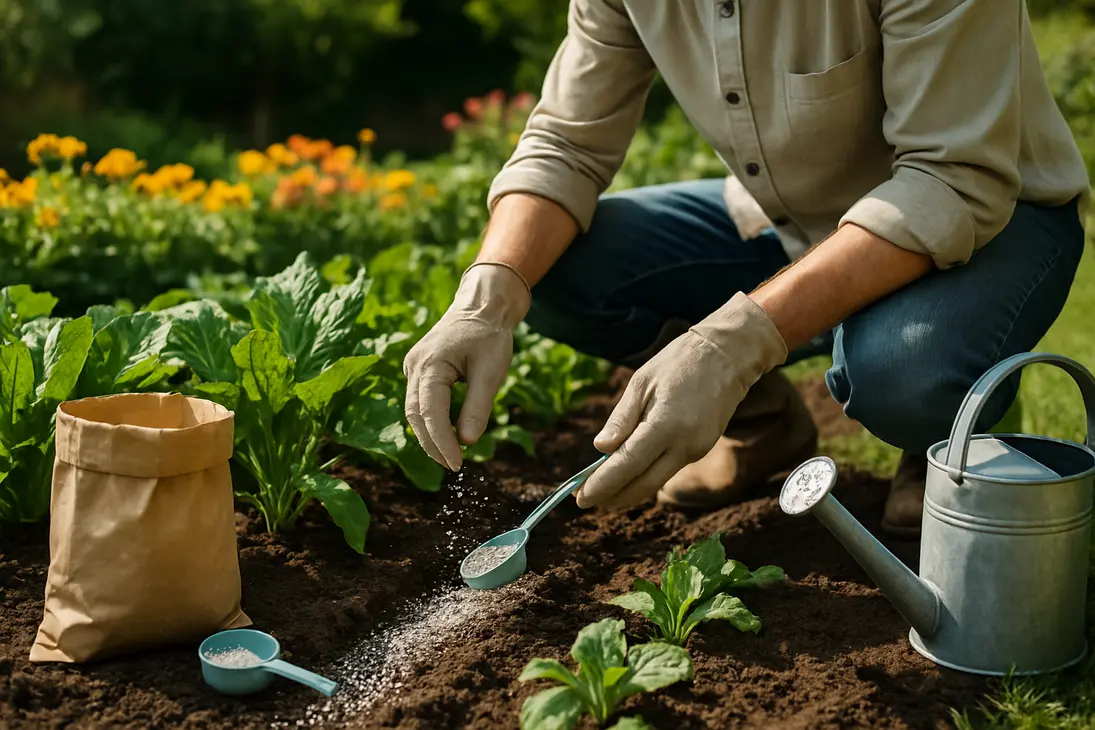
Many granular fertilizers need watering in so nutrients move into the root zone and burn risk is reduced. Liquid fertilizers are applied with water, but plants should not be severely dry before feeding.
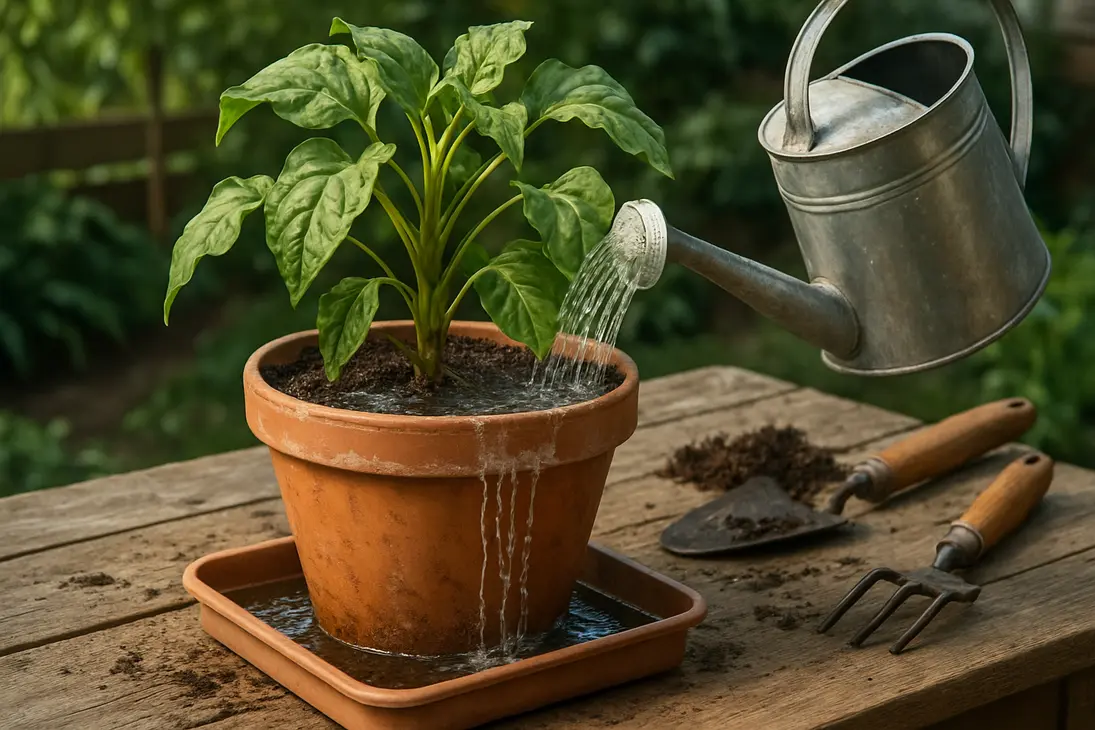
For in-ground beds, water gently after application unless rain is expected and the label allows it. For containers, water until the mix is evenly moist and let excess drain.
White crust on potting mix or around drainage holes can signal salt buildup. If appropriate for the plant, flush the pot with plain water, let it drain well, and reduce fertilizer frequency.
Common fertilizing mistakes beginners make
Common mistakes include:
- Fertilizing before identifying the real problem. Yellow leaves may be water stress, not nutrient shortage.
- Using lawn fertilizer on vegetables or flowers. It is often too high in nitrogen.
- Adding too much nitrogen to fruiting plants. This can mean large leafy plants with fewer fruits.
- Feeding too late in the season. Tender new growth may be vulnerable to cold.
- Assuming compost and fertilizer are interchangeable. Compost improves soil; fertilizer supplies concentrated nutrients.
- Ignoring pH. Nutrients may be present but unavailable.
- Using homemade mixtures carelessly. Fresh manure, scraps, or strong DIY brews can damage roots or attract pests.
A simple rule: build the soil, observe the plant, test when possible, and fertilize lightly when there is a clear reason.
Conclusion
Garden plants need nutrients, but fertilizer is not automatically required. Healthy soil with compost, mulch, organic matter, and biological activity can supply much of what many plants need. Low-feeding herbs, native plants, established shrubs, and well-managed perennial beds may need little or no added fertilizer.
Fertilizer is useful when nutrients are lacking, plants are heavy feeders, crops are grown intensively, or containers run out of nutrients. The safest approach is to observe growth, understand the plant, improve soil over time, and use a soil test when possible.
Fertilizer is a tool, not a requirement for every plant. Used thoughtfully, it supports strong growth, better flowering, and productive harvests. Used unnecessarily or heavily, it creates new problems.
FAQ
Is fertilizer necessary for a beginner garden?
Not always. A beginner garden may do well with good soil, compost, mulch, proper watering, and suitable plants. Fertilizer is more likely to help with vegetables, annual flowers, lawns, containers, poor soil, or new raised beds.
For beginners, compost plus a mild, balanced fertilizer used according to the label is usually safer than frequent heavy feeding.
Can compost replace fertilizer?
Sometimes. Compost improves structure, moisture balance, and soil life while adding small amounts of nutrients slowly. In fertile soil with low- or moderate-feeding plants, it may be enough.
For heavy-feeding vegetables, container plants, or confirmed deficiencies, compost may not supply nutrients quickly or predictably enough. In those cases, compost and fertilizer work well together.
How often should I fertilize garden plants?
It depends on the plant, soil, fertilizer type, and growing conditions. Containers need feeding more often than in-ground plants, and heavy-feeding vegetables need more than herbs or established shrubs.
Follow the product label, then adjust based on plant response. If plants are vigorous, green, and flowering or fruiting normally, they may not need more.
Is organic fertilizer better than chemical fertilizer?
Organic fertilizer can support long-term soil health because it releases nutrients slowly and pairs well with compost and mulch. Synthetic fertilizer can be useful when you need fast, precise nutrient correction.
Neither is automatically better. Choose based on your soil, plants, timing, and goals.
You Might Also Like