Why Are My Zinnia Petals Curling?
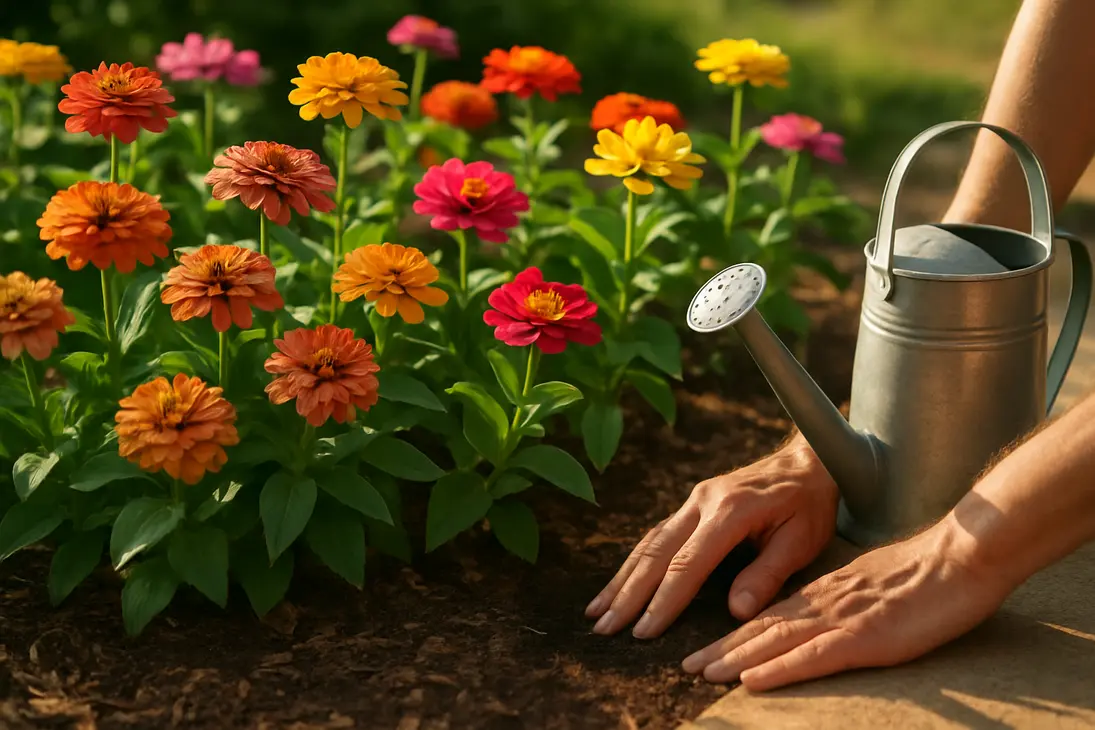
Curling zinnia petals usually mean the flower is reacting to stress, not that the whole plant is dying. Zinnias love sun and warmth, but their petals are thin and exposed, so they quickly show the effects of hot afternoons, dry air, wind, reflected heat, and uneven soil moisture.
Some curling is also normal as blooms age. Older zinnia flowers often fade, curl, dry at the edges, or become papery before they are ready to deadhead. The key question is whether only older blooms are curling or whether fresh flowers and buds are opening curled, scarred, or distorted.
What Curling Zinnia Petals Usually Mean
Most curling zinnia petals are caused by one of these issues:
- Heat and intense sun
- Low humidity, dry wind, or reflected heat
- Inconsistent soil moisture
- Normal bloom aging
- Less commonly, pests or disease
Zinnias are tough annuals, but “tough” does not mean stress-proof. Plants beside a hot wall, driveway, patio, gravel path, or metal fence may experience much more heat than the air temperature suggests. Container-grown zinnias also dry out faster than those in the ground.
Petals curl when they lose moisture faster than the plant can replace it. They may curl inward, twist, cup, crisp at the tips, or look uneven around the flower head.
Look at the whole plant. If only a few older flowers are curling, deadhead them and do not worry. If new blooms curl as soon as they open, check heat, watering, pests, and disease more carefully.
Heat, Low Humidity, and Sun Stress
Zinnias need full sun to bloom well, but extreme afternoon conditions can damage flowers. The problem is usually not sun alone; it is sun combined with high temperature, dry air, wind, and reflected heat.
A zinnia in open soil with morning sun may look fine, while one beside concrete or a white wall may have curled petals by late afternoon. Hard surfaces absorb and radiate heat. Walls trap warm air. Wind and low humidity pull moisture from petals faster than roots can replace it.
Curling often appears during:
- Heat waves
- Long dry spells
- Hot, windy afternoons
- Sudden temperature jumps
- Very low humidity
- Exposure to pavement, brick, gravel, siding, or walls
The plant may keep blooming, but flowers can become smaller, shorter-lived, faded, curled, or crisp until conditions improve.
Signs Your Zinnias Are Too Hot or Too Dry
Watch for patterns, especially changes between morning and afternoon.
| What you see | What it often means |
|---|---|
| Petals curl or cup in the afternoon | Heat or low humidity stress |
| Petal tips are dry or papery | Moisture loss from petals |
| Flowers fade quickly | Heat is shortening bloom life |
| Leaves droop late day but recover by morning | Temporary heat stress |
| Soil is very dry and lower leaves yellow | Repeated underwatering |
| Potting mix pulls from the pot edge | Container is drying too much |
| Plants near pavement look worse | Reflected heat is likely |
Check plants early in the morning and again late in the day. If they look better in the morning but tired by afternoon, heat and moisture stress are likely. Compare locations too: zinnias closest to walls, driveways, or patios often show the worst curling.
How to Give Temporary Relief Without Overwatering
When petals curl, it is tempting to water heavily every time. That helps only if the root zone is dry. Soggy soil can stress roots and encourage disease.
-
Check soil moisture first.
Push a finger 1 to 2 inches into the soil. If it feels dry, water. If it feels damp, focus on shade or heat exposure instead. -
Water deeply at the base.
Soak the root zone rather than sprinkling the flowers. Shallow watering encourages shallow roots and may leave the plant stressed again within hours. -
Water in the morning.
Morning watering gives roots moisture before the hottest part of the day and lets splashed foliage dry quickly. -
Use temporary afternoon shade.
During extreme heat, use shade cloth, a patio umbrella, or another light barrier to block harsh late-day sun. Keep airflow open. -
Move containers.
Potted zinnias can be shifted to morning sun and light afternoon shade during heat waves. Do not keep them in deep shade for long, or flowering may slow. -
Avoid misting in strong sun.
Misting rarely fixes root-zone moisture stress and can worsen flower aging or disease risk in humid conditions.
Already-damaged petals may not uncurl. The real test is whether the next blooms open cleaner after moisture and heat stress improve.
Watering and Soil Moisture Problems
Watering problems are one of the most common reasons zinnia flowers look stressed. Underwatering can cause curled petals, especially in heat, but uneven watering is also a problem. A plant that dries hard, gets soaked, then dries hard again may survive but produce shorter-lived or uneven blooms.
Zinnias prefer soil that drains well while staying reasonably even in moisture. In the ground, established plants can tolerate short dry spells. In containers, raised beds, sandy soil, or exposed sites, they need closer attention.
Soggy soil causes a different kind of stress. If roots sit in wet, poorly aerated soil, they may not take up water properly. The plant can wilt even while the soil is wet.
Be cautious if curling appears with:
- Persistently wet soil
- Yellowing lower leaves
- Mushy stems near the soil line
- Sour-smelling potting mix
- Fungus gnats around containers
- Wilting despite damp soil
Those signs mean you should improve drainage and water less often, not more.
How Often to Water Zinnias in Hot Weather
There is no perfect schedule for every garden. Soil type, plant size, container size, mulch, weather, and sun exposure all matter. Use the soil as your guide.
| Growing situation | Hot-weather watering approach |
|---|---|
| In-ground, loamy soil | Deep water about 1–3 times weekly as needed |
| Sandy or exposed beds | Check often; water when top 1–2 inches dry |
| Raised beds | Check every 1–2 days during heat |
| Small containers | May need daily watering |
| Large containers | Check daily in heat; water only as mix dries |
For in-ground zinnias, a slow soak is better than a quick sprinkle. For containers, water until excess drains from the bottom, then empty saucers so pots do not sit in water.
If plants wilt in the afternoon but recover by morning, they may simply be reacting to heat. If they are still wilted in the morning, the soil is probably too dry or the roots are stressed.
Mulch and Soil Tips to Keep Moisture Even
Mulch helps reduce petal curling caused by moisture swings. It keeps soil cooler, slows evaporation, and reduces stress on roots.
Good organic mulches include:
- Shredded leaves
- Straw
- Fine bark
- Compost
- Pine needles
Use about 1 to 2 inches and keep mulch slightly away from the main stem. Too much mulch piled against stems can hold excess moisture and increase rot risk.
Compost can help sandy soil hold moisture and improve heavy soil structure over time. Still, avoid compacted, soggy soil; zinnias need drainage and air around their roots.
For containers, use potting mix, not garden soil. If pots dry too quickly, choose larger containers, group pots together to reduce heat exposure, or move them away from reflective surfaces.
Rule Out Pests, Disease, and Flower Age
Heat and moisture stress are common, but they are not the only causes of curled zinnia petals. Inspect several flowers, including new blooms, old blooms, buds, and leaves. The pattern matters more than one damaged flower.
Check for Insects on Petals and Buds
Small insects can distort petals, especially if they feed on buds before flowers open. Thrips are a common suspect when petals look streaked, scarred, silvery, browned, or oddly twisted. Aphids may cluster on tender stems and buds. Spider mites usually affect leaves first, but severe infestations weaken the whole plant.
Look for:
- Tiny insects inside flowers or buds
- Black specks on petals
- Silvery streaks or scarring
- Sticky residue from aphids
- Clusters of soft-bodied insects
- Fine webbing under leaves
- Speckled or bronzed leaves
To check for thrips, tap a flower over white paper and look for tiny moving specks.
For light problems, remove badly damaged blooms, spray aphids off with water in the morning, and avoid unnecessary broad insecticides. If using insecticidal soap, follow the label and do not spray heat-stressed plants in strong sun.
Look for Spots, Mildew, or Misshapen New Growth
Disease usually affects leaves as much as, or more than, petals. Zinnias commonly get powdery mildew, which appears as a white or gray powdery coating on leaves and stems. It does not usually cause simple petal curling by itself, but a weakened plant may produce poorer flowers.
Watch for:
- White powdery leaves
- Brown or purple leaf spots
- Yellowing with spotting
- Blackened or rotting stems
- Buds that fail to open
- Flowers misshapen from the start
- Distortion in leaves, stems, and buds
If disease is present, improve airflow. Crowded zinnias stay humid longer after rain or watering, which encourages fungal problems. Remove badly affected leaves or plants if needed. Avoid overhead watering late in the day; wet leaves overnight are more vulnerable to disease.
When Curling Is Just an Old Bloom
Zinnia flowers naturally decline. As a bloom ages, petals may fade, curl inward or backward, dry at the edges, and look dull or papery.
Old-bloom curling is normal if:
- The flower looked good when it opened
- Only older blooms are affected
- New buds and fresh flowers look healthy
- Leaves are not badly wilted, spotted, or distorted
- The plant keeps growing and blooming
Deadhead spent flowers by cutting or pinching back to a leaf node or side stem. This keeps the plant tidy and encourages more buds. If you are saving seed, leave some blooms to mature; they will naturally become dry, curled, and brown.
How to Prevent Zinnia Petals From Curling Again
You cannot prevent every heat-related curl, but you can make zinnias more resilient with steadier moisture, better placement, and good airflow.
Choose the planting site carefully. Zinnias need sun, but in very hot climates, morning sun with some late-day protection may produce better-looking flowers than a site that bakes beside concrete all day. If current plants are near a heat-reflecting wall or driveway, plant future zinnias farther from that surface.
Water deeply at the base when the top 1 to 2 inches of soil dry out. Avoid frequent light sprinkling, which wets the surface but does not support deeper roots. Morning watering is usually best.
Spacing also matters. Crowded zinnias compete for water and have poor airflow, increasing stress, mildew, and pest problems. Follow spacing guidance for the variety; compact bedding zinnias need less room than tall cutting types.
To reduce future curling:
- Water deeply when soil begins to dry.
- Mulch beds to even out soil moisture.
- Deadhead old curled blooms.
- Space plants for airflow.
- Avoid overhead watering in hot afternoons.
- Move containers away from reflected heat during heat waves.
- Use temporary shade only during extreme conditions.
- Check buds and petals weekly for pests.
- Remove severely diseased foliage or plants.
For containers, a larger pot often helps. Small pots heat and dry quickly, making curling more likely. Use containers with drainage holes and quality potting mix. Light-colored pots may stay cooler than dark pots in full sun.
During extreme heat and very low humidity, some curling may happen no matter what you do. The goal is to keep the plant healthy so the next flush of blooms looks better when conditions improve.
Conclusion
Curling zinnia petals are most often caused by heat, low humidity, intense sun, dry wind, or inconsistent soil moisture. Flowers may show stress before the rest of the plant does, especially in containers or reflected-heat locations.
Check the soil, note when symptoms appear, and see whether new blooms or only old blooms are affected. Water deeply when the root zone is dry, mulch to keep moisture even, and use temporary shade during extreme heat without making the soil soggy.
Also inspect for thrips, aphids, mildew, leaf spots, and distorted new growth. If only older flowers are curling, it is probably normal aging. Deadhead them and watch the next blooms.
With steadier watering, good airflow, and some heat protection, new zinnia flowers usually open with better shape and last longer.
FAQ
Should I remove zinnia flowers with curled petals?
Yes, remove them if they are old, faded, crispy, or unattractive. Deadheading encourages more blooms and makes it easier to see whether fresh flowers are also curling.
If a newly opened flower is slightly curled but the plant looks healthy, you can leave it. Remove blooms that are badly damaged by pests or disease.
Can curled zinnia petals uncurl after watering?
Sometimes mild, recent curling relaxes after watering and cooler temperatures. However, petals that are crisp, papery, browned, or distorted usually will not return to a perfect shape.
Watch the next blooms. If they open normally after you improve watering or reduce heat stress, the issue is likely corrected.
Do zinnias need shade in extreme heat?
Zinnias generally need full sun, but temporary afternoon shade can help during extreme heat, especially in hot, dry climates or reflected-heat spots. Use light shade with good airflow, not deep shade.
In very hot regions, morning sun with late-day protection may work well. In mild climates, too much shade can reduce blooms and increase disease pressure.
Are curling petals a sign my zinnias are dying?
Not usually. Curling petals alone more often indicate flower stress or bloom age. If leaves are green, stems are firm, and new buds are forming, the plant can likely keep blooming.
Be more concerned if curling appears with severe wilting, yellow leaves, soggy soil, stem rot, heavy pest damage, mildew, or distorted new growth.
You Might Also Like