Why Are My Aloe Vera Leaves Pale, Floppy, or Not Growing Well?
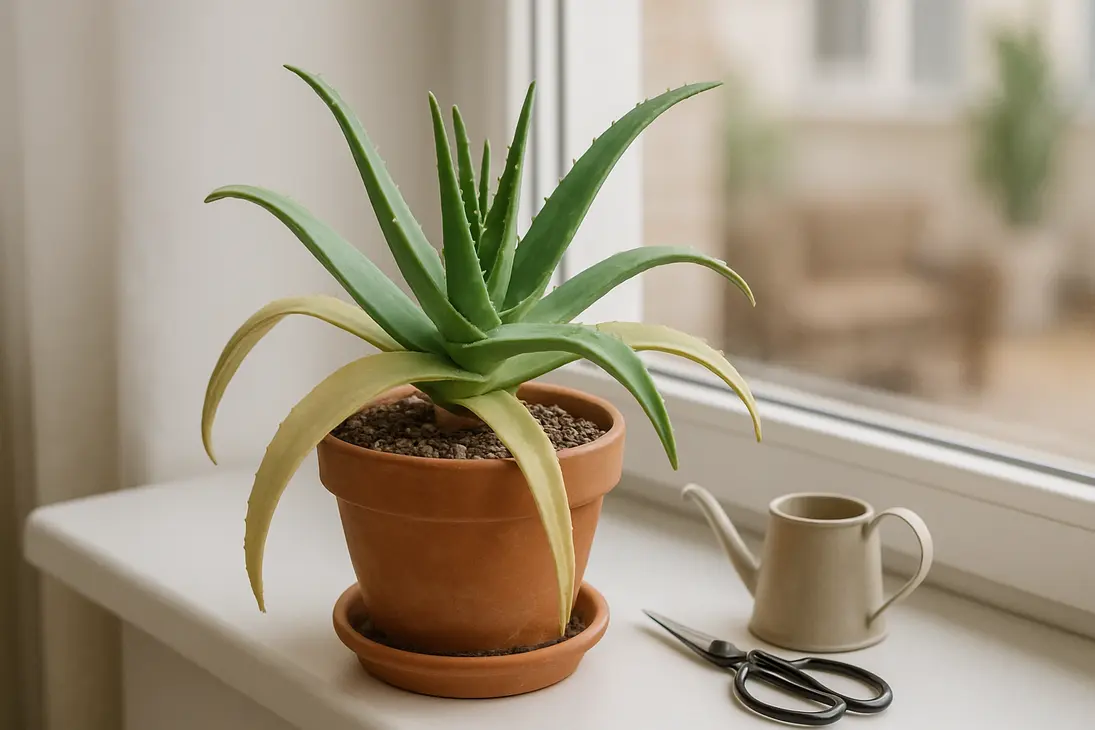
Pale, floppy aloe vera leaves are usually a sign of stress, not a separate problem called “weak growth.” Aloe vera struggles when light, watering, drainage, roots, temperature, or pot size are wrong.
Because aloe leaves store water, they show stress quickly. They may fade, bend, wrinkle, thin, turn red or brown, soften, or collapse at the base. If the roots and crown are still firm, aloe vera can often recover, though old damaged leaves may stay scarred or misshapen.
Is Weak Growth Really What Causes Pale, Floppy Aloe Leaves?
Weak growth does not usually cause pale or floppy leaves by itself. Pale, limp, or drooping leaves mean the plant is failing to make or store energy and water properly.
Healthy aloe leaves stay firm when the plant has enough light, working roots, breathable soil, and stored moisture. When one part of that system fails, growth weakens.
Common patterns include:
- Too little light: pale, stretched, floppy growth
- Too much water: soft leaves and damaged roots
- Too little water: thin, curled, wrinkled leaves
- Poor soil: roots staying wet too long
- Cold or sun shock: bleached, red, brown, or mushy patches
So the better question is not “Why is my aloe weak?” but “What stress is making it weak?”
What Healthy Aloe Vera Growth Looks Like
A healthy aloe vera usually has thick, fleshy leaves; a firm feel; green to blue-green color; and new upright leaves emerging from the center rosette. The base should feel stable, not loose or mushy, and the soil should dry between waterings.
Some aloe plants naturally arch outward or have lighter, spotted, or gray-green leaves. Judge recovery by new center growth, not by old damaged leaves.
How Leaf Color, Firmness, and Shape Reveal the Problem
Aloe symptoms are useful clues:
- Pale and stretched: usually low light
- Soft and mushy: overwatering, rot, or cold damage
- Thin and curled inward: thirst or root loss
- Red, bronze, or brown patches: sun, heat, cold, or drought stress
- Bending from the middle: weak, light-starved growth
- Collapsing at the base: possible crown or root rot
Do not water automatically. A plant with rotten roots may look thirsty because it cannot absorb water, even if the soil is wet.
The Most Common Causes of Aloe Vera Leaf Problems
Most aloe problems happen when the plant is treated like a leafy tropical houseplant. Aloe vera is a succulent: it wants bright light, fast drainage, and dry periods between waterings.
Too Little Light
Low light is one of the most common reasons aloe becomes pale, floppy, thin, or stretched. Indoors, a plant far from a window may survive but slowly lose strength, leaning toward light and producing long, narrow leaves.
Aloe usually does best near a very bright window, such as a sunny south- or west-facing window in many homes, or a bright east-facing window. A grow light can help in darker rooms. Move a low-light aloe brighter gradually.
Too Much Direct Sun or Sudden Sun Exposure
Aloe likes bright light, but an indoor or shade-grown plant can burn if moved straight into strong outdoor sun. Sun stress may cause bleached patches, red or bronze color, dry brown spots, crispy tips, or scarred leaves.
Sunburned tissue will not turn green again. Move the plant into gentler light and reintroduce direct sun slowly, starting with morning sun or bright shade.
Overwatering and Waterlogged Roots
Overwatering makes aloe leaves soft, limp, yellowish, translucent, or mushy. The real problem is oxygen loss around the roots. Wet soil suffocates roots, then rot prevents the plant from absorbing water.
Warning signs include damp soil for many days, a loose base, sour smell, black or slimy roots, and leaves collapsing from the base. If the crown feels mushy, stop watering and check the roots.
Underwatering and Shriveled Leaves
Aloe vera tolerates drought, but not forever. When it uses up stored moisture, leaves become thinner, wrinkled, curled inward, or flexible instead of firm. Tips may turn dry and brown, especially in heat or strong sun.
Do not fix this with frequent small sips. Water thoroughly until excess drains out, then let the mix dry well before watering again.
Poorly Draining Soil
Even careful watering can fail in heavy soil. Regular potting mix often holds too much moisture indoors. Aloe does best in a gritty cactus or succulent mix, often improved with pumice, perlite, coarse sand, or similar mineral amendments.
Dense, muddy, peat-heavy soil can cause persistent dampness, fungus gnats, sour smell, root rot, pale limp leaves, and slow growth.
Pot Size and Drainage Problems
Aloe needs drainage holes. A decorative cachepot is fine only if the plant sits in an inner pot with holes and excess water is emptied.
Oversized or deep pots hold extra wet soil around small roots. Extremely cramped pots packed with pups may dry too fast and restrict growth. Choose a stable pot only slightly larger than the root ball, preferably wider rather than very deep.
Cold Stress or Temperature Shock
Aloe vera is sensitive to cold and especially frost. Cold stress can cause gray, brown, translucent, limp, or mushy tissue. Chilly windowsills, cold drafts, and sudden indoor-outdoor moves can also stress the plant.
Keep aloe away from freezing temperatures, cold glass, heaters, and drafty doors.
How to Diagnose Your Aloe Vera by Leaf Symptoms
Use leaf symptoms as clues, then confirm by checking soil moisture, light exposure, and roots.
| Leaf symptom | Likely causes | First check | Best next step |
|---|---|---|---|
| Pale leaves | Low light, sun bleaching, overwatering | Light and soil | Adjust light; check moisture |
| Floppy leaves | Low light, overwatering, weak roots | Firmness and roots | Improve light; inspect if soft |
| Thin growth | Low light, crowding | New growth | Move brighter; remove pups |
| Mushy leaves | Rot, overwatering, cold | Base and roots | Stop watering; repot if needed |
| Crispy tips | Drought, sun, heat, salts | Soil and sun | Water correctly; reduce stress |
| Base collapse | Crown/root rot | Crown firmness | Unpot immediately |
Pale or Faded Leaves
Pale leaves most often mean low light, especially if growth is stretched. If leaves are pale and soft, suspect overwatering. If they have dry bleached patches after a move outdoors, suspect sunburn.
Move low-light plants closer to a bright window, avoid sudden midday sun, let wet soil dry, and inspect roots if pale leaves are also soft or collapsing.
Floppy, Limp, or Bending Leaves
Texture matters. Firm but bending leaves usually point to weak, light-starved growth. Soft, heavy, limp leaves suggest overwatering or root damage. Thin, wrinkled floppy leaves suggest drought or roots that cannot supply water.
Check the soil before watering. If the base is loose, soft, or mushy, inspect the roots.
Thin, Weak, or Leggy Growth
Thin, leggy aloe growth is usually caused by low light. The plant stretches and produces longer, narrower, less sturdy leaves.
Crowding can worsen this. Pups around the mother plant compete for space, water, and light. Increase light gradually, rotate the pot occasionally, and remove rooted pups if the container is packed. Fertilizer is not the first fix.
Soft, Mushy, or Translucent Leaves
Soft, mushy, or translucent leaves are serious warning signs. They often mean overwatering, root rot, crown rot, or cold injury.
If only one lower leaf is soft, it may be old or damaged. If several leaves are mushy or the base is soft, stop watering, unpot the plant, remove rotten roots and leaves, and repot only firm tissue into dry succulent mix.
Brown, Red, or Crispy Leaf Tips
Brown, red, or crispy tips can come from sun, drought, heat, cold, or mineral buildup. A slight red tint can be stress color, but crispy patches are permanent damage.
If the plant recently moved into sun, give it gentler light. If the soil is bone dry and leaves are thin, water thoroughly. If soil is wet and leaves are browning, check the roots.
Leaves Falling Over at the Base
Leaves collapsing where they meet the crown are more concerning than leaves bending from the middle. This often points to rot from frequent watering, heavy soil, no drainage, or cold wet conditions.
Unpot the plant, inspect roots and crown, remove rotten tissue, and save firm offsets if the mother plant is badly damaged.
How to Help a Struggling Aloe Vera Recover
Recovery comes from correcting the cause, not forcing fast growth. Aloe vera responds slowly, especially indoors. Old leaves may stay scarred or bent, while new center growth improves over weeks or months.
Move It to Brighter Light Gradually
If the aloe is pale, stretched, or floppy from low light, increase light in stages. Move it closer to a bright window, add gentle morning sun if available, and watch for bleaching or red stress color.
Do not move a dark-shelf aloe straight into harsh afternoon sun. If your home has no bright window, use a grow light.
Let the Soil Dry Before Watering Again
Aloe should not stay evenly moist. Water by soil dryness, not by the calendar. When the mix has dried well, water thoroughly until excess drains out, then wait for it to dry again.
Indoor aloe may need far less water in winter or low light. In warm bright conditions with gritty soil, it dries faster.
Check for Root Rot
Check roots if leaves are soft, yellowing, translucent, or collapsing. Healthy roots are firm and light tan to brown. Rotten roots are black, mushy, hollow, slimy, or smelly.
Remove old wet soil gently, cut away rotten roots with clean tools, keep only firm tissue, and avoid repotting into wet soil. If much root trimming was needed, wait before watering.
Repot Into Cactus or Succulent Mix
Repot into a fast-draining cactus or succulent mix. Add pumice or perlite if the mix still feels heavy. The goal is a medium that drains well and lets air return to the roots.
Repotting is especially useful if the current soil stays wet, the pot lacks drainage, roots show rot, or the plant is crowded with pups.
Choose a Wider Pot With Drainage
Choose a pot with drainage holes, a stable shape, and a size only slightly larger than the root ball. Aloe often does well in a wider pot rather than a very deep one.
Terracotta dries faster and can help in damp conditions, but plastic can work if the mix is gritty and watering is careful. Avoid large volumes of unused wet soil.
Remove Dead or Severely Damaged Leaves
Mushy, dead, or badly damaged leaves will not heal. Remove them with clean scissors or a clean knife, cutting close to the base without damaging healthy tissue.
Leave firm, green leaves if possible, even if they are bent or scarred. Aloe needs leaves to photosynthesize and rebuild energy.
Common Aloe Vera Growing Mistakes to Avoid
Most mistakes come from giving aloe the same care as moisture-loving houseplants. Avoid constant moisture, dark corners, poor drainage, and sudden exposure to harsh sun.
Watering on a Fixed Schedule
Do not water simply because a week has passed. Water needs change with season, light, pot size, soil mix, temperature, humidity, and root health.
Always check the soil first. A bright summer aloe may dry quickly; a dim winter aloe may stay damp for weeks.
Using Regular Heavy Potting Soil
Heavy regular potting soil often holds too much water for aloe, especially indoors. If you use it, amend it heavily with drainage materials, or choose a cactus/succulent blend.
Roots should not sit in dense, wet soil for days.
Keeping Aloe in a Dark Indoor Corner
Aloe may tolerate a dark corner for a while, but it will not thrive there. Pale, thin, floppy leaves are common results.
If the room is low light, rotate the plant to a brighter place periodically or use a grow light.
Moving It Into Harsh Sun Too Quickly
A weak indoor aloe can burn fast outdoors. Acclimate it gradually with bright shade or morning sun before stronger exposure.
Slight color change may be normal, but bleaching, crisping, or large brown patches mean the sun is too intense too soon.
Leaving Pups Crowded Around the Mother Plant
Aloe often produces pups. This is normal and useful for propagation, but too many pups can crowd the mother plant and compete for space, water, and light.
Remove pups once they have some roots and pot them separately in succulent mix.
Conclusion
Pale, floppy, or weak aloe vera leaves usually come from fixable stress. Check light, watering, drainage, and roots first.
Pale, stretched leaves need brighter light. Soft or mushy leaves call for less water and a root check. Thin, wrinkled leaves may need a thorough watering after the soil dries. Dense soil or pots without drainage should be replaced with a better succulent setup.
Be patient. Damaged leaves may not recover, but firm new center growth means the plant is improving.
FAQ
Can pale aloe vera leaves turn green again?
Sometimes. Leaves pale from low light may regain some color in brighter conditions. Sunburned, rotted, cold-damaged, or scarred areas usually will not turn green again. Watch the new center growth.
Should I cut off floppy aloe vera leaves?
Cut them off if they are mushy, dead, badly damaged, or rotting at the base. If they are still firm and green, leave them while the plant recovers. A bent leaf can still feed the plant.
How often should I water aloe vera with weak leaves?
Do not use a fixed schedule. Water only when the mix has dried well, then water thoroughly and let excess drain away. If weakness comes from overwatering or root rot, more water will make it worse.
Can aloe vera recover from overwatering?
Yes, if the crown is firm and enough healthy tissue remains. Remove wet soil, trim rotten roots, discard mushy leaves, and repot into dry, fast-draining succulent mix. If the crown is rotted, the mother plant may fail, but firm pups may survive.
Sources
- Quora gardener discussion on aloe cultivation and pups: https://www.quora.com/How-do-I-cultivate-aloe-vera
You Might Also Like