Can You Grow Amaryllis From Seeds From a Store-Bought Plant?
Yes, you can grow amaryllis from seeds produced by a store-bought plant if the seeds are mature and viable. The key factors are whether the flower was pollinated, whether the pod ripened fully on the plant, and whether each seed contains a real embryo instead of being an empty papery flake.
One important note: most store-bought “amaryllis” sold for winter bloom are actually Hippeastrum hybrids, commonly called amaryllis. They grow from seed, but seedlings will not be identical to the parent. A striped red-and-white plant may produce seedlings with different colors, markings, sizes, or forms. If you want an exact copy, use bulb offsets. If you enjoy surprises and can wait several years for flowers, Amaryllis seed propagation is worth trying.
Can Store-Bought Amaryllis Seeds Be Planted?
Store-bought amaryllis seeds can be planted if they came from a successfully pollinated flower and the seed pod matured before harvest. A purchased bulb is not finished after flowering; if it sets seed, those seeds can germinate like seeds from any other healthy plant.
The catch is that not every swelling pod contains viable seed. Some flowers form pods without full fertilization, some pods are removed too early, and some hybrid or double-flowered varieties have poor fertility.
Indoor plants often need hand-pollination because there are few natural pollinators indoors. If a pod developed and later split open on its own, your chances are much better.
Signs the Seeds Are Viable
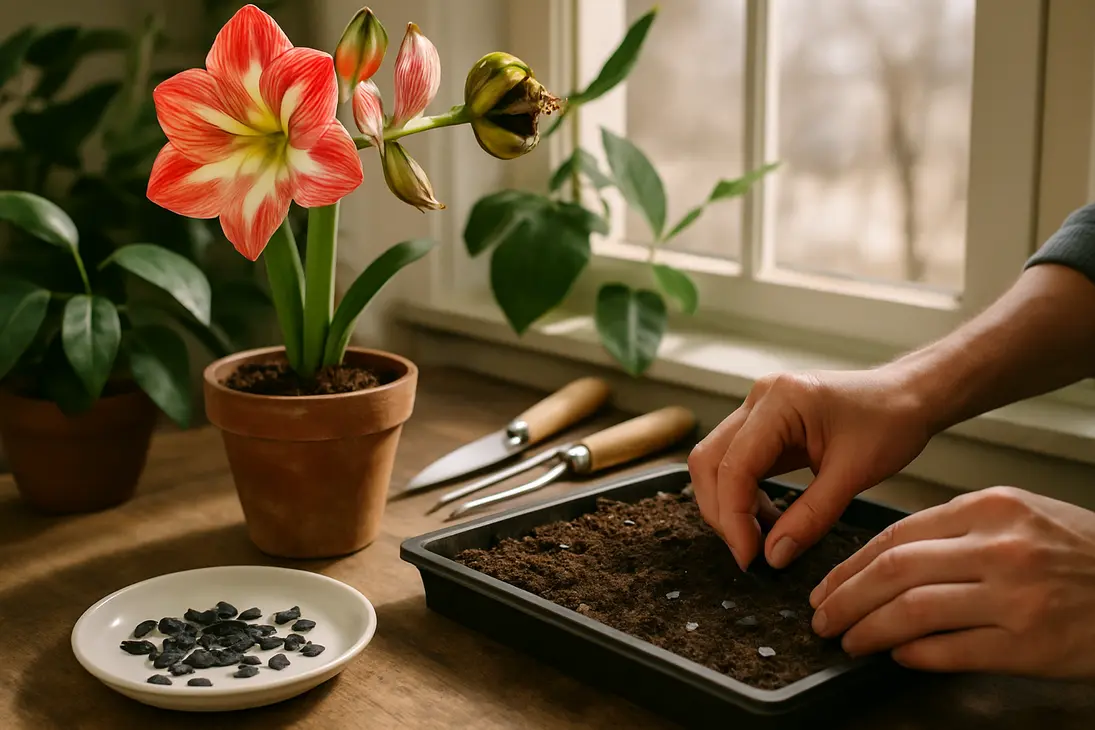
Viable amaryllis seeds are usually thin, papery, and dark, but each good seed should have a slightly thicker spot where the embryo sits.
Look for:
- A pod that split naturally. This is the best sign the seeds had time to mature.
- Dark papery seeds. Mature seeds are usually black or dark brown and wing-like.
- A small bump inside each seed. Hold seeds up to light or feel them gently. A viable seed usually has a tiny raised lump. Completely flat, translucent flakes are often empty.
Do not worry that the seeds look dry or fragile. Amaryllis seeds are naturally thin. The embryo bump is the important detail.
A simple test is to spread seeds on a white plate and sort them into two groups: seeds with a visible or touchable bump, and seeds that are completely flat. Plant the best ones first.
When Seeds May Not Grow
Seeds may fail if they were immature, unpollinated, old, moldy, planted too deeply, or kept too wet.
Common causes include:
- The pod was picked too early. A green, firm pod usually needs more time.
- The flower was never pollinated. Without fertilization, the seed coats may be empty.
- Seeds are pale, flat, dried out, or moldy. These often lack embryos.
- The cultivar has poor fertility. Some fancy hybrids and doubles do not set strong seed reliably.
Even if only a few seeds germinate, that can still be a success with home-collected seed from a store-bought plant.
How to Collect Amaryllis Seeds
Seed collection starts with pollination. After the flower opens, pollen must reach the stigma. If pollination succeeds, the petals fade and the ovary behind the flower swells into a pod.
Do not cut the flower stalk as soon as the blooms fade if you want seed. Leave it in place until the pod matures. This can take several weeks.
Seed production uses energy, so consider the bulb’s condition. A strong bulb with healthy leaves can usually support one pod. A weak, small, or depleted bulb may be better off rebuilding instead of making seed.
Pollination Basics
Indoor amaryllis often needs hand-pollination.
The flower parts to notice are:
- Anthers: These hold the yellow pollen.
- Stigma: This is the receptive tip of the female structure.
To hand-pollinate:
- Wait until the flower is fully open.
- Look for loose, powdery pollen.
- Use a small paintbrush, cotton swab, or fingertip to collect pollen.
- Dab pollen onto the stigma.
- Repeat for a couple of days while the flower is fresh.
The stigma is most receptive when it looks slightly open, glossy, or sticky. You can use pollen from the same flower, another flower on the same plant, or a different amaryllis. Cross-pollination increases genetic variation.
Harvesting the Seed Pod
After successful pollination, the pod at the base of the flower swells. Leave the stalk attached while the seeds develop.
A mature pod usually:
- Swells noticeably
- Fades from green toward yellow
- Dries slightly
- Cracks along the seams
- Splits open to reveal papery black seeds
Wait for the pod to split naturally if possible. Once it opens, collect the seeds promptly so they do not fall, scatter, or become damp and moldy.
Hold a bowl, paper towel, or envelope under the pod and remove the loose seeds. If the pod has opened but some seeds remain attached, let it dry indoors for a day or two in a clean, airy place, then remove the rest.
Fresh seed is best. Amaryllis seeds do not need weeks of drying, and long storage can reduce germination.
How to Plant Amaryllis Seeds
Amaryllis seeds germinate best when fresh, warm, and evenly moist but not waterlogged. You can sow them in seed-starting mix or sprout them first in water.
Do not plant them like bulbs. The seeds are thin and should be sown on the surface or barely covered.
Best Seed-Starting Method
For most growers, sowing directly into a light mix is easiest.
Use:
- A shallow tray, cell pack, or small pot with drainage holes
- Fresh seed-starting mix or fine, well-draining potting mix
- Clean water
- A warm, bright spot out of harsh direct sun
Steps:
- Moisten the mix first. It should be damp, not muddy.
- Lay seeds on the surface. Space them about an inch apart if possible.
- Barely cover them. A dusting of fine mix, vermiculite, or perlite is enough.
- Keep them warm. Avoid cold windowsills at night.
- Maintain even moisture. Mist gently or water from below.
- Provide bright indirect light. Light becomes more important once leaves appear.
A clear cover can help prevent drying, but ventilate it daily and remove it once seedlings are growing. Germination may be uneven, so give fresh, embryo-filled seeds time before discarding them.
Water Germination Option
Water germination lets you see which seeds are alive.
To try it:
- Fill a shallow dish with clean water.
- Float the seeds on the surface.
- Place it in a warm, bright spot out of strong sun.
- Change the water if it becomes cloudy.
- Watch for a small root.
- Move sprouted seeds into potting mix before roots tangle.
Handle sprouted seeds carefully. Make a small indentation in moist mix, place the root downward, and barely cover the root area. The papery seed coat can remain partly visible.
Water germination is useful, but neglected water can become stagnant, and delicate roots can be damaged during transfer.
Caring for Amaryllis Seedlings
Amaryllis seedlings start small, but each one is building a tiny bulb. The first-year goal is steady growth.
Unlike mature forced bulbs, seedlings should not be pushed into dry dormancy too soon. They need leaves, light, warmth, and regular moisture to build reserves.
Light and Water
Give seedlings bright indirect light as soon as they sprout. A bright window, filtered sunroom, or grow light can work. Weak light causes floppy leaves and slow bulb growth.
Aim for:
- Bright light for most of the day
- Protection from hot midday sun
- Consistent warmth
- Gentle airflow
Keep the mix lightly moist, not soggy. Tiny bulbs should not dry out completely, but saturated soil can rot new roots. Touch the surface before watering: if it is still damp, wait; if it is starting to dry, water lightly.
Do not fertilize heavily. Once seedlings have several leaves and are growing well, feed lightly with diluted balanced houseplant fertilizer.
Potting Up Young Bulbs
Seedlings can stay together until they become crowded or fill the container with roots. Transplant when they have several leaves, airflow is poor, or watering becomes difficult.
Use a well-draining potting mix, such as indoor potting mix amended with perlite.
When potting up:
- Lift seedlings gently.
- Keep roots as intact as possible.
- Plant each small bulb at the same depth.
- Do not bury the leaves or crown.
- Water lightly after transplanting.
- Keep them out of intense sun for a few days.
Let young bulbs keep growing as long as they remain active. The more healthy leaves they produce, the faster they can reach flowering size.
How Long Until Seed-Grown Amaryllis Blooms?
Seed-grown amaryllis usually takes 3 to 5 years to bloom. Some vigorous seedlings may flower sooner, while slower ones may take longer.
The timeline depends on light, warmth, nutrition, pot size, root health, genetics, and whether the plant is kept growing instead of forced into dormancy too early.
This long wait is the main trade-off of Amaryllis seed propagation. Seeds are inexpensive and interesting, but offsets are better if you want a clone that may flower sooner. The reward with seeds is variation: even seedlings from the same pod can bloom differently.
Common Mistakes in Amaryllis Seed Propagation
Most failures come from harvesting too early, planting old seed, burying seed too deeply, or keeping the mix soggy. Another common mistake is expecting hybrid seedlings to match the parent plant.
Mistakes to Avoid
Harvesting pods before they split
A green pod may contain immature seed. Wait until it yellows, dries, and cracks open naturally.
Letting seeds sit too long before planting
Fresh amaryllis seeds usually germinate best. If you must store them briefly, keep them dry, cool, and airy, not sealed damp in plastic.
Burying seeds too deeply
Sow seeds on the surface or barely cover them. Deep planting can cause rot or prevent weak shoots from reaching light.
Keeping soil constantly wet
Moist is good; swampy is not. Use drainage holes and a light mix. Algae, sour-smelling soil, or collapsing seedlings can mean conditions are too wet.
Expecting seed-grown plants to bloom quickly
Three to five years is normal. Do not discard healthy seedlings after one year just because they have not flowered.
Assuming seedlings will be exact clones of the parent
Seedlings from hybrid amaryllis can vary widely. Use offsets if you want an identical plant.
Here is a quick troubleshooting table:
| Problem | Likely Cause | What to Do |
|---|---|---|
| Seeds never sprout | Empty seeds, old seed, immature pod | Check for embryo bumps; use fresh seed from split pods |
| Seeds mold | Too wet, poor airflow | Ventilate, reduce watering, use clean mix |
| Seedlings collapse | Soggy mix or weak light | Improve light and drainage |
| Leaves are pale and floppy | Insufficient light | Move to brighter indirect light or use a grow light |
| Seedlings stay tiny | Low light, cool conditions, little nutrition | Provide warmth, stronger light, and light feeding |
| Flowers differ from parent | Normal genetic variation | Use offsets for identical plants |
Conclusion
Seeds from a store-bought amaryllis are worth planting if they are mature, dark, papery, and have a small embryo bump. The best seeds come from pods left on the plant until they yellow, dry, and split open naturally.
Amaryllis seed propagation is slow and does not produce exact copies of the parent. Expect several years of care before bloom, and expect variation in color, shape, and vigor. But with fresh seed and patience, growing amaryllis from a store-bought plant can be a rewarding project.
FAQ
Are seeds from a store-bought amaryllis always viable?
No. They are viable only if the flower was pollinated and the pod matured fully. Good seeds are usually dark, papery, and have a small raised embryo. Flat, pale, moldy, or immature seeds often fail.
Do amaryllis grown from seed look like the parent plant?
Not necessarily. Most store-bought amaryllis are Hippeastrum hybrids, so seedlings can differ in color, markings, size, and form. Use bulb offsets if you want a clone.
Should amaryllis seeds be dried before planting?
They do not need long drying. Fresh seeds usually germinate best. You can air-dry damp seeds briefly, but plant them soon rather than storing them for a long time.
Is it better to propagate amaryllis by seed or bulb offsets?
Use seed if you want variation or many plants and do not mind waiting 3 to 5 years for flowers. Use offsets if you want an identical plant and often a shorter path to blooming.
You Might Also Like