How Do Deep-Winter Greenhouses Keep Plants Alive in Extremely Cold Climates?
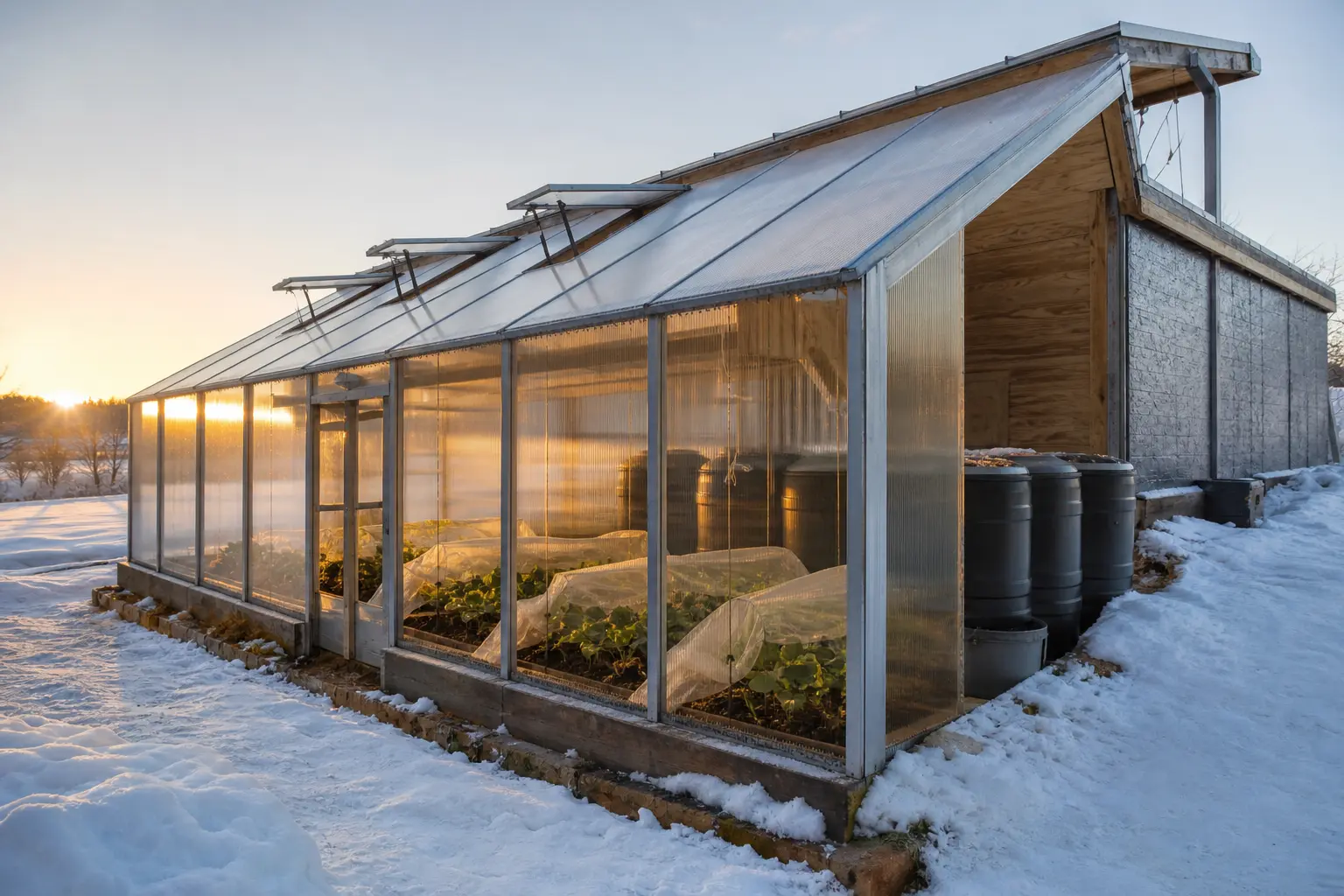
Deep winter greenhouses do more than trap warm air under clear plastic. In very cold climates, they combine passive solar collection, insulation, heat storage, protected growing beds, and crops suited to short days and cool temperatures.
The goal is usually not summer conditions in January. Instead, these structures create a stable environment where hardy vegetables can remain unfrozen, grow slowly, or stay harvestable. A modest backup heater may protect crops during extended cloud cover or exceptional cold.
What Makes a Greenhouse Work in Deep Winter?
A conventional backyard greenhouse may extend the season by a few weeks in spring and autumn, but it often loses heat quickly on long winter nights. Deep winter greenhouses are designed around heat conservation.
They commonly collect low-angle winter sunlight during the day, store some of that energy, and release it after sunset. The north, east, and west sides are often insulated rather than glazed, while the south-facing side provides most of the light.
Passive solar design and south-facing glazing
In the Northern Hemisphere, the main glazing generally faces true south to capture the low winter sun. The covering may be polycarbonate, greenhouse film, glass, or layered materials, depending on budget, snow conditions, lifespan, and insulation needs.
Double-wall or multiwall polycarbonate insulates better than single-pane glass. Multiple layers of polyethylene film can also reduce heat loss compared with a single layer.
The glazed wall or roof should receive direct winter sun for as much of the day as possible. Evergreens, buildings, fences, and hillsides that seem harmless in summer can block valuable light in December and January.
Earth-sheltered walls, insulation, and airtight construction
The north wall is often heavily insulated because it receives little useful winter sun and can be a major source of heat loss. Insulated sidewalls, perimeter insulation, insulated doors, and sealed joints all matter.
Some designs use an earth-sheltered north wall or are partially set into a slope. Soil below the frost zone changes temperature more slowly than outdoor air, which can moderate swings. However, earth sheltering requires drainage, waterproofing, structural planning, and a site that will not collect runoff.
Airtightness is also important. Gaps around doors, vents, glazing panels, and foundation edges can leak warm air continuously. Yet a greenhouse cannot remain sealed permanently: controlled ventilation is necessary for humidity management and fresh air.
Matching the structure to local sun, wind, and snow conditions
A design that works in one cold region may not perform the same way in another. Winter sunlight, cloud cover, wind exposure, snow depth, and nighttime lows all affect performance.
A sunny, dry site may gain substantial daytime heat but need protection from severe nighttime cold. A cloudy climate may need more insulation, thermal storage, or dependable backup heat. Windy sites need strong framing, secure glazing, and windbreaks that do not shade the south side. Snowy regions need roofs able to shed or carry snow safely.
“Passive solar” is a design strategy, not a guarantee that no additional heat will ever be needed.
How Deep-Winter Greenhouses Capture and Store Heat
The basic cycle is simple: sunlight enters during the day, interior surfaces absorb energy, insulation slows heat loss after dark, and thermal mass releases stored warmth as the air cools.
Solar gain during short winter days
On a clear winter day, sunlight can warm a well-oriented greenhouse dramatically even when outdoor air is below freezing. Dark soil, benches, masonry, water containers, and plant surfaces absorb incoming radiation.
But winter days are short, the sun is low, and cloudy weather sharply reduces solar gain. A greenhouse may be warm at midday, then lose much of that warmth after sunset if it lacks insulation or stored heat.
Avoid blocking the main growing area with tall tanks, dense shelving, or equipment. Reflective surfaces on the insulated north wall can help distribute light, but they cannot replace direct sun.
Thermal mass from soil, water, stone, or masonry
Thermal mass absorbs heat when the greenhouse is warm and gives it back as temperatures fall. It reduces day-to-night swings but does not create heat.
Common forms include:
- Growing soil and subsoil: Deep, ground-connected beds hold more heat than shallow containers.
- Water barrels or tanks: Water stores substantial heat for its volume and is easy to place along a north wall.
- Stone, brick, or masonry: These absorb daytime warmth when exposed to sun.
- Concrete floors or foundations: A slab can moderate temperatures if its edges are insulated.
Water is especially useful because it warms and cools slowly. Containers should be secure, protected from freezing, and positioned so they do not interfere with growing space. A few small buckets, however, will not carry a greenhouse through a severe multi-day cold spell. Thermal mass helps bridge the night and soften swings; it cannot compensate for poor glazing, air leaks, or prolonged lack of sun.
Night insulation, insulated foundations, and heat-retaining coverings
Heat loss is greatest at night, when there is no solar input and the indoor-outdoor temperature difference is largest. Night insulation can be as important as daytime glazing.
Depending on the design, growers may use insulated shutters, thermal curtains, removable interior row covers, or additional glazing layers. Curtains should be opened early enough to admit morning light.
Insulated foundations and perimeter insulation also matter. Without them, heat can flow from warm soil or a concrete slab into frozen surrounding ground.
How Plants Are Protected During Extreme Cold
Plants respond to the temperature of their leaves, crowns, and roots—not simply the air temperature near the door. A greenhouse can have warm air near the roof while soil at bed level remains cold.
Keeping temperatures above damaging levels
The needed temperature depends on the crop and its growth stage. Mature spinach, mâche, kale, claytonia, and many Asian greens tolerate much lower temperatures than basil, tomatoes, peppers, or cucumber seedlings. Young seedlings are generally less resilient than established plants.
A deep-winter greenhouse may be kept only slightly above freezing rather than at room temperature. That can be enough for hardy crops to survive and remain harvestable. Growth is often slow during the darkest weeks but increases as daylight lengthens.
Root-zone warmth is especially important. Cold, wet soil limits root activity and increases stress. Deep soil beds, insulated bed edges, and careful watering help prevent repeated freezing and thawing around roots.
Using row covers, low tunnels, and protected growing beds
A greenhouse within a greenhouse is one of the most effective cold-weather techniques. Row cover fabric, low tunnels, cold frames, or clear inner covers create an extra protected layer around crops. The enclosed air space warms during the day and loses heat more slowly at night.
Use this protection selectively:
- Cover the most cold-sensitive beds before severe nights.
- Leave very hardy greens uncovered when conditions permit.
- Keep fabric supported above foliage.
- Vent or open covers when temperatures rise to prevent excess humidity.
Crops in central beds usually face fewer extremes than plants beside doors, sidewalls, or glazing.
Managing condensation, airflow, and winter humidity
Winter greenhouse problems are not limited to cold. Plants, damp soil, and irrigation add moisture to a tight enclosure. Warm humid air condenses on cold glazing and framing, encouraging disease and dripping onto foliage.
Use controlled airflow rather than keeping the greenhouse sealed. Small fans reduce cold pockets, while brief ventilation during the warmest part of a sunny day removes humid air with less heat loss than nighttime venting.
Water early in the day when possible, and avoid saturating beds late in the afternoon. Plants use less water in cool, low-light conditions, and overwatering is a common winter mistake.
Choosing cold-hardy crops for low-light conditions
Deep winter greenhouses are best suited to leafy greens, herbs, roots, and overwintering plants rather than fruiting summer vegetables.
Reliable candidates include:
- Spinach
- Kale and collards
- Mâche or corn salad
- Claytonia or miner’s lettuce
- Cool-season lettuce
- Arugula and mustard greens
- Tatsoi, bok choy, and other Asian greens
- Parsley, cilantro, and chives
- Radishes, small turnips, and scallions
These crops still need light, but many tolerate cool conditions and short days better than tomatoes or peppers. Growers often establish crops in late summer or autumn, then harvest slowly through winter as growth slows.
When Supplemental Heat, Light, and Ventilation Are Needed
Passive features reduce energy use, but equipment makes a deep-winter greenhouse more dependable when weather exceeds what passive solar methods can handle.
Backup heat for prolonged clouds or severe cold snaps
Backup heat is prudent in many extremely cold climates, especially with long cloudy periods, deep subzero temperatures, or windstorms. It may be used only occasionally, but can prevent crop loss.
Set backup heat to maintain a minimum safe temperature rather than make the greenhouse warm. A low set point protects roots, prevents irrigation from freezing, and limits damage while preserving the structure’s low-energy purpose.
Any combustion-based heater requires safe installation and proper ventilation. Do not rely on an unvented fuel-burning appliance in an enclosed greenhouse because fumes, fire risk, and oxygen depletion can be serious hazards.
Supplemental lighting for winter production
Supplemental lighting is useful when the goal is steady production rather than crop survival. It can support seedlings and leafy greens during the darkest months.
Lighting produces heat only as a side effect and should not be treated as primary heating. A practical approach is to reserve lights for propagation benches, high-value crops, or periods of especially limited daylight.
Ventilation and overheating on bright winter days
A greenhouse can overheat quickly on a clear winter day, even when it is bitterly cold outdoors. Roof vents, side vents, doors, automatic vent openers, and circulation fans help control temperature and humidity.
Open vents gradually when outdoor air is very cold or dry, and close them before late-afternoon temperatures fall.
Monitoring temperature, soil conditions, and humidity
A single thermometer is not enough. Conditions vary from floor to roof and from the sunny south side to the shaded north wall.
Place sensors at crop height, near the coldest glazing edge, in or just above a representative bed, and near heaters or water storage. Track minimum and maximum temperatures, not just current readings. Humidity monitoring is also useful because condensation problems often develop overnight.
Planning a Deep-Winter Greenhouse for Your Climate
Successful deep winter greenhouses are planned around a specific site and realistic production goal. A structure meant to keep spinach alive can be simpler than one meant to supply weekly salad greens.
Site orientation and shading
Choose the sunniest available site from late autumn through early spring. Observe winter shadows, not only summer conditions. Bare deciduous trees may be acceptable, but evergreens can block low-angle light all day.
Avoid frost pockets where cold air settles. Leave room for snow removal, water access, and a safe winter path to the greenhouse.
Greenhouse size, glazing choice, and insulation levels
Larger greenhouses generally have less exterior surface area relative to growing volume, which can make temperatures more stable. They also cost more to build and heat if backup heat is needed.
Glazing and insulation should work as a system. More transparent glazing admits more light but may lose more heat; better-insulated coverings may slightly reduce light transmission. In deep winter, reducing nighttime heat loss is often worth a modest light trade-off on walls that receive little direct sun.
Insulate the north wall well, seal gaps carefully, and plan for an efficient door.
Snow load, wind protection, and access in winter
Use a frame and roof design appropriate for expected snow loads. Snow can reduce light transmission long before it creates structural trouble, so plan for safe removal where necessary.
Windbreaks can reduce heat loss and strain, but place them far enough away to avoid shading. Secure glazing, anchor the frame properly, and protect exposed edges from wind-driven snow.
Setting realistic crop and harvest expectations
Production follows available light. Expect rapid growth in autumn, slower growth around midwinter, and renewed growth in late winter and early spring.
For many home growers, the realistic goal is a steady harvest of hardy leaves, herbs, and small roots—not continuous summer-style production. Crops intended for midwinter harvest are often established before the shortest days arrive.
Conclusion
Deep winter greenhouses keep plants alive through extreme cold by combining solar collection, thermal mass, insulation, airtight construction, and layers of crop protection. South-facing glazing captures winter sunlight, while insulated walls, foundations, coverings, and stored heat slow nighttime cooling.
Success also depends on protecting roots, managing humidity, venting on bright days, monitoring conditions, and choosing crops suited to cold and low light. In the harshest climates, modest backup heat may be the difference between a resilient winter garden and frozen crops.
FAQ
Can a deep-winter greenhouse stay warm without electricity?
Yes. A greenhouse with strong passive-solar design, insulation, thermal mass, and adequate winter sun can remain significantly warmer than outdoors without electricity. Whether it stays above freezing depends on weather, crop protection layers, and the length of cloudy periods.
A no-electricity greenhouse is most realistic for hardy crops and modest winter goals. In extremely cold or cloudy regions, backup heat or monitoring equipment improves reliability.
What temperature can a deep-winter greenhouse maintain in subzero weather?
There is no single answer. Performance depends on outdoor lows, sunshine, wind, glazing, insulation, thermal mass, and greenhouse size. On sunny days, temperatures may rise well above freezing even in subzero weather. Overnight, an unheated structure may still approach outdoor temperatures if heat loss exceeds stored heat.
Well-designed deep winter greenhouses aim to reduce temperature swings and maintain conditions safe for selected hardy crops rather than promise a fixed temperature during every storm.
What vegetables grow best in a deep-winter greenhouse?
The best choices are cold-hardy, low-light-tolerant crops such as spinach, kale, mâche, claytonia, lettuce, arugula, Asian greens, parsley, cilantro, scallions, radishes, and small turnips.
Tomatoes, peppers, cucumbers, basil, and other heat-loving crops usually need substantially more heat and light than a passive deep-winter greenhouse can provide.
Do deep-winter greenhouses need to be heated at night?
Not always. In a well-insulated passive solar greenhouse, thermal mass, row covers, and cold-hardy crops may allow plants to survive many winter nights without active heat.
However, supplemental heat is often sensible during prolonged cloudy weather, extreme cold snaps, or when growing less hardy crops. A small backup heater set only to prevent dangerous lows can protect plants while preserving the greenhouse’s low-energy design.
You Might Also Like