What Shrubs Can Hide a Utility Box Without Blocking Access?
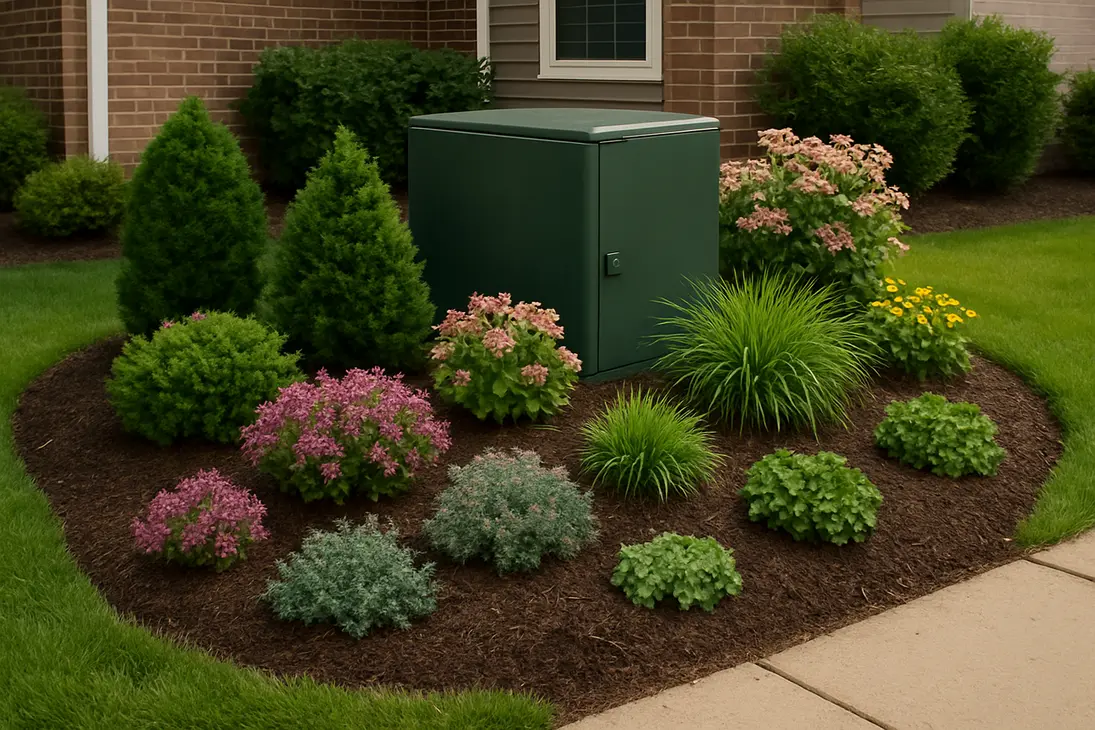
A well-placed shrub can hide a utility box without creating a maintenance problem. The goal is not to cover the box completely, but to screen the view from the street, patio, window, or front walk while leaving room for utility workers to open panels, read meters, and make repairs.
The best plants are compact, easy to prune, non-thorny, and suited to your sun, soil, and climate. In most yards, a layered planting of a few shrubs, grasses, and perennials works better than one large shrub planted too close.
Start With Utility Box Rules, Clearance, and Access
Before choosing shrubs, identify the type of utility box. A pad-mounted electrical transformer, cable pedestal, gas meter, and irrigation controller may all have different clearance needs. Some open from one side only; others need airflow, meter visibility, or access on several sides.
Check the label on the box and your local utility’s landscaping rules before planting. HOA rules may affect appearance, but utility access usually takes priority. If a crew cannot safely reach the box, they may cut back or remove plants.
Also call before digging. In the U.S., call 811 a few days before planting so underground utilities can be marked. Outside the U.S., use your local utility-marking service. Even a small planting hole can hit shallow cables, irrigation lines, or low-voltage wires.
Avoid permanent structures around utility boxes. Fences, masonry walls, raised planters, fixed trellises, and large boulders can block service access. Plants are more flexible, but only if they are placed outside the required clearance zone.
How Much Space to Leave Around the Box
Clearance requirements vary by utility and box type, so use local rules first. Many utilities require a larger working area in front of the door or panel than on the sides or back. For pad-mounted transformers, it is common to need several feet on the sides and back and a wider open area in front of the opening side.
For planning, use this conservative approach until you confirm the rules:
| Area around the utility box | Practical planting guidance |
|---|---|
| Door, panel, or meter side | Keep fully open for standing, kneeling, opening panels, and carrying tools. |
| Sides and back | Plant outside the required clearance, allowing for mature shrub width. |
| Above the box | Keep branches away from doors, vents, handles, locks, meters, and labels. |
| Ground around the pad | Do not bury the pad or alter drainage with soil, mulch, or edging. |
Measure from the mature edge of the plant, not from the trunk or nursery pot. If a shrub matures at 4 feet wide, assume it will extend about 2 feet from its center in each direction, then add the utility clearance beyond that.
What Not to Plant Too Close
Some plants create more problems than they solve. Avoid these near utility boxes:
- Thorny or spiny shrubs, such as barberry, pyracantha, rugosa rose, or sharp-leaved holly.
- Fast-growing screening shrubs that need constant shearing, including many privets, large arborvitae, wax myrtle in warm climates, and oversized laurels.
- Large shrubs with aggressive roots, especially near underground lines or pads.
- Vines, which can grow into vents, doors, locks, and labels.
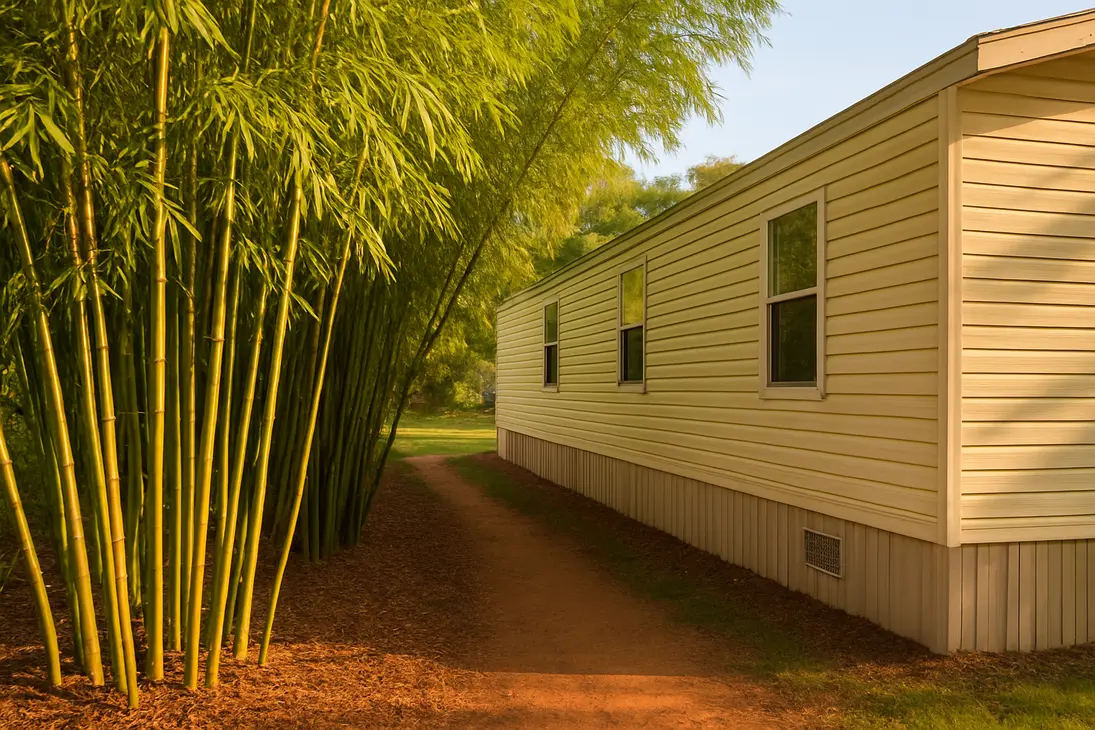
- Bamboo, running grasses, or suckering shrubs that spread into the work area.
- Messy fruiting plants where workers need to stand.
- Large trees, especially willows, poplars, silver maples, and other water-seeking or surface-rooted species.
Also avoid plants with invasive behavior in your region. Burning bush, privet, barberry, and some nandina varieties are restricted or discouraged in some areas.
How to Choose Shrubs for Hiding a Utility Box
The right shrub is one that stays in scale. You want the mature plant to screen the view without swallowing the equipment.
Use these criteria:
- Mature size: Choose shrubs that naturally mature close to the height and width you need. A 3- to 5-foot shrub is often better than a 10-foot shrub you plan to keep small.
- Evergreen or deciduous: Evergreens screen year-round; deciduous shrubs may reveal the box in winter.
- Root behavior: Favor fibrous, non-aggressive roots.
- Growth rate: Moderate growth is easiest to manage.
- Maintenance needs: Choose shrubs you can trim from outside the access area.
- Sun exposure: Match plants to full sun, part shade, or shade.
- Hardiness zone: Choose plants suited to your winter lows and summer heat.
If the site has reflected heat, compacted soil, road salt, or dry shade, prioritize toughness over appearance.
Evergreen Shrubs for Year-Round Screening
Evergreens are the most dependable option when you want screening in every season. Choose compact types with a clear mature size.
Useful evergreen options include:
- Dwarf yaupon holly for warm climates; tough, small-leaved, and prunable.
- Inkberry holly for moist, acidic soils; softer-looking than many hollies.
- Dwarf Japanese holly where it grows well; boxwood-like texture.
- Boxwood in regions without severe blight or winter burn.
- Dwarf arborvitae for full sun, used carefully because many still get wide.
- Yew for shade to part shade, where toxicity is not a concern.
- Dwarf false cypress for soft texture in suitable climates and soils.
Do not rely on labels such as “compact” or “dwarf” alone. A dwarf conifer may still reach 6 feet tall and wide over time.
Flowering Shrubs for Seasonal Interest
Flowering shrubs can make the utility area look like an intentional garden bed. They work especially well when the box only needs screening from one direction.
Good flowering options include:
- Dwarf spirea: Full sun, easy pruning, summer flowers, often 2 to 4 feet tall.
- Dwarf panicle hydrangea: Summer blooms, compact cultivars available.
- Smooth hydrangea: Good for part shade; can be cut back in many climates.
- Abelia: Semi-evergreen to evergreen in warmer areas, with long bloom.
- Potentilla: Tough, modest-sized shrub for sunny sites.
- Dwarf weigela: Spring flowers or colorful foliage, depending on cultivar.
- Fothergilla: Spring flowers and fall color; best in acidic soil and part sun.
Flowering shrubs often look best with evergreen structure. One compact evergreen on the main viewing side plus two flowering shrubs near the corners can screen the box without creating a solid wall.
Dwarf and Compact Shrubs for Small Yards
Small yards require realistic plant sizes. If your planting strip is only 4 feet deep, avoid shrubs that mature 6 feet wide, even if you plan to prune. Constant pruning can make shrubs look stiff and may allow them to block access between trims.
For tight spaces, consider:
- Dwarf boxwood or Japanese holly for formal shapes.
- Dwarf yaupon holly for a loose, rounded evergreen in warm regions.
- Compact spirea for sunny sites.
- Small inkberry cultivars where soil stays evenly moist.
- Dwarf abelia for mild climates.
- Compact ornamental grasses where seasonal screening is acceptable.
In a small yard, it is often better to screen only the most visible side and leave the back and service side open.
Best Shrub and Small Tree Options for Utility Box Screening
No single plant is best everywhere. Climate, soil, sunlight, deer pressure, and the type of utility box all matter. The following categories are reliable starting points for many landscapes.
Low-Maintenance Evergreen Choices
For year-round screening, these are practical choices when matched to the right region:
| Plant type | Best use | Watch-outs |
|---|---|---|
| Dwarf yaupon holly | Warm-climate evergreen screen; tolerates pruning | Can outgrow small spaces if cultivar is not truly compact |
| Inkberry holly | Soft evergreen screen in acidic, moist soil | May get leggy in dry or alkaline soil |
| Boxwood | Formal or semi-formal screening | Susceptible to blight, mites, winter burn, and poor drainage |
| Dwarf arborvitae | Dense evergreen mound or column | Deer browsing; many cultivars grow larger than expected |
| Yew | Shade-tolerant evergreen | Toxic plant parts; dislikes wet soil |
| Dwarf false cypress | Soft texture and color | Needs suitable drainage and climate |
If deer are common, ask locally before planting. “Deer resistant” does not mean deer proof.
Ornamental Flowering Shrubs
Flowering shrubs are useful when you want the planting to feel like a garden bed rather than a screen. They draw attention to blooms, foliage, and shape instead of the utility box.
Consider these combinations:
- Sunny front yard: Dwarf spirea, compact panicle hydrangea, and a small ornamental grass.
- Part shade: Smooth hydrangea, fothergilla, and sedges.
- Warm climate: Dwarf abelia, dwarf yaupon holly, and seasonal perennials.
- Cottage-style bed: Dwarf weigela, catmint, coneflower, and a compact evergreen anchor.
Be careful with shrubs that flower on old wood if you need frequent pruning. Repeated trimming at the wrong time may remove flower buds. Shrubs that tolerate renewal pruning or bloom on new wood are often easier around utility areas.
Grasses, Perennials, and Mixed Planting Options
Shrubs are not the only option. A mixed planting is often safer and more attractive because grasses and perennials soften the view and can be cut back quickly if access is needed.
Good options include:
- Little bluestem for sunny, dry areas.
- Switchgrass cultivars where there is enough room.
- Prairie dropseed for fine texture and smaller scale.
- Muhly grass in warm regions.
- Sedges for shade or part shade.
- Coneflower, salvia, catmint, black-eyed Susan, and coreopsis for sunny color.
- Hosta, heuchera, ferns, and woodland phlox for shady settings.
Grasses screen well during the growing season but are not ideal if you need a neat year-round screen in a prominent front yard.
When a Small Tree Is—and Isn’t—a Good Idea
A small ornamental tree can distract from a utility box, but it should not be planted close enough to shade, overhang, or root into the work area. Use small trees as background or side accents, not as the main screen directly beside the equipment.
Possible choices, where regionally appropriate, include:
- Serviceberry
- Japanese maple
- Redbud
- Dwarf crape myrtle
- Fringe tree
- Small flowering dogwood cultivars
A small tree is a poor choice near underground utility corridors, overhead lines, narrow easements, or tight front strips. Trees are also harder and more expensive to remove if emergency access is needed.
Planting Layout Ideas That Look Natural
The best layout hides the utility box from the direction people actually see it. You rarely need to surround the entire box, and enclosing all sides is a common mistake.
Stand at the street, driveway, front door, patio, and main windows. Identify the main sightlines, then interrupt those views while keeping the service side open.
Use Layered Planting Instead of One Large Shrub
One large shrub planted directly in front of a utility box often blocks the panel, grows unevenly from repeated pruning, and draws more attention to the area.
A layered planting works better:
- Place one compact evergreen off to the side of the main view.
- Add one or two flowering shrubs farther out from the box.
- Use perennials or grasses along the front edge.
- Leave the door or panel side open.
Layering also gives you flexibility. If one plant fails or outgrows the space, you can replace it without redesigning the whole bed.
Create a Curved Bed Around the Box
A curved bed makes the planting feel intentional instead of like a square “utility box corral.” Shape the bed so it connects with the rest of the landscape.
For example, create a shallow crescent bed in front of the main viewing side while leaving the service side open. Put the tallest plant slightly off-center, then step down to smaller shrubs, grasses, and perennials.
Keep edging low and movable. Avoid concrete curbs, mortared stone, or heavy timbers that could interfere with access.
Screen the View From the Street, Patio, or Window
Design for the most important view first. If the box is ugly from the street, screen the street-facing side. If it is most visible from a kitchen window, plant between the window and the box.
Practical layouts include:
- Street view: Stagger compact shrubs on the street-facing side, leaving the service side open.
- Patio view: Use a mixed bed between the patio and box.
- Corner lot: Use two offset plant groups instead of a solid hedge.
- Narrow side yard: Use one upright compact evergreen outside the clearance zone, plus low perennials.
The goal is visual interruption, not total disappearance.
Maintenance Tips and Common Mistakes to Avoid
Even the right shrub can become a problem if it is not maintained. Check utility screening at least twice a year: once during active growth and once before winter or storm season.
Look for branches touching the box, plants leaning over the panel, mulch building up around the pad, and shrubs spreading into the access path. If you cannot easily walk to the panel, a utility worker carrying tools cannot either.
Prune Before Plants Block the Door or Vents
Do light pruning before the shrub reaches the box. Repeated hard pruning against one side creates bare spots and awkward shapes.
Focus on:
- Keeping the door, lock, meter, label, and vents visible and reachable.
- Removing branches that rub on the box.
- Maintaining a clear walking path.
- Preserving the plant’s natural shape.
- Cutting back grasses and perennials before they collapse over the equipment.
Do not tie shrubs to the box, lean supports against it, or attach anything to it.
Avoid Fast-Growing Shrubs That Outgrow the Space
Fast-growing shrubs hide a box quickly but often become a long-term maintenance problem. A plant that grows 2 to 3 feet per year may need frequent shearing, and one missed season can block access.
Be cautious with:
- Large arborvitae cultivars
- Privet
- Cherry laurel and other large laurels
- Wax myrtle in small spaces
- Forsythia near access points
- Large viburnums
- Running bamboo
- Tall ornamental grasses in narrow beds
Choose by mature size, not purchase size. If you need quick coverage, combine properly spaced shrubs with temporary perennials rather than planting an oversized evergreen too close.
Don’t Bury, Fence In, or Cover the Utility Box
Never bury a utility box with soil, mulch, or decorative stone. Do not build a raised bed around it unless your utility explicitly allows it and access remains clear. Changing the grade can trap moisture, block drainage, cover labels, and complicate repairs.
Also avoid:
- Painting the box without permission.
- Covering it with a fake rock or cabinet.
- Locking it behind a gate.
- Surrounding it with thorny shrubs.
- Planting vines over it.
- Placing large containers directly in front of the panel.
- Storing hoses, firewood, or garden décor around it.
If you want a non-plant screen, use movable containers or a freestanding screen placed well outside the access zone.
Conclusion
The best shrubs to hide a utility box are compact, site-appropriate, and easy to prune. Evergreens such as dwarf yaupon holly, inkberry, boxwood, dwarf arborvitae, and yew can provide year-round screening when they fit your climate and space. Flowering shrubs such as dwarf spirea, hydrangea, abelia, potentilla, fothergilla, and dwarf weigela can make the area look like a planned garden bed.
Most importantly, plant outside the required clearance zone and keep the service side open. A layered bed that screens the main view is usually safer, better-looking, and easier to maintain than a solid hedge around the box.
FAQ
Can I plant shrubs directly in front of a utility box?
Usually, no. The front is often the access side, and utility workers need room to open panels, read meters, and make repairs. Plant shrubs off to the side or far enough forward that mature branches will not block doors, vents, locks, or labels.
What is the best evergreen shrub to hide a utility box?
It depends on climate, sun, soil, and space. Good compact choices include dwarf yaupon holly in warm regions, inkberry holly in moist acidic soil, boxwood where disease pressure is low, dwarf arborvitae in sunny areas with enough room, and yew in shade where toxicity is not a concern.
Can tree roots damage underground utility lines?
They can, especially if you plant large, aggressive, or water-seeking trees near utility corridors. Roots often exploit existing cracks or disturbed soil, but they can still interfere with shallow infrastructure and repairs. Avoid willows, poplars, silver maples, and large shade trees near utility boxes and marked lines.
How can I hide a utility box without using shrubs?
Use layered perennials, ornamental grasses, movable containers, or a freestanding screen placed outside the required access area. You can also reshape the bed so the eye is drawn to flowers or grasses instead of the box. Avoid permanent fences, heavy planters, fake covers, vines, or anything that blocks access.
You Might Also Like