Best Shade-Tolerant Plants for Growing Under a Large Tree
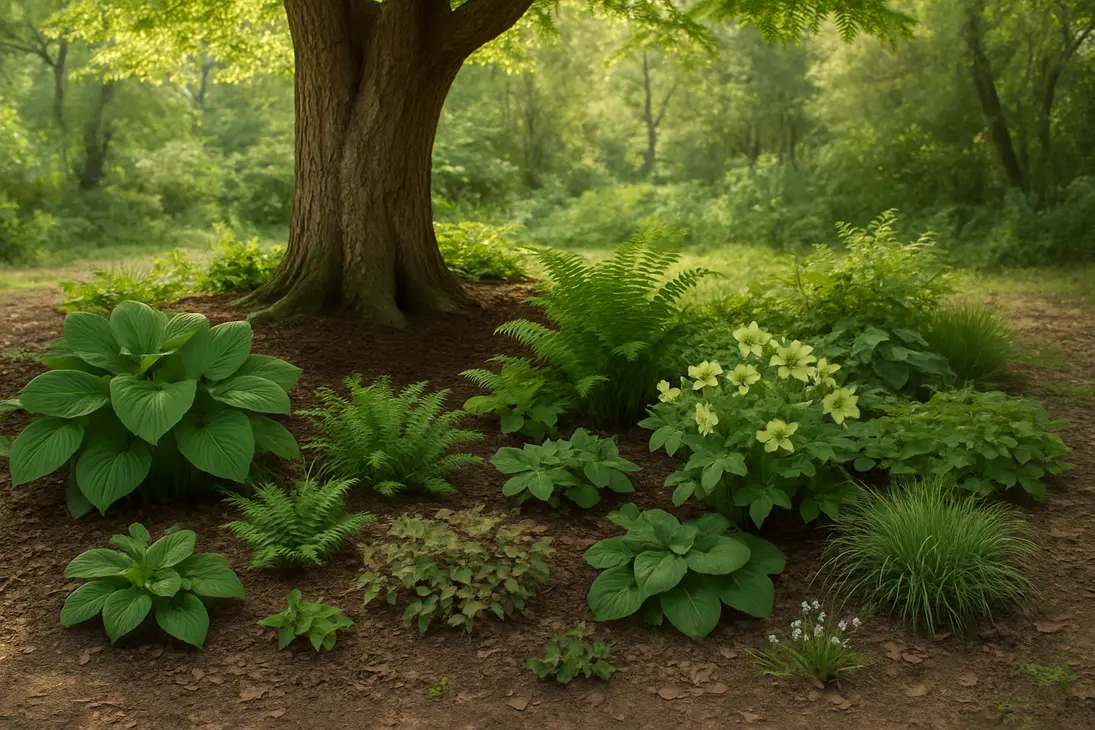
Planting under a large tree is difficult because the site usually has more than shade. It may also have thirsty roots, compacted soil, leaf litter, and little room to dig. The best shade-tolerant plants for this setting are tough perennials, groundcovers, small shrubs, and spring bulbs that can handle low light and root competition once established.
The right choice depends on the tree, soil, and available light. A plant that grows well under an open oak may fail under a dense maple, beech, or evergreen, so study the site before planting.
Match Plants to the Type of Shade You Have
“Shade-tolerant” does not mean a plant grows in darkness. Most shade plants still need indirect light, morning sun, reflected light, or spring sun before deciduous trees leaf out. If only moss or leaf litter persists, use mulch, containers, or the toughest groundcovers.
Watch the area over a day. Note morning sun, shifting dappled light, deep shade, and how quickly the soil dries after rain.
Full Shade vs. Part Shade vs. Dappled Shade
Shade changes by hour and season.
| Shade type | What it means | Good choices |
|---|---|---|
| Full shade | Little direct sun, some indirect light | Hellebores, ferns, epimedium, wild ginger |
| Part shade | About 3–6 hours of sun | Hostas, heuchera, brunnera, hardy geranium |
| Dappled shade | Filtered moving light | Foamflower, woodland phlox, Solomon’s seal |
| Deep shade | Very little usable light | Tough groundcovers, mulch, containers |
Morning sun is gentler than afternoon sun. A hosta may thrive with morning sun but scorch in hot late-day exposure.
Dry Shade, Root Competition, and Poor Soil
Dry shade is the classic under-tree problem. Tree canopies intercept rainfall, and roots quickly absorb moisture. Maples, beeches, birches, and many conifers are especially challenging because they often have dense surface roots.
For dry shade, choose resilient plants such as epimedium, hellebores, bigroot geranium, liriope, sedges, and some ferns. Plants such as astilbe, ligularia, and many hydrangeas may tolerate shade but still need consistent moisture, so place them near the canopy edge or in irrigated beds.
Improve poor soil gently. Deep digging, tilling, or adding thick layers of soil can harm the tree.
Evergreen Trees vs. Deciduous Trees
Deciduous trees provide seasonal light before leaves emerge, making them good sites for spring bulbs and woodland plants that grow early, flower, and fade as shade deepens.
Evergreen trees cast shade year-round and may create dry, acidic, needle-covered soil. Under pines, spruces, and similar trees, focus on tough foliage plants, groundcovers, or mulch. The area closest to the trunk is often best left unplanted.
Best Shade-Tolerant Plants for Under Trees
A good under-tree planting combines groundcovers, foliage plants, a few flowering perennials, and perhaps small shrubs near the outer canopy. Avoid crowding the trunk, where conditions are harshest and the tree needs airflow.
Groundcovers for Shady Tree Beds
Groundcovers protect soil, reduce weeds, and make the bed look intentional. Choose spreading plants carefully, because some can become aggressive.
Good options include:
- Epimedium, or barrenwort: Excellent for dry shade, with spring flowers and attractive leaves.
- Wild ginger: Low, leafy, and woodland-like; best in humus-rich soil with some moisture.
- Sweet woodruff: Fine-textured, with small white spring flowers; spreads in cool, moist shade.
- Foamflower: Frothy spring blooms and patterned foliage; best in dappled shade.
- Liriope: Grasslike and tough, useful along bed edges.
- Japanese spurge: Dense and often evergreen, but may spread beyond bounds.
- Sedges: Many Carex species make soft, grasslike groundcovers.
Use caution with English ivy and periwinkle. They can be invasive or hard to remove in many regions. If used, keep ivy off the tree and away from natural areas.
Flowering Perennials for Color in Shade
Under trees, flowers are usually subtler than in sunny borders. Many shade perennials bloom in spring, then provide foliage for the rest of the season.
Reliable choices include:
- Hellebores: Winter to early spring flowers; good tolerance of shade and established dryness.
- Lungwort: Early blue, pink, or purple flowers and silver-spotted leaves.
- Woodland phlox: Good in dappled shade where soil is not bone dry.
- Hardy geranium, especially bigroot geranium: Aromatic foliage, spring flowers, and good dry-shade tolerance.
- Bleeding heart: Spring flowers; old-fashioned types may go dormant in summer.
- Solomon’s seal: Arching stems with dangling white spring flowers.
- Astilbe: Feathery blooms, but only where soil stays moist.
- Japanese anemone: Late flowers for part shade; can spread.
In the darkest areas, expect foliage to matter more than bloom.
Foliage Plants That Brighten Dark Areas
Foliage often carries a shade bed better than flowers. Silver, gold, chartreuse, variegated, and finely textured leaves make shade look designed rather than neglected.
Consider:
- Hostas: Classic shade plants; blue types prefer more shade, while gold or variegated types often color best with morning sun.
- Ferns: Lady fern, Christmas fern, autumn fern, and Japanese painted fern are useful, though moisture needs vary.
- Heuchera, or coral bells: Colorful foliage; best in brighter shade with good drainage.
- Brunnera: Silver leaves and small blue spring flowers, especially good in cooler climates.
- Japanese forest grass: Graceful, cascading foliage for part shade and even moisture.
- Pulmonaria: Valuable for spotted foliage after early bloom.
- Sedges: Green, gold, bronze, or variegated forms for soft edging.
Repeat a few strong foliage plants rather than scattering one of everything.
Small Shrubs for Shaded Spots
Shrubs usually do best near the drip line, where light and rainfall are better. Plant small specimens so you do not need to cut many roots.
Options include:
- Oakleaf hydrangea: Part shade, summer flowers, fall color, and peeling bark; needs space and moisture.
- Dwarf rhododendrons and azaleas: Best under high, open trees with acidic, well-drained soil.
- Sweet box: Small evergreen with fragrant winter flowers.
- Aucuba: Tough evergreen foliage for dry shade in mild climates.
- Mahonia: Evergreen structure and winter or spring flowers; some types are prickly or large.
- Yew: Very shade-tolerant evergreen, but dislikes wet soil.
Avoid forcing large shrubs into cramped, root-filled spaces.
Spring Bulbs and Seasonal Plants for Deciduous Tree Shade
Deciduous trees create a spring light window before the canopy fills in. Bulbs and woodland ephemerals use that light early, then fade back.
Good choices include snowdrops, crocus, daffodils, winter aconite, Virginia bluebells, trout lily, wood anemone, and, where not invasive, Siberian squill or glory-of-the-snow.
Tuck bulbs between roots rather than cutting roots. Smaller bulbs are easier to plant. Let foliage die back naturally so bulbs can store energy.
How to Plant Under a Large Tree Without Harming It
The tree is the permanent feature, so plant around its needs. Mature roots often extend beyond the drip line, with many feeder roots near the surface.
Avoid Cutting Major Tree Roots
Do not till under a tree. Avoid cutting roots larger than a small finger, and never remove large woody roots to fit a plant. If you hit a major root, move the hole.
Use a trowel, soil knife, or narrow spade, and plant in pockets between roots. Also avoid trenching for edging or irrigation near the trunk.
Improve Soil Lightly Without Piling Soil Around the Trunk
Do not fix poor soil by adding a deep layer of topsoil. Extra soil can reduce oxygen around roots and damage the tree. Never bury the trunk flare, where the trunk widens into the roots.
Instead:
- Add a thin layer of compost, usually about an inch or less.
- Mix compost only into individual planting pockets where roots allow.
- Keep soil and mulch away from bark.
- Let leaves decompose in the bed when practical.
If soil is badly compacted, begin with mulch and a few tough plants rather than renovating the whole area at once.
Plant Small, Young Plants Instead of Large Root Balls
Small plants are easier to fit between roots and establish better in limited soil. Plugs, divisions, small perennials, and young shrubs are ideal.
Large container plants give instant size but require bigger holes and more water. Plant in groups of three to seven of one variety for a natural, cohesive look.
Use Mulch Correctly Around Trees and New Plants
Mulch conserves moisture, moderates soil temperature, and reduces weeds. Use shredded leaves, composted bark, pine needles, or wood chips.
Keep mulch shallow around perennials so crowns are not buried. Leave a clear gap around the trunk, and never mound mulch against bark. A practical layout is mulch near the trunk and heavier planting toward the outer canopy.
Care Tips for Shade-Tolerant Plants
Shade plants under trees are not instantly low-care. Most need close attention for the first season or two before becoming reliable.
Water Deeply While Plants Establish
New plants need regular water even if they become drought-tolerant later. Tree roots compete strongly, so light sprinkling is not enough. Water slowly and deeply.
Check the root zone with a finger or trowel. Rain may wet the surface while deeper soil remains dry. During dry spells, new perennials under trees may need water once or twice a week, depending on soil, weather, and plant type.
Avoid Over-Fertilizing Slow-Growing Shade Plants
Fertilizer cannot replace light. Shade plants naturally grow slowly, and overfeeding can cause weak growth, floppy stems, or brown leaf edges, especially in dry soil.
Use compost, leaf mold, or mild slow-release fertilizer only when needed. If using packaged fertilizer, follow the label and avoid repeated heavy applications.
Watch for Stunted Growth, Browning, or Leggy Plants
Look for patterns before reacting.
| Symptom | Likely cause | What to do |
|---|---|---|
| Brown leaf edges | Drought, heat, roots, excess fertilizer | Water deeply, mulch, pause feeding |
| Leggy stems | Too little light | Move plant or choose deeper-shade species |
| Few flowers | Low light or immaturity | Accept foliage, move plant, or use spring bloomers |
| Tiny plants | Dry soil, compaction, dense roots | Water, mulch, or switch to tougher plants |
| Scorched leaves | Too much afternoon sun | Move to protected shade |
Some trial and adjustment are normal under large trees.
Divide, Thin, or Move Plants When Conditions Change
Trees grow, shade deepens, and roots expand. A bed that once supported flowering perennials may later suit ferns and groundcovers better. Storm pruning can also increase sun suddenly.
Divide crowded perennials, thin aggressive groundcovers, and move moisture-loving plants toward the outer canopy if they struggle near the trunk.
Shade-Tolerant Plants for Pots and Low-Light Areas
Sometimes containers are easier than planting in roots. Pots work well on patios under trees, covered porches, and areas with heavy surface roots.
Potted Plants for Shady Outdoor Areas
Containers give plants their own soil, though they still need regular watering because pots dry quickly and may be sheltered from rain.
Good choices include hostas, ferns, heuchera, begonias, impatiens, coleus, torenia, caladiums, fuchsias in cool shade, and small Japanese forest grass or sedges.
Use pots with drainage holes and quality potting mix, not garden soil. In deep shade, rely more on foliage than heavy bloom.
Can Spider Plants and Similar Houseplants Handle Low Light?
Spider plants tolerate low light but do not thrive in darkness. In low light, they grow slowly, produce fewer plantlets, and may lose variegation. Outdoors in warm weather, they can handle bright shade if protected from harsh direct sun.
Pothos, philodendron, peace lily, and snake plant can also spend warm seasons in shade, but move them indoors before cold weather unless your climate is frost-free. Bright indirect light is better than very low light.
When to Add Artificial Shade or Move Containers
Some container problems come from too much sun, not too little. A south-facing patio can be hot even near a shady garden.
Use shade cloth, an umbrella, lattice, or taller plants to block afternoon sun. Move containers gradually so leaves do not scorch. If a plant leans strongly, drops leaves, or stays sparse, give it brighter indirect light. If it wilts daily despite watering, move it to cooler shade or a larger pot.
Conclusion
The best shade-tolerant plants for under a large tree are plants suited to low light, dry soil, shallow roots, and competition for water. Epimedium, hellebores, ferns, hostas, sedges, wild ginger, hardy geraniums, spring bulbs, and selected small shrubs can all work when matched to the site.
Plant small, avoid cutting major roots, improve soil gently, mulch properly, and water deeply while plants establish. In the toughest area near the trunk, a clean mulch ring may be healthier and more attractive than forcing plants to grow.
FAQ
What plants grow best in full shade under trees?
Good choices include epimedium, hellebores, Christmas fern, lady fern, wild ginger, sweet woodruff, sedges, liriope, and some hostas. In very dry shade, epimedium, hellebores, bigroot geranium, and certain sedges are especially useful.
Can plants survive under a large tree’s roots?
Yes, if chosen and planted carefully. Use small plants, tuck them between roots, and avoid cutting large roots. Water well during establishment. The area closest to the trunk is often better mulched than densely planted.
How often should I water shade plants under a tree?
Water deeply whenever the root zone begins to dry. In dry weather, new plantings may need water once or twice a week during the first growing season. Do not rely on rainfall alone, because the canopy and tree roots reduce available moisture.
Do shade-tolerant plants need fertilizer?
Usually they need little fertilizer. Shade plants grow slowly, and overfeeding can cause weak growth or browning. A light topdressing of compost or leaf mold is often enough. If using fertilizer, apply it sparingly and follow the label.
You Might Also Like