How Does Growing Plants in a Large Garden Differ?
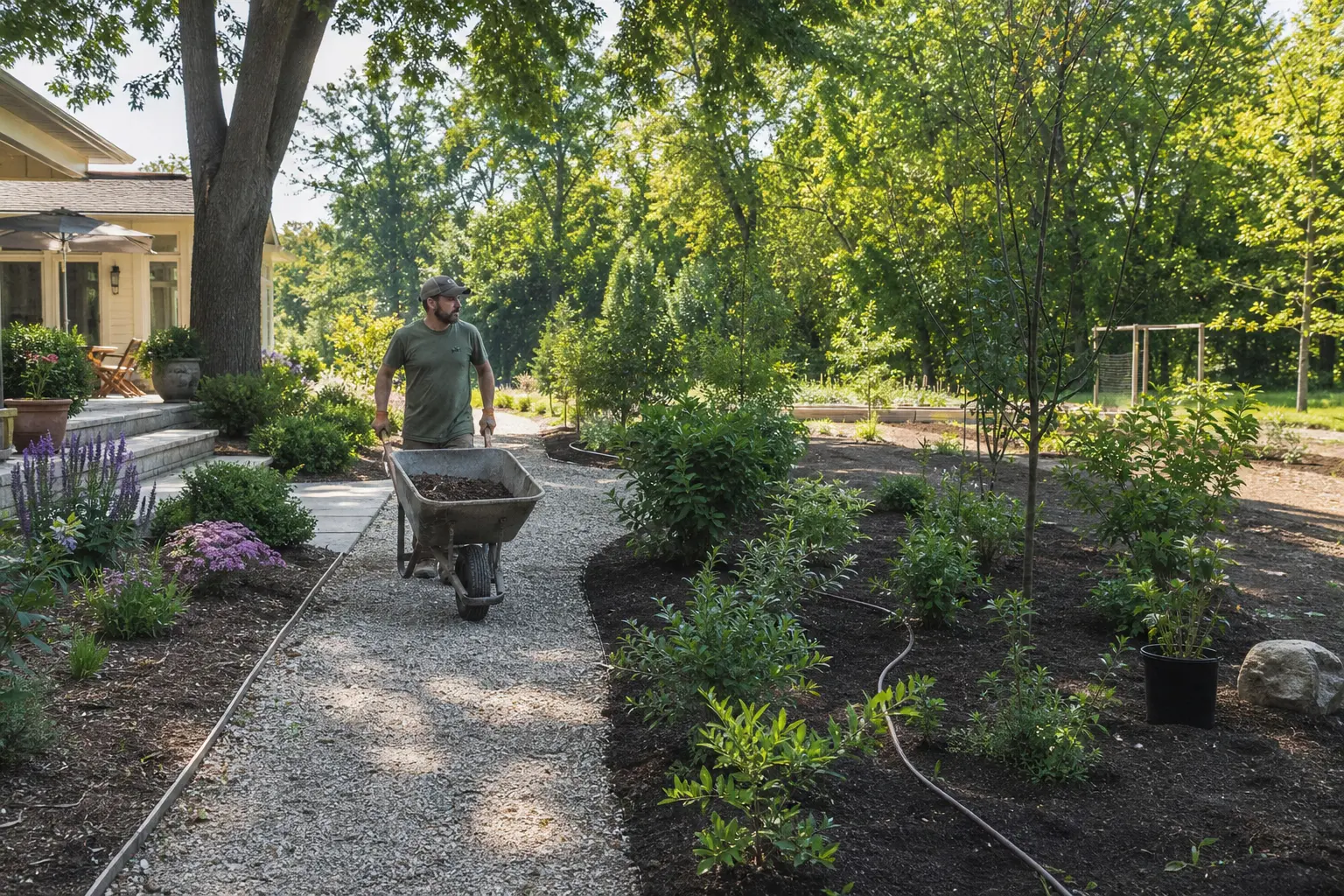
Growing plants in a large garden is not simply small-scale gardening with more beds. At larger scale, mistakes cost more in time, water, and replacement plants. A poorly placed shrub, inefficient watering method, or weed problem that is manageable in one border can become overwhelming across a property.
Large gardens need systems. Successful gardeners assess conditions, divide the site into workable areas, repeat reliable plant combinations, and focus effort where it has the greatest effect. New plants also need dependable care during their first season before the garden becomes more self-sustaining.
Plan the Garden Around Scale, Conditions, and Access
Before buying plants, observe the whole garden. Large sites often contain several growing environments: a sunny lawn edge may be dry and exposed, while ground behind a hedge may be shaded, damp, and sheltered. Treating them alike leads to poor performance and unnecessary maintenance.
Assess:
- Sunlight: Note direct sun through the day; buildings, trees, and hedges may create substantial shade.
- Soil: Check different areas for clay, sand, stones, compaction, and organic matter.
- Drainage: Identify pooling water and places that dry quickly after rain.
- Wind: Exposed ground dries faster and can damage new plants.
- Slopes: Upper areas may be dry while lower ground stays wet.
- Access: Consider how tools, mulch, hoses, compost, and wheelbarrows will reach each area.
A planting scheme is only practical if you can maintain it without repeatedly carrying supplies across the garden.
Divide the space into manageable planting zones
Break the garden into zones based on conditions and purpose. A sunny, regularly watered border near the house needs different plants and care from a lower-maintenance shrub area at the edge of the property.
Useful zones include:
- High-visibility beds near entrances, patios, or windows
- Vegetables, fruit, herbs, or cut flowers
- Sunny dry areas
- Damp or poorly drained areas
- Shade beneath trees
- Boundary planting for screening, habitat, or wind protection
- Outer areas that do not need weekly attention
Beds closest to the house can justify more detailed planting and seasonal colour. Distant boundaries are usually better suited to durable shrubs, grasses, perennials, or ground covers.
Map paths, water sources, storage, and working areas
Plan practical infrastructure before planting densely. Sketch the site and mark trees, buildings, fences, taps, slopes, drainage routes, and sun or shade.
Then identify:
- Paths wide enough for a wheelbarrow or mower
- Water points, hose routes, or irrigation zones
- Compost, mulch, and tool storage
- Delivery access for soil, compost, gravel, or plants
- A potting or temporary plant-holding area
Avoid large beds that require walking through planting to reach the back. Paths or stepping stones prevent compacted soil and damaged plants. Irrigation is also much easier to install before beds fill in.
Start with priority beds instead of planting the whole garden at once
Planting an entire large garden in one season can create an unmanageable backlog of watering, weeding, staking, and replacing losses. Start with one or two important areas, such as a front border, patio planting, or productive plot, and establish them properly before expanding.
Use temporary solutions elsewhere: mulch future beds, mow paths through open areas, sow a cover crop, or add simple ground cover while planning continues. Phasing also helps you learn where soil dries first, where pests feed, and which plants tolerate local wind and weather.
Choose Plants That Suit the Site and Reduce Maintenance
Plant selection matters more at scale because unsuitable plants multiply the workload. A plant that needs frequent watering, staking, deadheading, winter protection, or pest control may be worthwhile in a small display near the door, but less practical across long borders.
Choose plants suited to existing conditions rather than trying to alter every area for demanding plants.
Select plants for sun, soil, climate, and mature size
Choose according to the conditions in each zone, not the conditions you hope to create. A bright area under a tree is not the same as full sun, and a plant that tolerates dry soil may fail in wet clay.
Consider mature size as well. Shrubs that look small in nursery pots can eventually block paths, crowd neighbours, and shade lower plants.
When choosing a plant, ask:
- Will it receive suitable sun or shade?
- Can it tolerate the soil’s moisture level and texture?
- Will it withstand local cold, heat, wind, or humidity?
- How large will it become?
- Does its maintenance level suit this part of the garden?
Reserve demanding plants for accessible, high-priority beds and use tougher choices elsewhere.
Use trees, shrubs, perennials, and ground covers as the garden framework
Permanent plants provide structure and reduce the need for yearly replanting. Trees add height and shade; shrubs define boundaries; perennials return each year; ground covers protect bare soil.
A practical hierarchy is:
- Trees and large shrubs for long-term structure
- Smaller shrubs and robust perennials for repeated colour and shape
- Ground covers and spreading plants to cover soil and limit weeds
- Annuals and containers for concentrated seasonal colour near living areas
Repeat a small number of reliable plant types rather than using one of everything. Repetition creates a coherent appearance and simplifies pruning, watering, dividing, and mulching.
Group plants with similar water and care needs
Mixed planting works best when plants have compatible needs. Put drought-tolerant plants together in dry, sunny areas and moisture-loving plants in naturally damp ground or near irrigation. Keep plants needing frequent picking, deadheading, or protection near paths and water.
Grouping by water requirements prevents dry-soil plants from being overwatered because they share a bed with thirstier neighbours.
Plan spacing for growth, airflow, and easier weeding
Young plants make new beds look sparse, but overcrowding creates disease, weak growth, and difficult maintenance later. Allow for mature width, especially with trees and shrubs, and leave enough room to weed, prune, stake, and divide perennials.
Use mulch or temporary annuals to cover gaps rather than permanently packing plants too tightly. Good spacing improves airflow and makes pests or disease easier to spot.
Establish Plants Successfully After Planting
The first month after planting is when many avoidable failures occur. In a large garden, a group of losses often points to a shared problem such as watering, planting depth, drainage, or poor-quality stock.
Prepare planting holes and soil without overworking it
Remove persistent weeds before planting, especially perennial weeds with deep or spreading roots. Loosen compacted soil where necessary, but avoid unnecessary deep digging that can damage soil structure and bring weed seeds to the surface.
Dig holes wide enough for roots to spread, but generally no deeper than the root ball. Planting too deeply is a common cause of decline, especially in woody plants. The point where roots meet the stem should sit at or slightly above finished soil level.
Backfill with the removed soil. Improve poor ground gradually across the planting area rather than creating a small, highly amended pocket. Firm gently to remove major air gaps, then water thoroughly.
Water deeply and consistently while roots establish
New plants need moisture around the root ball even when surrounding soil appears damp. Rain may wet the surface without reaching recently planted roots.
Water slowly so moisture soaks in rather than running off. Check soil near the root ball with a finger, trowel, or soil probe. Aim for evenly moist soil, not constant saturation.
| Condition | Likely watering adjustment |
|---|---|
| Hot, windy, or dry weather | Check more often |
| Sandy or gravelly soil | Water may be needed more frequently |
| Heavy clay soil | Water less often and watch for waterlogging |
| Mature plants | Usually need less irrigation than new plants |
| New trees and shrubs | Need regular deep watering for longer |
Use soil moisture rather than a fixed calendar as the main guide.
Mulch to conserve moisture and suppress weeds
Mulch is a major labour-saving tool in large gardens. It slows evaporation, moderates soil temperature, reduces weed germination, and gives beds a finished appearance.
Use composted bark, leaf mould, compost, or suitable wood chips. Spread mulch over the soil but leave a clear gap around stems and trunks; mulch piled against them can trap moisture and encourage rot or pests. Replenish it as it breaks down.
Check for transplant shock, pests, poor drainage, and planting-depth problems
Inspect new plants regularly, especially during hot or unsettled weather. Wilting, yellowing, leaf scorch, leaf drop, or slow growth may indicate stress.
Check whether:
- The root ball is dry below the surface
- Water is pooling around roots
- Plants are buried too deeply
- Roots were tightly bound in the pot
- Leaves or stems are damaged by pests
- Wind is rocking larger plants loose
- Frost, heat, or intense sun has stressed plants
Some leaf loss after transplanting is normal, but widespread decline needs quick attention.
Manage the Ongoing Work in a Large Garden
A large garden becomes manageable when work is planned by priority rather than treated as one endless list. Some areas need close care; others can remain simpler and more natural.
Build efficient watering and irrigation routines
Hand-watering extensive borders, hedges, vegetables, and young trees can consume hours. Where possible, use systems that place water near roots.
Drip lines, seep hoses, soaker hoses, and targeted emitters are useful for beds and rows, especially with mulch. Overhead sprinklers may suit lawns or open ground but can waste water in wind and leave foliage wet.
Separate irrigation into zones. A newly planted border should not receive the same water as a mature dry-adapted shrub bed. Check systems for leaks, blocked emitters, and uneven coverage.
Prioritize high-impact tasks and let lower-priority areas stay simpler
When time is limited, use this order:
- Water new plants, vegetables, and containers.
- Remove weeds before they set seed in key beds.
- Address pests, disease, or storm damage.
- Harvest productive crops.
- Prune when it benefits health, structure, or safety.
- Leave cosmetic tasks, such as deadheading distant beds, until later.
This is sensible management, not neglect. Boundary plantings can retain some seedheads, fallen leaves, and faded flowers without harming the garden.
Use mulch, dense planting, and ground covers to reduce weeding
Weeding bare soil is one of the greatest time costs in a large garden. Reduce exposed ground by combining mulch, appropriate ground covers, repeated groups of shrubs and perennials, and clear bed edges.
Remove invasive or seeding weeds before they spread. Dense planting should still leave adequate airflow and access; the aim is covered soil, not overcrowded plants.
Keep records of plant performance, failures, and seasonal tasks
Simple records save time in future years. Note what was planted, where, when, and how it performed. Photograph beds in different seasons, especially when they look good or problems appear.
Useful records include plant names and locations, flowering or harvest periods, irrigation changes, pest observations, weather events, and seasonal tasks such as pruning, dividing, mulching, and sowing.
Troubleshoot Plants That Decline Soon After Planting
When several plants decline within weeks, look for a pattern rather than immediately blaming the plants or the gardener. Plants from the same batch or bed may share a watering, drainage, or planting problem.
Check moisture levels and drainage first
Moisture problems are a common cause of early decline. Wilting does not always mean dryness: waterlogged roots also cannot function properly.
Check below the surface. If the root ball is dry while surrounding soil is damp, water may not be penetrating the original potting mix. If holes stay full of water after rain or irrigation, drainage may be inadequate. Downspouts, compacted subsoil, rubble, and low spots can affect one area.
Look for root damage, incorrect planting depth, or poor plant quality
Inspect a declining plant if practical. Circling roots may struggle to grow outward, while black, soft, foul-smelling roots may be rotting. Dry, brittle roots may indicate prior stress.
Check planting depth as well. Buried crowns or stem bases can rot, and exposed roots can dry out. Do not heap soil or mulch around woody trunks.
Rule out weather stress, pests, disease, and unsuitable conditions
Hot spells, late frost, strong wind, or sudden exposure to full sun can cause transplant stress. Inspect leaves and stems for chewing, sap-sucking insects, spots, mould, or lesions.
Finally, reconsider the site. A shade plant in intense afternoon sun or a drought-tolerant plant in wet clay may continue to fail despite good care.
Replace failed plants only after correcting the underlying problem
Do not simply replace plants in the same hole. Correct drainage, planting height, irrigation, wind exposure, pest issues, or plant choice first. If a whole group has failed, test one replacement before replanting the entire area.
Conclusion
Growing plants in a large garden differs because scale magnifies every decision. Plan for changing conditions, create practical access and irrigation, and choose plants that perform without constant intervention.
Start with priority areas, build in stages, and use durable plant combinations suited to the soil, sun, moisture, and climate. Give new plants consistent establishment care, then rely on mulch, ground covers, records, and practical routines to keep the workload realistic.
FAQ
How do I make a large garden easier to maintain?
Divide the garden into priority zones and concentrate detailed planting near the house or main seating areas. In distant areas, use site-appropriate trees, shrubs, perennials, and ground covers rather than plants needing frequent watering, deadheading, or staking.
Mulch bare soil, group plants with similar water needs, install efficient irrigation where useful, and keep paths, storage, and seasonal tasks organized.
What is the best way to water plants in a large garden?
Targeted irrigation such as drip lines, seep hoses, or soaker hoses is often more practical than hand-watering large planted areas. These methods deliver water near roots and can be divided into zones.
Water deeply enough to moisten the root area, then check the soil before watering again. New trees, shrubs, and perennials need closer monitoring than established plants, and mulch helps retain moisture.
Why are newly planted plants dying within a few weeks?
Common causes include dry root balls, overwatering, poor drainage, planting too deeply, root-bound or damaged plants, weather stress, pests, and unsuitable light or soil conditions.
When several plants fail at once, look for a shared cause such as irrigation or drainage. Check soil moisture below the surface and planting depth before replacing them.
Should I plant a large garden all at once or in stages?
For most home gardeners, stages are more realistic. Start with areas you use and see most often, establish those plants well, then expand gradually. This spreads costs, reduces the watering burden, and gives you time to understand site conditions.
Temporary mulch, mown paths, ground covers, or cover crops can keep future planting areas tidy while you plan the next stage.
You Might Also Like