How Should You Arrange Indoor Plants for an Attractive Display?
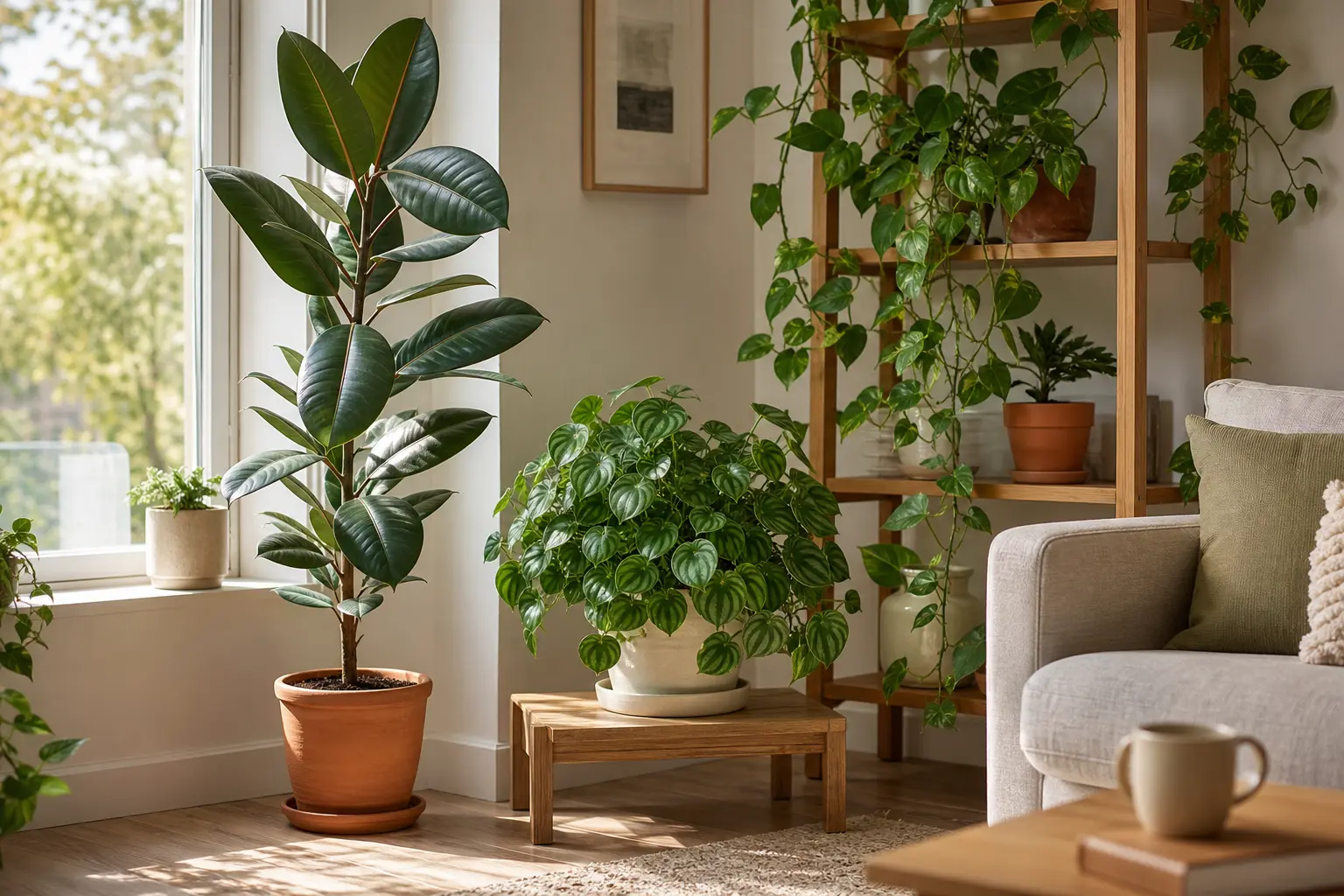
The most attractive indoor plant arrangements begin with growing conditions, then use height, shape, and repetition to create an intentional display. Give each plant suitable light, room to grow, and easy access for care rather than filling every available surface.
Observe where daylight falls, then build layers with a taller plant for structure, medium plants for fullness, and one or two trailing plants to soften edges. Leave enough space to see individual leaves and pots.
Start With Light, Space, and Plant Needs
A stylish arrangement will not compensate for plants declining in the wrong location. Start with light, then consider temperature, drafts, humidity, and the plant’s mature size.
Watch plants over time. Sparse growth, fading variegation, slow-drying soil, or strong leaning toward a window can signal insufficient light. Scorched or bleached leaves may indicate too much direct sun.
Match plants to bright, indirect, low-light, and direct-light areas
Bright, indirect light suits many popular houseplants. This is a bright room where intense sunlight does not strike foliage for most of the day. Place plants a few feet from a bright window, beside it, or behind a sheer curtain.
Plants commonly suited to bright, indirect light include:
- Pothos
- Heartleaf philodendron
- Monstera deliciosa
- Rubber plant
- Peace lily
- Spider plant
- Many hoyas and orchids
Direct light reaches the foliage. Reserve sunny windowsills for plants adapted to it, including many cacti, succulents, jade plants, aloe, and herbs. Acclimate plants gradually if they were previously grown in lower light.
Low light means dim daylight, not no light. Snake plants, ZZ plants, cast-iron plants, Chinese evergreens, and some pothos tolerate lower-light positions, though they will grow slowly. Water less often because soil dries more slowly.
Place plants where they can thrive, then decorate around them. Do not put a high-light plant in a dark corner just because it suits the room visually.
Assess windows, room orientation, and darker apartment corners
Window direction affects light, although trees, neighboring buildings, balconies, and window size can alter the result.
- South-facing windows in the Northern Hemisphere generally provide the strongest light and suit many direct-light plants.
- East-facing windows provide gentler morning sun and work for many foliage plants.
- West-facing windows can be hot and bright in the afternoon, so watch sensitive leaves for scorching.
- North-facing windows usually offer softer, lower-intensity light and suit tolerant foliage plants placed closer to the glass.
In a low-light apartment, treat the area near the brightest window as valuable growing space. For a genuinely dark corner, use a grow light if you want living plants there; otherwise, use artwork, a mirror, or another decorative element.
Leave room for airflow and future growth
Avoid packing plants leaf-to-leaf. Crowding traps moisture, hides pests, complicates watering, and obscures the plants’ individual forms.
Allow room around broad-leafed plants such as monstera, bird of paradise, and rubber plants. Keep foliage away from radiators, heating vents, air-conditioning streams, and cold window glass in winter.
Consider future growth as well. A plant that fits neatly on a shelf now may outgrow it within a season or two. Choose locations that allow you to raise, prune, trail, or relocate plants later.
Create Balanced Groups With Height, Shape, and Texture
A grouping looks composed when it has contrast and visual hierarchy. Instead of lining pots up at one height, use a taller focal plant, supporting plants, and perhaps a trailer to draw the eye downward.
The goal is balance, not strict symmetry.
Use the thriller, filler, and trailing-plant approach
This container-design idea works well indoors:
- Thriller: a plant that adds height or a strong focal point, such as a snake plant, rubber plant, dracaena, or upright philodendron.
- Filler: a rounded or bushy middle layer, such as peperomia, Chinese evergreen, calathea, or compact pothos.
- Trailer: a plant that spills over a shelf or stand, such as heartleaf philodendron, satin pothos, string of hearts, or trailing hoya.
For example, place a medium snake plant at the back of a stand, a full peperomia at mid-level, and a trailing pothos on the upper shelf. The display has movement without requiring many pots.
Group plants in odd numbers and stagger their heights
Groups of three or five often create a relaxed, natural rhythm, though this is not a strict rule. Two large matching plants can work well framing a sofa or doorway.
For a three-plant cluster, use clearly different heights:
- A tall floor plant or plant stand at the back.
- A medium plant on a low stool or stand.
- A smaller plant at floor level or on a nearby shelf.
Avoid nearly identical pots arranged in a straight line. Staggered heights help each plant remain visible.
Combine upright, bushy, trailing, and large-leaf plants
Different growth habits make a collection more interesting even when foliage is mostly green. Pair vertical plants with rounded ones, then add a trailer or unusually shaped leaves.
Effective combinations include:
- Upright snake plant with Chinese evergreen and trailing pothos
- Large-leaf monstera with compact peperomia and trailing philodendron
- Slender dracaena with bushy spider plant and cascading string of hearts
Avoid overcrowding one small area with patterned or variegated plants. Let one colorful or strongly patterned plant be the feature and surround it with simpler foliage.
Repeat pot colors or materials to unify mixed plant types
Pots do not need to match exactly, but repetition makes a collection feel connected. Choose one or two common elements, such as terracotta, white or cream cachepots, woven baskets, or matching stand finishes.
Mixing shapes works when the palette is restrained. A ceramic cylinder, terracotta bowl, and woven basket can look cohesive if they share warm, earthy tones.
Use Plant Stands, Shelves, and Corners to Build Layers
Vertical layering makes a collection look fuller without filling every tabletop. It can also bring plants closer to usable window light. Keep displays accessible enough to inspect, water, and clean.
Arrange floor plants around windows and in empty corners
Floor plants work best when they anchor a room without blocking traffic. Place a large plant just beside a window rather than directly in front of it. A rubber plant, dracaena, palm, or large snake plant can soften the gap between a chair and window or fill an empty corner near a bright wall.
Use a sturdy stand to lift a medium plant into better light, but leave room to open blinds, curtains, and windows safely.
In darker corners, use tolerant plants as close to available daylight as possible. Rotate only when needed for even growth; frequent moves between very different light levels are not helpful.
Style shelves, bookcases, and mantels without cramming plants together
Shelves suit small and trailing plants, but they look cluttered when every level is filled. Leave negative space and alternate plants with books, framed art, or a small object.
A simple shelf formula is:
- One medium upright plant on a lower or middle shelf
- One small compact plant elsewhere
- One trailing plant on an upper shelf
- At least one partly open shelf section
Avoid placing water-sensitive plants above books, electronics, or upholstery. Mantels can hold a few plants if the light is suitable and fireplace heat is not a concern, but they are often too warm or dim for permanent displays.
Add hanging plants and wall-mounted displays safely
Hanging plants free up surfaces and add softness around windows and seating areas. Use lightweight pots, hardware rated for the pot, wet soil, and mature plant, and anchors appropriate to the ceiling or wall material.
Hang plants high enough to avoid head bumps but low enough to water safely. Keep vines clear of doors, blinds, and walkways.
For wall-mounted planters, make sure water cannot run down the wall and that plants can be removed for pruning, pest checks, and repotting.
Create a focal point with one large plant or a clustered plant stand
Most rooms need only one main plant focal point. This could be a tall bird of paradise near a bright window, a sculptural snake plant, or a three-tier stand holding a small edited cluster.
Keep the tallest plant at the top or back of a stand and smaller plants below. If foliage overlaps so heavily that stems and pots cannot be inspected, remove one or two plants.
Make the Arrangement Easy to Water and Maintain
A display that is inconvenient to care for will eventually look neglected. Plan for watering, drainage, cleaning, and inspection from the start.
Keep similar-care plants near one another
Grouping plants with broadly similar needs simplifies care. Keep drought-tolerant plants such as snake plants, ZZ plants, and many succulents together rather than mixing them with plants that prefer consistently moist soil.
Plants still may not need water on the same day, so always check the potting mix first. Similar light and moisture preferences simply reduce the chance of overwatering one plant while caring for another.
Use saucers, cachepots, and drainage-friendly containers
Whenever possible, grow plants in pots with drainage holes. Set them on waterproof saucers or place the nursery pot inside a decorative cachepot, which has no drainage. Remove the inner pot to water, let it drain thoroughly, then return it.
This protects furniture and makes decorative changes easy. Do not let plants sit in collected water for extended periods, as constantly wet soil can damage roots.
Avoid hard-to-reach placements that discourage regular care
If watering requires moving furniture, climbing unsafely, or reaching behind curtains, reconsider the placement. Reserve high shelves and hanging displays for plants that are lightweight and relatively easy to maintain.
For shelf plants, remove pots and water them at a sink or tub when possible. Let them drain before returning them to the display.
Check spacing for pests, airflow, and easy leaf cleaning
Inspect plants while watering. Check leaf undersides, stems, and soil for webbing, sticky residue, scale insects, or tiny flying insects. Space between pots makes this easier and can help contain problems early.
Wipe dust from broad leaves with a soft damp cloth as needed. Remove yellowing leaves, fallen debris, and dead stems from displays.
Beginner-Friendly Indoor Plant Arrangement Ideas
Starting with a few adaptable plants is easier than styling a large collection at once. These arrangements create impact while keeping light and maintenance realistic.
A bright indirect-light windowsill grouping
Use three small plants with varied forms:
- A compact peperomia or pilea
- A small pothos allowed to trail from the edge
- A snake plant or upright sansevieria variety
Place the tallest at one end, the trailing plant at the other, and the rounded plant between them. Use saucers and leave a gap so leaves do not press against cold glass.
A low-light corner with resilient plants
Set a medium snake plant on the floor or a low stand, then add a ZZ plant on a slightly raised stand nearby. If the corner receives modest daylight, include a Chinese evergreen for a softer middle layer.
Keep the grouping near the room’s best available light. In very dim conditions, use a grow light or limit the display to one or two plants that can be moved closer to a window.
A small-space shelf display
Place a small upright plant, such as a mini snake plant or peperomia, on a middle shelf. Add pothos or heartleaf philodendron on an upper shelf where vines can hang freely, then place a compact plant in a matching pot on a lower shelf.
Use no more than one plant per shelf section if shelving is shallow. This leaves room to remove pots for watering.
A statement floor-plant arrangement for a living room
Choose one large plant suited to the light, such as a rubber plant in bright indirect light or a tall snake plant in a lower-light room. Place it beside rather than directly in front of a window.
Add one medium bushy plant on a short stand and one trailing plant on a nearby side table. Repeat one pot color across the three containers so the large plant remains the focal point.
Conclusion
Arrange indoor plants by letting growing conditions guide the design. Start with the best light, leave room for airflow and growth, then create layers with contrasting heights, leaf shapes, and plant habits. A few well-placed plants usually look better than a crowded collection.
Choose containers that make watering and drainage straightforward, keep plants reachable, and reassess the display as seasons and plant sizes change. When an arrangement supports regular care, it stays attractive long after the initial styling.
FAQ
How many indoor plants should be grouped together?
Three plants are an easy starting point because they allow variation in height and shape without clutter. A group of five can work on a wide shelf, plant stand, or floor area if there is enough light and space between pots.
The right number depends on plant size and location. One large floor plant may have more impact than several small pots crowded into one corner.
Can I arrange plants in a room with little natural light?
Yes, but choose genuinely low-light-tolerant plants and place them near the brightest available window. Snake plants, ZZ plants, cast-iron plants, and Chinese evergreens are practical options for lower-light homes.
No houseplant can grow indefinitely in complete darkness. Use an appropriate grow light if the room has no meaningful daylight.
Which plants work well together in one display?
Choose plants with similar light and watering needs, then vary their form. A snake plant, ZZ plant, and trailing pothos can work in a moderately bright area, although the pothos may need water more often.
For bright indirect light, a rubber plant, peperomia, and heartleaf philodendron offer a mix of large, rounded, and trailing foliage. Do not force plants with conflicting needs into one display simply because they look good together.
How do I keep an indoor plant display from looking cluttered?
Limit plants in each area, vary their heights, and leave visible open space between pots. Repeat a pot color or material for cohesion instead of adding more decorative objects.
Remove plants that are struggling, oversized for the spot, or hidden behind healthier plants. The display should make each plant easy to see, inspect, and water.
You Might Also Like