What to Consider Before Buying Land for an Orchard
Buying land for an orchard is different from buying attractive rural acreage. Fruit and nut trees are long-term plantings, so mistakes in soil, drainage, water, climate, access, or legal use can stay expensive for decades.
Good orchard land does not have to be perfect, but it must fit the crop, your budget, and your plan for using or selling the harvest. Before making an offer, evaluate the property as a working agricultural site.
Match the Land to the Orchard You Want to Grow
Start with the orchard you want, then look for land that supports it. Apples, peaches, cherries, citrus, pecans, walnuts, olives, and berries all have different requirements. A site that is excellent for one crop may be unsuitable for another.
Decide whether you want a homestead orchard, pick-your-own farm, wholesale block, cider orchard, nut planting, or specialty fruit business. Scale and market affect access, water demand, labor, equipment, and storage.
Climate and growing zone
USDA growing zones are useful, but they only describe average winter lows. Orchard success also depends on frost, heat, rainfall, humidity, wind, drought, and disease pressure.
Review:
- Winter minimum temperatures
- Spring frost dates
- Summer heat intensity
- Rainfall and humidity
- Wind exposure
- Length of growing season
- Drought, hail, storm, or flood frequency
A hardy apple may survive winter but lose blossoms to spring frost. Peaches may grow in warm areas but struggle in wet, humid climates. Citrus may handle heat but not hard freezes. Ask extension offices, nurseries, nearby growers, and agricultural advisers what performs reliably in the area.
Chill hours, frost pockets, and heat stress
Many temperate fruit and nut trees need enough winter chill to bloom properly. Apples, peaches, plums, cherries, pears, almonds, and some blueberries have cultivar-specific chill requirements. Too little chill can cause uneven leafing, weak bloom, and poor crops.
Also watch for frost pockets. Cold air drains downhill and settles in low areas, so a valley floor can be colder than a nearby slope. Warning signs include:
- Low basins with poor air movement
- Tree lines, berms, or buildings that trap cold air
- Creek bottoms or wetlands
- Late snow melt
- Nearby growers using frost protection
Heat can also limit production by causing sunburn, poor fruit color, high irrigation demand, and reduced quality.
Suitability for specific fruit or nut trees
There is no universal “orchard land.” Each crop has different tolerances for drainage, drought, salinity, wind, slope, and disease.
| Crop type | Site preferences | Common risks |
|---|---|---|
| Apples and pears | Air drainage, moderate fertility, well-drained soil | Fire blight, frost pockets, wet roots |
| Peaches and nectarines | Warm sites, excellent drainage, airflow | Late frost, wet soil, winter injury |
| Cherries | Well-drained soil, frost protection | Rain cracking, frost, root disease |
| Citrus | Mild winters, irrigation, freeze protection | Hard freezes, saline water |
| Pecans and walnuts | Deep soil, long season, ample water | Drought, shallow soil |
| Olives | Mild winters, dry summers, drainage | Cold damage, wet roots |
| Plums and apricots | Good drainage, suitable chill | Early bloom frost, disease |
If you know the crop, judge land through that crop’s needs. If you are flexible, ask what the property naturally favors. It is usually cheaper to match the crop to the land than to force the land to fit the crop.
Proximity to markets, labor, and services
Remote land may be affordable, but orchards need supplies, labor, equipment, and buyers. Distance matters most for commercial or public-facing orchards.
Consider access to:
- Farmers markets, processors, packing houses, cideries, or wholesale buyers
- Seasonal labor
- Equipment repair
- Nurseries and farm suppliers
- Cold storage
- Roads suitable for trucks, trailers, and customers
A productive site far from buyers may be less practical than a smaller site near a strong market.
Evaluate Soil, Water, Drainage, and Terrain
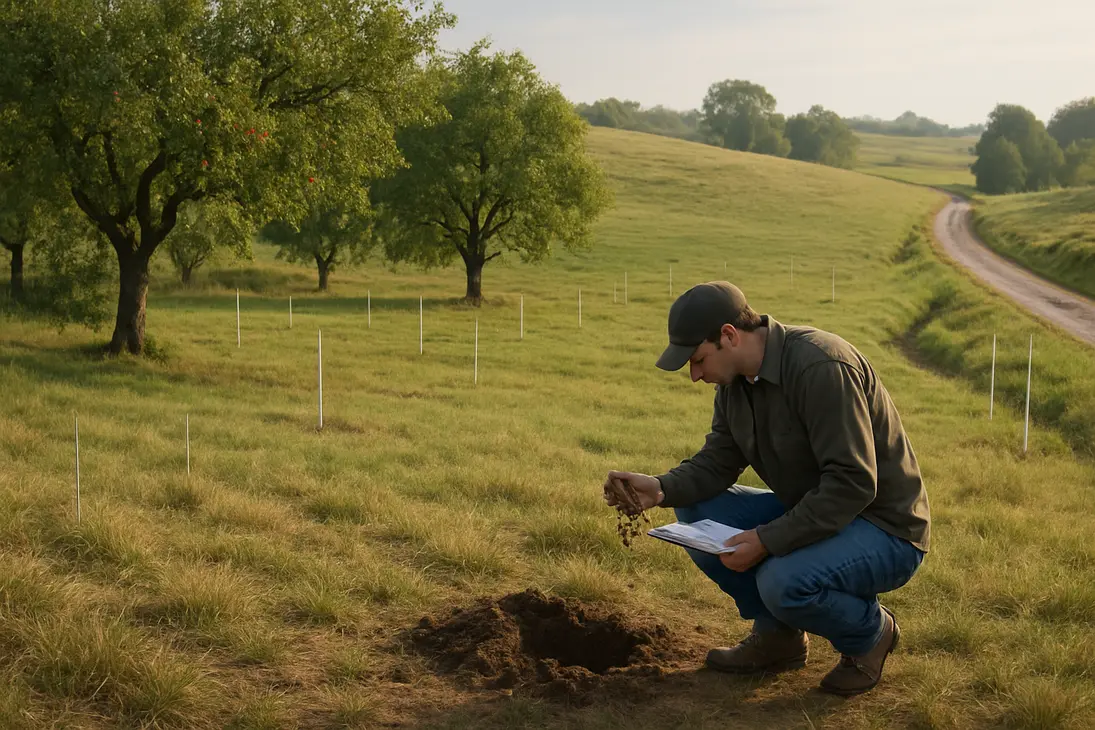
Climate shows what might grow. Soil, water, drainage, and terrain show whether trees can thrive economically. Walk the property, review maps, dig test holes if allowed, and get professional tests before closing.
Soil depth, texture, fertility, and pH
Fruit and nut trees need enough soil volume for roots to anchor, feed, and access moisture. Look for:
- Adequate depth before bedrock, hardpan, or compaction
- Texture with both drainage and water-holding capacity
- Suitable pH for the crop
- Manageable fertility and organic matter
- Low salinity where relevant
- No obvious contamination from dumping, industry, or chemical misuse
Heavy clay can cause drainage and root disease problems. Very sandy soil may need more irrigation and fertility management. Shallow soil can limit tree size and drought tolerance.
Order a soil test before buying. Test pH, nutrients, organic matter, texture, salinity where relevant, and local concerns. A soil scientist or agricultural consultant can help identify restrictive layers.
Drainage and flood risk
Poor drainage is one of the hardest orchard problems to fix after planting. Saturated soil reduces oxygen, weakens roots, and encourages disease.
Check for standing water after rain, wetland plants, gray or mottled soil, sour-smelling soil, erosion channels, sediment deposits, and ditches that stay full.
Floodplain soils may be fertile, but repeated flooding can kill young trees, delay work, damage irrigation, and complicate insurance or financing. If tile drainage, swales, diversion ditches, or berms are needed, price them before buying.
Water rights, well capacity, and irrigation options
Reliable water is critical, especially while trees establish and during fruit sizing. Rainfall may be enough for some crops in some regions, but many orchards need irrigation.
Verify:
- Legal water rights
- Well yield and recovery rate
- Water quality, including salts where relevant
- Existing irrigation infrastructure
- Power for pumps
- Pond or surface-water permits
- Drought restrictions
A creek does not automatically give you irrigation rights. A well does not automatically support several planted acres. Ask for well logs, pumping records, water tests, permits, and transfer requirements.
Drip irrigation is common because it uses water efficiently and can deliver fertilizer. Overhead irrigation may help with frost protection in some settings, but it requires high water volume and careful management.
Slope, aspect, erosion, and machinery access
Terrain affects frost, sunlight, erosion, and equipment safety. Gentle slopes often work well because cold air can drain away. South-facing slopes in the Northern Hemisphere warm earlier, which may help ripening but can increase frost risk by encouraging early bloom. North-facing slopes stay cooler and may delay bloom.
Steep slopes can improve air drainage but create problems with tractor access, erosion, irrigation design, harvest, safety, roads, and terrace costs. Even small orchards need access for mowing, pruning, spraying or organic pest management, harvest bins, trailers, and emergency vehicles.
Check Legal, Zoning, and Access Issues Before You Buy
A property can be good horticulturally and still fail legally. Confirm that you can farm it, reach it, irrigate it, build needed structures, and sell products from it.
Agricultural zoning and permitted uses
Do not rely on listing phrases such as “farm potential.” Ask the local planning office what is allowed.
Confirm whether you can:
- Grow a commercial orchard
- Operate a farm stand, pick-your-own business, or agritourism activity
- Build barns, wells, storage, worker housing, or a residence
- Meet parcel size, setback, parking, sign, and traffic rules
- Use normal farm equipment and crop protection practices
This matters near residential areas, where a personal orchard may be allowed but a public business may require permits.
Easements, road access, and utilities
Legal access is essential. A long-used dirt track is not the same as a recorded easement. Confirm the parcel touches a public road or has legal access for your intended use.
Review easements for roads, driveways, utilities, irrigation ditches, conservation restrictions, neighbor access, powerlines, pipelines, and drainage rights. Utilities also affect cost. Bringing power to a pump, cooler, barn, or residence can be expensive, so estimate upgrades before closing.
Water-use regulations and environmental restrictions
Water law varies widely. Groundwater pumping, surface-water rights, and drought restrictions may limit irrigation.
Environmental rules may affect wetlands, streams, riparian buffers, endangered species habitat, tree clearing, grading, erosion control, pesticide use near homes or waterways, and burning brush or prunings.
These rules may not prevent orchard development, but they can change where and how you plant.
Boundary surveys, title checks, and liens
A survey can prevent disputes over fences, wells, roads, and acreage. Rural fence lines often do not match legal boundaries.
Use a qualified title company or real estate attorney to review clear title, liens, tax status, mineral, timber, or water reservations, recorded easements, boundary descriptions, leases, and tenant rights. If a grazing, hunting, crop, or farm lease exists, find out when it ends and what rights transfer to you.
Understand the Full Cost of Orchard Land
The purchase price is only the start. A cheap parcel with poor water, no fencing, weak access, or major drainage needs may cost more than a higher-priced parcel with good infrastructure.
Land price versus development cost
Compare properties by total cost, not land price alone. Orchard development may require:
- Soil testing and consulting
- Clearing, ripping, grading, or erosion control
- Drainage work
- Wells, pumps, tanks, filters, and irrigation lines
- Power upgrades
- Wildlife fencing
- Trees, rootstocks, and planting labor
- Trellis systems where needed
- Roads, gates, and equipment areas
- Barns, coolers, or packing areas
- Permits and legal fees
Existing wells, fencing, power, and access can justify a higher purchase price.
Site preparation, fencing, irrigation, and tree planting
Young trees need consistent water, protection, and good planning. Design irrigation before planting. Plan tree spacing, row orientation, rootstock, pollinizers, and equipment lanes together.
Budget for cultivars and rootstocks, stakes or trellis materials, weed control, irrigation emitters and filters, pollinizer trees, replacement trees, soil amendments, and pest monitoring supplies. Poor spacing or awkward access becomes a long-term problem.
Years before trees produce income
Orchards rarely pay quickly. Many fruit trees take several years to produce meaningful crops, and nut trees often take longer. During establishment, you still pay for mowing, irrigation, pruning, pest control, taxes, loan payments, insurance, and repairs.
Include these non-income years in your business plan. If cash flow is tight, consider compatible interim income such as annual crops between rows, workshops, a small nursery area, or off-farm income.
Financing options for buying orchard land
Financing orchard land can be harder than financing a house. Raw land and agricultural parcels may require larger down payments, shorter terms, or specialized lenders.
Possible sources include:
- Agricultural lenders
- Farm credit institutions
- Rural local banks
- Seller financing
- Home equity from another property
- Partnerships or family investment
- Beginning-farmer or conservation programs where available
Lenders may ask for a business plan, water documentation, development budget, comparable land values, and evidence of experience. Do not spend so much on the land that you cannot afford to develop it.
Plan the Purchase Process Step by Step
Use a deliberate process so emotion does not outrun due diligence.
Define orchard goals and budget
Write a basic plan before shopping. Answer:
- What crops will you grow?
- Is the orchard for home use, side income, or full business income?
- How many acres will be planted?
- How much labor can you provide?
- Will customers visit?
- What equipment is needed?
- What is the total land-plus-development budget?
- How long can you wait for income?
Beginners should start at a manageable scale. A well-planned five-acre orchard can be better than a fifty-acre mistake.
Visit sites in different seasons if possible
One sunny visit is not enough. If possible, see the property after heavy rain, during dormancy, during spring frost risk, and in summer heat.
Observe where water collects, whether roads become muddy, wind movement, existing vegetation, neighboring crops, wildlife pressure, shade patterns, truck access, and erosion or flood signs.
Talk with neighbors. They may know about road washouts, frost, weak wells, or deer pressure. Verify what you hear.
Hire the right experts before closing
Professional advice is cheaper than buying the wrong land. Depending on scale, consider:
- Rural real estate attorney
- Title company
- Surveyor
- Soil scientist or agronomist
- Irrigation designer or well professional
- Orchard consultant
- Agricultural lender
- Accountant
- Extension adviser or horticulture specialist
A homestead orchard may not require every expert. A commercial planting usually deserves professional review before purchase.
Negotiate contingencies for soil, water, and legal findings
Use written contingencies rather than verbal promises. They should give you time to investigate and allow withdrawal or renegotiation if serious problems appear.
Possible contingencies include soil testing, water rights verification, well inspection and water quality, zoning and permits, survey results, title review, environmental or wetland findings, financing approval, and access or easement confirmation.
Have a qualified local professional draft the wording.
Conclusion
Buying orchard land is a long-term decision. The right property matches the crop’s climate needs, has suitable soil and drainage, provides reliable legal water, allows agricultural use, offers practical access, and leaves enough money for development.
Careful evaluation before purchase gives the orchard its best chance to become healthy, productive, and financially realistic.
FAQ
What is the most important factor when buying land for an orchard?
Water, soil, drainage, and climate are the key factors, and they must work together. The best site fits the needs of the specific crop.
How much land do you need to start an orchard?
A home orchard can fit on less than an acre with dwarf or semi-dwarf trees. A small market orchard may need several acres to justify equipment, fencing, irrigation, and marketing. The right size depends on crop, labor, market, budget, and income goals.
Can you buy raw land and turn it into an orchard?
Yes, if the fundamentals are right or can be improved affordably. Confirm soil, water rights, zoning, access, drainage, and development costs before buying. Raw land often needs clearing, fencing, irrigation, roads, utilities, and soil preparation before planting.
Is buying orchard land only practical for experienced farmers?
No. Beginners can buy land for a homestead or small orchard, but they should start small, test soil and water, talk with local growers, and get professional help for legal and technical checks.
You Might Also Like