What Are the Best Flowering Plants for a Small Flower Bed?
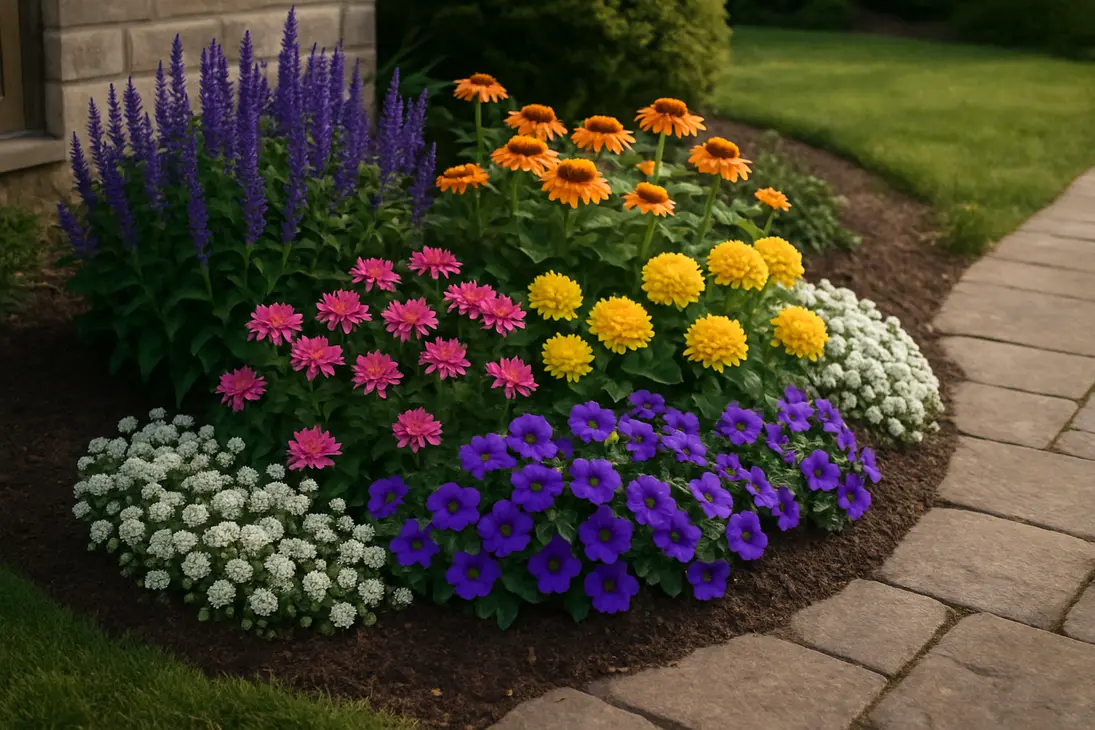
The best flowering plant for a small flower bed is compact, reliable, and suited to the bed’s light and soil. For sunny beds, good choices include salvia, dianthus, marigolds, petunias, dwarf coneflowers, and compact coreopsis. For partial shade, try begonias, impatiens, lobelia, and alyssum.
Most small beds look best with a mix: a few perennials for structure, annuals for fast color, bulbs for spring, and low edging plants to finish the front.
Best Flowering Plants for Small Flower Beds
Small beds need plants that earn their space. Avoid anything that sprawls, flops, blocks a path, or overwhelms neighboring plants. Choose compact varieties with long bloom times and growth habits that match your maintenance level.
Compact Annuals for Fast Color
Annuals are the fastest way to make a small flower bed look full. They bloom heavily for one season and can be changed each year.
| Annual | Best Light | Why It Works | Watch For |
|---|---|---|---|
| Petunias | Full sun | Long bloom season, many colors | Trim if leggy |
| Marigolds | Full sun | Easy, bright, heat-tolerant | Choose short types |
| Zinnias | Full sun | Bold color, good cut flowers | Use dwarf varieties |
| Impatiens | Shade/partial shade | Strong color in low light | Need steady moisture |
| Alyssum | Sun/partial shade | Fragrant, low edging | May fade in heat |
| Begonias | Partial shade | Tidy, dependable blooms | Avoid soggy soil |
For an easy sunny combination, plant marigolds in the middle, alyssum along the edge, and compact petunias for trailing color. For shade, use begonias or impatiens with lobelia or alyssum at the front.
Small Perennials That Come Back Each Year
Perennials cost more at first but return when they suit your climate and soil. In small beds, choose tidy clumping plants instead of aggressive spreaders.
Good options include:
- Lavender: Best in full sun and sharply drained soil; poor in wet clay.
- Salvia: Compact, pollinator-friendly, and often reblooms after trimming.
- Coreopsis: Cheerful yellow or gold flowers; choose compact varieties.
- Dianthus: Fragrant, low to medium height, good near edges.
- Dwarf coneflowers: Classic daisy-like blooms without excessive height.
- Compact black-eyed Susans: Warm color and sturdy growth in smaller forms.
Two or three perennial types are usually enough. Repeating plants in small groups looks more intentional than planting one of everything.
Bulbs and Early-Season Flowers
Bulbs add spring color before most annuals and perennials begin blooming. They also fit easily between established plants.
Useful choices include:
- Tulips: Bold spring flowers; often best treated as short-term color.
- Daffodils: Cheerful and usually longer-lived than tulips.
- Crocus: Very early blooms for the front of the bed.
- Dwarf iris: Good where larger iris would be too tall.
- Alliums: Add height and shape, but check mature size.
Plant bulbs in fall, then tuck annuals around fading foliage in spring. Do not cut bulb leaves right after flowering; they need time to feed the bulb for next year.
Low-Growing Fillers and Edging Plants
Low plants make small beds look finished. They soften edges, cover bare soil, and connect taller flowers.
Good edging plants include:
- Sweet alyssum: Easy annual edging in white, pink, or purple.
- Creeping phlox: Spring-blooming perennial for sunny edges.
- Frog fruit: Useful in warm regions as a pollinator-friendly groundcover, but it can spread.
- Candytuft: Low white perennial for sunny, well-drained spots.
- Lobelia: Blue, purple, or white flowers; best with consistent moisture.
Frog fruit is a good example of a plant that can be charming in the right place but frustrating in a tightly controlled bed. Use it where spreading is acceptable or keep it trimmed.
How to Choose the Right Flowering Plants for a Small Bed
A small bed leaves little room for mismatch. Before buying, check light, mature size, climate, soil, and care needs.
Match Plants to Sun Exposure
Most flowers need enough light to bloom well.
Full sun choices generally need at least six hours of direct sun:
- Petunias
- Marigolds
- Zinnias
- Lavender
- Salvia
- Coreopsis
- Dianthus
- Dwarf coneflowers
- Compact black-eyed Susans
Partial shade choices work with morning sun, filtered sun, or bright indirect light:
- Begonias
- Alyssum
- Lobelia
- Some dianthus
- Some compact salvias
Shade-tolerant flowers are better near porches, fences, or tree canopies:
- Impatiens
- Wax begonias
- Tuberous begonias
- Lobelia in cool conditions
Do not force full-sun flowers into a dim bed. They often stretch, mildew, or stop blooming.
Consider Mature Size, Not Just Nursery Size
Nursery plants are young and compact. A small pot can become a two-foot mound by midsummer.
Before buying, check the tag for:
- Mature height and width
- Recommended spacing
- Sun exposure
- Growth habit
- Annual or perennial status in your climate
In small beds, look for words like compact, dwarf, mounding, patio, or border. Be cautious with vigorous, spreading, self-seeding, or naturalizing unless that is what you want.
A small bed usually looks better with fewer plants spaced correctly than with too many crowded together.
Choose Plants for Your Climate and Soil
A plant that is easy in one garden may struggle in another. Lavender, for example, is low-maintenance in sunny, dry, well-drained soil but difficult in wet, humid, heavy soil. Impatiens thrive in shade and moisture but can scorch in hot afternoon sun.
Soil matters too:
- Clay soil holds moisture but drains slowly. Improve with compost and avoid plants that need dry roots unless the bed is raised.
- Sandy soil drains fast and may need compost plus more frequent watering.
- Amended garden soil suits many annuals and perennials if drainage is good.
If water puddles after rain, fix drainage before planting.
Balance Annuals and Perennials
The most dependable small beds combine:
- Annuals for quick color
- Perennials for structure
- Bulbs for spring
A sunny bed might use salvia and dianthus as perennials, daffodils and crocus for spring, and petunias or marigolds for summer. A shaded bed might use begonias and impatiens, with spring bulbs where light reaches the soil before trees leaf out.
Annuals let you change the look each year. Perennials keep the bed from feeling empty. Bulbs extend the season earlier.
Small Flower Bed Design Ideas That Work
Small beds look best when they are simple, layered, and repeated. Do not try to fit every favorite flower into one space.
Use Layers: Tall, Medium, and Low Plants
Layering keeps a small bed from looking flat.
For a bed against a wall, fence, or porch:
- Put taller plants at the back.
- Use mid-height flowers in the middle.
- Place low edging plants in front.
For an island bed:
- Put the tallest plant in the center.
- Ring it with medium plants.
- Use low fillers around the edge.
A simple sunny layout:
- Back or center: compact salvia or dwarf coneflower
- Middle: marigolds, dianthus, or coreopsis
- Edge: alyssum, creeping phlox, or lobelia
In a very small bed, 12- to 24-inch plants often provide enough height.
Pick a Simple Color Palette
A small bed can look busy if every plant is a different color. Choose two or three main colors and repeat them.
Good palettes include:
- Purple, white, and silver
- Yellow, blue, and white
- Pink, lavender, and cream
- Red, orange, and yellow
White flowers and silver-gray foliage are especially useful because they brighten shade, soften strong colors, and show well in evening light.
Create Continuous Blooms From Spring to Summer
Plan a bloom sequence so the bed does not peak for only two weeks.
| Season | Plants to Use |
|---|---|
| Early spring | Crocus, dwarf iris, early daffodils |
| Mid to late spring | Tulips, alliums, creeping phlox, candytuft |
| Early summer | Dianthus, salvia, coreopsis |
| Midsummer to fall | Petunias, marigolds, zinnias, begonias, compact black-eyed Susans |
Deadheading helps many annuals and some perennials keep blooming. Trim salvia after its first flush to encourage rebloom.
Add One Anchor Plant if Space Allows
An anchor plant gives a small bed a focal point. Use one, not several.
Possible anchors include:
- Dwarf flowering almond
- Compact rose
- Small hydrangea variety
- Lavender or salvia clump
Check mature size carefully. Even “compact” shrubs may need several feet of space.
Planting and Care Tips for Healthy Small-Bed Flowers
Even good plants struggle in compacted soil, harsh transplant conditions, or inconsistent watering. Small beds can dry out quickly in some spots and stay wet in others, so watch new plantings closely.
Prepare the Bed Before Planting
Clear weeds, old roots, and debris. Loosen the soil several inches deep so roots can spread.
Good preparation includes:
- Loosening compacted soil
- Mixing in compost
- Breaking up large clods
- Checking drainage
- Leveling the bed so water does not pool
Do not plant into hard, dry holes. Roots may stay trapped instead of moving into surrounding soil.
Transplant Store-Bought Flowers Carefully
Blooming nursery plants can wilt after planting because they move from protected conditions into sun, wind, heat, and different watering patterns.
To reduce transplant shock:
- Water before planting.
- Plant in late afternoon or evening during warm weather.
- Dig a hole slightly wider than the root ball.
- Loosen crowded roots gently.
- Plant at the same depth as the pot.
- Firm soil lightly.
- Water deeply.
- Give temporary shade if weather is hot.
Avoid burying the crown or piling soil against stems.
Water and Fertilize Without Overdoing It
New plants need evenly moist soil while roots establish, not constant sogginess. Too much water can cause yellow leaves, weak roots, and rot.
Check with your finger. If the top inch is dry and the root zone is only slightly moist, water. If the soil feels wet or sticky, wait.
Use fertilizer according to the label. Poor blooming can come from shade, overwatering, root stress, or excess nitrogen—not just lack of fertilizer.
Keep the Bed Tidy and Blooming
Small beds show every spent flower and floppy stem, so light upkeep matters.
Helpful habits include:
- Deadhead weekly.
- Trim leggy petunias, alyssum, and lobelia.
- Mulch lightly to reduce weeds.
- Keep mulch away from crowns.
- Remove declining annuals.
- Cut back tired perennials when appropriate.
Use a thin mulch layer. Heavy mulch can bury edging plants or keep crowns too wet.
Common Mistakes to Avoid in Small Flower Beds
Small beds are easy to rework, but a few mistakes can make them crowded, patchy, or short-lived.
Planting Too Many Large Varieties
Large plants can work only if used sparingly. Standard coneflowers, tall zinnias, large hydrangeas, and vigorous perennials may dominate the bed.
Choose dwarf varieties and use one anchor plant instead of several competing focal points.
Ignoring Sun and Water Needs
Do not mix plants with opposite needs in the same tiny bed unless it has distinct zones. Lavender and impatiens are poor companions because one wants sun and drainage while the other prefers shade and steady moisture.
Group plants with similar requirements so watering stays simple.
Expecting All Flowering Plants to Need the Same Care
Some flowers need deadheading. Others need cutting back. Some prefer lean soil, while heavy-blooming annuals may need feeding. Bulbs need foliage left after bloom; declining annuals can be removed.
Treating every flower the same often leads to weak results.
Leaving No Room for Growth
A new bed should not look completely packed unless it is a short-term seasonal display. Perennials need room to expand.
For instant fullness, plant annuals between young perennials and remove them later as the perennials mature.
Buying Blooming Plants Without Acclimating Them
Nursery plants in full bloom are tempting, but they may have been grown under protected conditions. Move them gradually into stronger sun or wind when possible. Water before planting, plant during cooler hours, and monitor closely for the first week.
Conclusion
The best flowering plants for a small flower bed depend on sun, soil, climate, and care level. For fast color, use compact annuals such as petunias, marigolds, zinnias, impatiens, alyssum, and begonias. For returning structure, choose tidy perennials such as lavender, salvia, coreopsis, dianthus, dwarf coneflowers, and compact black-eyed Susans. Add bulbs for spring and low fillers for clean edges.
In a small bed, restraint works. Choose compact plants, repeat a few varieties, layer heights, and leave room for growth.
FAQ
What is the best low-maintenance flowering plant for a small flower bed?
For sun, salvia is one of the best choices because it stays tidy, blooms well, attracts pollinators, and may rebloom after trimming. Dianthus and compact coreopsis are also good. For partial shade, begonias are usually easy and dependable.
What flowers bloom all summer in a small bed?
Good summer bloomers include petunias, marigolds, zinnias, begonias, impatiens, salvia, coreopsis, and compact black-eyed Susans. Annuals usually give the longest continuous color; perennials often bloom in waves.
Can perennials work in a small flower bed?
Yes. Perennials work well if you choose compact varieties and avoid aggressive spreaders. Use them as the backbone, then fill gaps with annuals or bulbs. Good choices include salvia, dianthus, lavender, coreopsis, dwarf coneflowers, and compact black-eyed Susans.
How do I keep a small flower bed colorful from spring through fall?
Use bulbs such as crocus, daffodils, tulips, iris, or alliums for spring; perennials such as dianthus, salvia, and coreopsis for late spring and summer; and annuals such as petunias, marigolds, begonias, impatiens, and zinnias for long-lasting color. Deadhead regularly and replace tired annuals when needed.
Sources
- Reddit, frog fruit groundcover discussion: https://www.reddit.com/r/gardening/comments/156uqcx/frog_fruit_ground_cover_give_me_the_good_the_bad
- Reddit, store-bought flowering plant concern: https://www.reddit.com/r/gardening/comments/1pcgs3d/bought_this_beautiful_yellow_flowering_plant_at
You Might Also Like