What Is the Best Soil Ratio for Succulents?
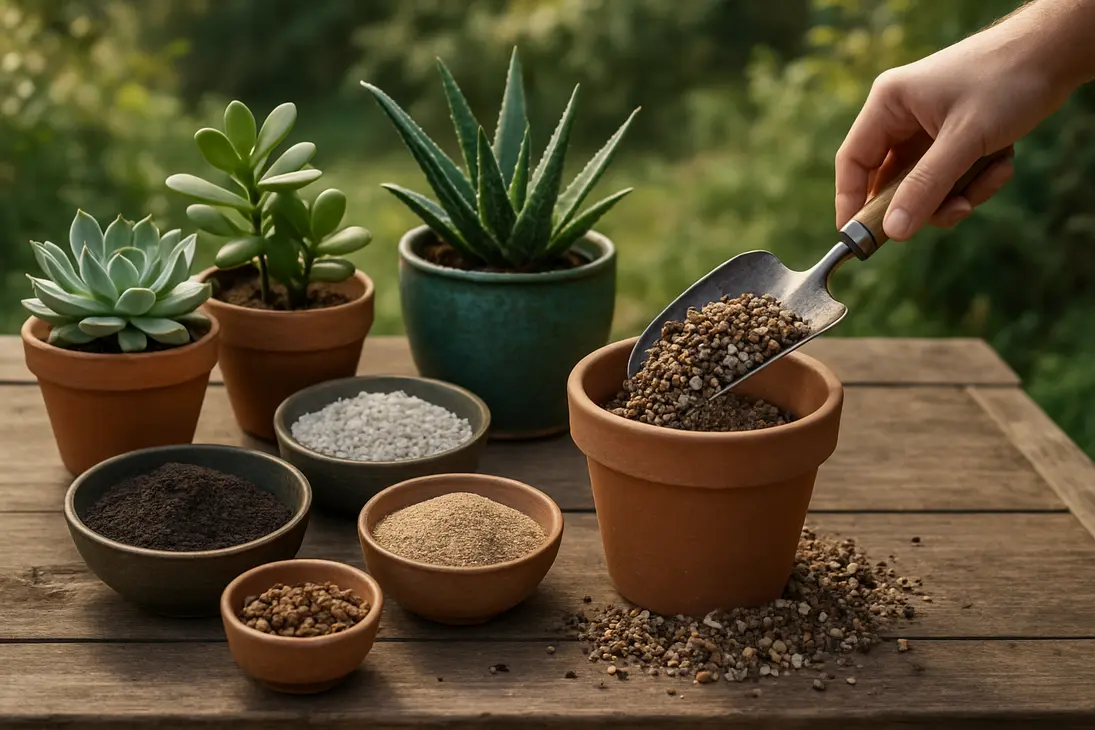
The best starting soil ratio for succulents is 1 part regular potting mix to 1 part mineral material, measured by volume. That means 50% potting mix and 50% grit such as perlite, pumice, coarse sand, lava rock, or fine gravel.
This works for many common succulents because it provides a little organic material for moisture and nutrients, plus enough mineral material for drainage and airflow. Succulents store water in their leaves, stems, or roots, so they are usually harmed more by soil that stays wet than by soil that dries slightly fast.
There is no perfect ratio for every plant, pot, and climate. Still, 50% potting mix and 50% mineral material is the safest general recipe for most potted succulents.
The Best Basic Soil Ratio for Most Succulents
Succulent soil should be loose, airy, and quick-draining. It should not be pure rock, but it also should not compact into a damp sponge. The goal is to keep roots lightly moist after watering, then let the mix dry in a reasonable time.
A Simple Beginner Ratio: 50% Potting Mix + 50% Grit
Use this ratio for most common succulents:
| Ingredient | Amount |
|---|---|
| Potting mix | 1 part |
| Mineral material | 1 part |
“Parts” means any equal measure: one scoop, cup, bucket, or handful. For example, mix 2 cups of potting mix with 2 cups of pumice or perlite.
This 1:1 ratio improves regular potting soil without making the mix too lean for young roots. It is especially useful for plants sold in peat-heavy nursery soil, which often stays wet too long.
Good mineral choices include pumice, perlite, lava rock, coarse sand, and fine gravel. Pumice adds air pockets while holding a little moisture. Perlite is cheap and common, though lightweight.
A Drier, Grittier Ratio: 1 Part Soil + 2 Parts Mineral Material
For rot-prone succulents or slow-drying conditions, use:
| Ingredient | Amount |
|---|---|
| Potting mix | 1 part |
| Mineral material | 2 parts |
This mix is about one-third organic material and two-thirds mineral material. It dries faster and allows more oxygen around roots.
Use it indoors in lower light, in humid climates, in plastic or glazed pots, after root rot, or for sensitive plants such as echeverias, lithops, and split rocks. The trade-off is that gritty mixes may need more frequent watering during active growth and hold fewer nutrients.
When Bagged Cactus or Succulent Soil Is Enough — and When to Amend It
Bagged cactus or succulent soil is fine if it drains quickly and does not stay damp for days. Some commercial mixes are gritty enough; others are mostly peat or compost with a little perlite.
Test it in a pot with drainage holes. Water thoroughly. If water runs through easily and the mix feels only slightly damp after a day or two, it may work. If it stays wet, dense, or spongy, amend it with:
- 2 parts bagged cactus/succulent soil
- 1 part pumice, perlite, or coarse grit
If it still feels heavy, move closer to a 1:1 ratio. The label matters less than how the mix behaves after watering.
What to Use in a Succulent Soil Mix
A good succulent mix combines organic and mineral ingredients. Organic material holds limited moisture and nutrients. Mineral material creates structure, drainage, and air pockets.
Organic Ingredients: Potting Soil, Compost, Coco Coir, or Peat
The organic portion is usually standard indoor potting mix. It may contain peat moss, coco coir, composted bark, compost, or similar materials.
Common options include:
- Regular potting mix: Easy to find and reliable when diluted with grit.
- Coco coir: Holds water but rewets more easily than peat; use moderately.
- Peat-based mix: Common, but can stay too wet or become hard to rewet.
- Compost: Nutrient-rich, but risky if used heavily.
- Composted bark: Adds texture if particles are not too fine.
Avoid making the organic portion too rich or dense. A little compost can help, but compost-heavy soil often holds too much water for succulents.
Mineral Ingredients: Perlite, Pumice, Coarse Sand, Gravel, or Lava Rock
Mineral ingredients keep the pot from acting like a wet sponge.
| Ingredient | Best Use | Notes |
|---|---|---|
| Perlite | Lightweight indoor mixes | Affordable; may float upward |
| Pumice | All-purpose mixes | Excellent drainage and slight moisture retention |
| Coarse sand | Added weight | Must be coarse, not fine play sand |
| Lava rock | Long-lasting gritty mixes | Porous and attractive |
| Fine gravel/crushed granite | Extra drainage and weight | Use small particles |
Particle size matters. Pieces that are too large reduce root contact; particles that are too fine fill air spaces and make soil dense. For most pots, use particles similar to coarse perlite, poultry grit, or small aquarium gravel.
Ingredients to Avoid or Use Carefully
Use caution with:
- Fine sand: Can compact and reduce airflow.
- Garden soil: Often too dense for containers.
- Moisture-control potting soil: Designed to hold water longer.
- Heavy compost: Useful only in small amounts.
- Vermiculite: Holds too much moisture for many succulents.
- Glued decorative rocks: Interfere with watering and drying.
Do not rely on a rock layer at the bottom of the pot. It does not fix heavy soil and can leave water perched above the rocks. Improve the whole mix and use drainage holes instead.
How to Adjust the Ratio for Different Succulents and Growing Conditions
The best ratio depends on how quickly the pot dries. Light, temperature, humidity, airflow, pot material, and plant type all matter.
A simple rule: the slower your conditions dry soil, the more mineral material you should add.
Indoor Succulents
Indoor succulents often need a grittier mix because indoor light and airflow are usually lower than outdoors.
Start with:
- 1 part potting mix
- 1 to 2 parts mineral material
Use 1:1 for bright windows and terracotta pots. Use 1:2 for lower light, humid rooms, plastic pots, or plants that have rotted before.
A fast-draining mix makes watering less risky, but it does not replace good light. A succulent in dim conditions can still decline in excellent soil.
Outdoor Succulents
Outdoor succulents may tolerate a slightly richer mix if they get strong light, warmth, and airflow. In hot, dry climates, an extremely gritty mix may dry so fast that plants shrivel.
For outdoor containers, start with:
- 1 part potting mix
- 1 part mineral material
In rainy climates, exposed pots, or cool seasons, increase mineral material to 2 parts. For in-ground succulents, focus on drainage rather than potting-soil recipes. Heavy clay may need raised beds, mounds, or broad mineral amendment.
Aloe, Haworthia, Echeveria, Jade, and Other Common Types
These are practical starting points:
| Succulent type | Suggested ratio | Notes |
|---|---|---|
| Aloe | 1 soil : 1–2 grit | Tolerates some moisture, not soggy roots |
| Haworthia | 1 soil : 1–2 grit | Often indoor; likes airflow |
| Echeveria | 1 soil : 2 grit | Rot-prone in low light or humidity |
| Jade plant | 1 soil : 1 grit | Can handle a richer mix in strong light |
| Sedum | 1 soil : 1–2 grit | Many prefer fast drainage |
| Lithops/split rocks | 1 soil : 2–3 grit | Need very lean, mineral-heavy soil |
Jades and aloes are usually more forgiving than echeverias and lithops. Haworthias tolerate lower light better than many rosette succulents, but still dislike soil that stays wet.
Humid Climates, Low Light, and Cool Seasons
Humidity, low light, and cool temperatures slow evaporation and plant water use. Choose a grittier mix when soil takes several days to dry, winter days are cool and short, plants sit far from bright windows, or root rot keeps recurring. During cool seasons, reduce watering too.
Terracotta Pots vs. Plastic or Glazed Pots
Terracotta pots are porous, so they dry faster and pair well with a 50/50 mix for many succulents.
Plastic and glazed ceramic pots hold moisture longer. Indoors, they are safer with a 1:2 soil-to-grit ratio.
Whatever pot you choose, drainage holes are strongly recommended. Without them, the soil ratio becomes much less forgiving.
How to Tell If Your Succulent Soil Ratio Is Wrong
Succulents often show soil problems before they die, but symptoms can be confusing. A plant with rotting roots may look thirsty because damaged roots cannot absorb water. Check the soil and roots, not only the leaves.
Signs the Mix Holds Too Much Water
Your mix may be too moisture-retentive if:
- Soil stays damp for many days
- Leaves turn yellow, translucent, mushy, or drop easily
- The stem base becomes soft or dark
- Fungus gnats appear
- Roots are brown, black, slimy, hollow, or rotten
- The plant looks weak while the soil is still moist
If the plant is declining, stop watering and inspect the roots. Remove rotten roots or mushy tissue, let damaged areas dry briefly, and repot into a grittier mix.
Signs the Mix Dries Too Fast
A mix may be too dry or too mineral-heavy if:
- Leaves wrinkle soon after watering
- The pot dries within a day during active growth
- Water rushes through without wetting the root ball
- Roots are dry, brittle, and sparse
- Growth stalls despite good light and suitable temperatures
If this happens, add a little more potting mix, use pumice instead of only non-absorbent grit, or water more thoroughly during active growth.
The Drainage Test: How Fast Should Water Run Through?
A good succulent mix should let water drain from the bottom soon after watering. It should not pool on the surface or seep through slowly like mud.
Test it this way:
- Fill a pot with your mix.
- Water until water exits the drainage hole.
- Watch how quickly the surface absorbs water.
- Check moisture after 24 hours and again after a few days.
The mix should become evenly moist but not swampy. If it is still wet and heavy after several days, add more mineral material. If it becomes bone dry almost immediately and the plant wrinkles, add more organic material.
Common Mistakes Beginners Make With Succulent Soil
Common mistakes include:
- Using regular potting soil straight from the bag
- Choosing a pot with no drainage hole
- Adding grit only as a top layer instead of mixing it throughout
- Using fine sand
- Watering on a fixed weekly schedule
- Repotting into an oversized pot
- Assuming every succulent needs the same mix
Before watering a wrinkled succulent, check whether the soil is still damp below the surface. Wrinkling can mean thirst, but it can also mean root damage from wet soil.
How to Mix Succulent Soil at Home
Mixing succulent soil at home is simple and lets you adjust for your climate, pots, and watering habits. Use a scoop so measurements stay consistent. If ingredients are dusty, wear a mask or moisten them lightly before mixing.
Easy DIY Succulent Soil Recipe
For a reliable general-purpose mix:
- 1 part potting mix
- 1 part pumice, perlite, coarse sand, lava rock, or fine gravel
Steps:
- Add potting mix to a bucket or tub.
- Break up clumps.
- Add an equal amount of mineral material.
- Mix until grit is evenly distributed.
- Moisten lightly and squeeze a handful.
- If it clumps like mud, add grit.
- If it cannot hold any moisture, add a little potting mix.
The finished mix should feel loose and textured. When damp, it may hold together slightly but should crumble easily.
Gritty Mix Recipe for Overwatered or Sensitive Succulents
For extra drainage, use:
- 1 part potting mix
- 1 part pumice
- 1 part lava rock, coarse perlite, coarse sand, or fine gravel
This creates a 1:2 soil-to-mineral ratio. It is useful for echeverias indoors, humid homes, plants recovering from overwatering, and pots that dry slowly.
Very sensitive succulents such as lithops may need even more mineral material, but those mixes store little moisture and require careful watering.
How to Repot Succulents Into a Better Mix
Repotting into better soil is often the best fix for a struggling succulent.
- Remove the plant from its pot. Loosen the root ball gently.
- Brush away old soil. Remove dense, wet, peat-heavy soil where practical.
- Inspect the roots. Trim dead, black, mushy, or hollow roots.
- Let damaged areas dry. Especially if roots or stems were cut.
- Choose the right pot. Use drainage holes and a pot only slightly larger than the roots.
- Add fresh mix. Keep the crown above the soil surface.
- Wait before heavy watering if needed. Let trimmed roots settle first.
- Resume careful watering. Water deeply, then let the mix dry appropriately.
Avoid oversized pots. Extra soil holds extra moisture, which raises the risk of rot.
Conclusion
The best soil ratio for succulents is usually 1 part potting mix to 1 part mineral material. Use 1 part soil to 2 parts mineral material for humid, cool, dim, indoor, or plastic-pot conditions. The right ratio lets you water thoroughly without leaving roots wet for too long.
FAQ
Can I use regular potting soil for succulents?
Regular potting soil alone is usually too moisture-retentive, especially indoors. Amend it with mineral material.
Start with 1 part regular potting soil and 1 part perlite, pumice, coarse sand, or lava rock. For rot-prone plants, use 1 part potting soil to 2 parts mineral material.
What is the best soil-to-perlite ratio for succulents?
A good soil-to-perlite ratio is 1:1, or equal parts potting soil and perlite.
For indoor succulents, humid homes, or previously overwatered plants, use 1 part soil to 2 parts perlite. If possible, combine perlite with pumice or lava rock for more weight and structure.
Do indoor succulents need more grit than outdoor succulents?
Often, yes. Indoor succulents usually get less light and airflow, so soil dries more slowly.
Use 1:1 soil-to-grit in bright indoor light. In lower light or plastic pots, use 1:2. Outdoor succulents in warm, breezy conditions often do well with 50/50.
Is sand good for succulent soil?
Sand is useful only if it is coarse sand. Fine sand, play sand, or beach-like sand can compact and reduce airflow.
For most beginners, pumice or perlite is easier and more reliable than sand.
You Might Also Like