Best Foundation Types for Different Soil Conditions
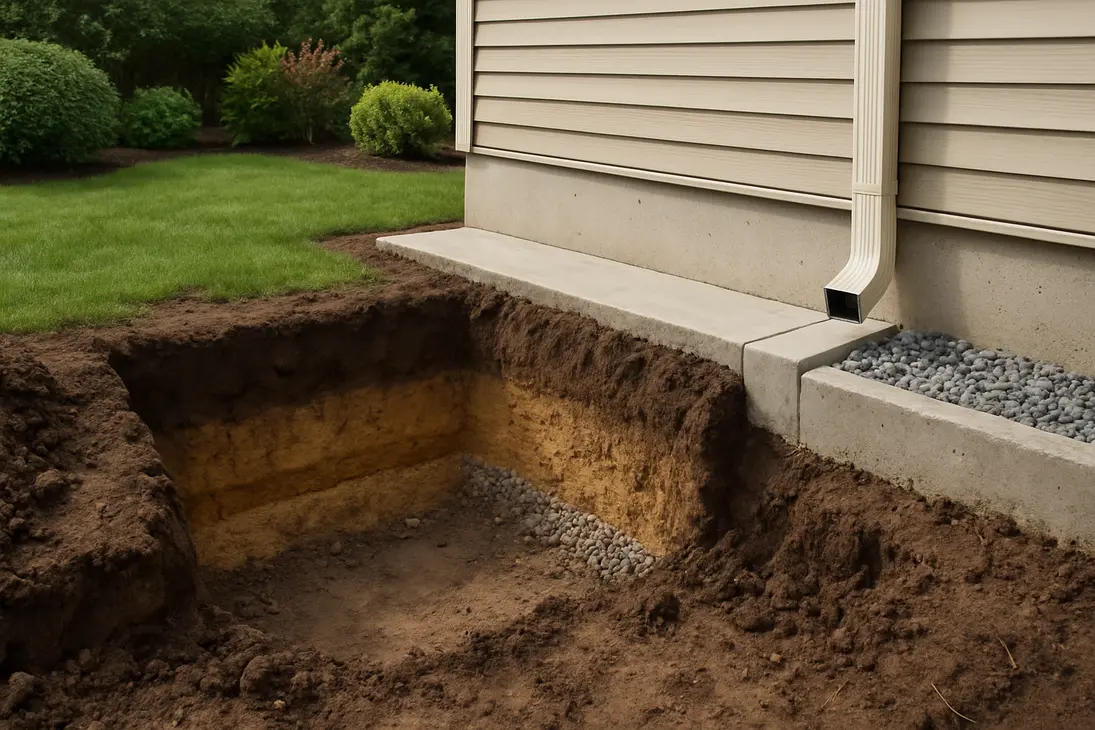
Choosing among different soil foundation types depends on more than the soil name. Soil affects bearing strength, drainage, settlement, shrink-swell movement, frost behavior, and groundwater response. A foundation that works on dense gravel may fail on soft clay, peat, or loose fill.
The best foundation type depends on soil strength, moisture behavior, depth to stable material, slope, groundwater, frost depth, and building load. Soil identification is only the starting point. Final decisions should be based on site investigation, local codes, and engineering design.
Why Soil Type Matters for Foundation Design
A foundation transfers building loads into the ground. The soil must carry those loads without excessive settlement, cracking, or movement. Key factors include:
- Bearing capacity: Rock, dense gravel, and compacted sand usually support loads better than peat, soft clay, saturated silt, or loose fill.
- Drainage: Water can weaken soil, increase wall pressure, cause erosion, contribute to frost heave, and worsen clay movement.
- Shrink-swell movement: Expansive clay swells when wet and shrinks when dry, causing uneven foundation movement.
- Compaction: Loose soil or poorly placed fill can settle after construction.
- Frost depth: In cold climates, footings often need to extend below the frost line or use frost-protected design.
- Groundwater: A high water table can reduce soil strength, complicate excavation, and require drainage or waterproofing.
“Good garden soil” is not necessarily good foundation soil. Organic topsoil may grow plants well, but it compresses and changes over time. Foundation soil needs predictable strength, not fertility.
Common Soil Types and Suitable Foundation Options
This overview explains why builders or engineers recommend different foundations, but it is not a substitute for a soil report.
| Soil condition | Main concern | Common foundation options |
|---|---|---|
| Rock or dense gravel | Uneven bearing, excavation difficulty | Strip footings, pad footings, slab-on-grade |
| Sand | Settlement if loose or eroded | Reinforced slab, strip footings, raft/mat foundation |
| Clay or expansive clay | Shrink-swell movement, poor drainage | Raft/mat foundation, drilled piers, piles, deep footings |
| Silt or loam | Moisture retention, strength loss when wet | Reinforced shallow foundations, raft foundation, soil improvement |
| Peat or organic soil | Compression, water retention, decay | Piles, soil replacement, ground improvement, engineered raft |
| Fill or disturbed soil | Unknown compaction, variable layers | Engineered fill, raft foundation, piles or piers |
Rock or Dense Gravel
Rock and dense gravel are often reliable when stable, continuous, and not severely fractured. They usually offer good bearing capacity and drainage.
Common options include strip footings under walls, pad footings under columns, and slab-on-grade foundations on level, prepared sites.
Challenges include difficult excavation, uneven rock surfaces, voids, sloping layers, or fractured rock. Dense gravel should still be checked for uniformity and compacted where required.
Sandy Soil
Sandy soil often drains well and is less moisture-sensitive than clay or silt. However, loose sand can shift, settle, erode, or be affected by vibration.
Common options include reinforced slab-on-grade, strip footings, raft or mat foundations where settlement risk is higher, and compaction or stabilization before construction.
Density is the key issue. Well-compacted sand can be a good base; loose sand can settle after the building is complete. Coastal, sloped, or high-groundwater sites may need evaluation for erosion, instability, or liquefaction potential.
Clay Soil and Expansive Clay
Clay can be stable in some locations and highly problematic in others. Expansive clay swells when wet and shrinks when dry, causing uneven movement that can crack slabs, walls, paving, and masonry.
Common options include raft or mat foundations to spread loads, drilled piers or shafts below the active shrink-swell zone, pile foundations transferring loads to deeper stable layers, and deeper footings where suitable.
Clay design must include moisture control. Large wet-dry swings are often more damaging than consistently moist or consistently dry soil. Grading, gutters, downspouts, drainage, and careful landscaping are part of the foundation strategy.
Silt or Loam
Silt and loam are variable. Loam may be excellent for gardens, but foundation performance depends on density, moisture, organic content, and layering. Silty soils can hold water, lose strength when wet, and be prone to frost heave.
Common options include reinforced shallow foundations where soil is stable and well drained, raft or mat foundations where settlement risk exists, and soil improvement such as compaction, replacement, or stabilization.
A compacted mineral loam may support a light structure. A wet, soft, organic-rich loam may not.
Peat, Organic, or Very Soft Soil
Peat and highly organic soils are usually poor for direct support. They retain water, compress under load, and can continue changing as organic matter decomposes. Very soft soils may settle significantly and unevenly.
Common options include pile foundations reaching stronger material below, soil replacement if the weak layer is shallow, ground improvement such as stabilization or preloading, and engineer-designed raft systems in limited cases.
Light sheds or decks may tolerate adjustable supports on marginal ground, but houses require reliable support. Peat and very soft soils almost always need professional investigation.
Fill, Mixed, or Previously Disturbed Soil
Fill is common on regraded lots, old demolition sites, sloped properties, and around existing homes. It may contain soil, gravel, rubble, organic material, or mixed layers. Its reliability depends on composition, depth, and compaction.
Common options include shallow foundations on engineered fill, raft foundations where bearing is variable but manageable, and piles or piers if fill is deep, loose, or unreliable.
Engineered fill placed in controlled layers and compacted to specification can be suitable. Uncontrolled fill may settle unevenly, contain debris, or trap water.
Shallow vs. Deep Foundations: How the Choice Is Made
Foundation choice balances soil conditions, building loads, cost, access, and risk. Shallow foundations are simpler and often less expensive, but they need competent soil near the surface. Deep foundations cost more but can bypass weak upper layers.
Shallow Foundations
Shallow foundations are used where stable soil with adequate bearing capacity is near the surface. They are common for houses, garages, garden rooms, small outbuildings, and low-rise buildings.
They include:
- Slab-on-grade: A reinforced concrete slab on prepared ground.
- Strip footings: Continuous footings beneath load-bearing walls.
- Spread footings: Wider bases that distribute loads over more soil.
- Pad footings: Isolated footings for columns or posts.
They suit rock, dense gravel, compacted sand, stable low-movement clay, and engineered fill. They are less suitable for peat, very soft clay, uncontrolled fill, or sites with high settlement risk.
Raft or Mat Foundations
A raft or mat foundation is a large reinforced concrete slab that spreads loads across a broad area. It can reduce differential settlement by distributing building weight more evenly.
Rafts are often considered for weaker soils with moderate bearing capacity, expansive clay, variable soil layers, and buildings sensitive to differential settlement.
A raft is not a cure for all poor soils. Extremely soft, organic, or deep compressible soils may still settle and require piles or soil improvement.
Deep Foundations
Deep foundations transfer loads through weak surface layers to stronger soil or rock below. They are used when shallow soils cannot reliably support the structure.
Types include piles, drilled shafts, piers, and caissons. These may be driven, drilled, or cast depending on the design and site conditions.
Deep foundations are common for soft clay, peat, deep fill, high groundwater sites, and projects where settlement control is critical.
Soil Improvement Before Building
Sometimes the best approach is improving the soil rather than simply changing the foundation type. Methods may include compaction of loose sand, gravel, or fill; removal and replacement of weak or organic soil; stabilization; drainage improvement; geotextiles or geogrids; and engineered fill placed in controlled lifts.
For house foundations, soil improvement should be specified and verified by qualified professionals.
Drainage, Grading, and Backfill Around Foundations
Even the right foundation can perform poorly if water collects around it. Many foundation problems begin as drainage problems: wet basements, soggy planting beds, settlement after backfilling, or clay that repeatedly swells and shrinks.
Why Water Control Is Critical
Water can soften soil, wash out fine particles, increase pressure against basement walls, contribute to frost heave, and cause expansive clay to swell. Good water control usually includes:
- Clear, functioning gutters
- Downspouts extended away from the house
- Surface grading away from the foundation
- Suitable backfill and compaction
- Foundation drains where required
- Irrigation kept off foundation walls
- Planting beds that do not trap water
Small issues such as a disconnected downspout, low spot, or raised mulch bed can keep foundation soil wetter than intended.
Best Backfill Practices
Backfill is the material placed around a foundation after construction. It should support drainage and be compacted appropriately. Loose topsoil, debris-filled fill, and highly expansive clay are usually poor choices directly against foundation walls.
Good practice may include well-draining granular material where suitable, layer compaction, keeping organic-rich topsoil out of structural backfill zones, protecting waterproofing and drainage boards, and following builder or engineer specifications.
There is no universal best backfill. Some sites require drainage systems, filter fabric, clay caps, or region-specific details.
Grading Soil Away From the House
Surface grading should move rainwater away from the house rather than allowing it to pool along the wall. After heavy rain, water should not stand near the foundation.
Landscaping beds can be close to a house if designed carefully. Avoid raising soil or mulch above siding, vents, weep holes, or the top of the foundation. Avoid edging that creates a basin, and do not pile soil against wood or cladding.
Managing Clay-Like Soil Near Foundations
Clay near foundations should be managed for moisture stability. In gardens, compost and organic matter can improve clay for plants. Near a foundation, soft, loose, moisture-holding material against the wall can create problems.
Better priorities include maintaining slope away from the house, directing roof water away, avoiding overwatering foundation plantings, keeping large thirsty trees at a suitable distance, adding drainage where water collects, and repairing low spots after backfill settles.
Clay does not need to be “fixed” everywhere. It needs to be controlled so it does not cycle sharply between saturated and shrunken conditions.
Site Investigation Before Choosing a Foundation
Foundation type should not be chosen by soil name alone. Two clay sites can behave very differently: one may be stiff and stable, while another may be expansive or soft below the surface. Sandy soil may be dense and reliable or loose and settlement-prone.
A site investigation may include test pits, soil borings, lab testing, groundwater observations, and review of local conditions. For small garden structures, a simple inspection may be enough. For a house, addition, retaining wall, or heavy outbuilding, professional input is often worth the cost.
What a Soil Test Can Reveal
A geotechnical investigation can identify hidden risks, including:
- Bearing capacity: Whether the soil can support the planned load.
- Soil layers: Weak material below a firm surface crust.
- Groundwater level: Effects on excavation, drainage, and strength.
- Expansive soil risk: Clay minerals that swell and shrink.
- Settlement potential: Compressible layers under load.
- Compaction quality: Whether fill was properly placed.
Surface appearance can be misleading. A firm summer lawn may become saturated in winter, and gravelly ground may hide soft fill below.
When to Hire a Geotechnical Engineer
Hire a geotechnical engineer before finalizing the foundation if the site has expansive clay, peat, very soft ground, deep or unknown fill, sloping land, nearby retaining walls, high groundwater, cracking in existing structures, heavy building loads, settlement, sinkholes, erosion, drainage problems, or local code requirements for soil reports.
Foundation problems are difficult and expensive to fix after construction, especially when caused by deep settlement or seasonal soil movement.
Conclusion
The best foundation depends on soil strength, drainage, moisture behavior, compaction, frost depth, groundwater, and building load. Stable rock, dense gravel, and well-compacted sand often suit shallow foundations such as slabs, strip footings, spread footings, or pad footings. Weaker, wetter, or more variable soils may need a raft foundation, soil improvement, or deep support.
Clay and expansive clay require special attention because movement can matter as much as strength. Peat, organic soil, very soft ground, and uncontrolled fill are usually poor candidates for direct shallow foundations unless improved or bypassed with piles, piers, or engineered systems.
Use soil identification as the beginning of the decision, not the final answer. A soil report and qualified design can match the foundation to actual site conditions.
FAQ
What is the best foundation for clay soil?
For stable clay, a reinforced shallow foundation may be suitable if drainage is good and codes allow it. For expansive clay, common options include raft or mat foundations, drilled piers, piles, or deeper footings below the active shrink-swell zone.
Moisture control is essential. Gutters, grading, drainage, and careful irrigation can be as important as the foundation type.
Which soil is best for building a foundation?
Rock, dense gravel, and well-compacted granular soils are generally among the best foundation soils because they provide good bearing capacity and drainage. Firm soils with low organic content and predictable moisture behavior are preferred.
Poor soils for direct support include peat, highly organic soil, very soft clay, loose uncontrolled fill, and soils that compress or move significantly with moisture changes.
Can you build a house on sandy soil?
Yes, if the sand is dense, well compacted, and properly drained. Sandy soil often drains well, but loose sand can settle or shift. A reinforced slab, strip footings, or raft foundation may be used depending on site conditions and building loads.
Coastal, sloped, or high-water-table sandy sites need closer evaluation for erosion, groundwater, and instability.
What type of soil should be used to backfill around a foundation?
Backfill should be suitable, compacted material that supports drainage without creating excessive pressure or moisture problems. Well-draining granular material is often used, but the best choice depends on the site, foundation, waterproofing, drainage system, and local soil.
Avoid loose topsoil, organic-rich soil, debris-filled fill, or highly expansive clay directly against foundation walls unless the design allows it. Surface grading should move water away from the house.
You Might Also Like