Are Potatoes, Sweet Potatoes, and Water Chestnuts Related?
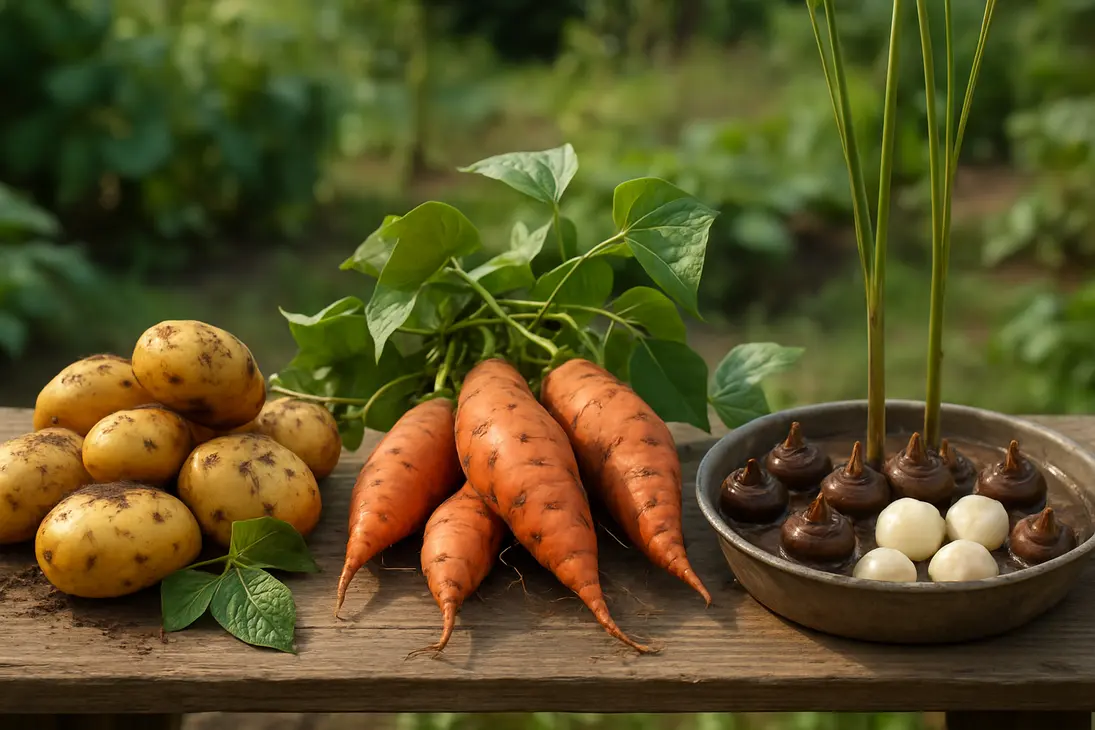
Quick Answer: They’re All Edible Plant Parts, Not Close Relatives
Potatoes, sweet potatoes, and water chestnuts are often grouped together because they are starchy, filling, and used like vegetables. Botanically, though, they are not close relatives.
In terms of potato family relations, they come from different plant families and different plant structures:
| Food | Botanical identity | Plant family | Edible plant part |
|---|---|---|---|
| Potato | Solanum tuberosum | Solanaceae, the nightshade family | Stem tuber |
| Sweet potato | Ipomoea batatas | Convolvulaceae, the morning glory family | Storage root |
| Water chestnut | Usually Eleocharis dulcis in cooking | Cyperaceae, the sedge family | Corm |
So the short answer is: potatoes are related to tomatoes and peppers, sweet potatoes are related to morning glories, and water chestnuts are related to sedges. Their similarity is mostly culinary, not botanical.
That distinction matters for gardening, cooking, crop rotation, and propagation. A potato and a sweet potato may both be starchy underground foods, but they grow differently, reproduce differently, and belong to very different branches of the plant world.
Potatoes: Members of the Nightshade Family
The common potato is Solanum tuberosum. It belongs to the Solanaceae, or nightshade family, along with tomatoes, peppers, eggplants, tomatillos, and many ornamental or wild plants.
This surprises many people because potatoes seem so different from tomatoes. But botanical relationships are not based on how foods are used in the kitchen. They are based on shared plant traits, including flowers, fruits, seeds, and reproductive structures.
If you have grown potatoes and seen them flower, the connection is easier to notice. Potato flowers can resemble tomato or eggplant flowers, with star-shaped petals and yellow anthers. Some potato plants also produce small green fruits that look like tiny tomatoes. Those fruits are not the edible potato crop and should not be eaten, but they show the plant’s nightshade identity.
For gardeners, this relationship is practical. Potatoes can share some pest and disease issues with other nightshades, so many gardeners avoid planting potatoes right after tomatoes, peppers, or eggplants in the same bed. Crop rotation does not have to be perfect in a small garden, but knowing plant families helps.
What Part of the Plant Is a Potato?
A potato is a stem tuber: a swollen underground stem that stores energy.
Potatoes grow underground, so they are often mistaken for roots. But they have traits of stems:
- Potatoes have “eyes,” which are buds.
- Those buds can sprout into shoots.
- Tubers form from underground stems called stolons.
- The tuber stores carbohydrates for regrowth.
When you plant a seed potato, you are planting stem tissue with viable buds. Each eye can produce shoots that grow into leafy stems, while underground stolons swell into new tubers.
This is why potatoes are usually grown from “seed potatoes” rather than true botanical seed. A seed potato is not a seed in the strict sense; it is a small tuber or tuber piece used to clone the parent plant. True potato seed exists, but it produces more variable plants and is less common for home gardeners.
Common Potato Relatives
The most familiar potato relatives are other nightshades, including:
- Tomatoes
- Eggplants
- Sweet and hot peppers
- Tomatillos
- Ground cherries
- Some ornamental nightshades
These plants are related botanically, not because they taste alike. A tomato, pepper, and eggplant are fruits; a potato tuber is a modified stem. In the kitchen, we may treat them all as vegetables, but botany uses different categories.
Potatoes are not close relatives of sweet potatoes, yams, taro, cassava, Jerusalem artichokes, or water chestnuts, even though those foods are also starchy underground or storage crops.
Sweet Potatoes: Similar Name, Different Family
Sweet potatoes are not simply sweeter potatoes. They are a different plant.
The sweet potato is Ipomoea batatas, a member of the Convolvulaceae, or morning glory family. Its relatives include morning glory vines, and the resemblance can show in the vining habit, heart-shaped leaves, and funnel-shaped flowers. Some ornamental sweet potato vines are grown mainly for foliage, while food varieties are grown for their enlarged roots.
The name causes confusion. In everyday language, “sweet potato” sounds like a type of potato. Botanically, a sweet potato is much closer to morning glories than to white, red, yellow, or russet potatoes.
The two crops also behave differently in the garden. Potatoes are generally cooler-season crops and are propagated from seed potatoes. Sweet potatoes are warm-season plants, usually grown from slips, which are young shoots started from a mature sweet potato. They need warm soil, warm weather, and a long growing season.
You cannot simply swap their growing methods. Potatoes may be planted earlier in the season if soil conditions are suitable, while sweet potatoes are usually planted only after the soil has warmed and frost danger has passed.
What Part of the Plant Is a Sweet Potato?
A sweet potato is a storage root, not a stem tuber.
This is a major botanical difference between potatoes and sweet potatoes. Sweet potatoes form when roots enlarge to store carbohydrates. Those swollen roots are the edible crop. They are not stems and do not have potato-like nodes or eyes.
A sweet potato can sprout, but not in the same way a potato eye sprouts. Gardeners grow sweet potato slips by encouraging shoots to develop from the storage root. Those slips are then removed and planted.
The practical differences are:
- Potatoes are stem tubers with buds called eyes.
- Sweet potatoes are enlarged storage roots.
- Potatoes are commonly planted as tuber pieces.
- Sweet potatoes are commonly planted as slips.
- They are not close crop-rotation relatives.
People sometimes call both “tubers” because both are starchy underground foods. In precise botanical terms, however, the common potato is a stem tuber, while the sweet potato is a storage root.
Sweet Potatoes vs. Yams
Sweet potatoes are also often confused with yams. In many North American grocery stores, orange-fleshed sweet potatoes may be labeled as “yams,” but that is a culinary or marketing habit, not a botanical one.
True yams are different plants, usually in the genus Dioscorea. They are separate from both potatoes and sweet potatoes. Many true yams are tropical or subtropical crops with rougher, bark-like skin and starchy flesh. They are important staple foods in parts of Africa, Asia, the Caribbean, and the Pacific, but they are not the same as the orange sweet potatoes commonly sold in supermarkets.
In simple terms:
- Potato: nightshade family, Solanum tuberosum
- Sweet potato: morning glory family, Ipomoea batatas
- True yam: usually Dioscorea species
- Water chestnut: sedge family, commonly Eleocharis dulcis
The names overlap in kitchens and stores, but the plants are separate.
Water Chestnuts: Not Potatoes, Not Nuts, and Not Chestnuts
Water chestnuts add another naming problem. Despite the name, they are not chestnuts, not nuts, and not potatoes.
The crisp, white water chestnuts used in many stir-fries and canned vegetable mixes usually come from Eleocharis dulcis, an aquatic plant in the Cyperaceae, or sedge family. Sedges are grass-like plants, but they are not true grasses. Many grow in wetlands, marshes, pond edges, and saturated soils.
Water chestnuts are not close botanical relatives of potatoes or sweet potatoes. They are not nightshades, not morning-glory relatives, and not part of the potato family. They are grouped with vegetables because they provide an edible, starchy, crunchy plant part used in cooking.
They also grow very differently. Potatoes need loose, well-drained soil. Sweet potatoes need warm soil and good drainage. Water chestnuts are aquatic or semi-aquatic plants that need consistently wet, muddy conditions. In warm climates, they may be grown in tubs, lined beds, or containers that hold water and mud.
What Part of the Plant Is a Water Chestnut?
The edible part of a water chestnut is a corm.
A corm is a swollen underground stem base that stores energy and can produce new growth. It is different from a stem tuber, bulb, rhizome, or storage root, even though all of these structures can serve storage functions.
In the common Chinese water chestnut, the plant sends up slender, rush-like stems above the water or mud. Below the surface, it forms small, rounded corms. These are harvested, peeled, and eaten raw or cooked, depending on preparation and food safety practices.
Water chestnuts stay crisp when cooked, unlike potatoes and sweet potatoes, which become soft, mealy, or creamy. Botanically, the key point is simple: a water chestnut is a corm from an aquatic sedge, not a potato tuber or a sweet potato root.
Why the Name Is Misleading
Common names often describe appearance, flavor, or use rather than botanical relationship. “Water chestnut” is a good example.
The plant grows in wet conditions, and the harvested corms are small, rounded, and brown-skinned before peeling. They may vaguely resemble chestnuts and can have a mildly sweet, nutty quality when fresh. But they are not true chestnuts.
True chestnuts are tree nuts from the genus Castanea. They grow on trees inside spiny burs and belong to a completely different botanical group. Water chestnuts grow in wet soil or shallow water as sedge corms.
This is similar to other misleading food names: peanuts are legumes, Jerusalem artichokes are sunflowers, sweet potatoes are not potatoes, and water chestnuts are not chestnuts.
Why These Foods Get Grouped Together
Potatoes, sweet potatoes, and water chestnuts are grouped together mainly because of how people use them, not because of their ancestry.
They share several practical traits:
- They are edible plant storage organs.
- They are often harvested from below ground, mud, or water.
- They are higher in carbohydrates than leafy vegetables.
- They are mild and filling.
- They are commonly cooked as vegetables.
This is where culinary categories and botanical categories separate. Cooks group foods by flavor, texture, starchiness, cooking method, and role on the plate. Botanists group plants by evolutionary relationships and plant structures.
A cook might put potatoes and sweet potatoes in the same pantry category because both can be roasted, mashed, baked, fried, or added to soups. A gardener separates them because one is a nightshade stem tuber and the other is a morning-glory storage root.
Water chestnuts are different again because they stay crunchy rather than soft. Still, they are often grouped with vegetables because they are an edible plant storage organ used in savory dishes.
Their growing needs also differ:
| Crop | General growing style | Key practical difference |
|---|---|---|
| Potato | Cool-season crop in loose, well-drained soil | Grown from seed potatoes; rotate with other nightshades in mind |
| Sweet potato | Warm-season vine crop in warm soil | Grown from slips; needs heat and a long season |
| Water chestnut | Aquatic or semi-aquatic sedge | Needs wet, muddy conditions; grown for corms |
Botanical identity is more than trivia. It affects crop rotation, propagation, climate needs, harvest timing, and what part of the plant you are eating.
Conclusion
Potatoes, sweet potatoes, and water chestnuts are all edible plant storage organs, but they are not close botanical relatives.
A common potato is Solanum tuberosum, a nightshade, and the edible part is a stem tuber. A sweet potato is Ipomoea batatas, a morning-glory relative, and the edible part is a storage root. A water chestnut is usually Eleocharis dulcis, an aquatic sedge, and the edible part is a corm.
Their similarity is mostly culinary. They are useful in savory dishes and harvested from underground or underwater structures. But in true potato family relations, only potatoes belong with the nightshades.
FAQ
Are potatoes and sweet potatoes in the same family?
No. Potatoes and sweet potatoes are not in the same botanical family.
The common potato, Solanum tuberosum, is in the Solanaceae, or nightshade family. Its relatives include tomatoes, peppers, eggplants, and tomatillos.
The sweet potato, Ipomoea batatas, is in the Convolvulaceae, or morning glory family. It is botanically closer to morning glory vines than to white potatoes.
Are water chestnuts a type of potato?
No. Water chestnuts are not a type of potato.
The water chestnut commonly used in cooking is an aquatic sedge, usually Eleocharis dulcis. It belongs to the Cyperaceae family, and the edible part is a corm.
Potatoes are stem tubers from a nightshade plant. Water chestnuts are corms from an aquatic sedge.
What vegetables are actually related to potatoes?
Vegetables and fruits related to potatoes include other members of the nightshade family, such as:
- Tomatoes
- Eggplants
- Sweet peppers
- Hot peppers
- Tomatillos
- Ground cherries
They may not look or taste like potatoes, but they are botanical relatives. In gardening, this matters because related crops can share some pests and diseases.
Why are potatoes and sweet potatoes both called tubers?
They are both often called tubers casually because they are starchy, enlarged underground plant parts.
Botanically, they are different. A potato is a stem tuber, a swollen underground stem with buds or “eyes.” A sweet potato is a storage root, an enlarged root used to store energy.
You Might Also Like