Which Houseplants Tolerate Direct Sun and Hot Climates?
Finding houseplants for hot, direct light can be difficult because “bright light” is not the same as several hours of intense sun through a south- or west-facing window. A plant may look fine in a bright room but scorch when placed close to hot glass.
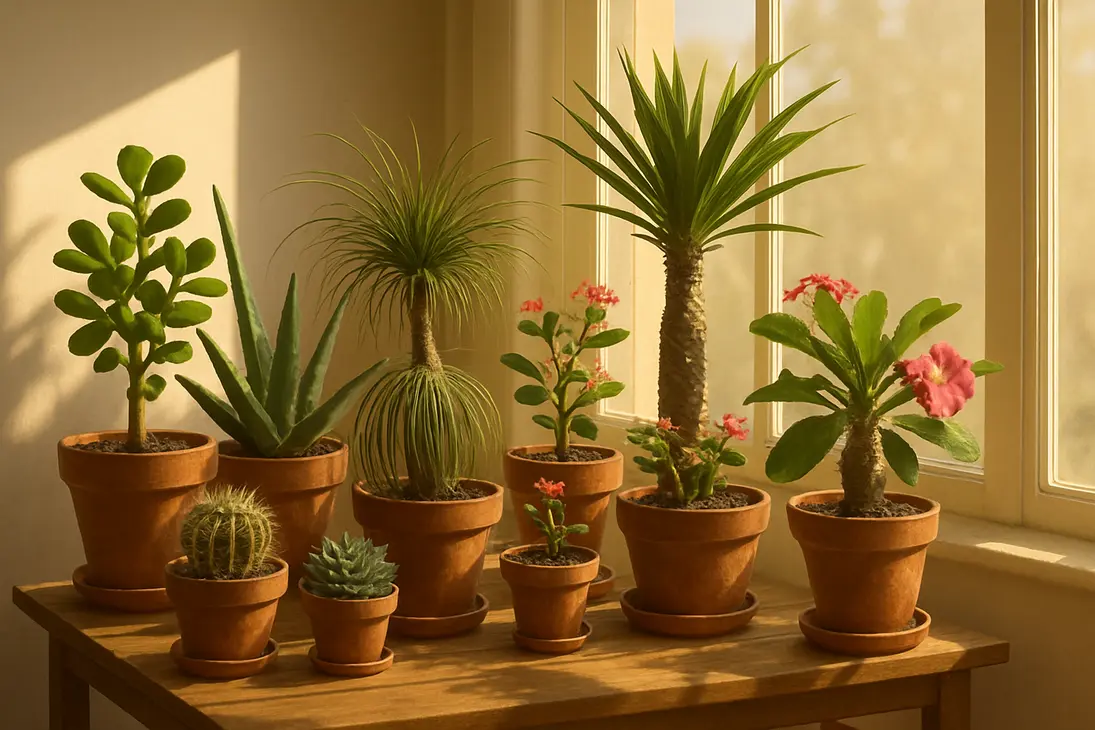
The most reliable choices are plants adapted to dry, exposed conditions: cacti, many succulents, yucca, ponytail palm, crown of thorns, and desert rose. Even these need good drainage, appropriate watering, and a gradual transition into stronger light.
What “Direct Hot Light” Means for Houseplants
Direct light means sunlight reaches the leaves for several hours a day, commonly from an unobstructed south-, southwest-, or west-facing window. In hot climates, sunny balconies, enclosed patios, top-floor rooms, and windows beside reflective pavement can be even more intense.
Bright indirect light is different: the room is well lit, but sun is filtered by a sheer curtain, tree, awning, or distance from the window. Many common houseplants thrive in bright indirect light but cannot tolerate hot direct rays.
Strong sun creates two challenges:
- High light intensity, which can bleach or burn foliage.
- Heat stress, especially when leaves are near glass or roots sit in a rapidly heating pot.
Consider Window Direction, Glass Heat, and Airflow
Window direction matters:
| Window exposure | Typical indoor conditions | Best use |
|---|---|---|
| East-facing | Gentle morning direct sun | Good for many succulents and plants acclimating to sun |
| South-facing | Long duration of strong sun in many locations | Ideal for cacti and sun-adapted plants if heat is manageable |
| West-facing | Intense, hot afternoon sun | Best for the toughest sun lovers; monitor in summer |
| North-facing | Low direct sun in the Northern Hemisphere | Usually too dim for cacti, jade, desert rose, and similar plants |
A plant a few inches from a west-facing pane can receive much more heat than one set a few feet back. Improve conditions by keeping foliage off the glass, using a sheer curtain during harsh afternoon sun if leaves fade or scorch, and providing gentle airflow.
Turn pots every week or two for even growth. Top-floor rooms often remain hot into the evening, so choose drought-tolerant plants and avoid leaving their roots in soggy soil.
Acclimate Plants Before Moving Them Into Full Sun
A sudden move from a dim shelf to a hot window is one of the fastest ways to damage a plant. Acclimate it over roughly two to four weeks:
- Start in bright indirect light near the intended window.
- Introduce one to two hours of gentle morning sun.
- Increase direct exposure every few days if the plant remains healthy.
- Move gradually toward stronger midday or afternoon sun.
- Step back if you see bleaching, brown patches, curling, or sudden leaf drop.
New growth is usually more sun-tolerant than older leaves. Sunburned tissue generally remains marked.
Best Houseplants for Direct Sun and Heat
The best plants for direct hot light often have water-storing leaves or stems, waxy coatings, or narrow foliage that limits water loss. “Tolerant” does not mean indestructible: all of these plants benefit from acclimation and freely draining soil.
Succulents and Cacti
Aloe vera is an easy choice for a sunny room. Its thick leaves store water, and established plants can handle several hours of direct sun. Watch for pale, reddish, or brown leaves after a sudden move.
Jade plant (Crassula ovata) does well in bright south- or west-facing windows. Strong light encourages compact growth and may bring out red leaf edges. Let the potting mix dry substantially between waterings.
Echeveria needs very bright conditions to maintain compact rosettes and color. It can take sun, especially morning sun, but may scorch if abruptly moved into hot afternoon exposure.
Haworthia and gasteria are better for bright windows that are not relentlessly harsh. They usually tolerate morning sun and bright indirect light better than all-day summer sun. Set them back from a blazing west-facing pane or use a sheer curtain.
Barrel, prickly pear, and other sun-loving cacti are among the strongest choices for hot direct light. They still need gradual adjustment indoors, and poor drainage is usually a greater risk than underwatering.
Tough Sun-Tolerant Foliage Plants
Ponytail palm is not a true palm but a drought-tolerant plant with a swollen, water-storing base. It handles warmth, sun, and occasional missed watering well.
Yucca has stiff, architectural leaves and is well suited to direct light. Allow the upper portion of its potting mix to dry before watering, and never leave water in the saucer.
Elephant bush (Portulacaria afra) resembles jade but has smaller leaves and flexible stems. It tolerates heat and bright sun, develops a fuller shape in strong light, and is vulnerable to overwatering in dense soil.
Crown of thorns (Euphorbia milii) is one of the few flowering houseplants that truly appreciates strong sun. Its woody stems and thick leaves cope well with warm, dry rooms, and it may bloom for long periods with adequate light. Its sap can be irritating, so handle it carefully.
Desert rose (Adenium obesum) thrives with sun and warmth. Its thickened trunk stores moisture, so it needs a gritty mix and restrained watering. Cool, dark, wet conditions are much harder on it than summer heat.
Flowering Options for Very Bright, Hot Spaces
For blooms, choose plants that need high light to flower well.
- Kalanchoe has long-lasting flowers and water-storing leaves. It likes bright light and can take some direct sun, particularly morning sun.
- Crown of thorns is usually the most dependable flowering choice for an exposed sunny window.
- Desert rose can produce striking flowers with substantial sunlight and warmth, though growth may slow in lower-light seasons.
A flowering plant may remain alive in a bright room but produce few blooms without direct sun.
How to Care for Houseplants in Hot Direct Sun
High light makes plants use water more quickly, but it does not justify daily watering. Root health still depends on the potting mix drying at an appropriate rate.
Water Thoroughly, but Do Not Water on a Fixed Daily Schedule
Check the potting mix rather than following the calendar. Use a finger, wooden chopstick, or the pot’s weight to assess moisture.
When watering is needed, soak the root ball until water runs from the drainage holes, then discard excess water from the saucer. For most cacti, aloe, jade, elephant bush, ponytail palm, and desert rose, let the mix dry well between waterings. Yucca may prefer slightly more moisture deeper in the pot but should not remain consistently wet.
A hot sunny room may shorten watering intervals in summer. In winter, the same plant usually needs much less water because growth slows.
Use Fast-Draining Soil and Pots With Drainage
A container needs at least one drainage hole. Without it, water collects at the bottom and roots can remain wet even when the surface appears dry.
Use cactus or succulent mix for most plants listed here, or amend standard houseplant soil with pumice, perlite, or coarse horticultural grit. The goal is a mix that retains some moisture but releases excess water quickly.
Terracotta is useful in hot, sunny conditions because it helps soil dry. It also dries faster, so check plants more often during heat waves. Plastic and glazed ceramic retain moisture longer and require more cautious watering.
Protect Roots From Overheating
Leaves can tolerate sunlight better than roots tolerate extreme heat. If the pot becomes hot to the touch, move it back from the glass or place it inside a larger, lighter-colored cachepot with air space around it.
Avoid setting dark plastic pots directly on scorching metal or against sun-heated glass. A small plant stand or insulating layer beneath the pot can reduce heat buildup.
Fertilize Lightly During Active Growth
Plants in strong light may grow faster, but more fertilizer is not better. Feed lightly during active spring and summer growth with a balanced houseplant fertilizer or one formulated for succulents, following product directions.
Do not fertilize plants that are heat-stressed, dehydrated, freshly repotted, or in low winter light. Fertilizer cannot correct poor drainage or damaged roots.
Prune Jade Plants for a Fuller, Branching Shape
Jade plants often become tall and sparse in weak light. Better light helps, but pruning encourages branching.
During active growth, use clean pruners to cut just above a pair of leaves or leaf scar on a healthy stem. New branches commonly emerge below the cut. Avoid removing too much at once, particularly after moving the plant into stronger sun.
Signs a Plant Is Getting Too Much Sun or Heat
Symptoms can overlap with watering problems, so inspect both foliage and soil before reacting. Crispy foliage in dry soil suggests dehydration; wilting in wet soil points more strongly to root stress or overheating.
Signs of Sunburn and Heat Stress
Watch for:
- Bleached, faded, tan, or crispy patches on sun-facing leaves
- Brown edges or tips soon after moving to stronger light
- Wilting while the potting mix is still moist
- Sudden leaf drop after a heat wave or relocation
- Leaves curling inward or becoming limp during the hottest part of the day
Sunburn is usually localized on exposed surfaces. Overwatering more often causes widespread yellowing, soft stems, or leaf drop while soil remains wet. Underwatering usually comes with dry mix, wrinkled succulent leaves, or a very light pot.
Signs the Plant Needs More Light
Too little light is also damaging over time, especially for succulents and flowering plants. Common signs include:
- Stretching or leaning toward the window
- Long gaps between leaves and weak growth
- Tall jade plants with small leaves
- Echeverias forming loose, elongated rosettes
- Reduced flowering or dull leaf color
Move plants closer to the window gradually rather than placing them directly into harsh afternoon sun.
Common Mistakes With Direct-Light Houseplants
The main mistake is treating every “bright-light” plant as a full-sun plant. Plant tags are broad, and indoor conditions vary.
Treating Bright Indirect Light as Full-Sun Tolerance
Many popular houseplants enjoy a bright room but burn in direct summer sun. Broad, thin, dark-green leaves are often more vulnerable than waxy, narrow, or succulent foliage.
Choose species adapted to dry or exposed habitats rather than relying only on a “bright light” label.
Moving a Plant Into Intense Sun Too Quickly
Even a cactus grown under nursery shade can burn in a west-facing apartment window. Acclimation is essential for newly purchased plants, plants moved from shade, and plants coming out of a dim winter season.
Start with morning sun or filtered exposure and increase light slowly.
Watering More Often Without Checking the Soil
Hot weather can make daily watering seem necessary, but frequent watering may keep succulent roots wet constantly. The soil surface can dry quickly while the lower half of the pot remains damp, especially in deep pots and dense mixes.
Assuming Heat-Loving Plants Can Handle Poor Drainage
A desert plant may tolerate hot sun, dry air, and missed watering but still rot in compact, saturated soil. Heat tolerance and wet-soil tolerance are not the same trait.
For most direct-sun houseplants, success comes from pairing strong light with a draining pot, airy mix, and watering based on actual soil dryness.
Conclusion
The best houseplants for direct hot light are sun-adapted species: aloe, jade plant, echeveria, hardy cacti, ponytail palm, yucca, elephant bush, crown of thorns, and desert rose.
Acclimate plants before exposing them to full sun, use fast-draining soil in pots with drainage holes, protect roots from overheating, and water according to the potting mix rather than a fixed schedule. Those habits matter as much as choosing the right plant.
FAQ
Which houseplants can survive direct sunlight through a window?
Cacti, aloe vera, jade plant, echeveria, ponytail palm, yucca, elephant bush, crown of thorns, desert rose, and kalanchoe are good options. For hot south- or west-facing windows, cacti, jade, yucca, crown of thorns, and desert rose are usually the toughest choices.
Even these plants should be acclimated gradually, since plants raised in filtered nursery light can burn against hot glass.
How often should I water houseplants in a hot, sunny room?
Water when the potting mix has dried to the level appropriate for the plant, not on a daily schedule. For most succulents and cacti, allow the mix to dry thoroughly or nearly thoroughly before watering deeply. Yucca and some flowering plants may need water sooner, but should never remain waterlogged.
Check more often during heat waves, especially in terracotta or small containers. Reduce watering in cooler, darker months.
Can jade plants grow in full sun indoors?
Yes. Jade plants can grow well in direct indoor sun, particularly at south- or west-facing windows, if introduced gradually. Strong light helps jade stay compact and develop sturdier stems.
Watch for pale or brown scorched patches after a move. If they appear, provide filtered light temporarily and increase exposure more slowly.
Is a hot south-facing window too intense for succulents?
Not necessarily. Many succulents thrive there, but the window may be too intense for newly purchased or shade-grown plants, haworthias, gasterias, and some echeverias. Risk increases when leaves press against glass, airflow is poor, or pots overheat.
Start plants slightly back from the window or behind a sheer curtain, then move them closer as they acclimate. Cacti, aloe, jade, elephant bush, crown of thorns, and desert rose are generally more reliable choices for the hottest locations.
You Might Also Like