What Is a Hoopla Plant?
Simple Definition of “Hoopla Plant”
A hoopla plant is not a clearly recognized plant name in standard gardening or botanical use. The safest hoopla plant definition is this: it is likely an informal, local, branded, fictional, or mistaken name for a plant rather than an accepted plant species.
That does not mean the term is meaningless. Gardeners, shops, online sellers, and families often use nicknames that do not appear in formal references. A plant may be known by a local name, sold under a catchy retail label, or remembered from a tag or video incorrectly. “Hoopla plant” appears to fit that unclear category.
If someone says they have a hoopla plant, the next question should be: What does it look like? Without a photo, scientific name, nursery tag, or growing context, the phrase alone is not enough to identify a real plant with confidence.
This matters because plant care depends on the actual species or at least the plant group. A tropical houseplant, hardy perennial, succulent, vine, shrub, and annual bedding plant can need very different light, water, soil, pruning, and winter care.
In simple terms: “hoopla plant” is best treated as an unclear plant nickname, not a confirmed botanical name.
Is a Hoopla Plant a Real Plant Species?
At this time, “hoopla plant” does not appear to be a widely accepted name for a recognized plant species in mainstream horticulture. A real plant usually has one or both of these names:
| Name type | Example | What it tells you |
|---|---|---|
| Common name | Spider plant, pothos, basil | Everyday name, often regional |
| Scientific name | Chlorophytum comosum, Epipremnum aureum, Ocimum basilicum | Formal name used for accurate identification |
Common names are useful but often confusing. One common name can refer to several plants, and one plant can have several common names. For example, “money plant” means different things depending on the country or gardener. That is why the scientific name matters when you need reliable care advice.
A scientific species name follows a recognizable pattern: genus first, species second, often written in italics, such as Monstera deliciosa or Lavandula angustifolia. Cultivars add another layer, often written in single quotation marks, such as Hydrangea paniculata ‘Limelight’. Trade names and brand names may appear more prominently on retail labels but are not the same as botanical names.
“Hoopla plant” does not fit neatly into those naming patterns. It may appear on a tag, online listing, social media post, or decorative product, but that alone does not make it a formal species name.
If a plant is sold only as “hoopla plant,” you still do not know whether it prefers full sun or shade, dry soil or steady moisture, indoor warmth or outdoor winter chill. Before buying or caring for it, try to find the proper name or identify it by its features.
Possible Meanings or Confusions
Because “hoopla plant” is not a standard botanical term, it is most likely one of several things: a local nickname, a misspelling, a misheard plant name, a branded label, or a non-botanical use of the word “hoopla.”
The word “hoopla” means excitement, fuss, or attention. A seller might use it as a playful product name, or a writer might use it for a fictional plant. It may also describe a decorative item rather than a living plant.
| If you saw “hoopla plant” in… | It may mean… | What to check |
|---|---|---|
| A nursery | Retail label, cultivar nickname, or local name | Look for a Latin name |
| An online marketplace | Branded, artificial, or casual listing | Ask for photos and the real name |
| Conversation | Misheard or misspelled name | Ask for spelling or a photo |
| Game, story, or décor listing | Fictional or decorative plant | Check if it is living |
| Social media | Caption error or informal nickname | Check comments, tags, and labels |
Local or Informal Plant Name
Many plants have informal names used by certain families, regions, stores, or gardening groups. These names can be memorable, but they are not always searchable or accurate.
A gardener might call a plant “grandma’s lace plant,” “the porch vine,” or “the curly one.” A nursery might use a fun display name to make a plant more appealing. “Hoopla plant” could be this kind of name, especially for a plant with colorful flowers, bold leaves, or a dramatic habit.
The problem is that informal names do not travel well. If you ask for a “hoopla plant” at another nursery, staff may not know what you mean. If you search for care instructions, you may find nothing useful or may find unrelated results.
If the term came from a local seller, ask:
- “What is the botanical name?”
- “Is this an indoor or outdoor plant?”
- “Is ‘hoopla’ the cultivar name, brand name, or just a display name?”
- “Do you have the grower’s tag?”
- “What are the mature size and light requirements?”
A reliable seller should at least be able to say whether it is a succulent, annual, perennial, shrub, vine, tree, or houseplant.
Misspelled or Misheard Plant Name
“Hoopla plant” may also be a spelling or hearing mistake. Plant names are easy to misread on faded tags, handwritten labels, automated captions, or short videos.
Similar-sounding or easily confused terms could include:
- Hoya plant — a popular houseplant group with thick leaves and often waxy, fragrant flowers.
- Hop plant — the climbing vine used in brewing, botanically Humulus lupulus.
- Hoop pine — a tree commonly associated with the name Araucaria cunninghamii.
- Hula-themed cultivar or product names — playful names sometimes used in ornamental plant marketing.
- A whimsical cultivar or trade name — retail plant names are often remembered incorrectly.
These are not claims that “hoopla plant” definitely means one of those plants. They simply show how the word could arise by accident.
To narrow the possibilities, reconstruct where you saw or heard the name. Was it spoken aloud, printed on a tag, written in a caption, or attached to a product listing? Was there a photo? Did the plant have trailing stems, thick leaves, flowers, cones, needles, or a cactus-like form?
A few details can help quickly:
- Thick, waxy leaves and trailing stems may suggest a hoya or similar houseplant.
- Twining vines with papery cone-like flowers could suggest hops.
- A young conifer with whorled branches might point toward hoop pine or another evergreen.
- A bright bedding plant may have been sold under a seasonal marketing name.
When spelling is uncertain, photos are more reliable than memory. Take pictures of the whole plant, leaves, flowers, stems, pot label, and any unusual texture or growth habit.
Fictional, Decorative, or Branded Usage
“Hoopla plant” may not refer to a living plant at all. It could be a fictional plant in a story or game, a toy, a craft item, an artificial plant, or a decorative product.
This is common in online shopping. A listing may use plant-related words loosely to describe style rather than botany. “Hoopla plant” could be part of a product name for wall art, nursery décor, a party prop, a novelty planter, or an artificial floral arrangement.
Branding can also blur the issue. Some sellers use trade names that are easier to remember than scientific names. A plant might be promoted under a cheerful name while the actual species appears in small print, especially with gift plants, seasonal indoor plants, and mass-market houseplants.
If you are looking at a product listing, check:
- Does it say “live plant,” “artificial,” “silk,” “faux,” or “decorative”?
- Is there a pot size, such as 4-inch, 6-inch, or 1-gallon?
- Are light and watering needs listed?
- Is a Latin name included?
- Do customer photos show a real growing plant?
- Is “hoopla” part of a brand collection rather than a species name?
If there is no scientific name or clear care information, treat the name as marketing until proven otherwise.
How to Identify What Someone Means by “Hoopla Plant”
The quickest way to solve the mystery is to gather context. Plant identification is rarely reliable from a name alone, especially when the name is not standard.
-
Get a clear photo of the whole plant.
This shows whether it is upright, trailing, climbing, rosette-forming, shrubby, grassy, or tree-like. -
Photograph the leaves.
Leaf shape, texture, arrangement, color, and thickness are major clues. Note whether leaves are opposite or alternate, smooth or toothed, glossy or fuzzy, thin or succulent. -
Photograph flowers, fruit, or seed heads if present.
Include the flower from the front and side, plus how it attaches to the stem. -
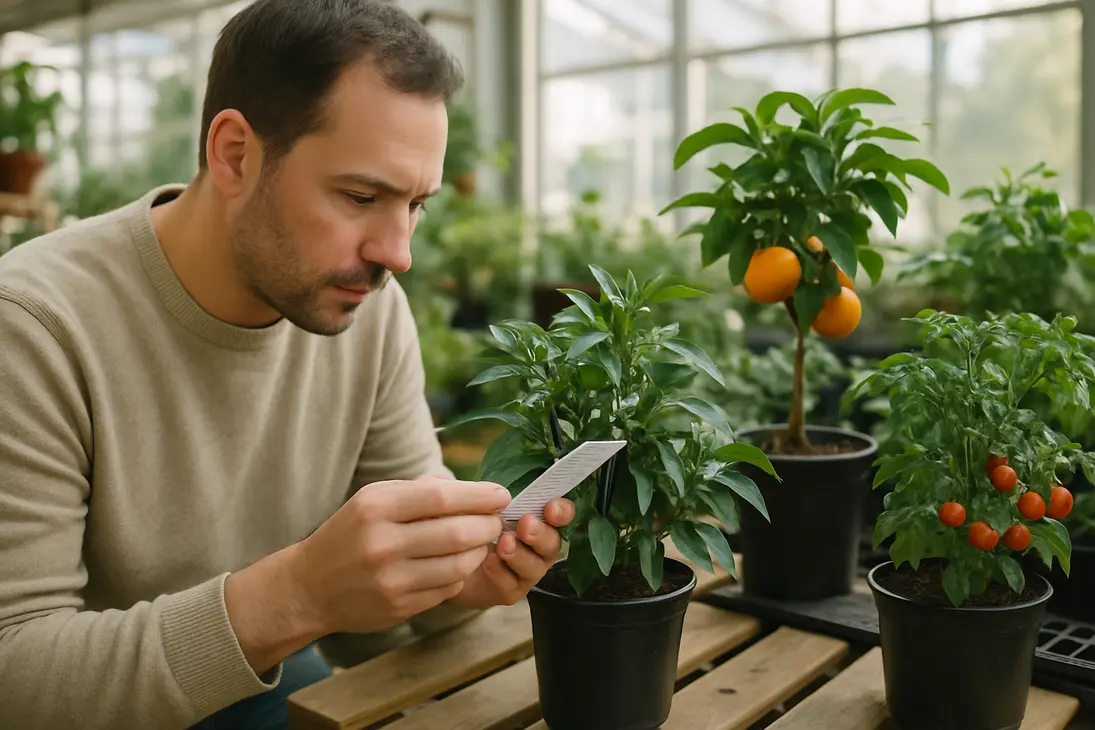
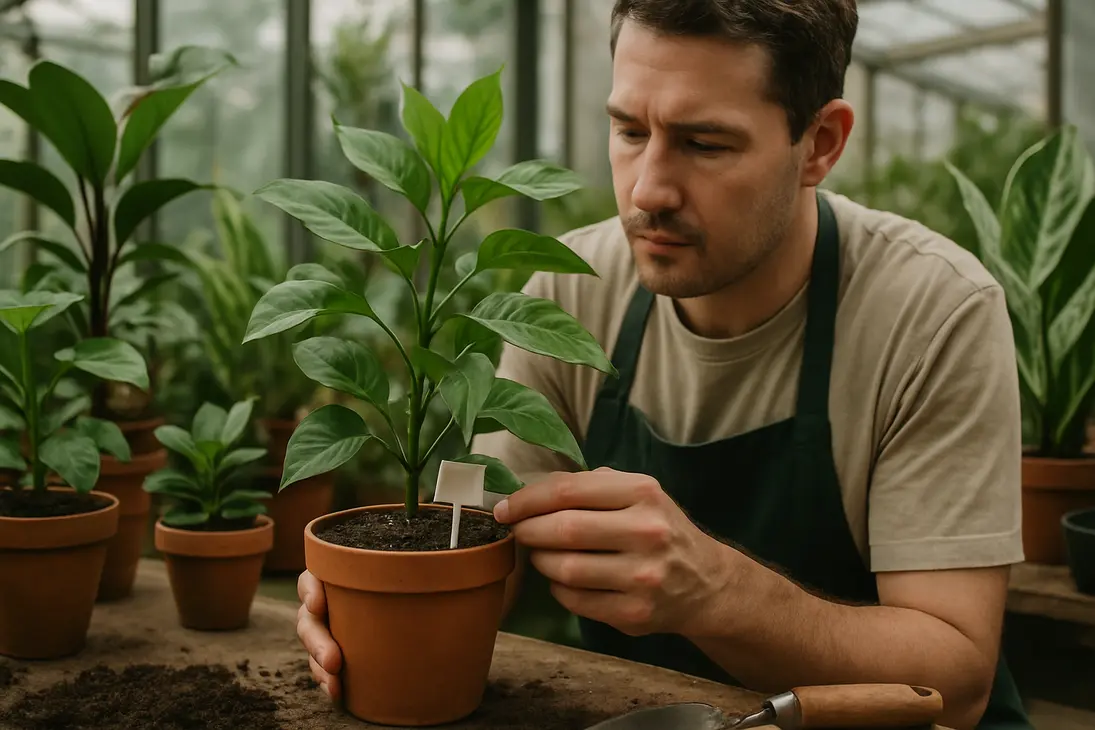
Look for the original tag.
The large name may be a brand or common name, while small print may show the genus, species, or cultivar. Check both sides of the tag and the pot. -
Note where the plant was found or bought.
A houseplant shop, grocery floral section, native plant sale, outdoor nursery, and online marketplace all point to different possibilities. -
Record growing conditions.
Is it indoors or outdoors? In sun or shade? In dry soil, damp soil, a hanging basket, garden bed, terrarium, or pond edge? -
Ask for the spelling and source.
If someone told you the name, ask them to spell it. If it came from a post or video, check captions, comments, hashtags, and visible labels. -
Compare with reliable identification help.
A local extension office, botanical garden, experienced nursery worker, or plant society can often identify a plant more accurately than a vague search. -
Be cautious with care advice until you know more.
Avoid drastic pruning, repotting, fertilizing, or moving until you have a better idea of what the plant is.
A useful identification request sounds like this:
“I saw a plant labeled ‘hoopla plant’ at a local nursery. It was in a 6-inch pot, had thick oval leaves, trailing stems, and no flowers. The tag did not show a Latin name. It was displayed with houseplants in bright indirect light. What could it be?”
That gives gardeners something to work with. By contrast, “What is a hoopla plant?” without context has no reliable single answer.
For a mystery houseplant, use gentle short-term care:
- Place it in bright, indirect light.
- Keep it away from heating vents, cold drafts, and harsh midday sun.
- Water only when the top layer of soil begins to dry, unless it is clearly aquatic or bog-loving.
- Make sure the pot drains.
- Inspect for pests before placing it beside other plants.
- Wait to repot unless it is severely rootbound or the soil stays wet too long.
For a mystery outdoor plant, do not assume it is hardy, edible, or safe for pets. Many ornamentals are not edible, and some can irritate skin or be toxic if ingested. Until you know the plant, handle it with basic caution and keep pets or children from chewing it.
Conclusion
“Hoopla plant” is best understood as an unclear or informal term, not a confirmed standard plant name. It does not appear to be a widely recognized scientific species name, and on its own it is not enough to identify a plant or give precise care instructions.
The phrase may refer to a local nickname, nursery display name, branded product, fictional or decorative plant, or misspelling of another plant name. The right answer depends on context.
If you are trying to identify a “hoopla plant,” look for photos, leaf and flower details, the scientific name, the nursery tag, the place it was sold, and the conditions where it was growing. Once the actual plant is identified, you can care for it correctly instead of guessing from a name that may not be botanical.
FAQ
Is “hoopla plant” a scientific plant name?
No. “Hoopla plant” is not a scientific plant name. Scientific names usually follow a Latin-style binomial format, such as Genus species, and may include a cultivar name in single quotation marks.
“Hoopla plant” does not follow that format and is not widely recognized as a formal botanical name. It may be a nickname, product name, misheard word, or informal label.
Can I buy a hoopla plant?
You may find something sold as a “hoopla plant,” especially online or in a shop using playful names. Before buying, ask what the plant actually is.
Look for:
- A scientific name
- A clear photo of the live plant
- Pot size
- Light requirements
- Watering guidance
- Mature size
- Whether it is indoor or outdoor
- Whether it is live, artificial, or decorative
If the seller cannot provide basic plant information, you may still buy it as a novelty, but you will be guessing about care.
What should I do if a plant label says “hoopla plant”?
Check the entire label first. Sometimes the front shows a marketing name, while the back or small print gives the botanical name. Look for Latin-style words, a cultivar name in quotation marks, or a grower’s code.
If there is no other information, ask the nursery staff or seller:
- “What is the scientific name?”
- “Is this a houseplant, annual, perennial, shrub, or vine?”
- “What light does it need?”
- “How large will it get?”
- “Is ‘hoopla’ a brand name or a plant name?”
If you already bought it, take photos and seek identification before changing its care routine dramatically.
Could “hoopla plant” be another name for a common houseplant?
Yes, it could be an informal or mistaken name for a common houseplant, but there is no single houseplant that can confidently be called “the” hoopla plant.
It might be a misheard version of a name such as hoya, or it could be a retail nickname for a plant sold in a gift display. To identify it, compare the plant’s leaves, stems, flowers, growth habit, and tag information rather than relying on the word “hoopla” alone.
You Might Also Like