Best Flowers for Home Fragrance: Which Blooms Make a Room Smell Beautiful?
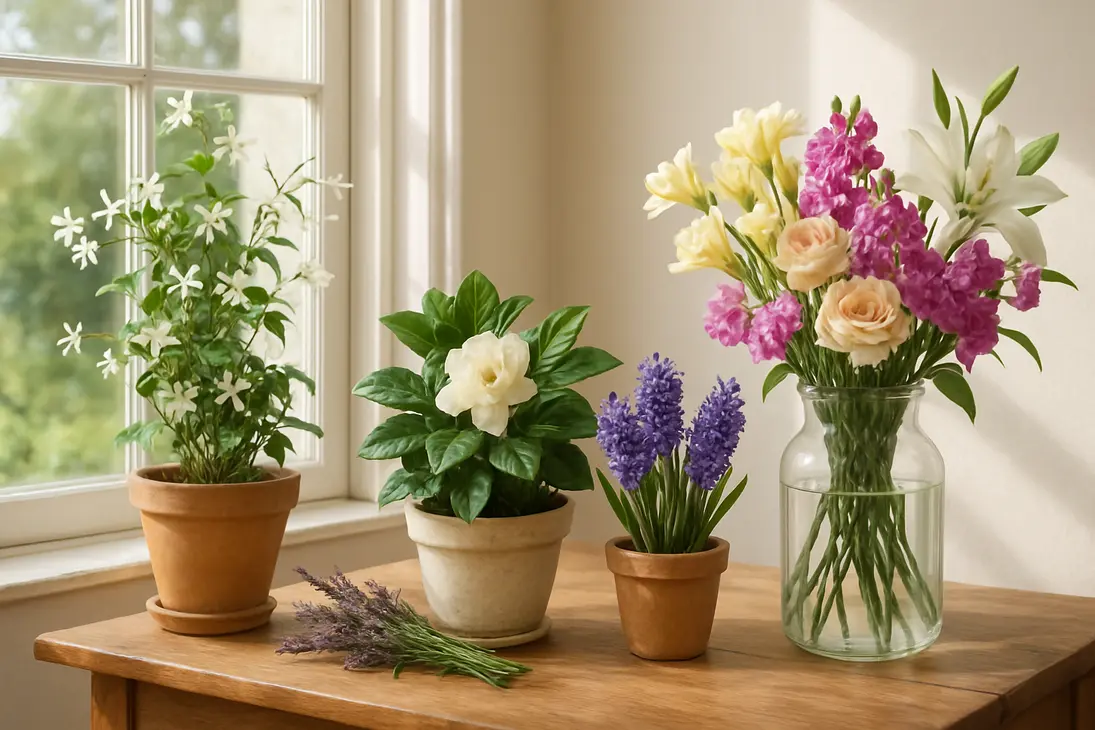
Fresh flowers can change a room before you even notice their color. The best flowers for home fragrance have a natural scent, reasonable vase life, and a fragrance that suits the space.
For indoor scent, start with jasmine, gardenia, lilies, hyacinth, freesia, roses, lavender, sweet pea, tuberose, and stock. Some are best as cut stems, some as potted plants, and some as seasonal treats.
Best Flowers for Indoor Scent
| Flower | Best Indoors As | Scent Character | Fragrance Strength |
|---|---|---|---|
| Jasmine | Potted plant or cut stems | Sweet, exotic, warm | Strong |
| Gardenia | Potted plant | Creamy, rich, floral | Strong |
| Lilies | Cut flowers | Sweet, heady, sometimes spicy | Strong |
| Hyacinth | Potted bulb or cut stem | Sweet, spring-like, intense | Very strong |
| Freesia | Cut flowers | Fresh, citrusy, peppery-sweet | Medium to strong |
| Roses | Cut flowers or potted miniature roses | Classic, soft to rich | Mild to strong |
| Lavender | Dried, cut, or potted herb | Herbal, clean, calming | Medium |
| Sweet Pea | Cut flowers | Soft, honeyed, old-fashioned | Medium |
| Tuberose | Cut flowers | Creamy, tropical, sensual | Very strong |
| Stock | Cut flowers | Clove-like, sweet, spicy | Medium to strong |
Jasmine
Jasmine is one of the most reliable indoor flowers for noticeable fragrance. Its scent is sweet, warm, and often strongest in the evening, making it especially appealing near a sitting area or bedroom.
For indoor growing, look for true jasmines such as Jasminum polyanthum or Jasminum sambac. They need bright light, good air movement, and careful watering. Keep the soil lightly moist but not soggy.
Best for: bright windowsills, sunrooms, evening fragrance, and plant lovers who do not mind regular care.
Gardenia
Gardenia has a creamy, luxurious perfume usually associated with warm evenings and formal gardens. Indoors, it is best as a potted plant rather than a long-lasting cut flower.
Gardenias are beautiful but fussy. They prefer bright indirect light, consistent moisture, humidity, and stable temperatures. Dry air, irregular watering, or drafts can cause buds to drop.
Best for: bright rooms, experienced beginners, and rich floral scent.
Lilies
Lilies are among the strongest cut flowers for home fragrance. Oriental lilies can scent an entire living room once the buds open. Their perfume is sweet, heady, and persistent.
They are not right for every home. The scent can be too intense in small bedrooms, and the pollen can stain fabric. Remove the orange anthers as flowers open. Most importantly, true lilies are highly dangerous to cats, so avoid them entirely if you have one.
Best for: large living rooms, entryways, homes without cats, and people who enjoy strong perfume.
Hyacinth
Hyacinths are small but powerful. A few potted bulbs can fill a room with a sweet spring fragrance, especially in late winter and early spring when they are often sold already budded.
Their scent is fresh, dense, and unmistakable. Some people love it; others find it heavy in a closed room. Place hyacinths where you can enjoy them from a little distance, such as an entry table or kitchen windowsill.
Best for: seasonal spring fragrance, small displays, and cool bright rooms.
Freesia
Freesia is ideal if you want fragrance without the heaviness of lilies or tuberose. Its scent is fresh, sweet, lightly citrusy, and a little peppery. The arching stems also look graceful in a vase.
Keep freesias in clean water, away from heat and direct sun. As flowers open along the stem, the fragrance continues for several days. Yellow and white varieties are often especially fragrant, though scent varies.
Best for: dining tables, desks, guest rooms, and lighter floral fragrance.
Roses
Roses are classic fragrant flowers, but not all roses smell strong. Many florist roses are bred for stem length, vase life, and appearance rather than scent. If fragrance matters, ask for scented garden roses, old-fashioned roses, or varieties sold as fragrant.
Rose fragrance can be fruity, spicy, tea-like, or richly damask. A mixed bouquet of scented roses can make a room smell elegant without overwhelming it.
Best for: classic floral scent, romantic arrangements, and flexible room placement.
Lavender
Lavender is not a traditional bouquet perfume flower, but it is one of the best options for a clean, herbal home fragrance. It works fresh, dried, or potted.
Indoors, lavender needs strong sun and sharply drained soil. It dislikes wet roots. Dried bunches are useful in small spaces because they release scent when brushed or gently warmed by the room.
Best for: small spaces, bedrooms, linen areas, and people who prefer herbal scents.
Sweet Pea
Sweet peas have a soft, honeyed, old-fashioned fragrance that feels gentle and cheerful indoors. They are usually enjoyed as cut flowers from the garden or bought seasonally.
Their vase life is shorter than lilies or roses, but their charm is worth it. Choose stems with some flowers open and others in bud, change the water often, and keep them cool.
Best for: bedside posies, breakfast tables, cottage-style arrangements, and gentle scent.
Tuberose
Tuberose is one of the most powerful flowers for indoor fragrance. Its scent is creamy, tropical, warm, and almost perfume-like. A few stems can scent a whole room, especially in the evening.
Use it sparingly indoors. One or two stems may be enough, and in a small room the scent can become cloying.
Best for: dramatic fragrance, evening entertaining, and large rooms.
Stock
Stock is an underrated fragrant cut flower with a sweet, spicy scent often compared to cloves. It works beautifully in mixed bouquets and is usually easier to live with than very intense white flowers.
It comes in soft colors such as white, cream, pink, lavender, and purple. Its scent is noticeable but usually not overwhelming.
Best for: mixed arrangements, kitchens, living rooms, and sweet-spicy fragrance.
Strong-Scented Flowers That Can Fill a Room
Some flowers stay close to the vase; others announce themselves as soon as you walk in. If you want a whole room to smell good, choose naturally strong blooms and place them where air can move gently around them.
Most Powerful Floral Scents
The strongest indoor flower scents usually come from:
- Tuberose — rich, creamy, tropical, and strongest in the evening.
- Oriental lilies — sweet and heady once several blooms open.
- Hyacinth — intense spring scent from even a small pot.
- Jasmine — sweet and lingering, often strongest at night.
- Gardenia — creamy and noticeable from a single open bloom.
- Stock — spicy-sweet and surprisingly room-filling in a bouquet.
For large rooms, lilies, tuberose, and hyacinths can be very effective. For smaller rooms, freesia, lavender, roses, or sweet peas are often more comfortable.
Best Flowers for Bedrooms, Living Rooms, and Entryways
Bedrooms usually suit softer scents. Try lavender, sweet pea, lightly scented roses, or a small jasmine plant if you enjoy evening fragrance. Avoid strong lilies or tuberose in a small bedroom unless you already know you like heavy perfume while resting.
Living rooms can handle more scent because they are usually larger and better ventilated. Oriental lilies, stock, roses, freesia, and tuberose can work well. Place strong flowers several feet from seating.
Entryways are ideal for flowers that create an immediate impression. Hyacinths, lilies, stock, or gardenias near the front door can feel welcoming, as long as the spot is not too hot, sunny, or drafty.
When Fragrance Can Become Overpowering
A flower that smells beautiful in a florist shop can feel too strong in a closed room. Fragrance is more likely to become overpowering when:
- The room is small or poorly ventilated.
- Flowers are placed beside a bed, desk, or dining chair.
- Several strongly scented flowers are combined.
- The room is warm.
- Blooms are past their freshest stage.
If you are trying a strong flower for the first time, buy a small bunch. One stem of tuberose, a few lily stems, or a single pot of hyacinths may be plenty.
Easy-to-Grow Fragrant Flowers for Beginners
Many beginners worry that fragrant flowers are difficult to grow. Some are, but the easiest route is often to combine potted herbs or bulbs with occasional cut flowers rather than trying to grow every fragrant bloom indoors year-round.
Best Beginner-Friendly Choices
For beginners, the most forgiving fragrant options are:
Lavender
Best if you have a very sunny window. Water only when the top of the soil feels dry, and use a pot with excellent drainage.
Hyacinth
Buy pre-potted bulbs in bud. Keep them in bright, cool light and water lightly. They are seasonal but easy while blooming.
Freesia
Often easiest as cut flowers. They give fragrance without plant care beyond vase maintenance.
Stock
A reliable cut flower with simple care. It lasts well if kept cool and in clean water.
Scented roses
Choose cut stems if you want fragrance without growing the plant. If growing miniature roses indoors, give them bright light and steady moisture.
Jasmine
A good next step once you are comfortable with watering and light. It needs more attention than lavender or cut flowers but can be very rewarding.
Potted vs. Cut Flowers for Home Fragrance
Potted and cut flowers serve different purposes indoors.
| Option | Advantages | Limitations |
|---|---|---|
| Potted flowers | Can bloom again, feel natural, good for plant lovers | Need correct light, water, humidity, and care |
| Cut flowers | Immediate fragrance, easy to change by season, no long-term commitment | Shorter lifespan, need water changes and trimming |
| Dried flowers/herbs | Long-lasting, low care, good for small spaces | Softer scent, less fresh-flower impact |
For a dinner party or guest visit, cut flowers are simplest. For an ongoing scented corner, try potted jasmine, lavender, or seasonal bulbs.
Low-Maintenance Options for Small Spaces
Small spaces need flowers that smell pleasant up close without taking over the room. Good choices include:
- A small vase of freesia on a desk.
- A tied bunch of dried lavender near linens.
- A few stems of sweet pea beside the bed.
- One small scented rose arrangement on a side table.
- A single pot of hyacinth in a bright, cool spot.
Avoid large bouquets of lilies, tuberose, or multiple hyacinth pots in a studio apartment unless you love intense fragrance.
How to Keep Fragrant Flowers Smelling Fresh Indoors
Fragrance fades quickly when flowers wilt, sit in dirty water, or become overheated. Good care keeps the scent clean rather than stale.
Cut Flower Care
For cut fragrant flowers:
- Trim the stems before arranging. Cut about 1 inch from the base at an angle with clean scissors or pruners.
- Remove leaves below the waterline. Submerged foliage decays and makes the water smell unpleasant.
- Use a clean vase. Old residue encourages bacteria and shortens vase life.
- Add flower food if provided. It helps support the blooms and keep water clearer.
- Change the water every one to two days. Recut stems if they look slimy or clogged.
- Keep flowers out of direct sun. Heat and bright sun usually shorten their life.
- Avoid fruit bowls. Ripening fruit releases ethylene gas, which can age flowers faster.
- Remove spent blooms. One decaying flower can make the whole arrangement smell tired.
For lilies, remove pollen-bearing anthers when flowers open. For delicate sweet peas, keep arrangements small and cool.
Potted Flower Care
Potted fragrant flowers need the right balance of light, moisture, and air.
- Jasmine: Bright light, evenly moist soil, support for climbing stems, and cooler nights if possible.
- Gardenia: Bright indirect light, consistent moisture, humidity, and no sudden temperature swings.
- Lavender: Full sun, dryish soil between waterings, and a gritty, well-drained mix.
- Hyacinth: Bright, cool conditions while blooming; avoid overwatering the bulb.
Do not assume every fragrant plant wants the same care. Gardenia dislikes drying out; lavender hates staying wet.
Common Mistakes That Reduce Fragrance
The most common problems are simple:
- Buying flowers bred for looks rather than scent.
- Placing cut flowers in hot sun.
- Letting vase water become cloudy.
- Overcrowding stems so air cannot circulate.
- Keeping flowers too close to heaters or vents.
- Choosing a scent too strong for the room.
- Overwatering potted fragrant plants.
Also remember that many flowers release scent more strongly at certain times of day. Jasmine and tuberose often smell strongest in the evening, while hyacinth and stock may be noticeable throughout the day.
Choosing the Right Fragrant Flowers for Your Home
The best fragrant flower depends on your nose, your space, and your household. A flower that feels elegant in one home may feel too strong in another.
Soft, Sweet, Spicy, and Fresh Scents
Use scent style as your starting point:
- Soft and romantic: sweet pea, scented roses, freesia.
- Rich and creamy: gardenia, tuberose, jasmine.
- Fresh and spring-like: hyacinth, freesia, some roses.
- Herbal and clean: lavender.
- Sweet and spicy: stock, some clove-scented roses.
If you are sensitive to perfume, begin with freesia, lavender, or lightly scented roses. If you want unmistakable fragrance from across the room, try lilies, tuberose, hyacinth, or jasmine.
Seasonal Fragrant Flowers
Season affects both availability and quality.
Late winter to spring: Hyacinth, freesia, stock, sweet pea, and some potted jasmine are excellent choices.
Summer: Roses, lavender, gardenia, and tuberose are at their best.
Autumn: Scented roses, stock, and lilies are often available from florists.
Winter: Jasmine, paperwhite narcissus, hyacinth bulbs, and florist lilies can bring strong scent indoors, though paperwhites are polarizing and not everyone enjoys their musky fragrance.
Buying in season usually gives better fragrance and value.
Allergy and Pet Safety Considerations
Fragrant flowers are not suitable for every person or pet. If someone in your home has fragrance sensitivity, migraines, asthma, or pollen allergies, choose lighter scents and avoid placing flowers near beds or workspaces. Low-pollen or pollen-removed arrangements may help, but scent itself can still be irritating.
Pet safety is especially important. Lilies should not be kept in homes with cats. Even small exposures can be dangerous. Hyacinth bulbs and some ornamental flowers can also cause problems if chewed. If you have pets that nibble plants, choose cautiously and keep arrangements inaccessible.
Conclusion
The best flowers for home fragrance are the ones that match both your scent preference and your room. For strong fragrance, choose jasmine, gardenia, Oriental lilies, hyacinth, tuberose, or stock. For a gentler everyday scent, try freesia, scented roses, lavender, or sweet peas.
If you are new to fragrant flowers, start small. A vase of freesia, a bunch of stock, a pot of hyacinths, or a few scented roses will quickly show you what kind of fragrance you enjoy indoors. Once you know your tolerance for sweet, spicy, fresh, or creamy scents, it becomes much easier to choose blooms that make your home smell beautiful without overwhelming it.
FAQ
What flower has the strongest scent for indoors?
Tuberose, Oriental lilies, hyacinth, jasmine, and gardenia are among the strongest indoor floral scents. Tuberose and lilies can be especially powerful in the evening or in warm rooms. Start with only a few stems so the fragrance does not become too heavy.
Which flowers make a whole room smell good?
For a whole room, choose Oriental lilies, tuberose, hyacinth, jasmine, gardenia, or stock. In large rooms, these flowers can create noticeable fragrance from a distance. In small rooms, use fewer stems or choose softer options like freesia, roses, lavender, or sweet pea.
What are the easiest fragrant flowers to grow at home?
Lavender is one of the easiest if you have strong sunlight and well-drained soil. Hyacinths are very easy as pre-potted seasonal bulbs. Jasmine is manageable with bright light and regular watering, though it needs more attention. For the simplest option, use cut freesia, stock, or scented roses.
Do cut flowers need sunlight to stay fragrant longer?
No. Cut flowers usually last longer away from direct sunlight. Bright sun and heat make them wilt faster and can shorten their fragrant period. Keep cut flowers in a cool spot with clean water, trim the stems, remove leaves below the waterline, and change the water regularly.
You Might Also Like